
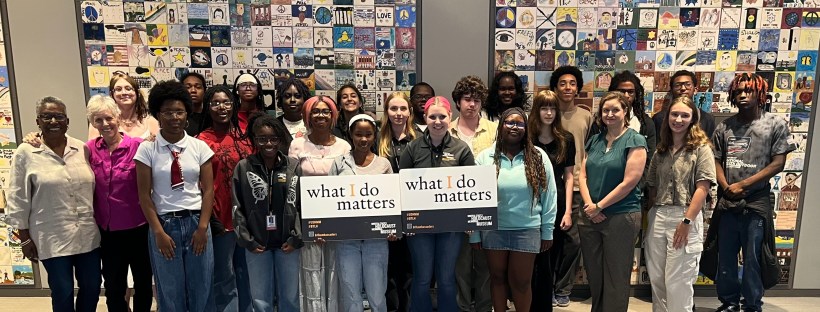
NOTE FROM THE PROGRAM DIRECTOR: Any visit to the US Holocaust Memorial Museum is overwhelming, and so it was for our students. For most, it was their first visit to the museum, even though they live and go to school in DC. Because a major focus of this year’s Japan in DC program was on the World War II era, our three hours spent there on July 21 had special significance, and was informed by other visits and presentations on our summer agenda.
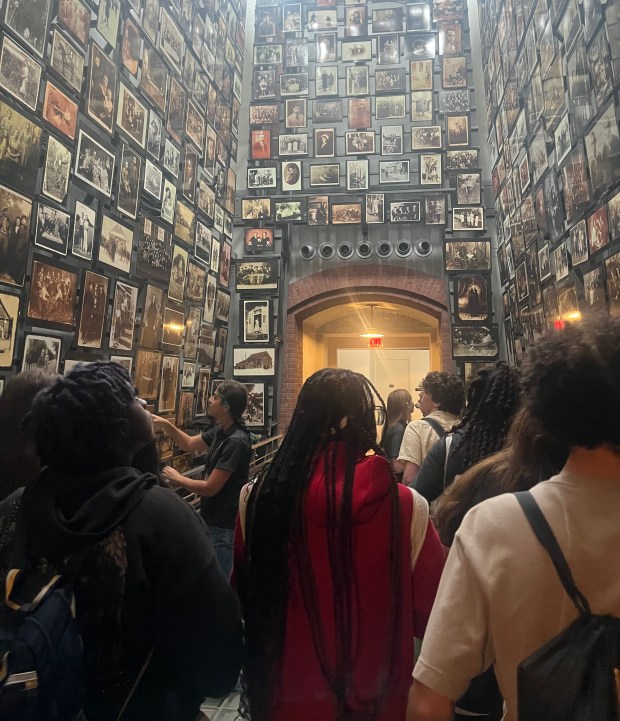
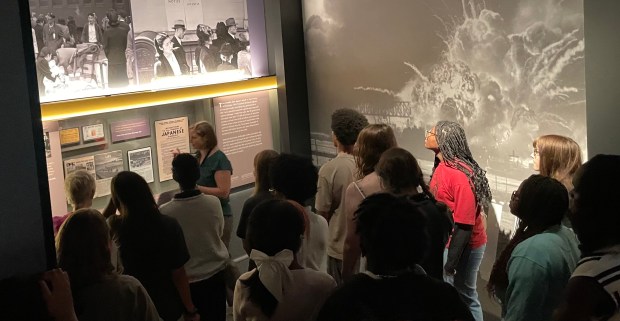
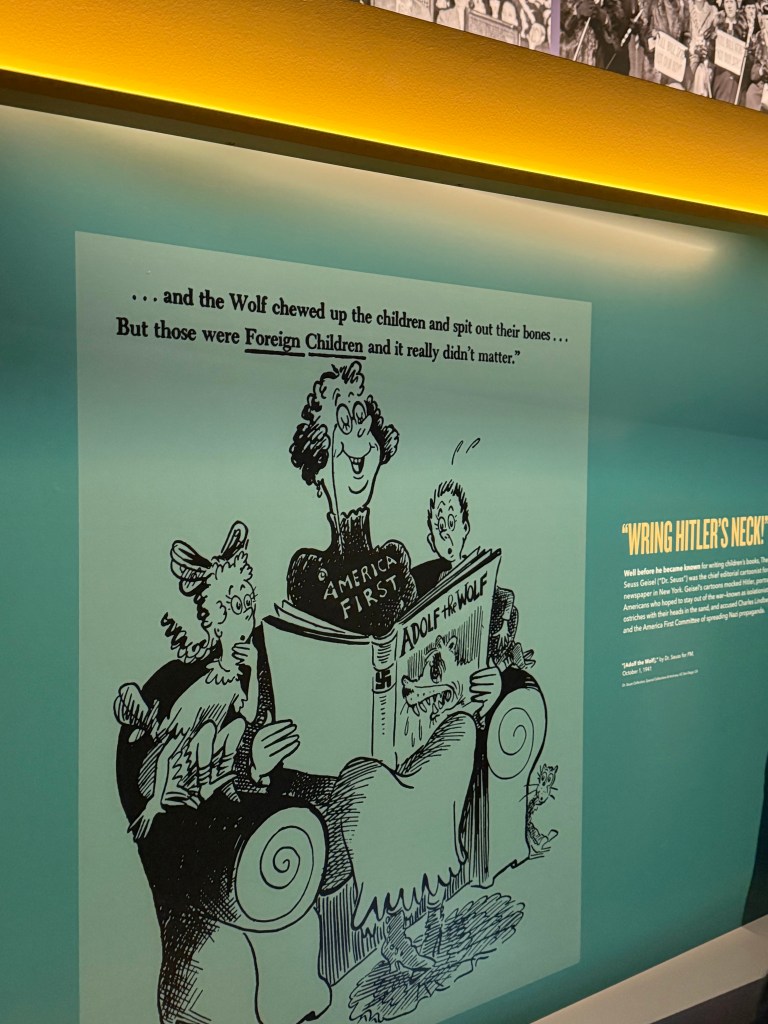
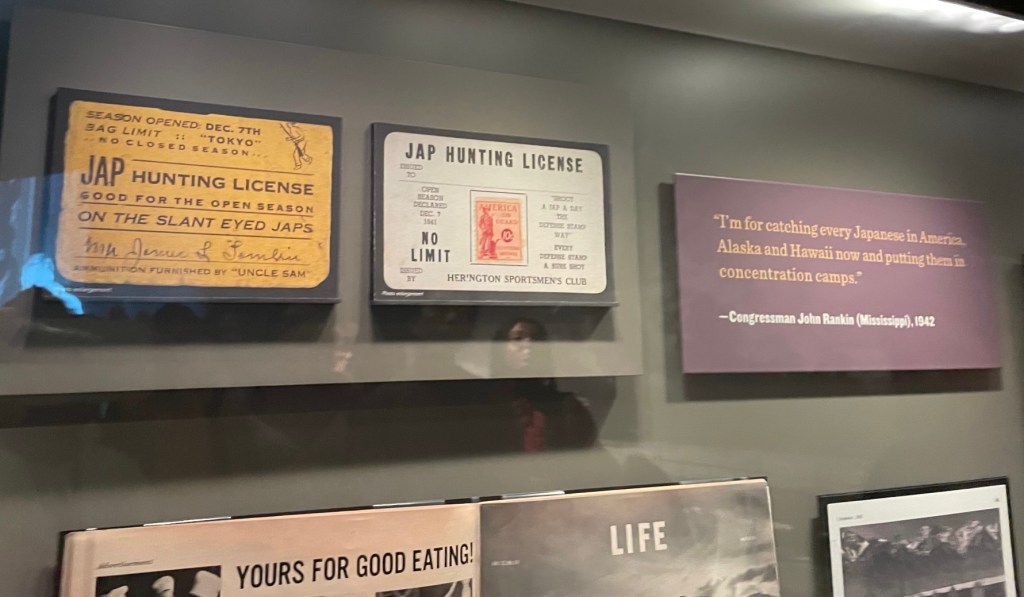
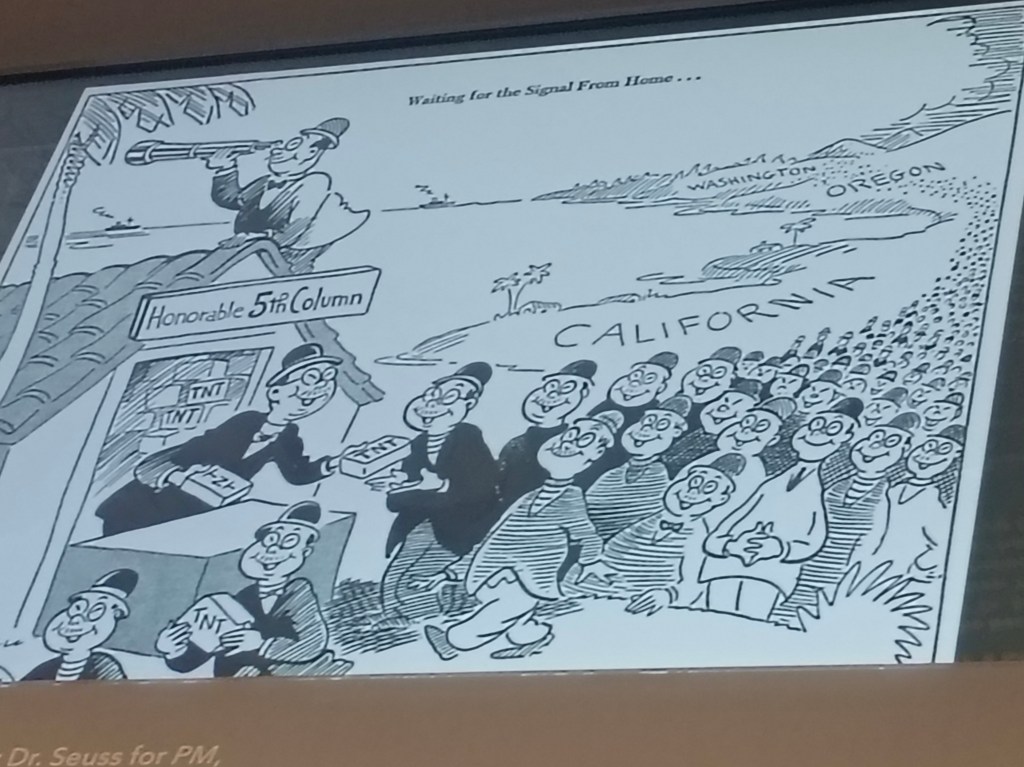
Students were first guided through the museum’s Permanent Exhibition by high school student docents in the USHMM’s Bringing the Lessons Home (BTLH) Ambassadors Program. The tour included a stop at the exhibit on Chiune Sugihara, the Japanese diplomat in Lithuania responsible for rescuing thousands of Jews. This was followed by a tour of the special Americans and the Holocaust Exhibition, which included content related to anti-Japanese propaganda and Japanese American incarceration, led by museum historian Rebecca Erbelding. Then our students were treated to lunch and a debriefing with the BTLH youth docents. Very special thanks to James Fleming and Jamil Miller of the museum’s Education Office for putting together such a meaningful program – and for providing us with air conditioned charter bus transportation on such a hot day!
Below you can read some of our student reflections on how the visit impacted them and what lessons they drew from the experience.
Malia:
The part that affected me the most is the beginning of the Holocaust. Most people don’t know how the Holocaust started so knowing how it began is impacting. I think more people should visit the museum so that they can know more about that period of time and know how to avoid something like that in the future.
Life lesson: Tell more people about the Holocaust so that in case something similar happens again, we can try to avoid it so more innocent people don’t get hurt.
Madisen:
The idea of the Jewish survivors of the Holocaust as well as the idea of the bodies impacted me the most because of how these men, women, and children looked either dead or alive. Many of the survivors of the Holocaust were very skinny, and despite being freed didn’t particularly looked pleased. It disgusted me how evil a human being could be to innocent people, and how few who weren’t Jewish protested until other countries intervened. While in the Holocaust Museum, I felt a great sense of empathy for the families and communities affected by the Nazis. I am grateful that the museum did not censor anything, so people Jewish or not Jewish alike can know what truly happened in the Holocaust. I, myself, am not Jewish, but I have a Jewish friend and I feel empathy towards her family because of how strongly I feel towards the Nazis. The imprisonment and abuse of Jewish Germans reminded me of the incarceration of Japanese and Japanese Americans during World War II. Although what the Japanese Americans experienced wasn’t as extreme, both minorities were wrongfully imprisoned and mistreated.
Morgan:
I felt intrigued at first, because I have never visited the museum, ever. It was my very first time. It was definitely a shock. Before this visit I never really knew what specifically went down during the Holocaust, only that Jewish people were captured, put in camps, then killed. I could have never imagined all of this could have happened. I felt a deep sense of disturbance when looking at some of the exhibits, especially the photos of the doctors seemingly treating the disabled men, women, and children, but they were instead killing them with injections, pills and starvation because they were seen as a cancer and a burden on society under Hitler’s dictatorship. I also felt disgusted looking at the piles of dead, naked bodies of Jewish people when the Nazis started to murder them.
Life lesson: I would say that it is important to record history, no matter how grotesque and gruesome it is. There will be people that deny the existence of historical events, and there should be photos, written accounts, or witnesses to not only prove its existence, but just how gruesome it was.
Zaevior:
During our visit to the Holocaust Museum, I felt especially moved by the Permanent Exhibition tour we did. Seeing the terror the Jewish people went through broke my heart more and more as the tour went on. The temporary exhibit showcased the heavy discrimination that Japanese American immigrants went through. Seeing what Japanese Americans dealt with is very reminiscent of the Jewish concentration camps, though not to that extreme.
Life lesson: After the museum visit, an idea that stuck with me was an idea of preserving history so it’s not repeated.
Pippa:
The part that made the biggest impact on me was when I saw videos/pictures of the survivors of the Holocaust right when they were being freed. The graphicness and how starved they looked was very upsetting, but it showed the severity of the Holocaust and the fact that each victim was their own person just like anyone. We learned about the Japanese camps because there was also an exhibit that talked about the incarceration camps, showing that the scapegoating of Jews in Germany was similar to what was done to the Japanese in America. I was really surprised by the pro-Israel exhibit at the beginning. I thought it was really contradictory to the museum’s message at “preventing future genocides.”
Life lesson: Think critically about any information you receive, no one is immune to propaganda.
Aston:
The part of the program that affected me most would be the recordings of the Nazis dumping dead bodies into pits because of the cruelty of the soldiers and the disgust of the passersby. I felt saddened due to the events that transpired but I noticed the will to inform people like us from the tour guides.
Demetris:
The part of the program that had the biggest impact on me was the Holocaust Museum tour and that was so impactful because of the long history of unfairness, pain, torture, and wrongdoing that the museum showed and how destroyed Europe was during and after the war. Something that I felt while being there was a feeling of sympathy, but a feeling of emptiness because of how much the people who suffered had to go through but also the reason I felt empty. I learned that the museum had parts in it that showed how poorly the Japanese were treated in the USA, mostly in the West Coast, and the way that this can relate to this program is by helping us feel and understand how much Japan and the Japanese people affect the way the USA still is today.
The life lesson that I took away from this was “You can make history but you cannot erase it.”
Lauren:
The whole museum had a big impact on me because I had heard very little about it before, so going to the museum was so eye opening since our tour guides went so in depth about some information and the museum was so graphic. I observed that the museum was so real and truthful about all the events and who was affected by the Holocaust. It made me feel upset that millions of people were killed because of their beliefs.
Kamaya:
The impact of the Holocaust was deep because the amount of discrimination there shows how gruesome it was. It made me appreciate the importance of treating everyone with respect. It was hard to listen to all the horror stories of all the people, men, women, and children that suffered. All those victims that died just because of their race.
Christian:
I found the student tour guides very good sources of information. Also the time, energy, and care they put in across the museum and learning about it. I had a special interest in the museum’s temporary exhibit on the Japanese American internment. It showed that both Jewish and Japanese Americans were targeted and imprisoned for their race. A big impact the visit left on me was learning about the “5th column.” The Americans feared that the Japanese Americans would turn and attack the West Coast for the Emperor. It showed how fear and patriotism moves American public opinion for or against something. Fear of a far away enemy can make Americans turn and attack each other. Especially against other races and religions.
Kiya:
The biggest impact of the program was going and visually seeing what happened to the Jews during this time. Also to get a further in depth explanation of the Holocaust because you learn about it in school but to actually go to a museum – and see and hear all the stuff that happened was really amazing. Mainly I would say my feeling after being at the museum was relatability, mainly because I’ve noticed since joining this program that many people like us (as in black people) have been or get treated exactly the same because we’re different than your average white American. So I felt sorrow and relatability.
Honesti:
After going to the Holocaust Museum the thing that made the most impact on me was how isolated they made the Jews to the point that they experienced bad reactions and had to go different roads to walk, like the Japanese concentration camps with them being isolated and treated like they were criminals and getting bad looks from others after coming back home from the camps. The trip made me feel sad for the people that were there and heartbroken they had to deal with that.
The life lesson I would take away from this is that the discrimination of people is a ridiculous thing that people do during war and with a flawed view.
Liam:
The part of the exhibit that I found had the most impact on me was seeing the starved prisoners, and the corpses. I felt this underlying dread throughout the museum, like a heavy weight deep in my body.
DeVonte:
The part of the Holocaust that made the biggest impact on me was that when they were trying to separate the Jewish people from the Germans they had tools that measured the head, the nose, etc. So they can separate Jews and Germans. Also how Reinhard Heydrich I believe was considered the perfect man. I saw the Holocaust as a bad thing with the mustard gas, the killing, the tools to measure the body to separate the Jews and Germans.
Jaylen:
The part of the experience that had the biggest impact on me was the long lasting impacts that the Nazis have on today’s day and age. One life lesson/takeaway that I got from the experience is that victims of a crime can also commit that same crime.

