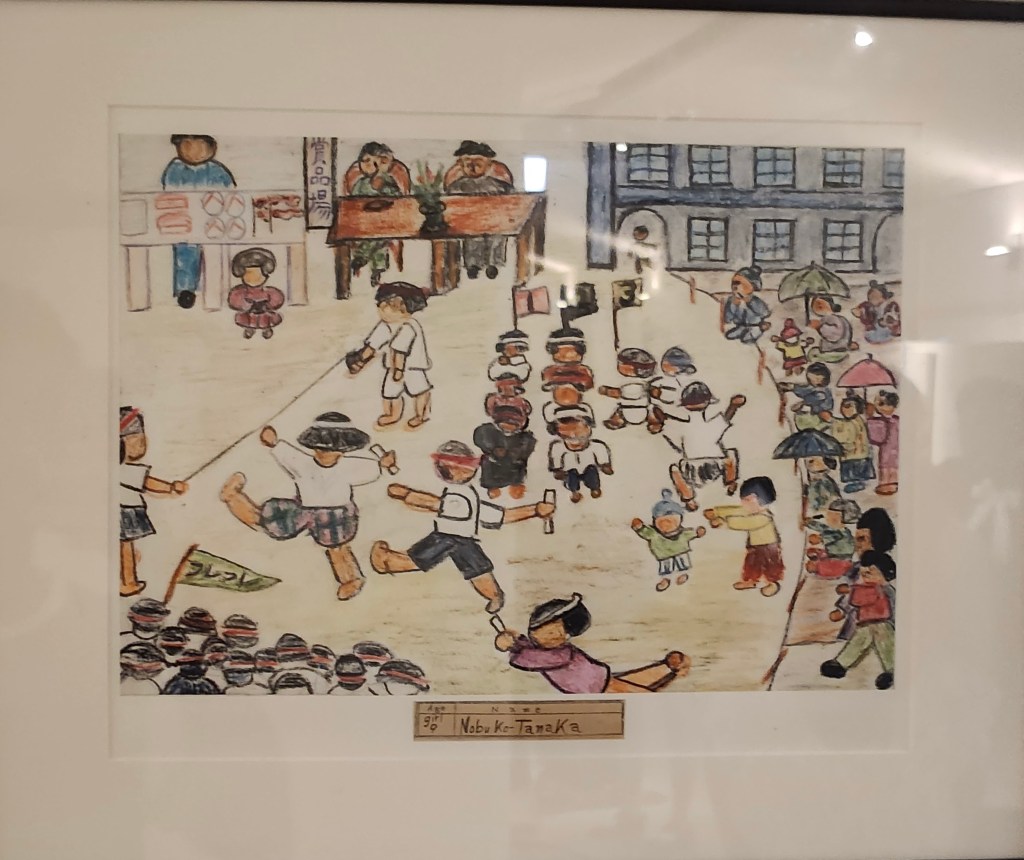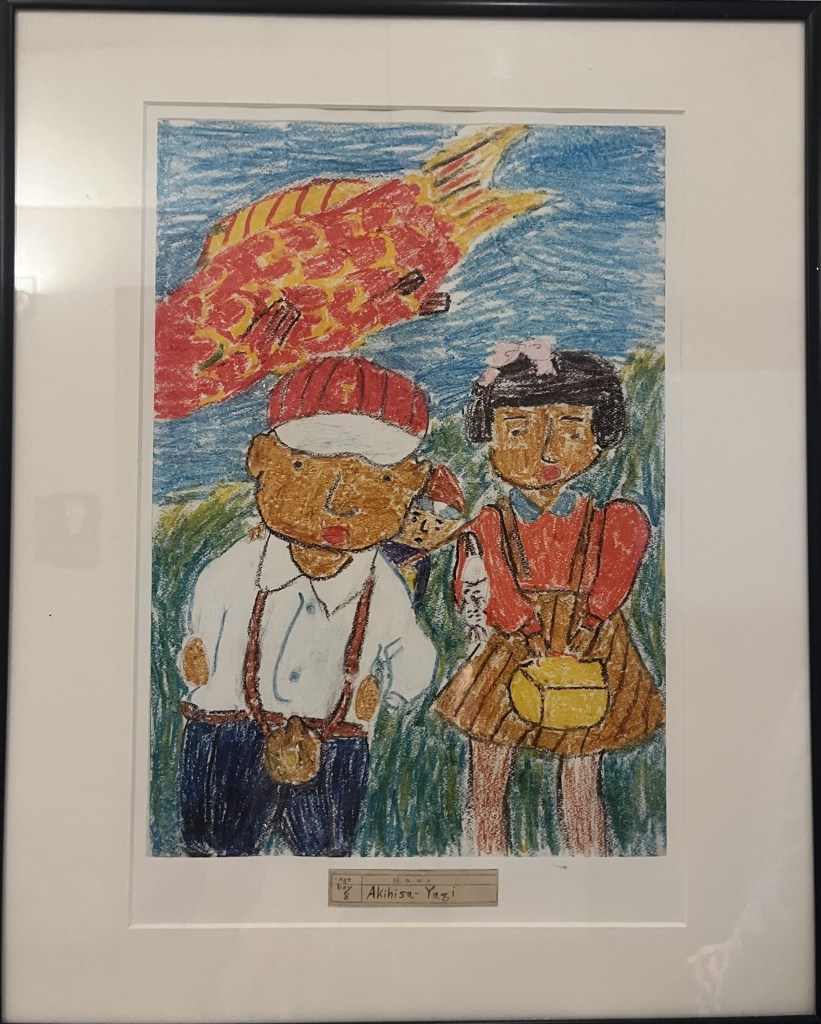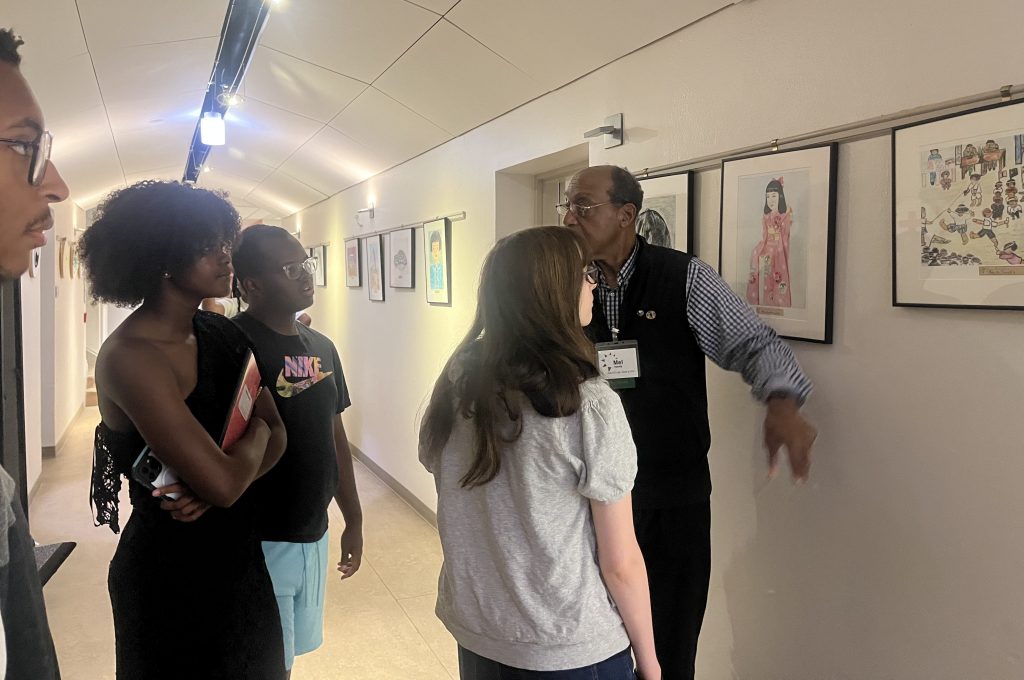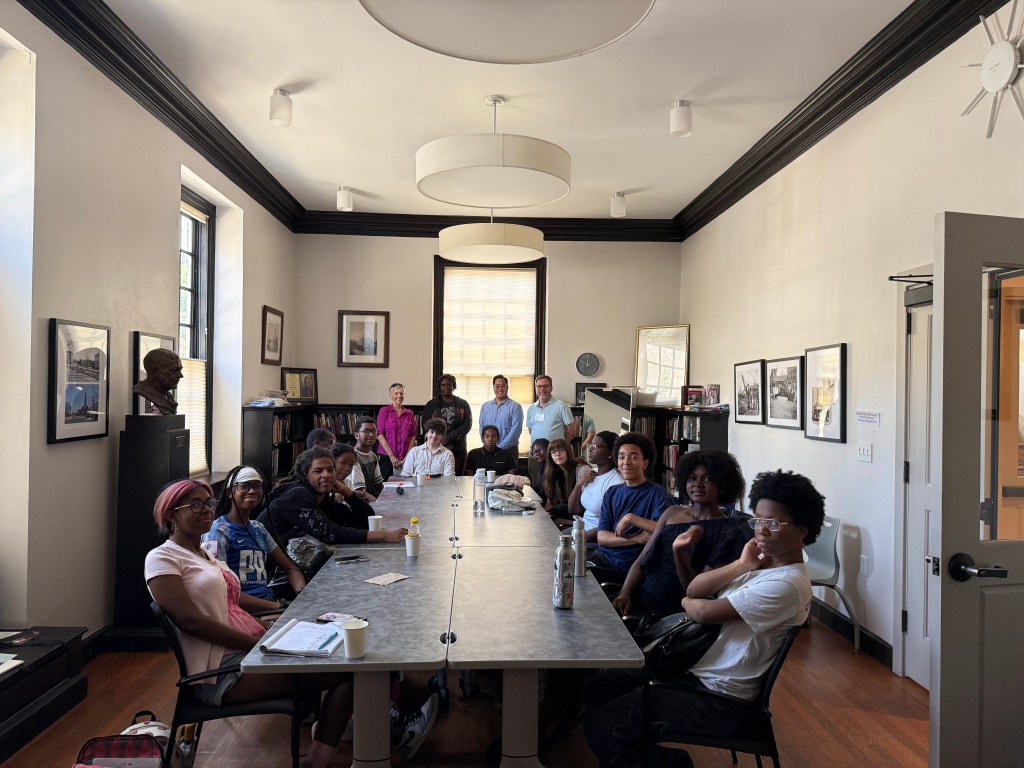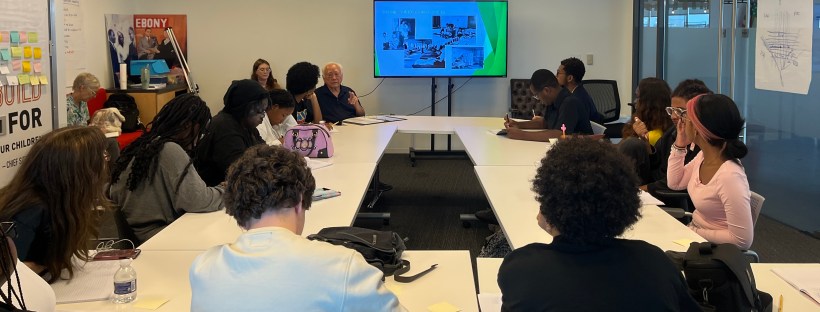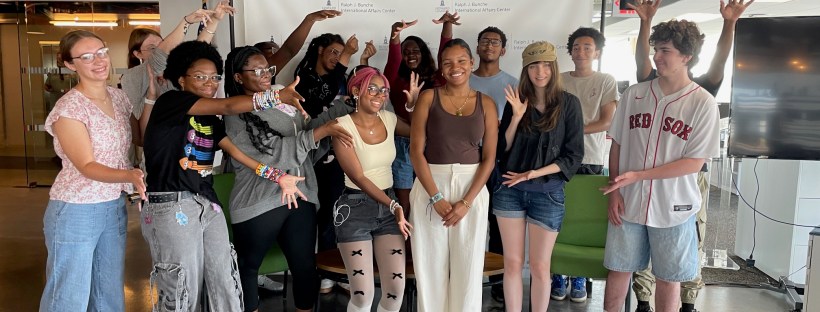
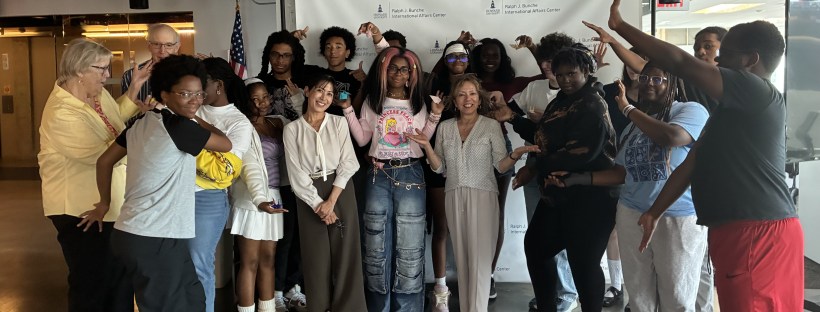
From the Program Director: Our final program of the summer was a real treat for all our students. On Tuesday, August 4, Japan in DC for the first time welcomed members of Okinawa Kai of Washington, DC, a non-profit organization dedicated to preserving the beautiful traditions of Okinawa and increasing understanding of the Okinawa culture. The group’s large membership consists of a diverse group – many from Okinawa; others 2nd, 3rd, or 4th generation Okinawan; and still others who aren’t Okinawan but simply love Okinawan history and culture.
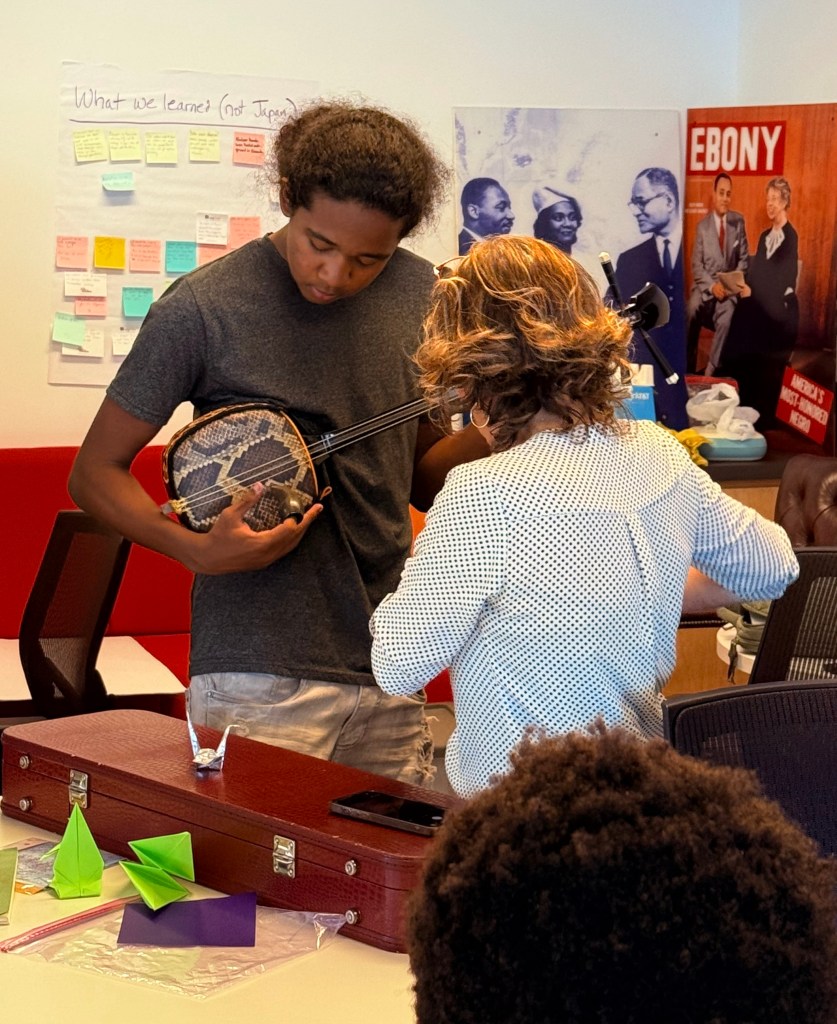
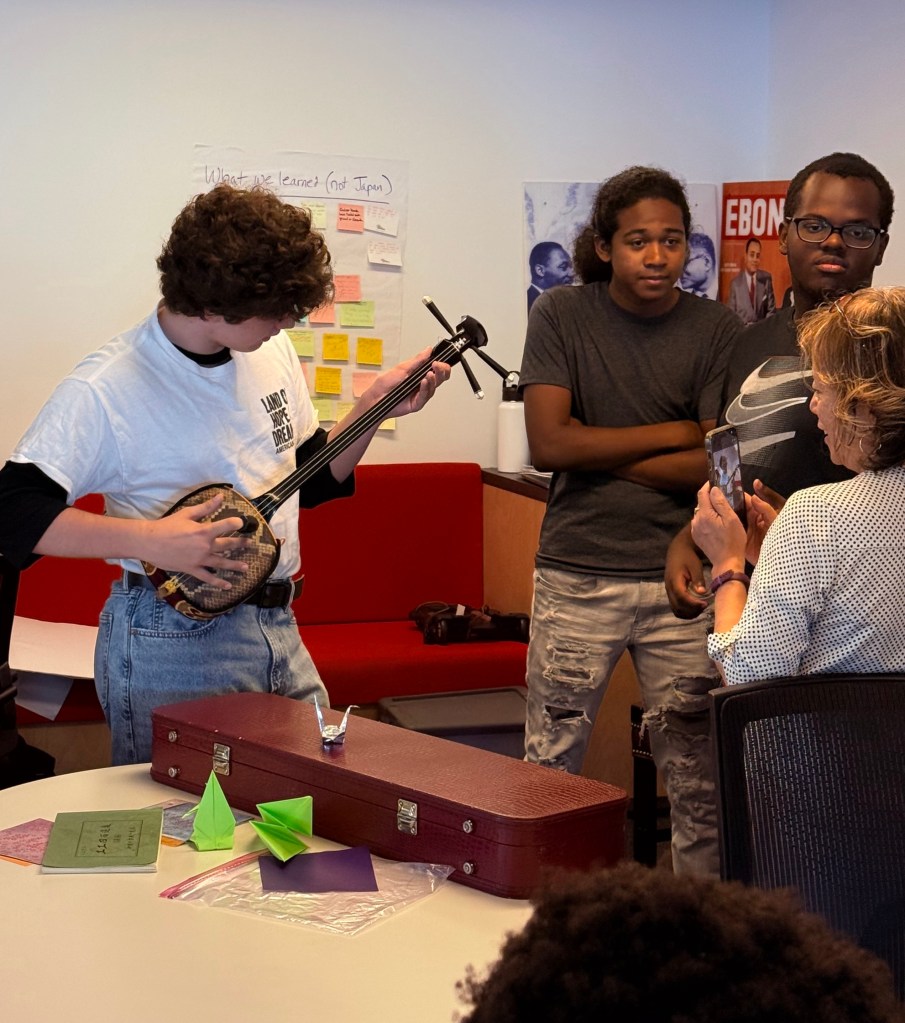
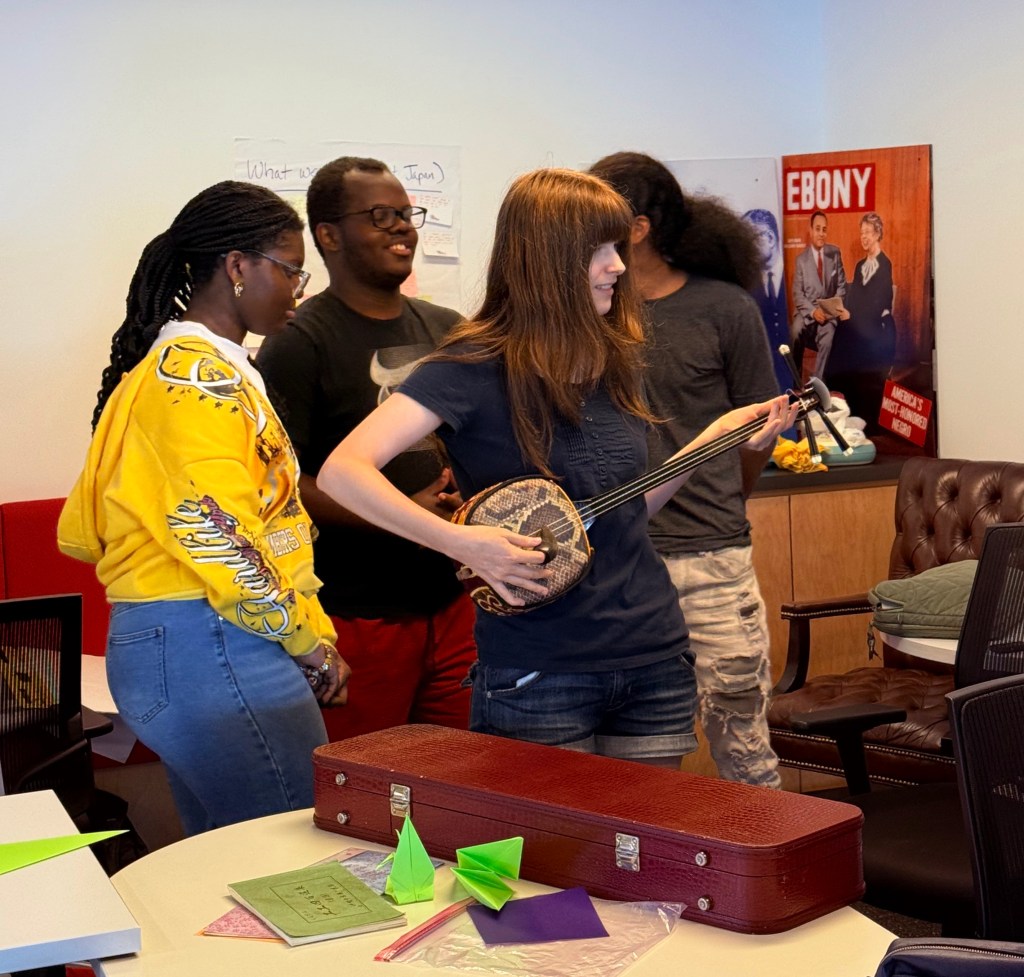
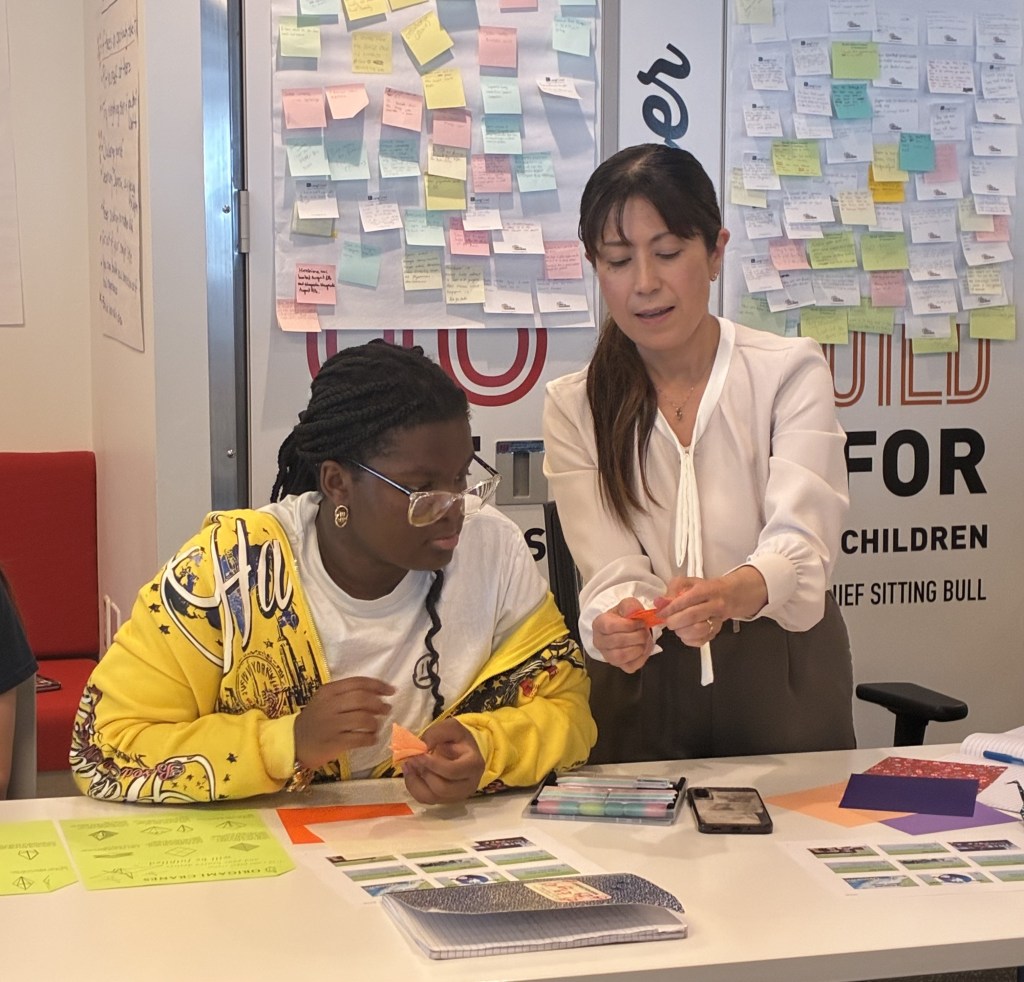
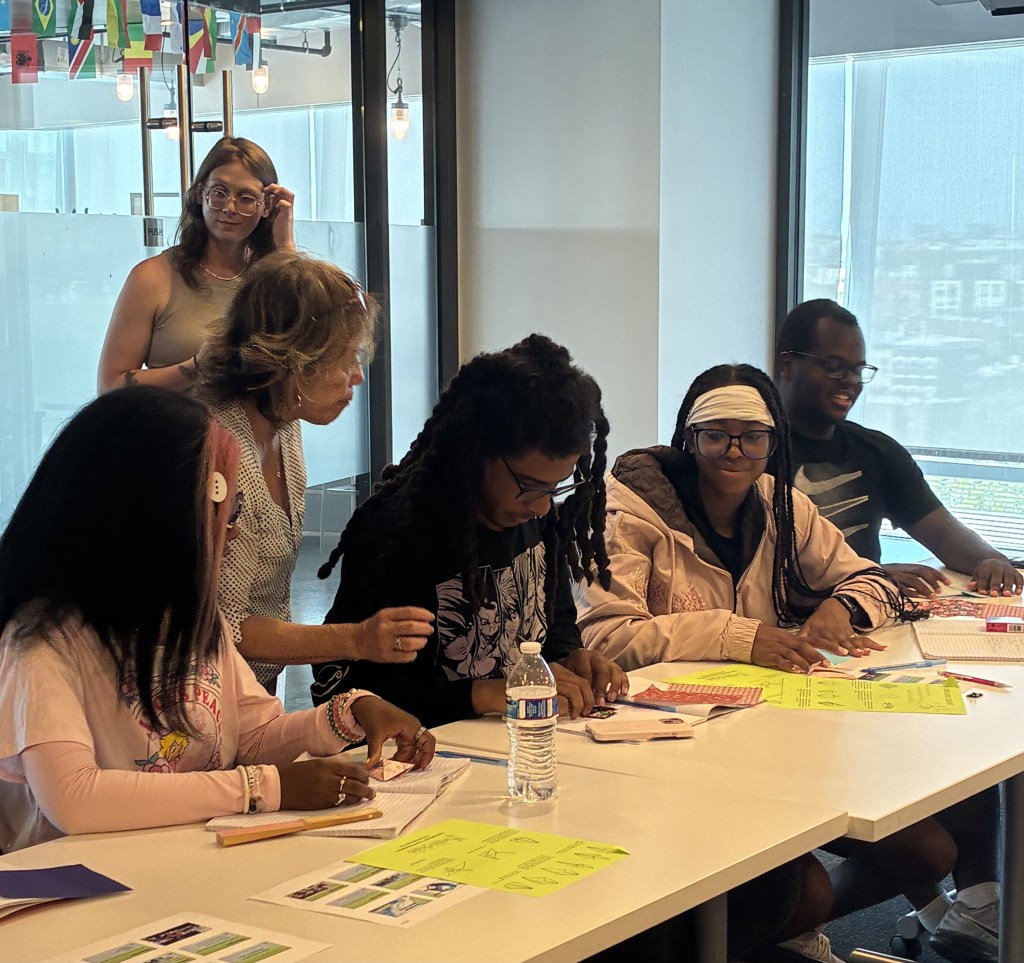
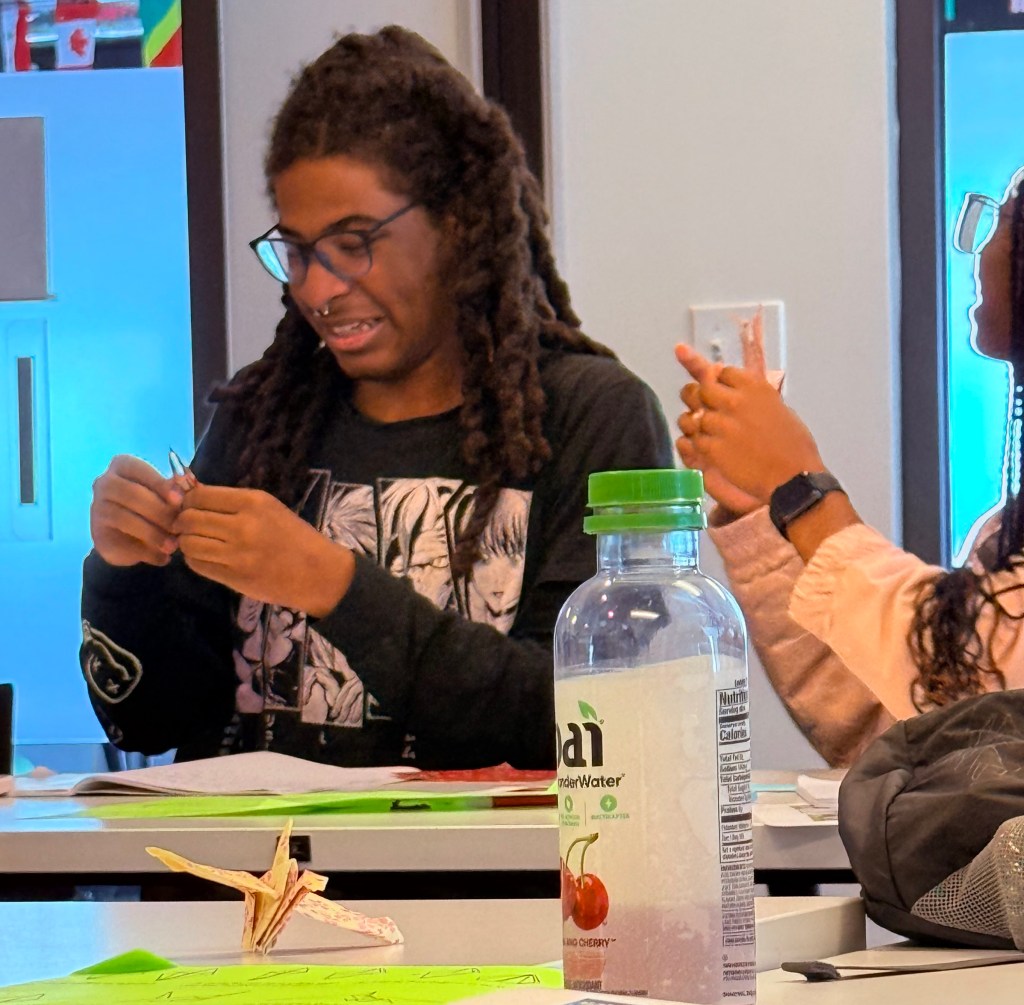
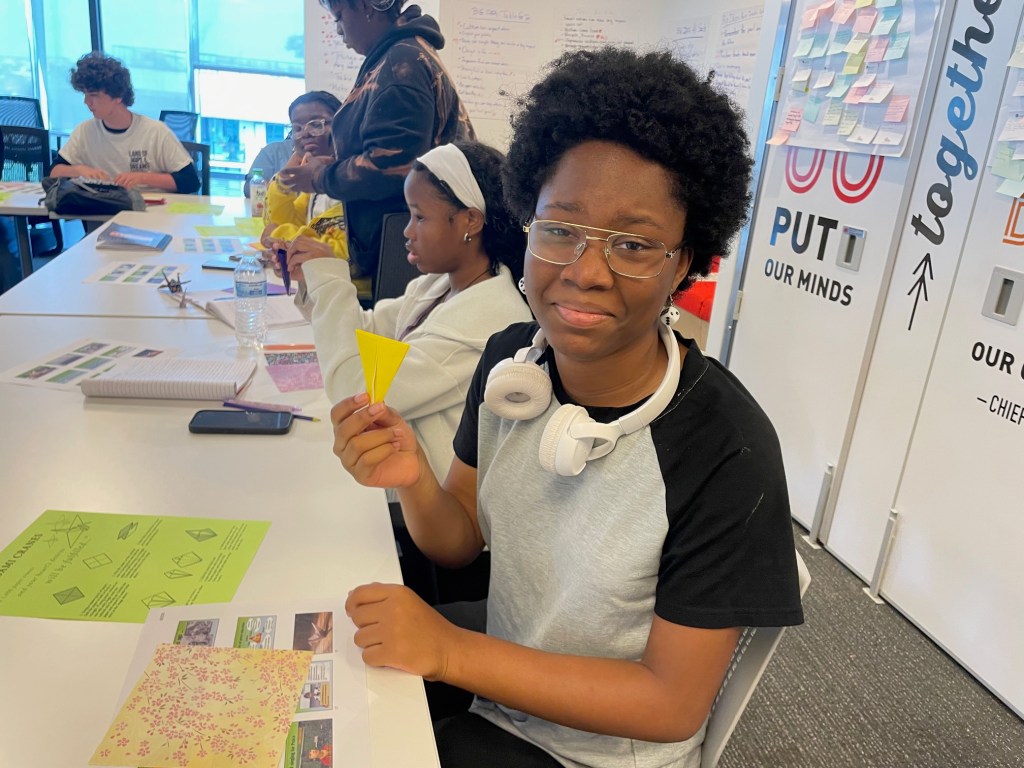
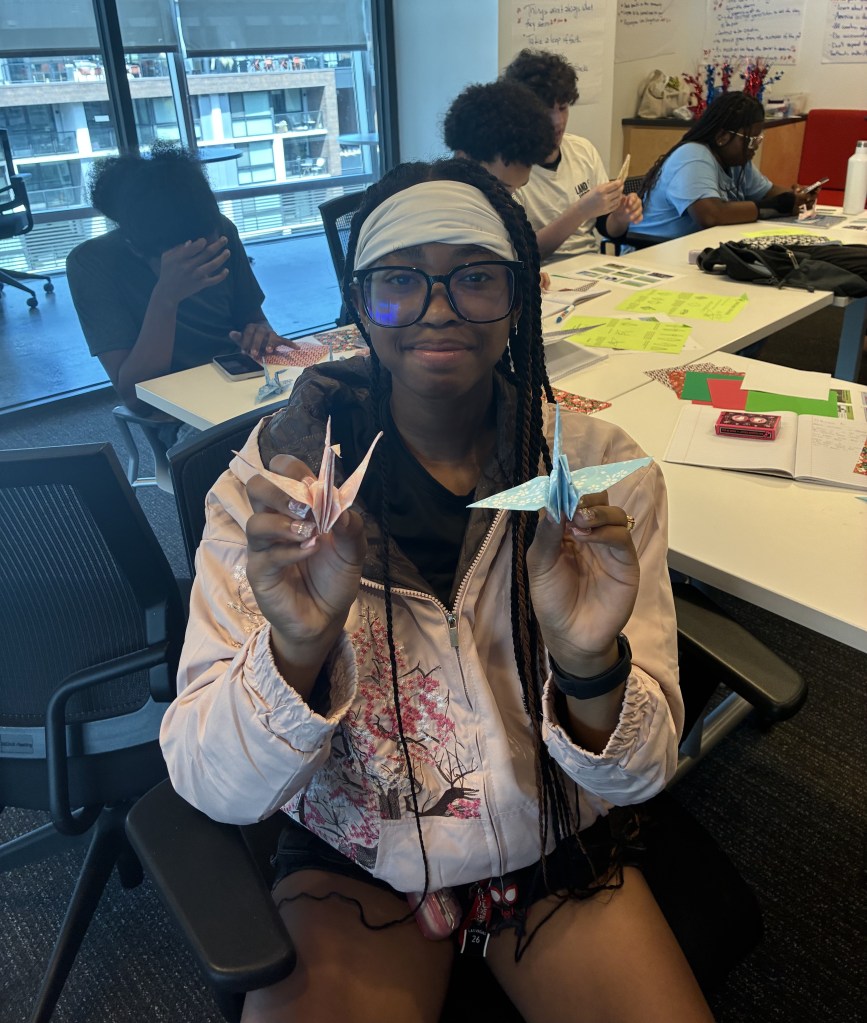
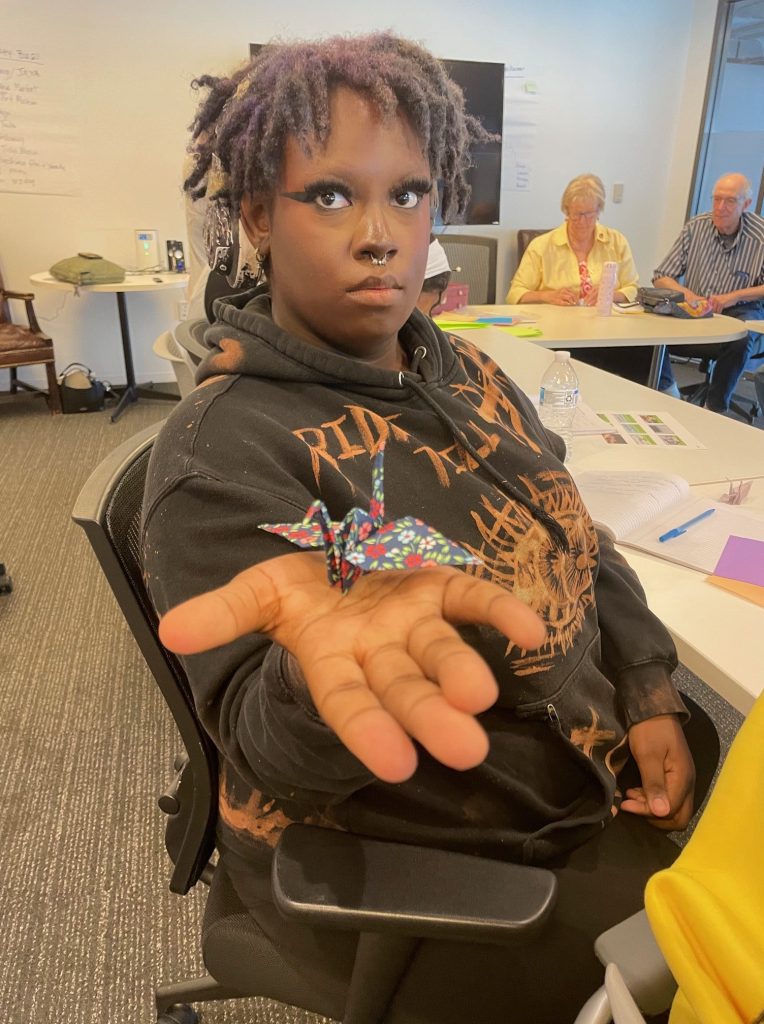
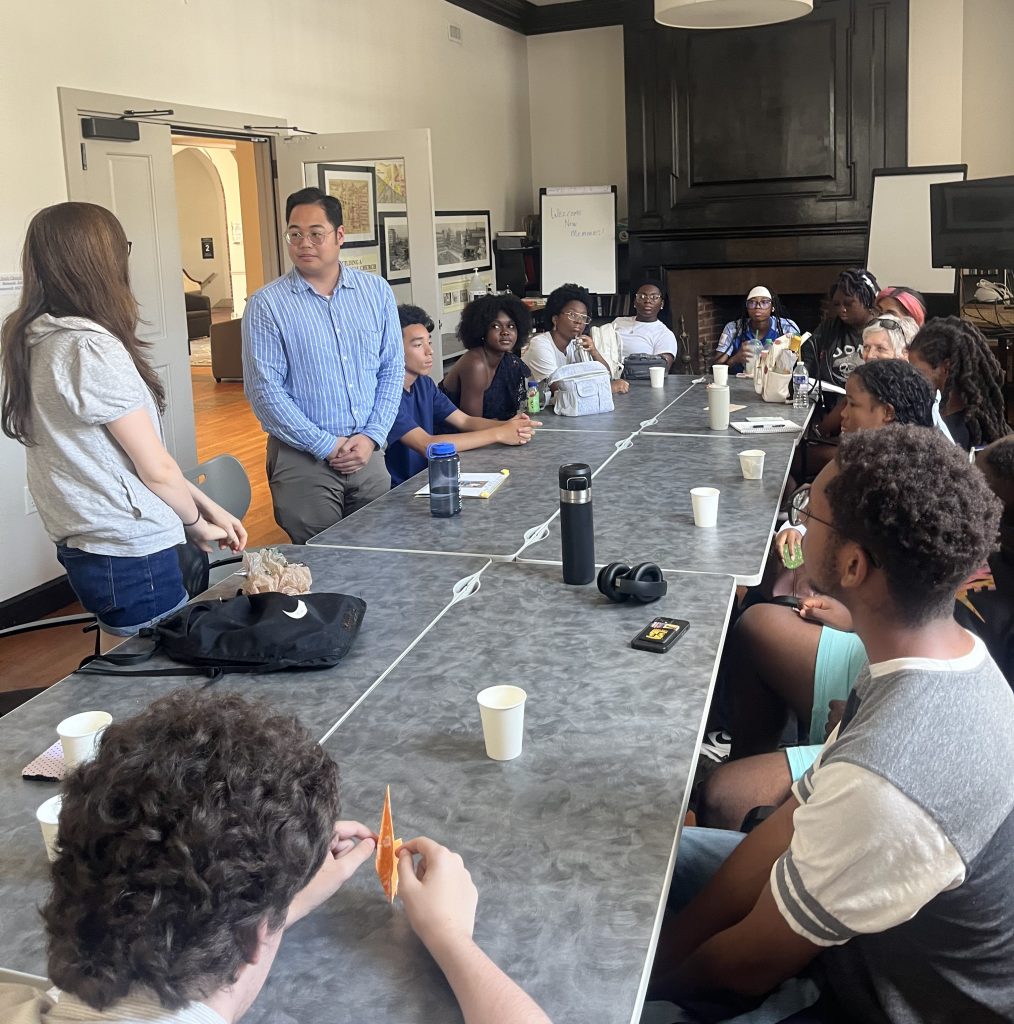
Our guests for this program were Akiko Clifford, Vice President; Eriko Meneses, and Anne Statland. Akiko-san and Eriko-san presented engaging information on the unique history and culture of Okinawa. We learned about the devastating Battle of Okinawa in 1945 that killed over 200,000 Americans and Okinawans, both military and civilian, and we learned about how this tragedy is remembered today, through “IREI NO HI” (Okinawa Memorial Day) and Peace Education Month commemorated in June in Okinawan schools. Anne-san, an American whose parents arrived in Okinawa one year after the end of the war, and who was born a few years later in 1949, shared personal memories from her childhood in Okinawa. Many tears were shed during this memorable presentation. Then the fun began with a workshop creating origami cranes and Akiko-san played the sanshin, a traditional Okinawan three stringed instrument, similar to a banjo. Very special thanks to Kristen Luck, from the Okinawa Collection and Japan Resource Center at George Washington University, and Lisa Ball from Okinawa Kai for helping to arrange this very special visit.
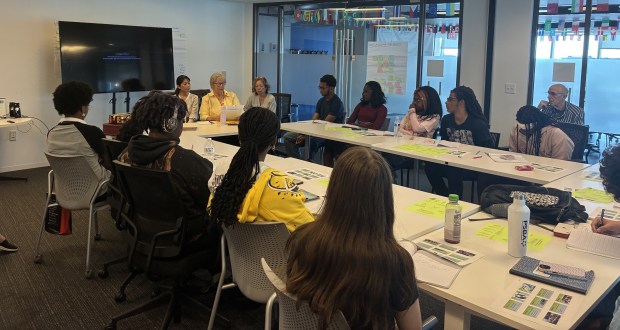
We invite you to read our students’ personal reflections below.
Honesti:
The Okinawa Kai visit was a wonderful experience that I loved. The speakers – Anne, Eriko, and Akiko – were so sweet and lively during the visit. It was so lively throughout except for when they talked about the battle of Okinawa. It shocked me for how easy it was for these kids after the war to be able to go to the caves on the war site and find bullets or other remnants from the battle. That made me feel so hurt for the people involved and all of the lives lost. The video with the song from the elementary kids was so heartwarming and sweet, especially hearing that most of them had grandparents who lived through that time and how much the kids felt for them. Afterwards at the presentation, being taught how to make cranes was so fun even if I struggled with it. It makes me want to know more origami besides just cranes.
Lauren:
The short video of elementary school kids singing peace songs made the biggest impact on me. Watching the video made me feel bad but made me realize these kids have so much empathy. There were two kids crying about their great grandmother’s siblings. I admire their empathy and sadness for someone they never had the chance to meet in life. A life lesson I would take away is to always advocate for peace.
Aston:
The part of the program with the biggest impact on me was Anne’s story because of how emotional it was. I felt curious to learn more about Okinawa. Life lesson: Keep your family close even during hard times.
Blessing:
The biggest impact was the music that the kids sing. It was so emotional and had so much impact. I feel so sad about the kids who lost their parents and brother because of the bombs during World War II. I learned about the musical instrument made with a snake – the sanshin. Life lessons: Make people feel better after the storms. Find something to bring people together to feel better and find peace.
Zaevior:
Learning about the song that Okinawan kids sing on the Japanese Memorial Day from Eriko left a mark on me. In America, there is no real “ritual” we have for Memorial Day. During this visit I felt a slight sense of unease learning about the Okinawa war, since one of the images depicted was a young child waving a white flag. This relates slightly to Iwo Jima, another battle fought in Japan by American and Japanese forces.
A lesson to be taken away is to make sure you remember the past and those who fought for you.
Morgan:
The biggest impact of the presentation to me was the song of peace that a teacher from Okinawa composed 20 years ago. Its message of peace not only spread through schools in Okinawa, but also all over the country. That was also a very fun presentation. The sanshin performance was very beautiful. I learned how to fold a paper crane. It was certainly not easy. Also, I learned that folding 1,000 of them allows for your heart’s desires to come true, and that the crane is a great symbol for peace. Also June is recognized as Peace Education Month in Okinawa.
Life lesson: Spread the message of peace so that the world may not know war.
Kiya:
The parts that had the biggest impact on me were about the film mainly. Mostly because of seeing the kids cry and talk about how war affected them. I can kinda relate to it. Also I loved the crane origami workshop. I learned that kids in school learn a peace song to remember the day of the finishing of the war as a sign of peace. The message I always take away from programs like this is violence is never the answer.
Madisen:
The Okinawa school children singing about peace and crying for their grandparents impacted me the most because despite not being present in the war they still mourn for their family. I find it heartwarming that at such a young age they are able to understand complex ideas and understand the significance of peace. I noticed that for a lot of the Okinawa Kai members, talking about the war on Okinawa is very emotional for them. However, the presenters seemed happy to teach us about Okinawan culture and the events that they had to honor it.
A life lesson I would take away from the Okinawa Kai presentation is to preserve the stories of the past to always choose peace.
Pippa:
I think it was nice how we got to learn about Okinawa in different ways, first with the informational slide show, then the videos about war, and then first hand experience from Anne-san. It gave us a comprehensive view of Okinawa. Learning about the war in Okinawa showed that war affected many different people in Japan, not just Hiroshima/Nagasaki. What made the greatest impact on me was the video they showed about the kids singing in honor of peace. I was stricken by how even though they hadn’t experienced war themselves, they were very passionate about carrying the message of peace. Also when the little girls started crying when talking about their grandparents/relatives that had died, the fact that they still cared so much about more distant relatives was very touching.
Life lesson: Never forget or stop caring about the past.
Demetris:
I enjoyed how the speakers from Okinawa Kai explained the history of their nation and people and how different major things were made in Okinawa, like karate, and eisa, a dance that celebrates and honors ancestors during the Obon festival, as well as having the most long living people in the world. I also learned that the Battle of Okinawa, which didn’t end until June 23, 1945, had about 200,000 lives lost (a mix of US & Japanese soldiers and Okinawan people).
Jaylen:
The part that made the biggest impact on me was the crane making because now that I learned once, I can do it 1,000 more times and if I do, I hopefully get my heart’s desire. I observed that a lot of people need to be a lot more zen because they were getting mad at a piece of paper.