The Life of a Diplomat: Our Visit to the US State Department

A central focus for our students in the 2026 Japan in DC program was on the history and nature of the US-Japan relationship. The question we kept coming back to over the summer was this – how have our two countries moved forward from war, mutual hatred and destruction during World War II to our strong alliance and friendship of today? Part of the answer can be found in the critical work of diplomats, and so we were thrilled to arrange for Japan in DC’s first visit ever to the US Department of State, thanks to the efforts of Lauren K. Fischer and Ciara Koepke at the National Museum of American Diplomacy. The program was rich in content, engaging, and gave our students the opportunity to imagine and experience what the life and work of a diplomat is all about.

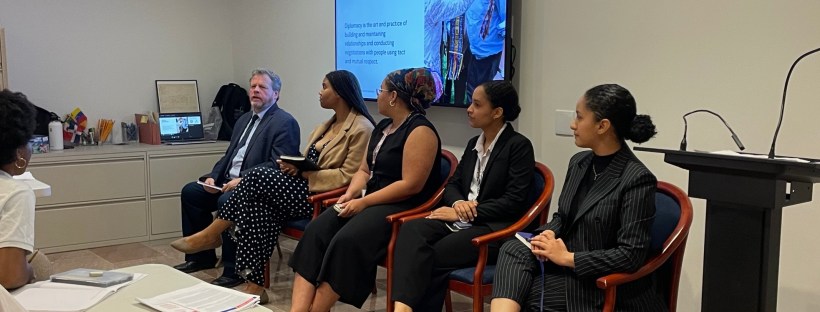
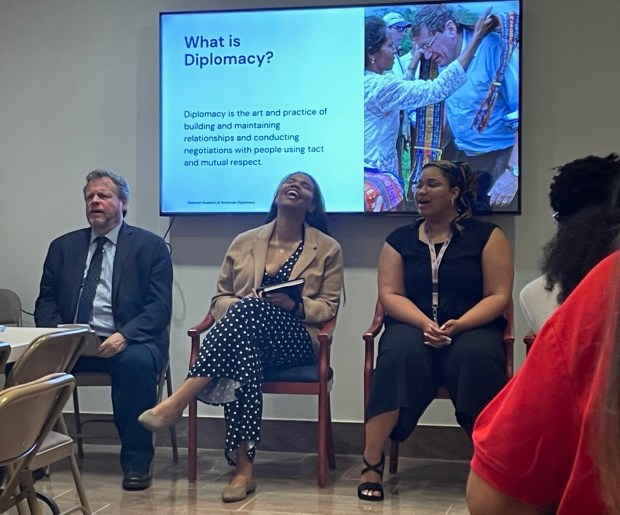
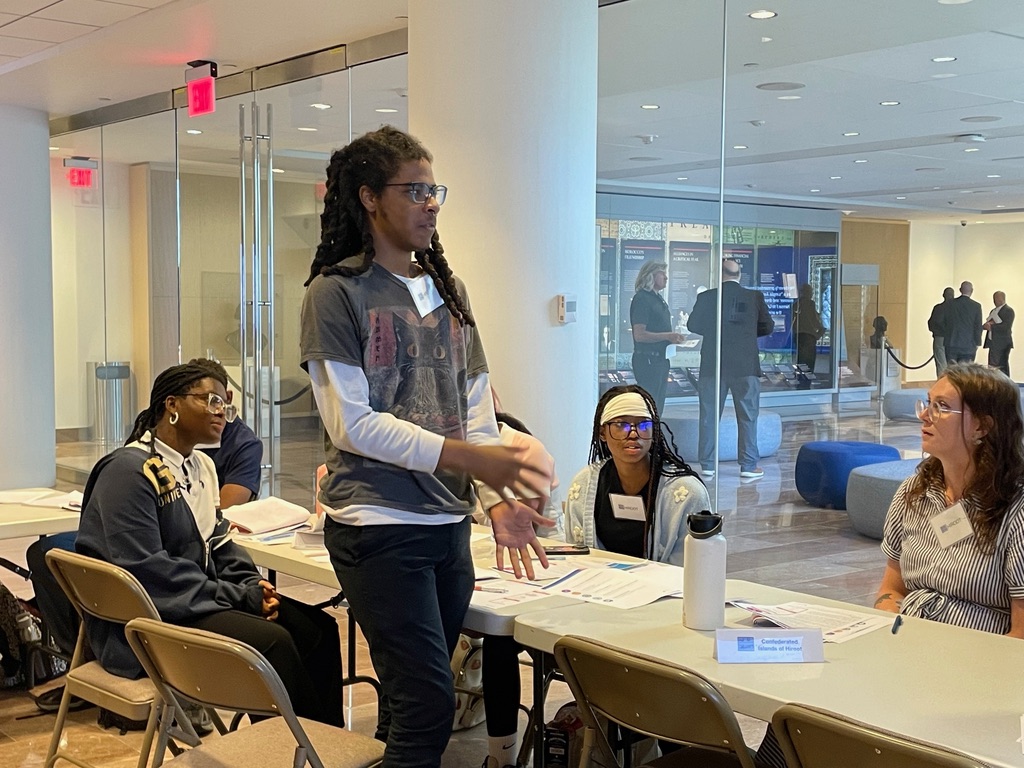
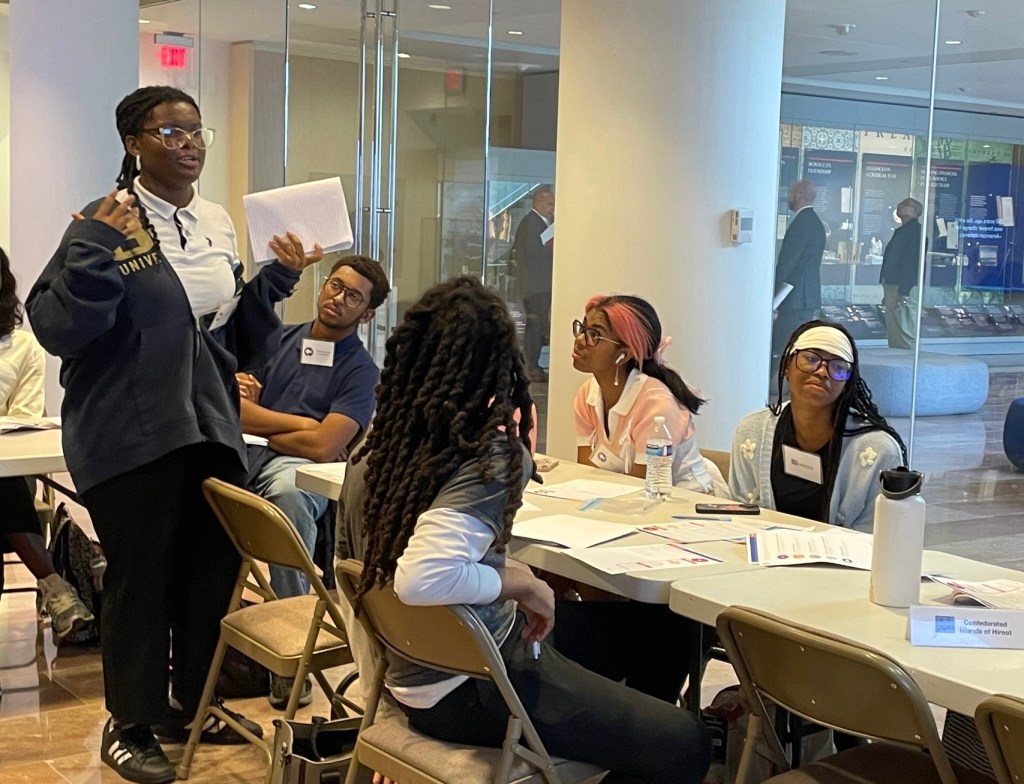
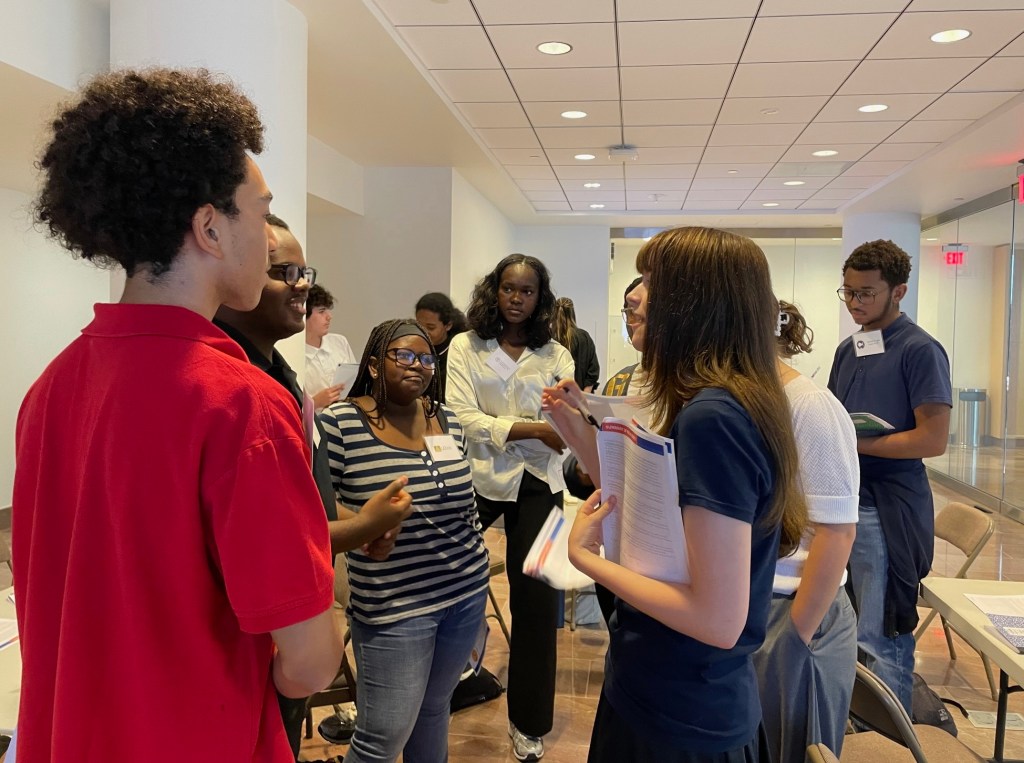
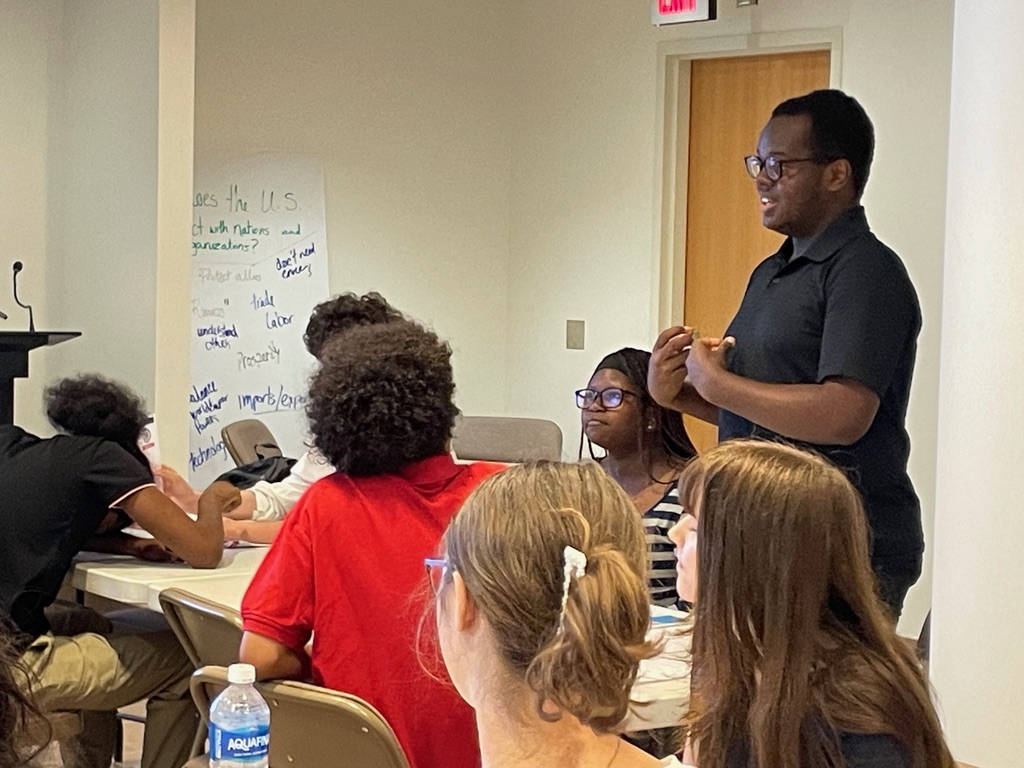
Our visit took place on Thursday morning, July 30, at the National Museum of American Diplomacy. It began with an overview of the “what” and “how” of diplomacy, followed by a simulation involving our students in a hypothetical international negotiation around the issue of overfishing and increasingly scarce fish resources. This intense experience was followed by an informal career panel, composed of young US State Department professionals, with considerable time built in for Q&A and discussion. The panel was organized and led by Tim Marshall of the East Asian and Pacific Programs Branch of the US Department of State. He was joined by colleagues Alithea McFarlane, Kylie Del Rosario, Clemencia El Antouri, and Lia Silva – all in the Bureau of East Asian and Pacific Affairs.

In our reflections we ask the students what aspect of the visit had the biggest impact, what lessons they learned, and how this program connected with other Japan in DC experiences.

Aston:
The part of the program that interested me the most would have been the simulation since it gave me a point of view of a meeting like that. I felt excited to be able to hear experiences from diplomats. The information learned here connected to our earlier visit to the Embassy of Japan.

Blessing:
The thing that had a big impact on me was the story of the five people we saw yesterday. Their stories were interesting and we learned about new programs. I feel so happy to hear that they speak many languages and had the opportunity to get into this program. I really liked to see them talking about their stories. This experience is related to the JET program, because the young people we heard from have many options and opportunities to learn something new in a new country.

Life lesson: Do not be afraid of something new.

Malia:
The part of the program that made the biggest impact on me was having the experience of being a diplomat. It showed me the process of making decisions through governments. I felt invested. It reminded me of relations with Japan and China. I learned that it takes a process in order to make decisions that involve different governments.

Lauren:
The part of the program that made the biggest impact on me was listening to the group of people speak, because they made it seem so easy to talk to them. It didn’t feel like a professional talk. They were laughing and made a few jokes, which made it feel more comfortable rather than having a total serious conversation. I also felt very happy doing the Uzan and Hiroot fishing simulation because it reminded me so much of when I did Model UN in middle school, which I enjoyed so much.

Demetris:
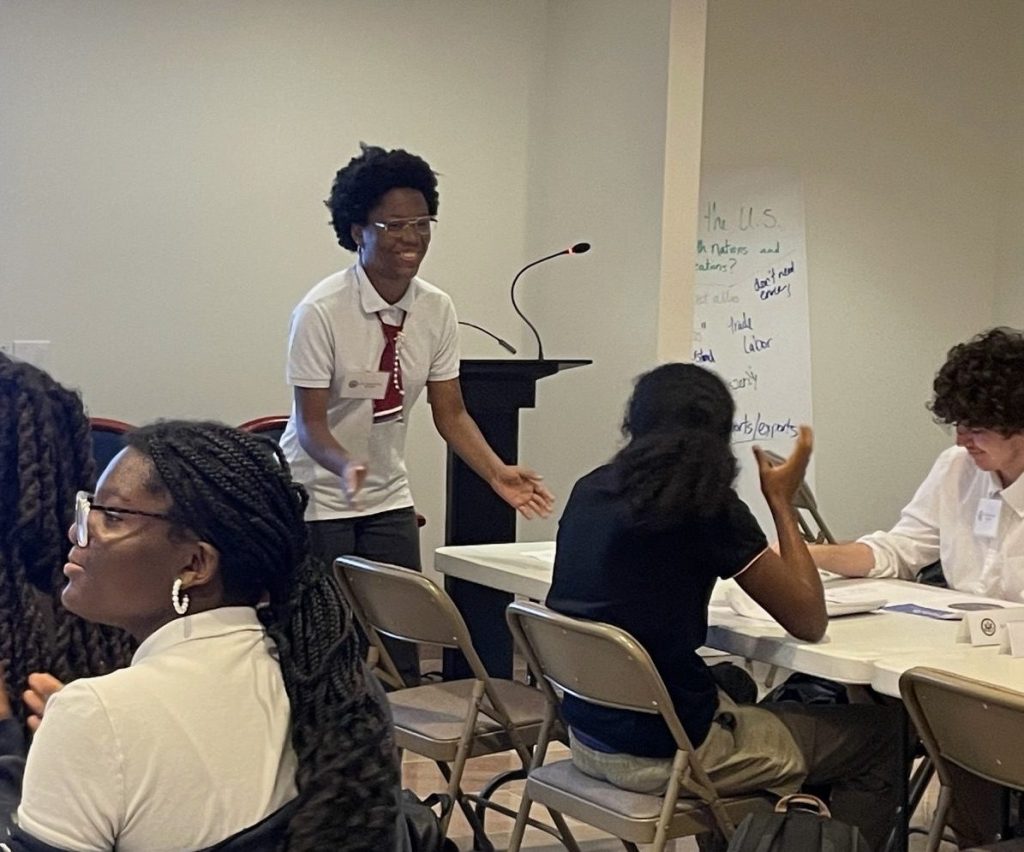
The part of the program that impacted me the most was how we played the roles of different groups and learned how to come to an agreement (ended OK but badly in a way), but my group was the State Department itself. To be honest, I was pretty happy because I love to learn about government, countries, and geography a lot. Relationships with countries take a long time to make and I learned how different people all need to learn languages to work.

Life lesson: “Relationships are all the same, human or not.”

Jaylen:
The part that made the biggest impact on me was when I heard that some of the diplomats actually read about us, and it stuck because I think it’s nice that they had an opportunity to get to know me before meeting me. The information they related to earlier was maybe the fact that some of them studied abroad in Japan.

Life lesson: You can’t please everyone.

Pippa:
The part that made the biggest impact on me was the simulation, because I thought it was really good in giving us insight into the job of a diplomat and I also just thought it was a fun experience. I thought it was good because the combination of the simulation as well as the panel made it so that we got different types of learning out of it. We had talked to a lot of people before who worked in international affairs, so it gave us more insight into what those people we met actually do.

Life lesson: If you like world cultures and languages, you don’t have to devote yourself to learning about only one. It’s also good to be interested in and learn about multiple at a time.

Madisen:
I liked the simulation about illegal fishing because it was fun to think with a team and discuss/argue with others. The mock negotiation also reminded me of Model UN, which I also enjoy at times. I learned that sometimes you need to make sacrifices for your job. For example, the people who work for the State Department can be out of the country for months, and missing family or important events like weddings. I also learned that it can take months of intensive language training when working for a State Department branch requiring a foreign language.

Morgan:
What we talked about and the problem we solved showed me how stressful it is being a diplomat. I didn’t like that. I did not like being a diplomat. I don’t think that’s gonna be on my job list. I also learned that being a diplomat means constant learning, being on the move, and being prepared for pop-up assignments.
Mary Murakami

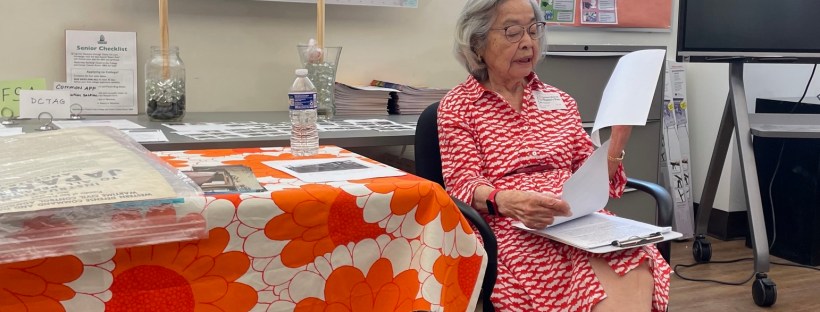
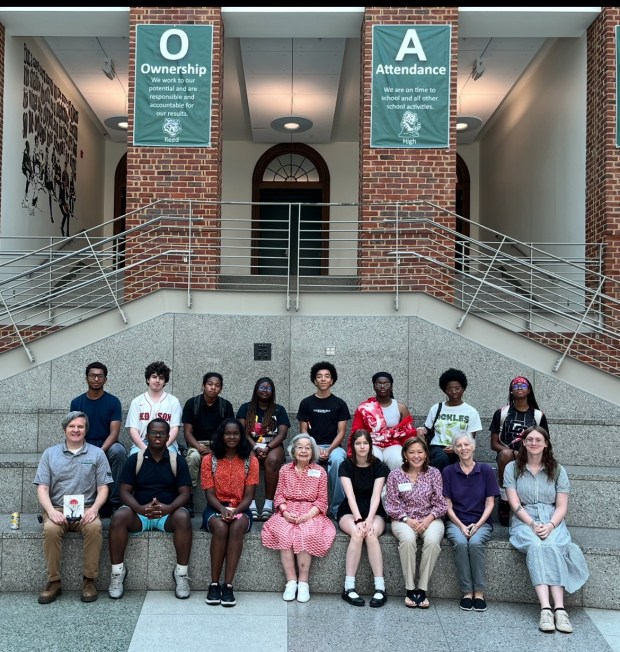
Note from the Program Director: On Friday morning, July 24, Japan in DC had the honor to meet with Mary Murakami to hear the story of her experience as a teenager living through one of the darkest chapters of American history – the incarceration of Japanese Americans during World War II. Mary was accompanied by her daughter, Kimi Murakami, who provided additional information and context.

Mary was 14 years old when the Japanese bombed Pearl Harbor in 1941, leading to the entry of the US into the war, followed by President Franklin D. Roosevelt’s signing of Executive Order 9066 in February 1942, which led to the incarceration of approximately 120,000 men, women, and children of Japanese descent – most American citizens. Mary described to our students in great detail what happened to her and her family before, during, and after her incarceration at Topaz Camp. Despite unbelievable hardships and disruptions to her high school education, through persistence Mary went on to attend the University of California at Berkeley, to earn her degree in public health/microbiology, and have a successful career as a microbiologist. We are so grateful that Mary has become a regular visitor to Globalize DC’s Japan programs. Mary is now 99 years old. She is a masterful storyteller. Her unrelenting commitment to sharing her experience and wisdom with younger generations is awe-inspiring, and our students felt the impact of this experience. Here are some of their reactions.

Special thanks to Jackson-Reed High School and Assistant Principal Marc Minsker for hosting this program, and inviting students from the school’s Academy of Global Studies and Diplomacy to join us as well.


Lauren:
The part of Mary’s story that made the biggest impact on me was at the start when she told us she was around our age going through this. Especially when she said she eventually could not attend school. I can’t imagine not being able to go to school, having to move into a camp in the middle of nowhere with my family and having to sell everything I couldn’t take with me. That part of her story impacted me most. A few feelings I have about Mary and the overall experience is proud, empathetic, and disappointed. I felt proud hearing Mary’s story, because even though she is 99, she is still able to go out and tell her story so that the next generation can carry it on. I felt empathetic because even though African Americans weren’t put into camps like Japanese Americans, they were still treated as badly, so hearing her side of the internment camps made me feel very empathetic. Lastly, I felt very disappointed with the US government because the US might not have been that diverse then, but people still should have been taught to treat others with respect no matter their gender or race. A life lesson I would probably take away is what she said at the end, “Remember your civil rights.” That is so important especially with what’s going on right now with ICE and deportation.

Christian:
The lessons I learned are that civil rights and the American dream should be something that nobody should be able to stop – not the government or any person. And lives may seem hard but will get better through will and hope.

Jaylen:
The part of Mary’s story that made the biggest impact on me was the part where she was answering a question about question 27 and 28 of the loyalty questionnaire. This really impacted me because she talked about families being separated and that is such an important thing to me because putting myself in their shoes, being around my age, being as clueless as I am, it would be really scary and I am not sure if I would have been able to do it. Beyond the story, I felt that this experience, similar to Gerald Yamada, was a great thing because it shows (no offence) that the history from back then is fleeting and we might not have much more time with these people so we should cherish our time with them. I think cherishing our time and listening to our elders is actually good for us and so that we can carry on the legacy of the past generations.

Malia:
The part of Mary’s story that had the biggest impact on me is when she talked about how her dad didn’t believe that Japan and the US were at war. It shows that the most unexpected things can have big impacts. I feel like it’s good that she is able to share her experience so that people can make an effort so it won’t happen again. A life lesson I will take away is to always try to protect my civil rights. Because you never know when they can be taken from you.

Pippa:
The part of Mary’s story that made the biggest impact on me was when she talked about how it was really difficult for her to receive an education, because even though it seems like she was really bright, she experienced a huge obstacle that stopped her from fulfilling her potential and living a normal life, and I think that goes for everyone in the camps, not just school kids. On the other hand, I thought the fact that she was still able to get into college was very uplifting. I thought it was interesting how she said, “at this point, this experience is a very small fraction of my life, but it still stays with me.” It shows that even though some historical events like this only lasted a short amount of time, the actual impact they have on people’s lives is immeasurable. I also thought Mary’s perseverance throughout it all was admirable. The life lesson I take away is, like she said, it’s important to protect civil rights. Her experience shows what can happen when they are ignored and so it’s really important to be active in defending and fighting for civil rights even now.

Blessing:
The part of Mary’s story that made a big impact on me is how her education was very difficult for her and she missed her 9th grade, but did not give up on her education and still tried to find a way to go to the university after World War II. I feel like she is a strong woman because of the way and circumstance that she was living as a teen was very bad. I observed that she is a person that gets the thing that they want and has a strong family that did some of the things to help them survive during the time they were in the camps.

Madisen:
Mary’s story of returning back to society after being incarcerated made the biggest impact on me because of how difficult it was to continue her life. Mary had only just received her diploma and chose to return to California, only to face racial discrimination. Because the government chose to negatively represent Asians, many Americans did not like Asians or Asian-Americans or want them in their community. This impacted me because of how unfair it must’ve been for Asian Americans continuing their life in America. I observed that Mary hadn’t been particularly depressed during this time in her life. Although she explained that her time at the camp was rough and often violent, she didn’t let that deter her. Mary had also described how fortunate her family was to receive rooms and overall be with each other, unlike many families who were separated. A life lesson I may take from Mary’s presentation is to preserve your education. When Mary and her family were incarcerated, she had to stop school for a time, and even before the camps she couldn’t go to school because of the curfew put on Japanese people. However, the incarceration camps did not stop her from trying to get her education.

Aston:
I was deeply inspired when she had told us about the daily life of the kids in the camps because it showed me that you and the people around you can enjoy yourselves within dark times. From the overall experience I felt determined to take this knowledge and use it to try to prevent this from ever happening again. The life lesson I’ll take away – that even when you find yourself in a dark time, you can still come back stronger.

Liam:
The part of Mary’s story that had the biggest impact on me was when she talked about her life before the camps, especially when she talked about how the FBI would go through Japantown and the Army blocking off streets. I’m not really sure why but that stuck with me. The life lesson I took away from Mary’s story is when she said “strive to do right without violence” at the end.

Morgan:
The part where Mary said she originally wanted to answer “No. No” to question 27.28, but her family made a group decision to answer “Yes. Yes.” Those two questions sparked many fights and deaths inside the camps, and separated families because people who answered “No. No,” “Yes. No,” or “No. Yes” were considered disloyal and were relocated. I might take away the fact that sometimes you have to make do with what you have, because life will not always be kind to you. Also, to live is to keep going, even in the face of adversity. $25 and a train ticket . . .  and she became a biochemist!!


From Presentation to Nutrition: What I Learned

By Malia Butler

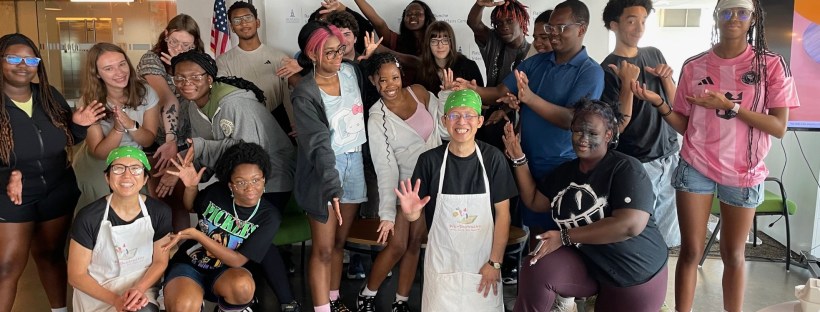
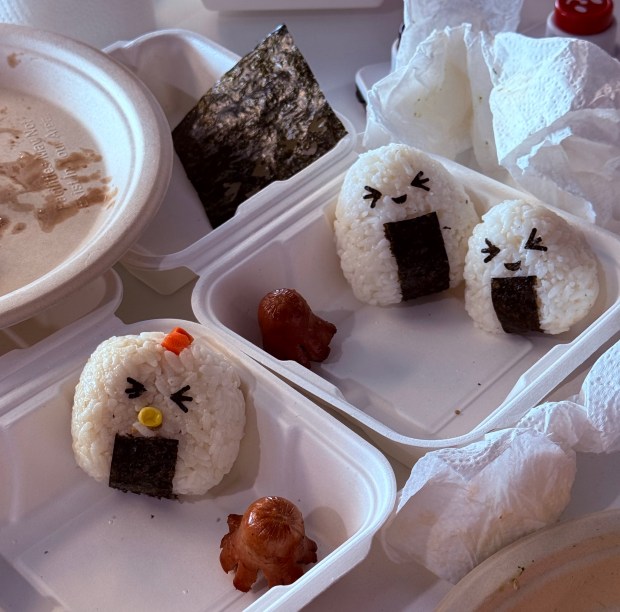
Onigiri is a handheld snack made from steamed rice, typically formed into a triangle ball or a shape of choice and often wrapped in nori (seaweed). A bento box is a single-portion meal, either homemade or store bought, packed into a container portioned off. Onigiri and bento boxes are well known in Japan. When I made bento boxes and onigiri for the first time, I learned that presentation is key. In Japan before people eat, you have to appreciate the presentation of your food, by looking at the decorations and the thought put into it. “Before eating you have to eat with your eyes,” which is what Ms. Miwako Felix said from the “Table for Two” organization. Another thing that I learned is before eating a meal you have to say “itadakimasu,” and after a meal you have to say “gochi sou sama deshite.” The reason they do this is to show appreciation to farmers, vendors, and cooks.

Something that I learned that affected me personally is that when making bento boxes they focus on nutrition. When making bento boxes, every meal has to be balanced, so in order to do that they use the 3:2:1 ratio. For the 3 part, this is used as a base. People often use it for steamed rice. For the 2 part, this is used as a main dish, usually meant for a various amount of protein. For the 1 part, this is used for a side, often used for different types of vegetables. Both the 2 and 1 part of the ratio can help with keeping someone energized throughout the day, because each have a specific amount that can keep you energized. Based on this experience, I learned how to make a balanced meal. This can help me on my daily life, because as an athlete it can help me to have energy for sports.