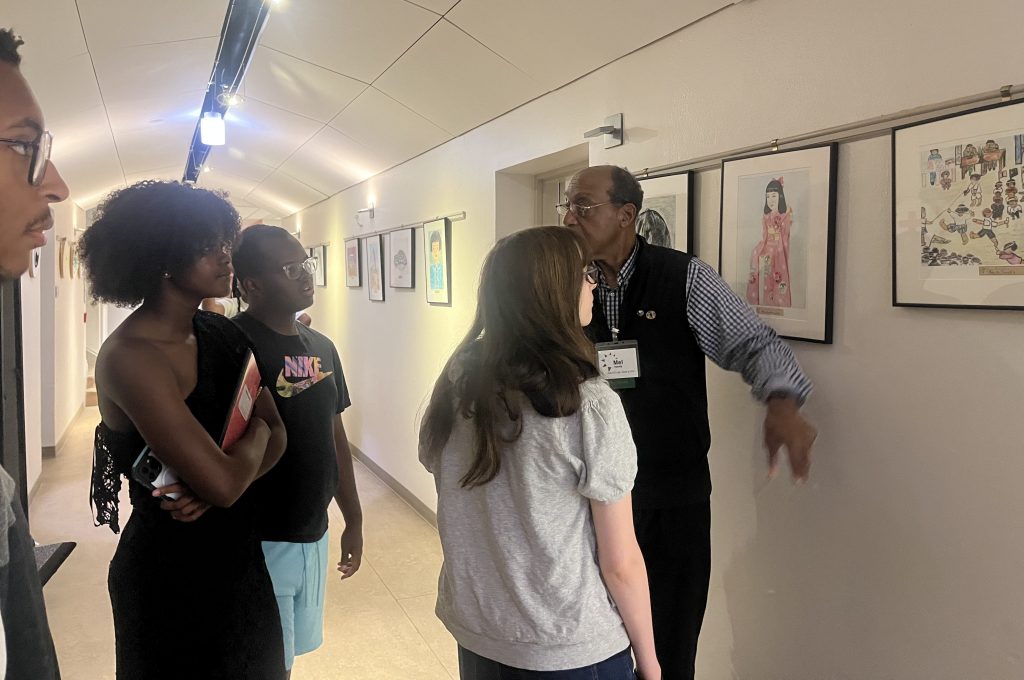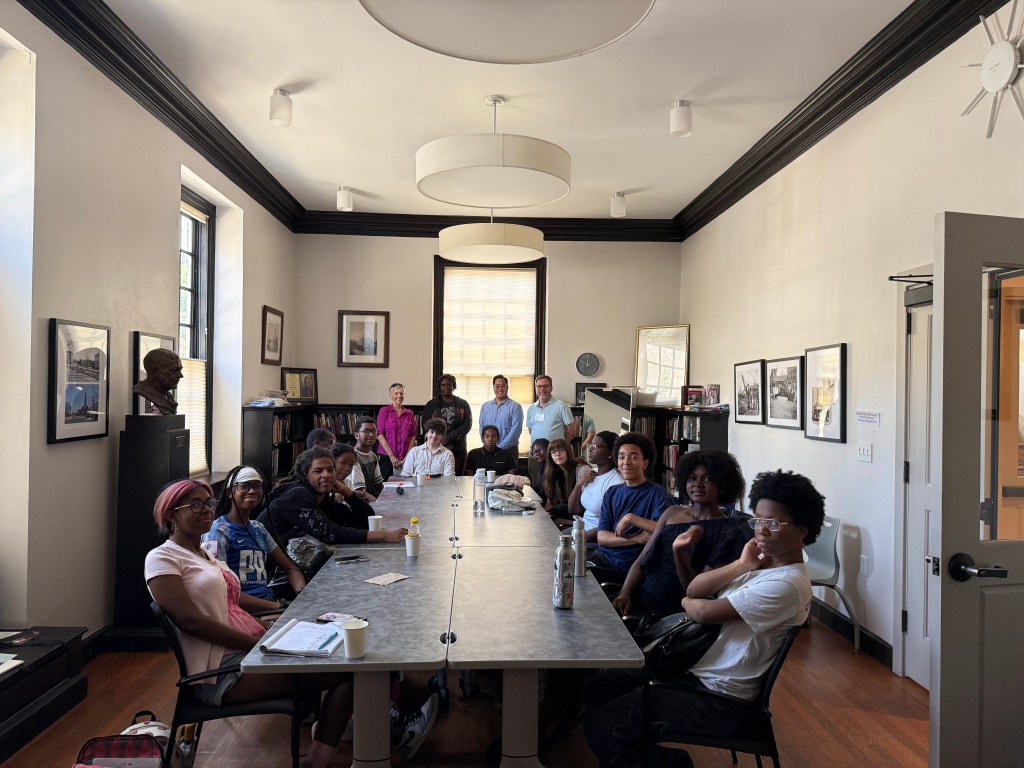
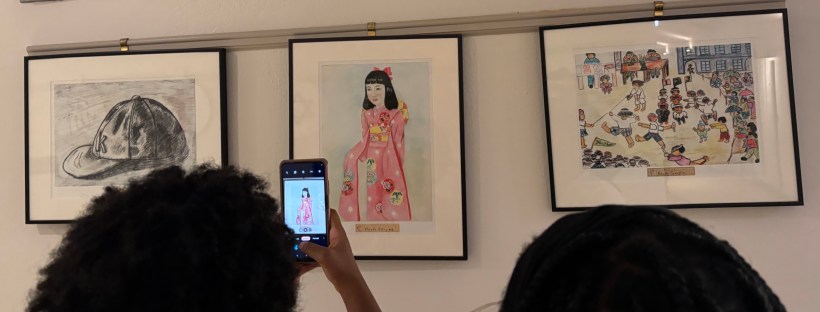
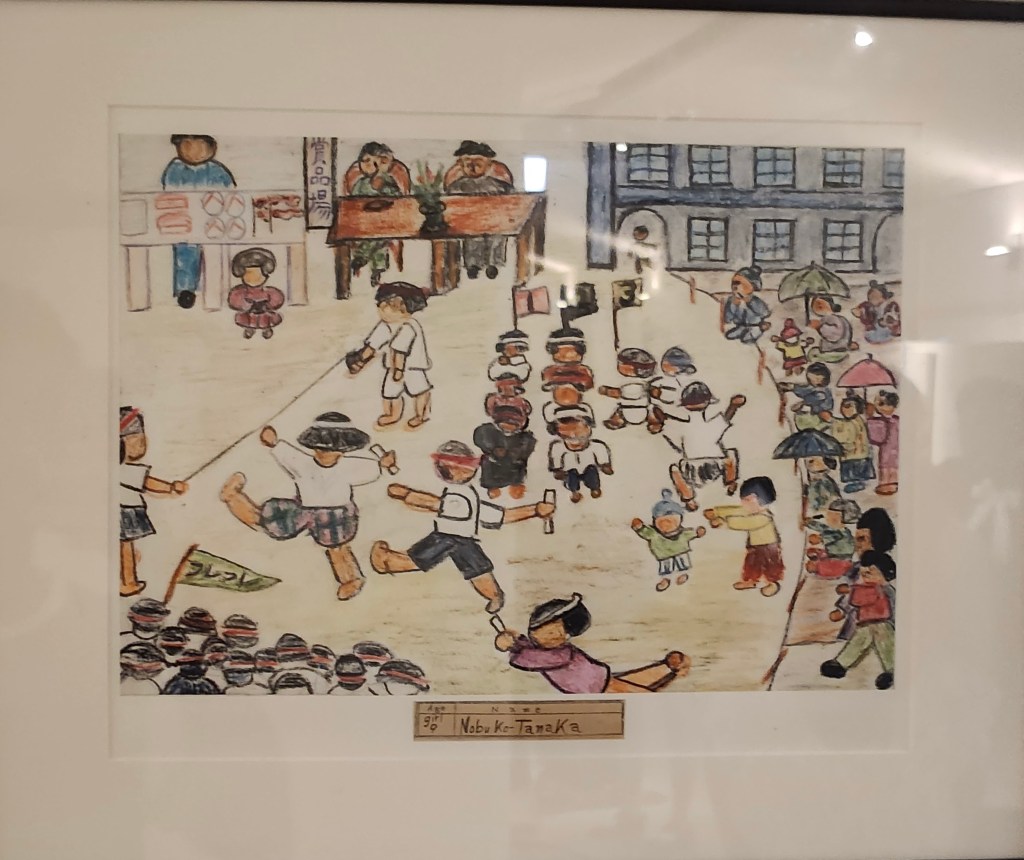
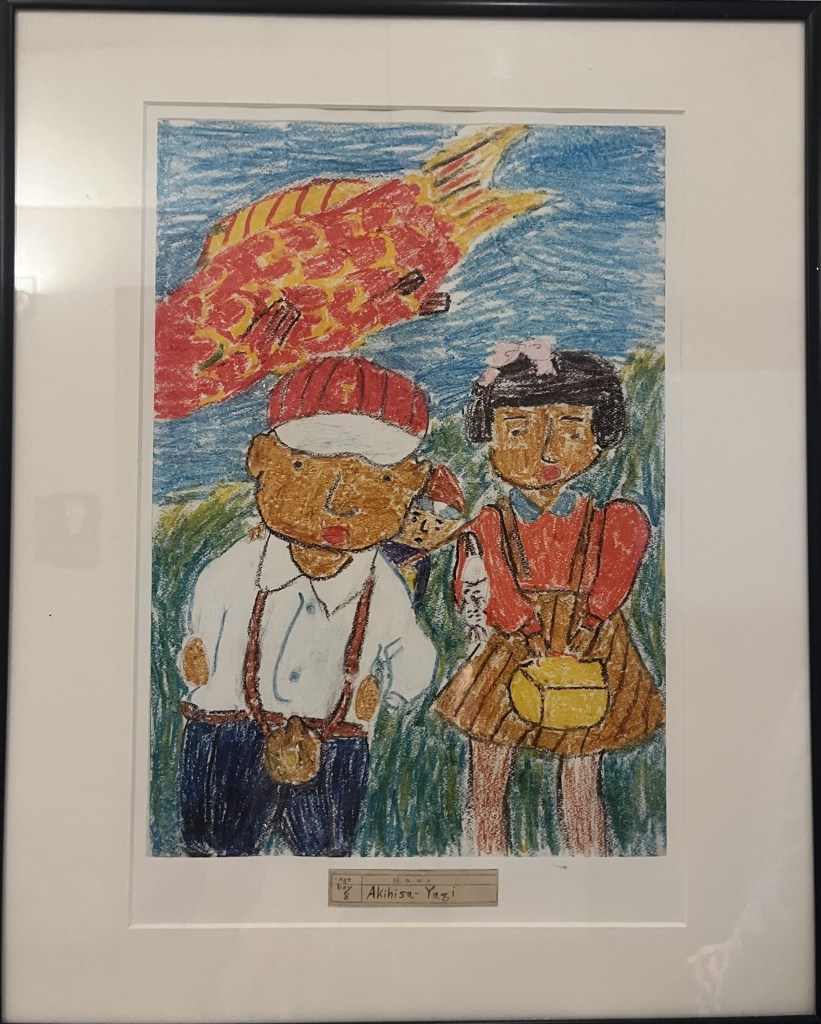
NOTE FROM THE PROGRAM DIRECTOR: A visit to All Souls Church Unitarian on 16th Street, at the intersection of Mt. Pleasant, Adams Morgan, and Columbia Heights, is the experience we look forward to in each Japan in DC program. All Souls is a historic DC church with a strong social justice tradition. After World War II, the children of All Souls collected art supplies to send to the surviving children of an elementary school in Hiroshima, Japan, devastated by the atomic bomb dropped on their city by the United States. This gesture of support from the All Souls community was reciprocated when they much later and unexpectedly received a box of children’s drawings from these same children as a gesture of appreciation. During our visit on July 14 our students were able to view this extraordinary exhibit of Hiroshima Children’s Drawings. We were welcomed by Rev. Rob Keithan, Charles Wooldridge, and peace activist Mel Hardy who shared information on the church, the history of this project, and the church’s ongoing Heiwa Peace Project.
This incredible history is documented in the film Pictures from a Hiroshima Schoolyard, which our students watched the day before our visit to the church. You can find the film streaming on a number of platforms. We highly recommend it.
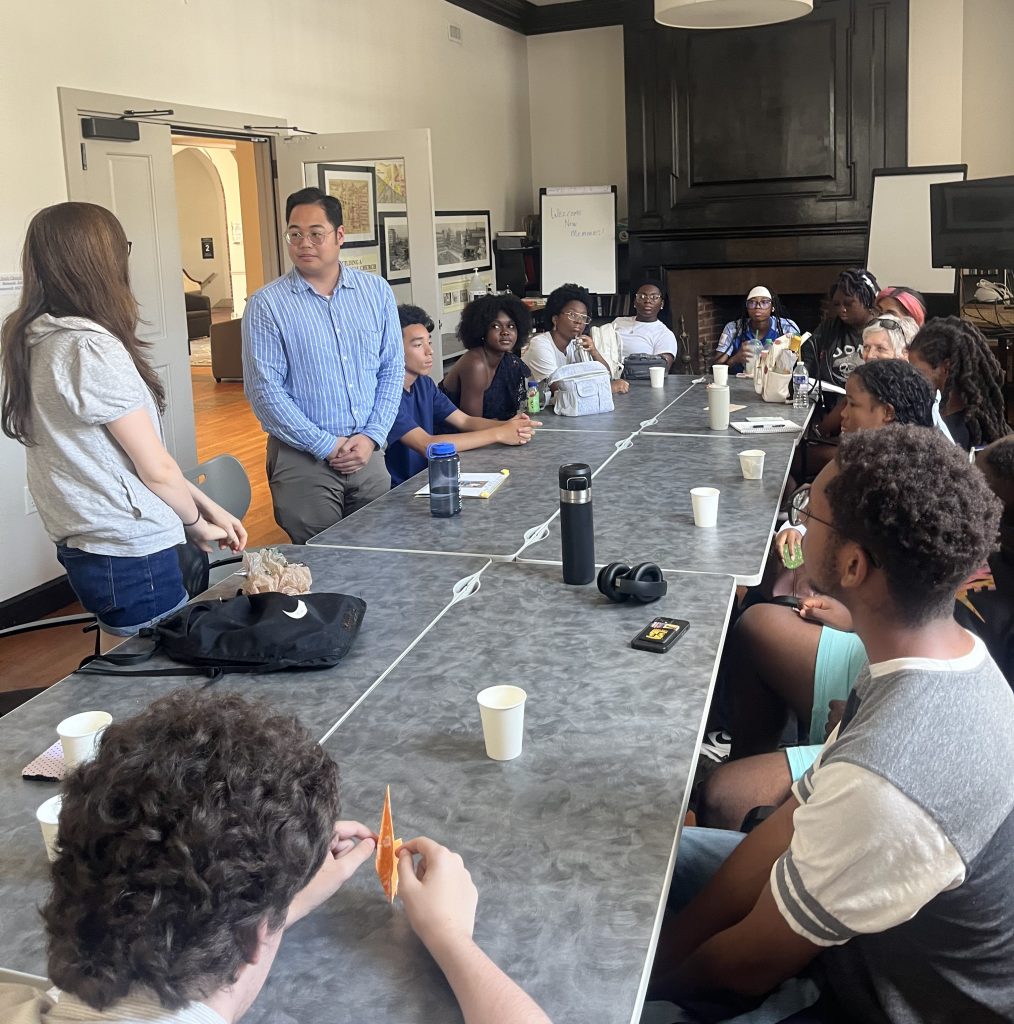
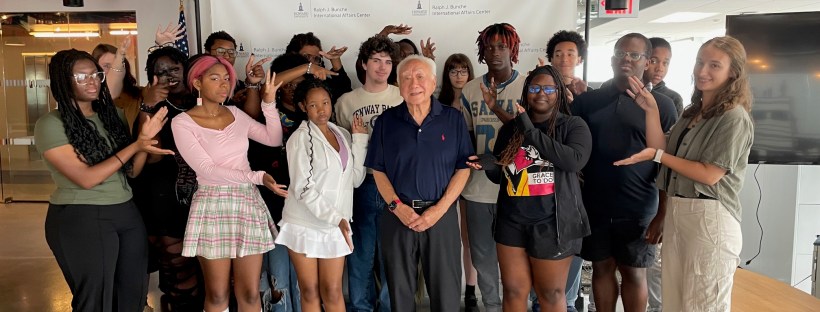
We were also joined by Karl Tan, a Public Affairs Officer at the Embassy of Japan, who spoke to our group over lunch about his experiences as a JET teacher in Nagasaki, as well as his own interest in Japan and career trajectory.
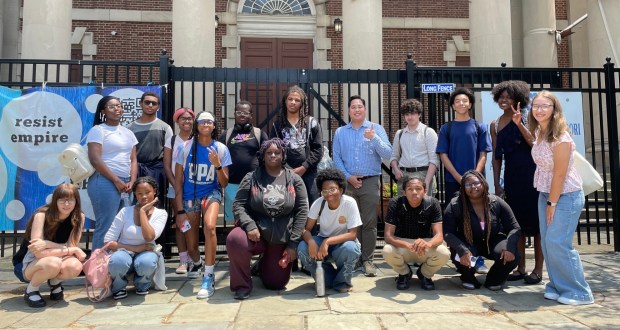
Here are some of our students’ reflections on the visit:
Kiya:
The biggest impact was how kids have so much imagination. Also the impact kids can have to bring two nations together even though they were in deep hatred with each other. My feeling mainly was how much I loved that the church is doing their best to preserve the memory and the history of the beginning of the peace between Japan and America. The lesson I learned was that after a fight you don’t have to hate that person after. Happiness and peace is always a choice and it’s a matter of if you choose it or not.
Demetris:
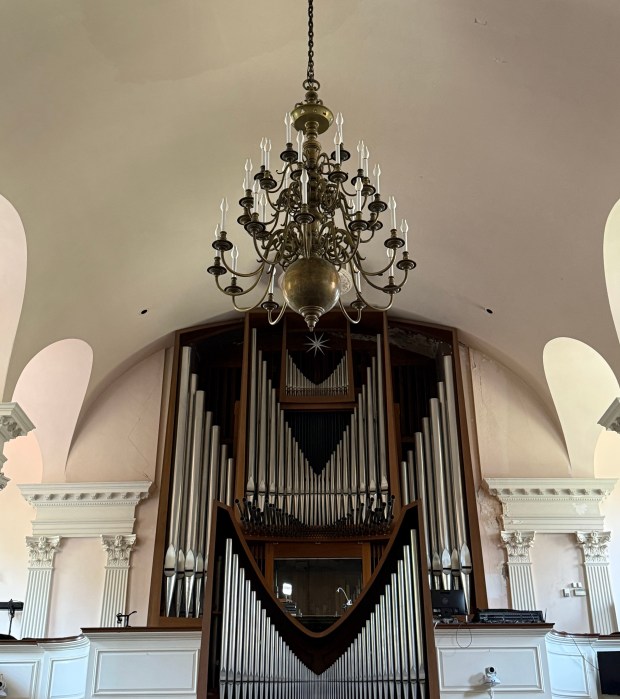
I felt a lot of an old feeling, not because we were in a church, but because it seemed old with a lot of historic things inside and it was really quiet too, so it made it more peaceful than anything. The part of the program that had a big impact on me was that All Souls Church had the drawings of kids’ artwork from Hiroshima, Japan but not only that. It was mostly on how old and how long ago it was, mostly how the drawings were made only two years after the bombs but somehow were full of color and talent. It showed the optimism of the kids and we can learn from this by seeing even in time of despair we can still see the beauty in what life has given to you.
Life lesson: “Even after devastation, they chose to see beauty in life and create it for others to see.”
Kamaya:
Seeing all the kids’ drawings made it emotional to know that the kids still had the creativity. Visiting all Souls Church taught me that there are worship communities that do so much.
Madison:
Seeing the drawings of the Japanese boys and girls in Hiroshima was the most important to me because of the nature of the art pieces. Despite facing a traumatizing experience and losing their homes and all their connections and belongings, the drawings these children drew were not negative and gloomy, but bright and colorful. This shocked me, especially with how grateful they were when receiving colored pencils from the country who bombed them and sending gifts back to the church. I enjoyed seeing the drawings of the children. Not only were they beautiful and well drawn, but they are artifacts from real people. Aside from the drawings, I enjoyed hearing about the church’s history and what they do to honor it.
A valuable lesson that could be taken from the visit is to help others no matter who they are, and you shall be rewarded.
Zaevior:
At the All Souls Church, the biggest impact for me came from the Hiroshima children’s drawings in the basement. Knowing those drawings came from preteens following their homes being bombed breaks my heart. Before going to the Church, we watched a film about it. In the film, we learned that the church had created a Heiwa Peace Project to help after the war. After the visit, an idea that stuck with me was that art can tell many stories.
Lauren:
The thing that made the biggest impact on me was seeing how the kids were able to make such happy drawings full of color after a tragedy. This impacted me deeply because I could never imagine drawing such things after losing loved ones. The visit to the church felt so wholesome because Honkawa didn’t have to send anything back after receiving the supplies from All Souls, but instead of sending a thank you card they sent beautiful drawings which shows how kind Honkawa Elementary was to a nation that killed so many of their people.
A life lesson I would take away is to not let anything dim your happiness and kindness.
Aston:
The most impactful part of the program to me would be the pictures that the kids made since they could show how life was for them or even a symbolic reflection of their current life situation. I felt amazed because of their artistic abilities.
DeVonte:
The part that surprised me the most was how the paintings weren’t bad, like they showed colorful and heartwarming paintings. They didn’t show war and the chaos that just happened. I didn’t even know that a school survived and their kids drew amazing paintings that leave an impact on the world. It shows how, because of something, it didn’t affect the peoples’ minds. They could still find a way to have fun.
Christian:
The biggest impact left on me was the pictures. How they weren’t war kids’ pictures but instead colorful, bright, and of people in places stuck in time. It made me feel a great sense of calm and impressed. I liked how much history and things were inside the Church – from Austrian organs to the Japanese kids’ pictures.
Life lesson: Colors make everything better.
Blessing:
The part of the program that made a big impact on me were the children who were innocent but had to face something so terrible. So young and beautiful. All of this because of the bombs that killed their family and their home. That’s not a good thing to do to children so innocent because of their parents. I feel so bad for the baby who died on the back of his brother. That was so much pain for a kid to lose his brother so young. This experience is related to all of the things that all countries cause each other. There are people who did not even talk but yet were killed just like that.
The life lesson is to not try to fight someone who has more power than yours or you could lose your family and your peace on one day, and also learn how to rebuild what has been destroyed.
Honesti:
The program left an impact on me because of how colorful and vibrant they were able to make their drawings despite the things they saw and lived through. I was deeply hurt after the bombing and how they progressed through the horrible situation they were in. I love how they were able to visualize things in such a beautiful light even through the mess and destruction of their Hiroshima.
Jaylen:
I think the thing that stuck with me the most was the fact that the children still remembered the times before the bomb, and also the fact that they could still keep moving forward after such a devastating attack, because I feel like if my whole city was bombed and thousands of people died, I would really struggle to keep on going. Also the fact that they forgave America so easily despite how devastating the attack was. Beyond the content, I noticed that people talked about the drawings and how just little kids made them, and I think that that view is not good because I feel like anyone can do anything as long as they really want it.
Pippa:
The part that had the biggest impact on me was just looking at all the kids’ art and seeing that even though they were not given any prompt about what to draw, all of them ended up drawing something related to life before the bomb or nature. It showed that in a time like this, most people’s desire was simply to return to a normal state of things and nothing more. I thought it was really nice and it was very cool to know that most of the originals had been reunited with those who made them. It helped with providing a human story to go with what we were learning about the bomb, which helped me feel the event on a deeper level.
Life lesson: Keep creating, even when in difficult situations.