A Visit from Okinawa Kai

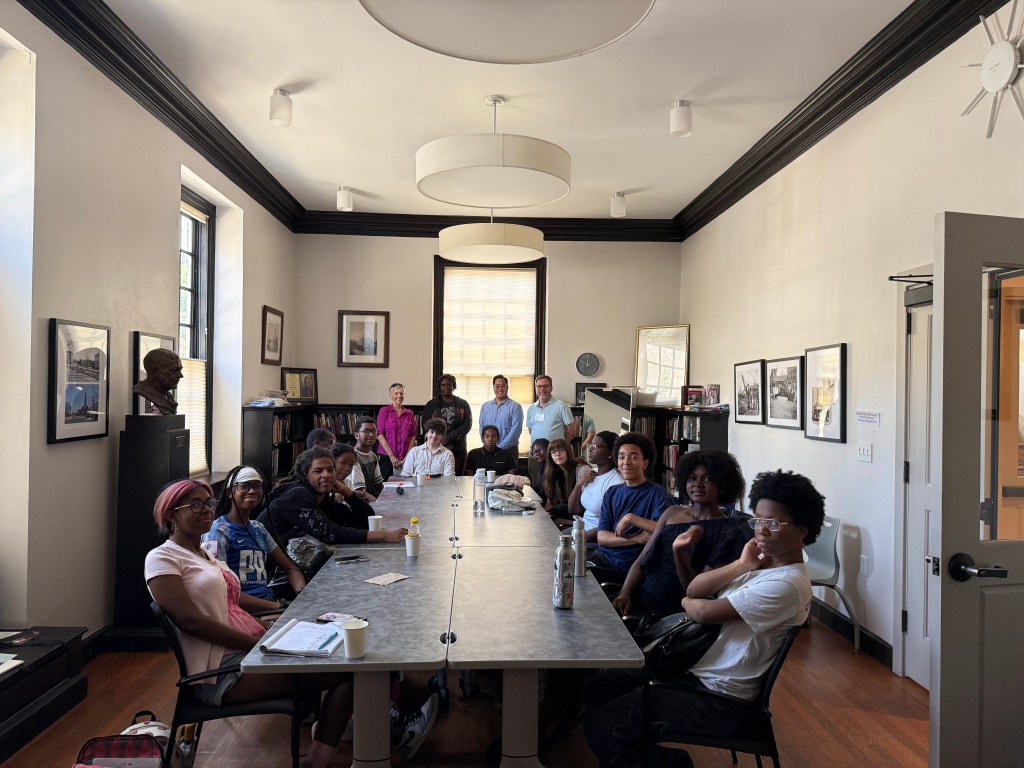
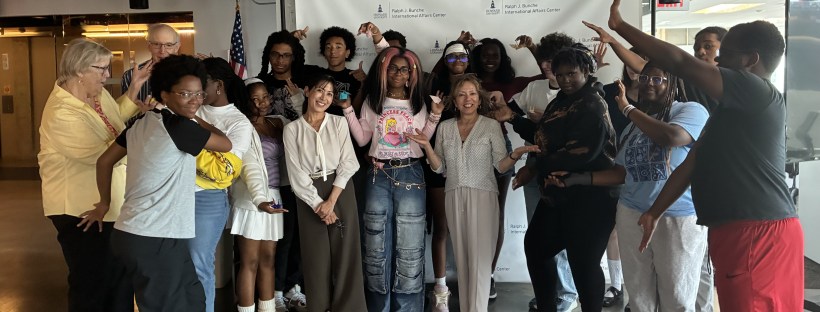
From the Program Director: Our final program of the summer was a real treat for all our students. On Tuesday, August 4, Japan in DC for the first time welcomed members of Okinawa Kai of Washington, DC, a non-profit organization dedicated to preserving the beautiful traditions of Okinawa and increasing understanding of the Okinawa culture. The group’s large membership consists of a diverse group – many from Okinawa; others 2nd, 3rd, or 4th generation Okinawan; and still others who aren’t Okinawan but simply love Okinawan history and culture.

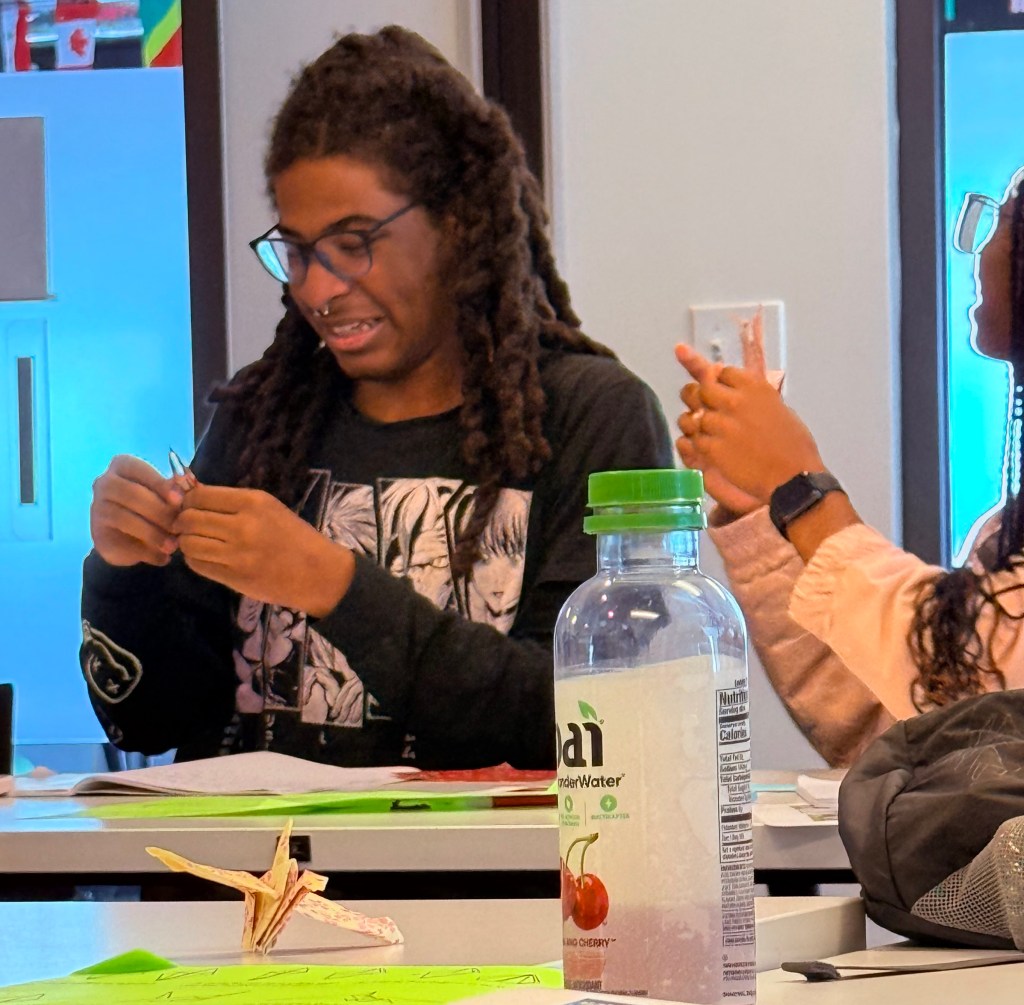
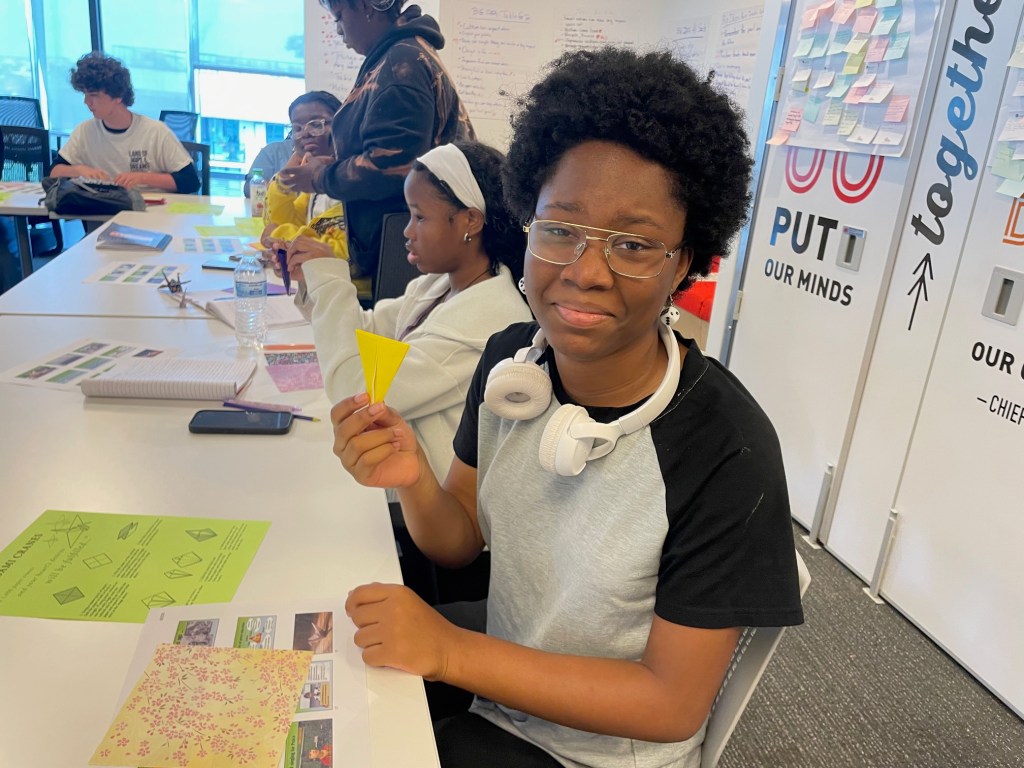
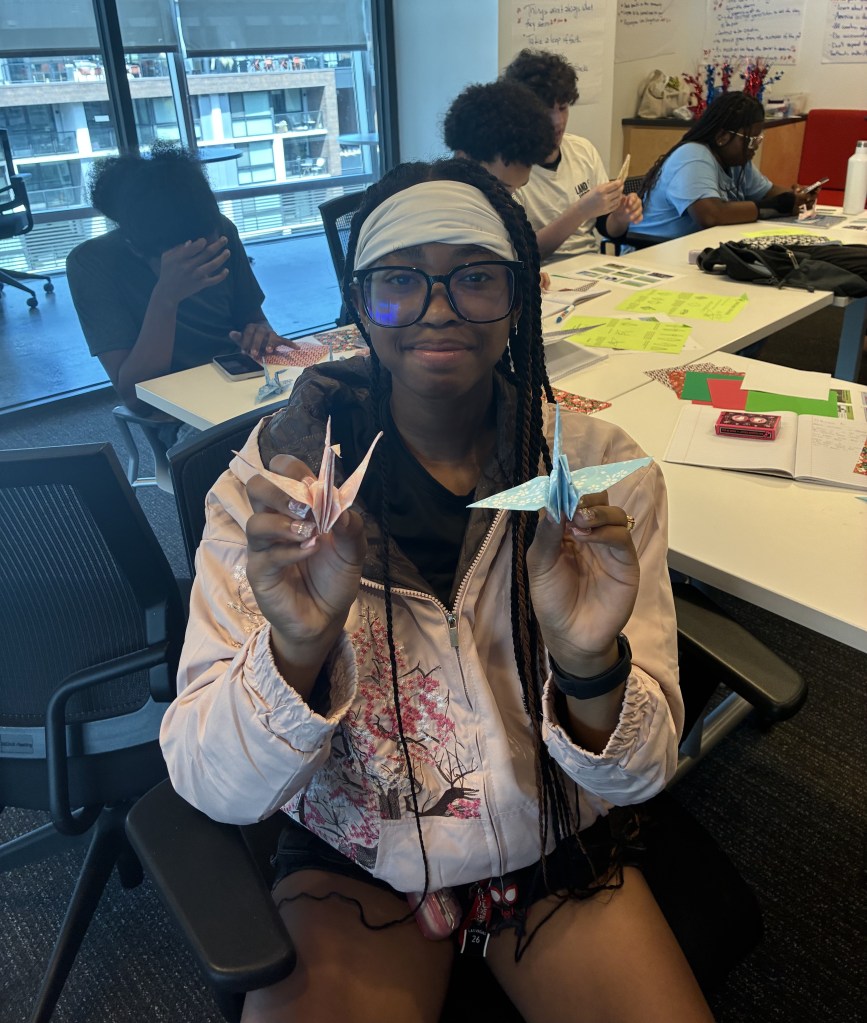
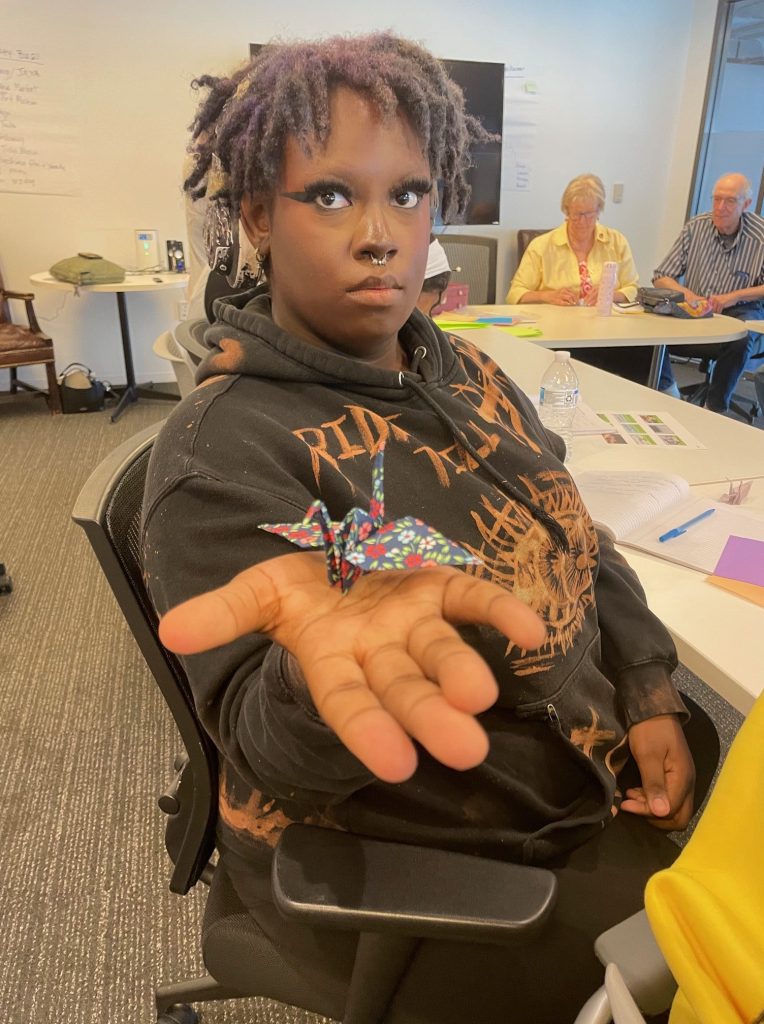
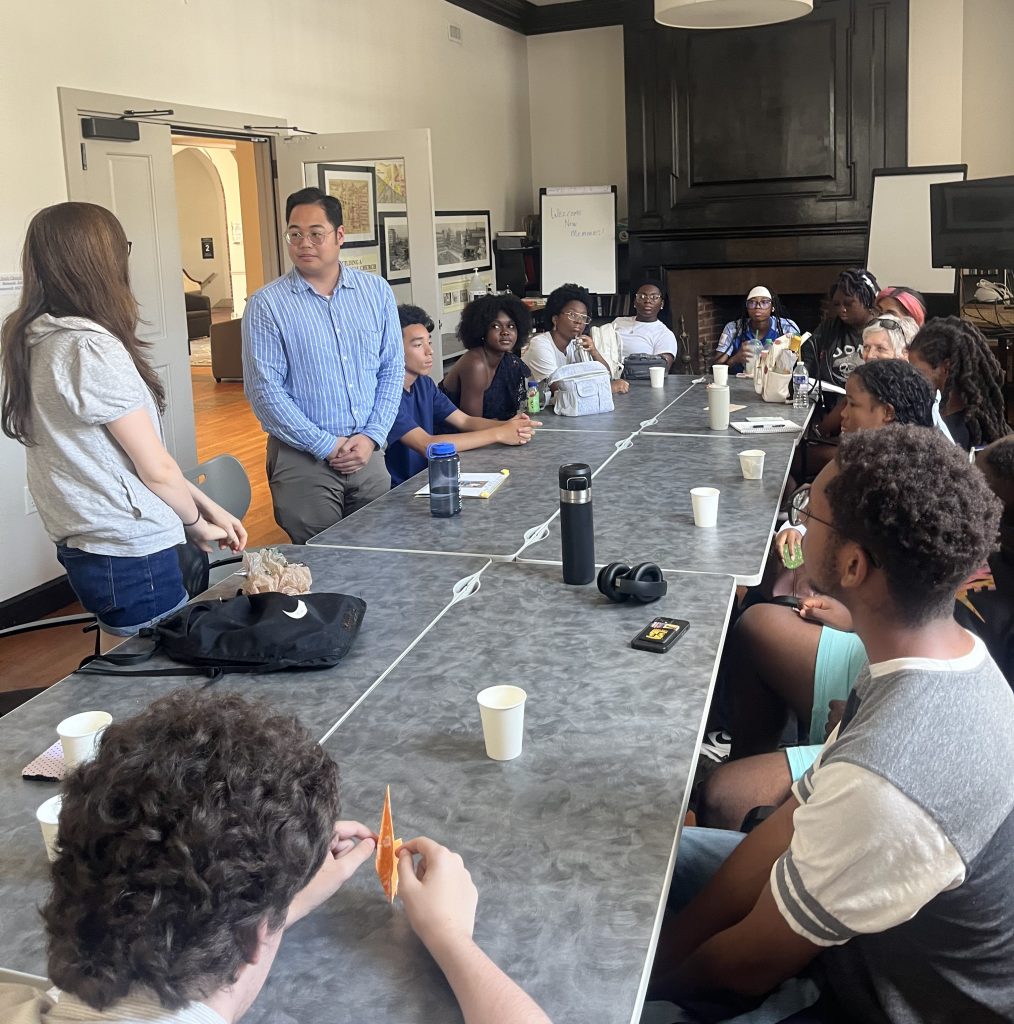
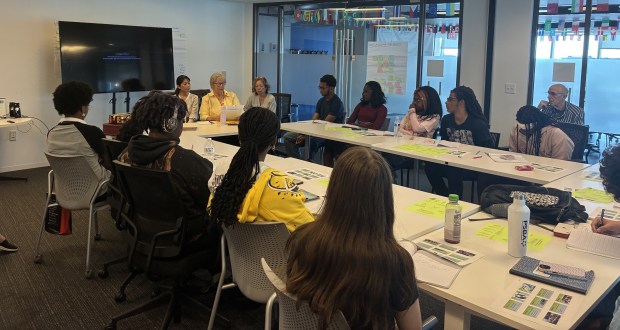
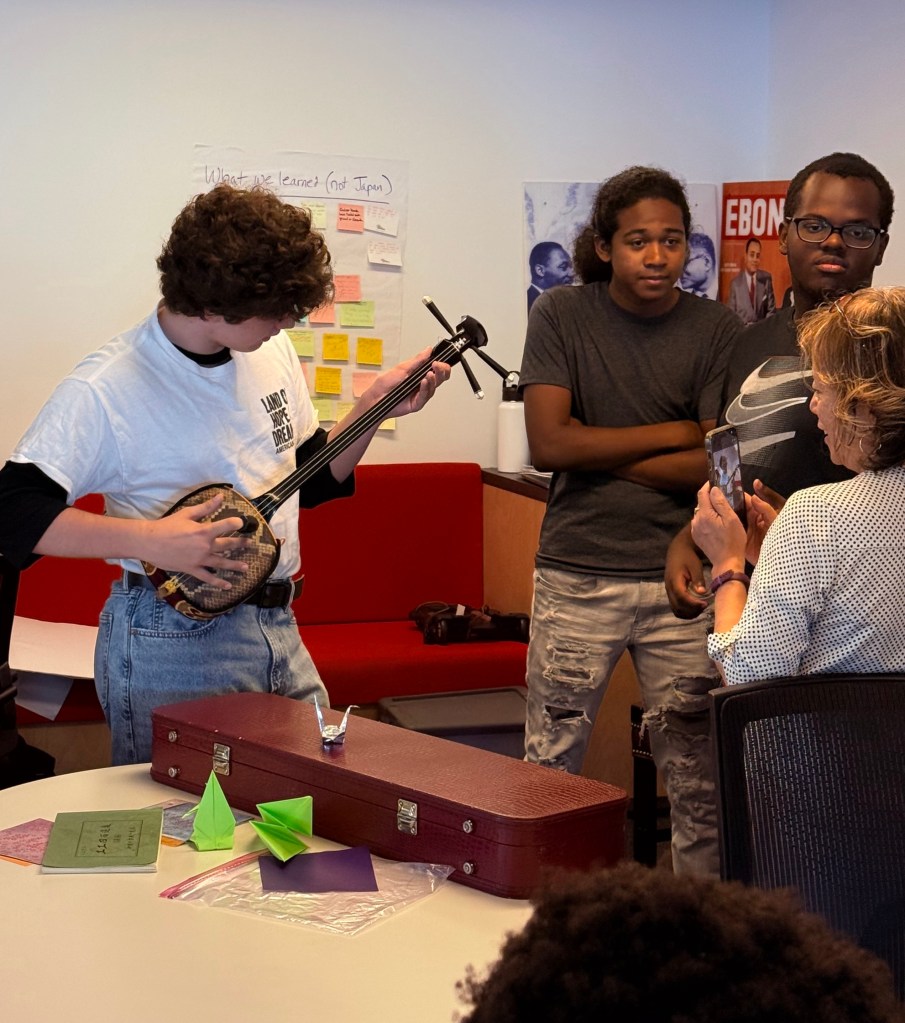
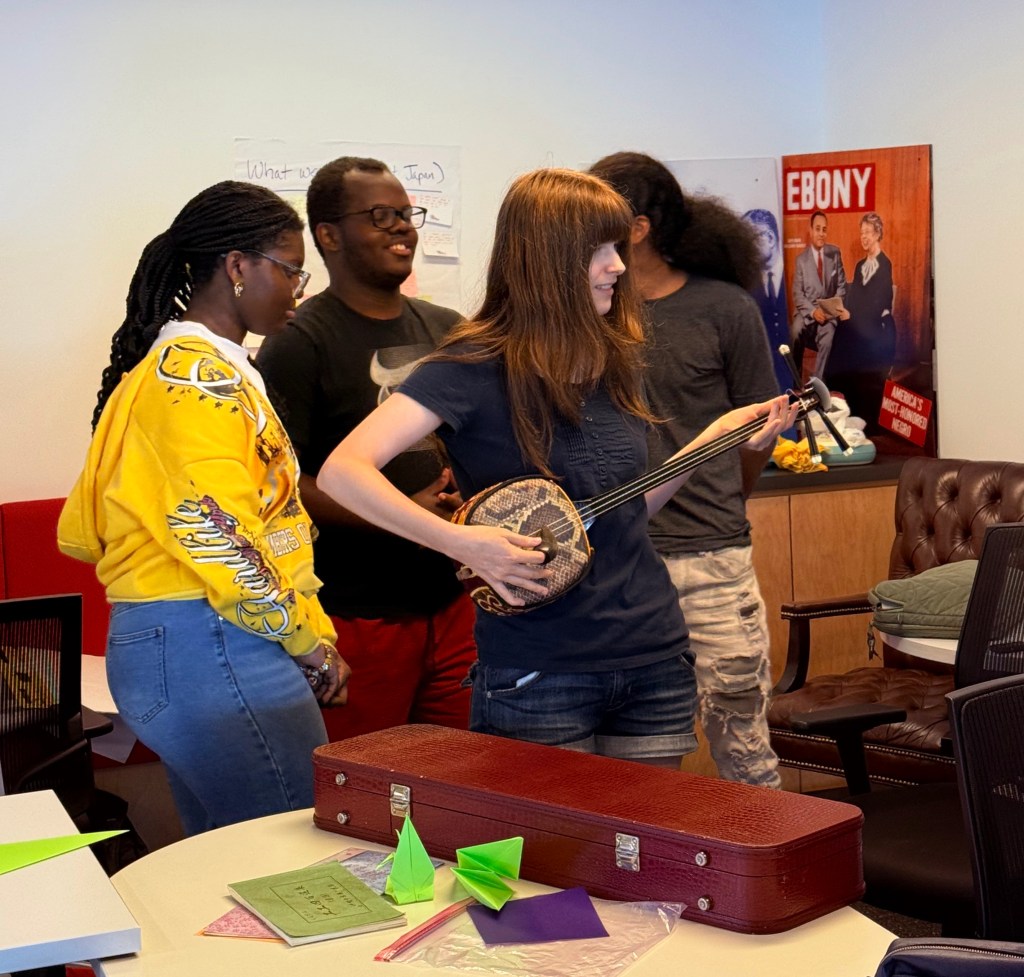
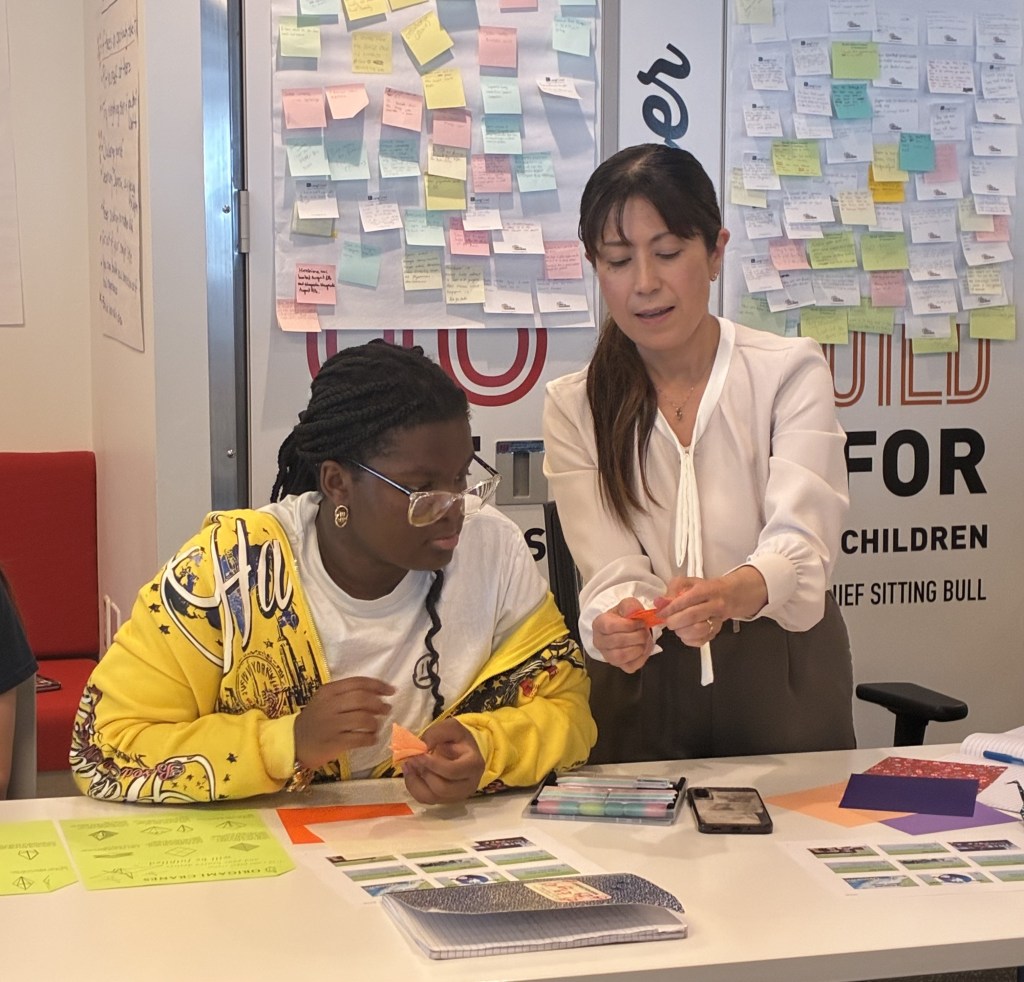
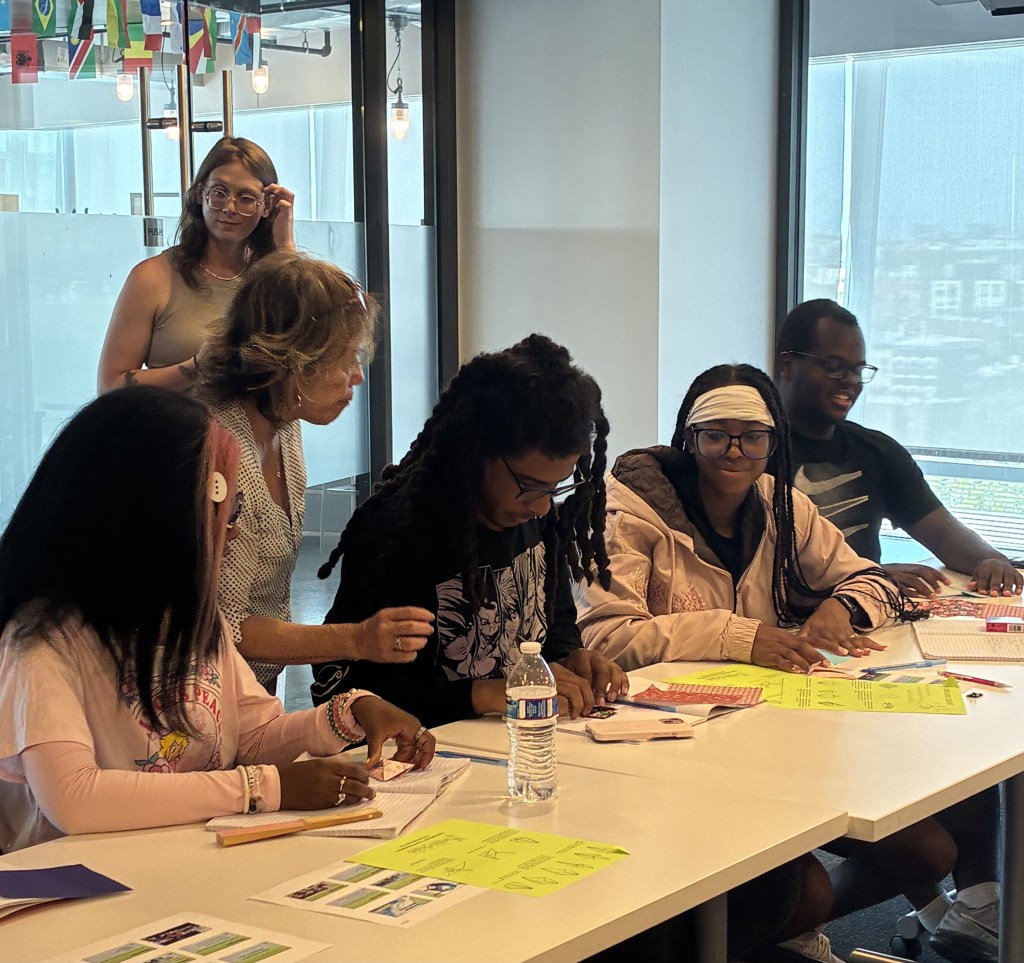
Our guests for this program were Akiko Clifford, Vice President; Eriko Meneses, and Anne Statland. Akiko-san and Eriko-san presented engaging information on the unique history and culture of Okinawa. We learned about the devastating Battle of Okinawa in 1945 that killed over 200,000 Americans and Okinawans, both military and civilian, and we learned about how this tragedy is remembered today, through “IREI NO HI” (Okinawa Memorial Day) and Peace Education Month commemorated in June in Okinawan schools. Anne-san, an American who arrived as a child in Okinawa one year after the end of World War II, shared her personal memories. Many tears were shed during this memorable presentation. Then the fun began with a workshop creating origami cranes and Akiko-san played the sanshin, a traditional Okinawan three stringed instrument, similar to a banjo. Very special thanks to Kristen Luck, from the Okinawa Collection and Japan Resource Center at George Washington University, and Lisa Ball from Okinawa Kai for helping to arrange this very special visit.

We invite you to read our students’ personal reflections below.

Honesti:
The Okinawa Kai visit was a wonderful experience that I loved. The speakers – Anne, Eriko, and Akiko – were so sweet and lively during the visit. It was so lively throughout except for when they talked about the battle of Okinawa. It shocked me for how easy it was for these kids after the war to be able to go to the caves on the war site and find bullets or other remnants from the battle. That made me feel so hurt for the people involved and all of the lives lost. The video with the song from the elementary kids was so heartwarming and sweet, especially hearing that most of them had grandparents who lived through that time and how much the kids felt for them. Afterwards at the presentation, being taught how to make cranes was so fun even if I struggled with it. It makes me want to know more origami besides just cranes.

Lauren:
The short video of elementary school kids singing peace songs made the biggest impact on me. Watching the video made me feel bad but made me realize these kids have so much empathy. There were two kids crying about their great grandmother’s siblings. I admire their empathy and sadness for someone they never had the chance to meet in life. A life lesson I would take away is to always advocate for peace.

Aston:
The part of the program with the biggest impact on me was Anne’s story because of how emotional it was. I felt curious to learn more about Okinawa. Life lesson: Keep your family close even during hard times.

Blessing:
The biggest impact was the music that the kids sing. It was so emotional and had so much impact. I feel so sad about the kids who lost their parents and brother because of the bombs during World War II. I learned about the musical instrument made with a snake – the sanshin. Life lessons: Make people feel better after the storms. Find something to bring people together to feel better and find peace.

Zaevior:
Learning about the song that Okinawan kids sing on the Japanese Memorial Day from Eriko left a mark on me. In America, there is no real “ritual” we have for Memorial Day. During this visit I felt a slight sense of unease learning about the Okinawa war, since one of the images depicted was a young child waving a white flag. This relates slightly to Iwo Jima, another battle fought in Japan by American and Japanese forces.

A lesson to be taken away is to make sure you remember the past and those who fought for you.

Morgan:
The biggest impact of the presentation to me was the song of peace that a teacher from Okinawa composed 20 years ago. Its message of peace not only spread through schools in Okinawa, but also all over the country. That was also a very fun presentation. The sanshin performance was very beautiful. I learned how to fold a paper crane. It was certainly not easy. Also, I learned that folding 1,000 of them allows for your heart’s desires to come true, and that the crane is a great symbol for peace. Also June is recognized as Peace Education Month in Okinawa.

Life lesson: Spread the message of peace so that the world may not know war.

Kiya:
The parts that had the biggest impact on me were about the film mainly. Mostly because of seeing the kids cry and talk about how war affected them. I can kinda relate to it. Also I loved the crane origami workshop. I learned that kids in school learn a peace song to remember the day of the finishing of the war as a sign of peace. The message I always take away from programs like this is violence is never the answer.

Madisen:
The Okinawa school children singing about peace and crying for their grandparents impacted me the most because despite not being present in the war they still mourn for their family. I find it heartwarming that at such a young age they are able to understand complex ideas and understand the significance of peace. I noticed that for a lot of the Okinawa Kai members, talking about the war on Okinawa is very emotional for them. However, the presenters seemed happy to teach us about Okinawan culture and the events that they had to honor it.

A life lesson I would take away from the Okinawa Kai presentation is to preserve the stories of the past to always choose peace.

Pippa:
I think it was nice how we got to learn about Okinawa in different ways, first with the informational slide show, then the videos about war, and then first hand experience from Anne-san. It gave us a comprehensive view of Okinawa. Learning about the war in Okinawa showed that war affected many different people in Japan, not just Hiroshima/Nagasaki. What made the greatest impact on me was the video they showed about the kids singing in honor of peace. I was stricken by how even though they hadn’t experienced war themselves, they were very passionate about carrying the message of peace. Also when the little girls started crying when talking about their grandparents/relatives that had died, the fact that they still cared so much about more distant relatives was very touching.

Life lesson: Never forget or stop caring about the past.

Demetris:
I enjoyed how the speakers from Okinawa Kai explained the history of their nation and people and how different major things were made in Okinawa, like karate, and eisa, a dance that celebrates and honors ancestors during the Obon festival, as well as having the most long living people in the world. I also learned that the Battle of Okinawa, which didn’t end until June 23, 1945, had about 200,000 lives lost (a mix of US & Japanese soldiers and Okinawan people).

Jaylen:
The part that made the biggest impact on me was the crane making because now that I learned once, I can do it 1,000 more times and if I do, I hopefully get my heart’s desire. I observed that a lot of people need to be a lot more zen because they were getting mad at a piece of paper.
US Holocaust Memorial Museum


NOTE FROM THE PROGRAM DIRECTOR:
Any visit to the US Holocaust Memorial Museum is overwhelming, and so it was for our students. For most, it was their first visit to the museum, even though they live and go to school in DC. Because a major focus of this year’s Japan in DC program was on the World War II era, our three hours spent there on July 21 had special significance, and was informed by other visits and presentations on our summer agenda.

Students were first guided through the museum’s Permanent Exhibition by high school student docents in the USHMM’s Bringing the Lessons Home (BTLH) Ambassadors Program. The tour included a stop at the exhibit on Chiune Sugihara, the Japanese diplomat in Lithuania responsible for rescuing thousands of Jews. This was followed by a tour of the special Americans and the Holocaust Exhibition, which included content related to anti-Japanese propaganda and Japanese American incarceration, led by museum historian Rebecca Erbelding. Then our students were treated to lunch and a debriefing with the BTLH youth docents. Very special thanks to James Fleming and Jamil Miller of the museum’s Education Office for putting together such a meaningful program – and for providing us with air conditioned charter bus transportation on such a hot day!


Below you can read some of our student reflections on how the visit impacted them and what lessons they drew from the experience.

Malia:
The part that affected me the most is the beginning of the Holocaust. Most people don’t know how the Holocaust started so knowing how it began is impacting. I think more people should visit the museum so that they can know more about that period of time and know how to avoid something like that in the future.

Life lesson: Tell more people about the Holocaust so that in case something similar happens again, we can try to avoid it so more innocent people don’t get hurt.

Madisen:
The idea of the Jewish survivors of the Holocaust as well as the idea of the bodies impacted me the most because of how these men, women, and children looked either dead or alive. Many of the survivors of the Holocaust were very skinny, and despite being freed didn’t particularly looked pleased. It disgusted me how evil a human being could be to innocent people, and how few who weren’t Jewish protested until other countries intervened. While in the Holocaust Museum, I felt a great sense of empathy for the families and communities affected by the Nazis. I am grateful that the museum did not censor anything, so people Jewish or not Jewish alike can know what truly happened in the Holocaust. I, myself, am not Jewish, but I have a Jewish friend and I feel empathy towards her family because of how strongly I feel towards the Nazis. The imprisonment and abuse of Jewish Germans reminded me of the incarceration of Japanese and Japanese Americans during World War II. Although what the Japanese Americans experienced wasn’t as extreme, both minorities were wrongfully imprisoned and mistreated.

Morgan:
I felt intrigued at first, because I have never visited the museum, ever. It was my very first time. It was definitely a shock. Before this visit I never really knew what specifically went down during the Holocaust, only that Jewish people were captured, put in camps, then killed. I could have never imagined all of this could have happened. I felt a deep sense of disturbance when looking at some of the exhibits, especially the photos of the doctors seemingly treating the disabled men, women, and children, but they were instead killing them with injections, pills and starvation because they were seen as a cancer and a burden on society under Hitler’s dictatorship. I also felt disgusted looking at the piles of dead, naked bodies of Jewish people when the Nazis started to murder them.

Life lesson: I would say that it is important to record history, no matter how grotesque and gruesome it is. There will be people that deny the existence of historical events, and there should be photos, written accounts, or witnesses to not only prove its existence, but just how gruesome it was.

Zaevior:
During our visit to the Holocaust Museum, I felt especially moved by the Permanent Exhibition tour we did. Seeing the terror the Jewish people went through broke my heart more and more as the tour went on. The temporary exhibit showcased the heavy discrimination that Japanese American immigrants went through. Seeing what Japanese Americans dealt with is very reminiscent of the Jewish concentration camps, though not to that extreme.

Life lesson: After the museum visit, an idea that stuck with me was an idea of preserving history so it’s not repeated.


Pippa:
The part that made the biggest impact on me was when I saw videos/pictures of the survivors of the Holocaust right when they were being freed. The graphicness and how starved they looked was very upsetting, but it showed the severity of the Holocaust and the fact that each victim was their own person just like anyone. We learned about the Japanese camps because there was also an exhibit that talked about the incarceration camps, showing that the scapegoating of Jews in Germany was similar to what was done to the Japanese in America. I was really surprised by the pro-Israel exhibit at the beginning. I thought it was really contradictory to the museum’s message at “preventing future genocides.”

Life lesson: Think critically about any information you receive, no one is immune to propaganda.

Aston:
The part of the program that affected me most would be the recordings of the Nazis dumping dead bodies into pits because of the cruelty of the soldiers and the disgust of the passersby. I felt saddened due to the events that transpired but I noticed the will to inform people like us from the tour guides.

Demetris:
The part of the program that had the biggest impact on me was the Holocaust Museum tour and that was so impactful because of the long history of unfairness, pain, torture, and wrongdoing that the museum showed and how destroyed Europe was during and after the war. Something that I felt while being there was a feeling of sympathy, but a feeling of emptiness because of how much the people who suffered had to go through but also the reason I felt empty. I learned that the museum had parts in it that showed how poorly the Japanese were treated in the USA, mostly in the West Coast, and the way that this can relate to this program is by helping us feel and understand how much Japan and the Japanese people affect the way the USA still is today.

The life lesson that I took away from this was “You can make history but you cannot erase it.”

Lauren:
The whole museum had a big impact on me because I had heard very little about it before, so going to the museum was so eye opening since our tour guides went so in depth about some information and the museum was so graphic. I observed that the museum was so real and truthful about all the events and who was affected by the Holocaust. It made me feel upset that millions of people were killed because of their beliefs.

Kamaya:
The impact of the Holocaust was deep because the amount of discrimination there shows how gruesome it was. It made me appreciate the importance of treating everyone with respect. It was hard to listen to all the horror stories of all the people, men, women, and children that suffered. All those victims that died just because of their race.

Christian:
I found the student tour guides very good sources of information. Also the time, energy, and care they put in across the museum and learning about it. I had a special interest in the museum’s temporary exhibit on the Japanese American internment. It showed that both Jewish and Japanese Americans were targeted and imprisoned for their race. A big impact the visit left on me was learning about the “5th column.” The Americans feared that the Japanese Americans would turn and attack the West Coast for the Emperor. It showed how fear and patriotism moves American public opinion for or against something. Fear of a far away enemy can make Americans turn and attack each other. Especially against other races and religions.


Kiya:
The biggest impact of the program was going and visually seeing what happened to the Jews during this time. Also to get a further in depth explanation of the Holocaust because you learn about it in school but to actually go to a museum – and see and hear all the stuff that happened was really amazing. Mainly I would say my feeling after being at the museum was relatability, mainly because I’ve noticed since joining this program that many people like us (as in black people) have been or get treated exactly the same because we’re different than your average white American. So I felt sorrow and relatability.

Honesti:
After going to the Holocaust Museum the thing that made the most impact on me was how isolated they made the Jews to the point that they experienced bad reactions and had to go different roads to walk, like the Japanese concentration camps with them being isolated and treated like they were criminals and getting bad looks from others after coming back home from the camps. The trip made me feel sad for the people that were there and heartbroken they had to deal with that.

The life lesson I would take away from this is that the discrimination of people is a ridiculous thing that people do during war and with a flawed view.

Liam:
The part of the exhibit that I found had the most impact on me was seeing the starved prisoners, and the corpses. I felt this underlying dread throughout the museum, like a heavy weight deep in my body.

DeVonte:
The part of the Holocaust that made the biggest impact on me was that when they were trying to separate the Jewish people from the Germans they had tools that measured the head, the nose, etc. So they can separate Jews and Germans. Also how Reinhard Heydrich I believe was considered the perfect man. I saw the Holocaust as a bad thing with the mustard gas, the killing, the tools to measure the body to separate the Jews and Germans.

Jaylen:
The part of the experience that had the biggest impact on me was the long lasting impacts that the Nazis have on today’s day and age. One life lesson/takeaway that I got from the experience is that victims of a crime can also commit that same crime.


Finding Inspiration at All Souls Church

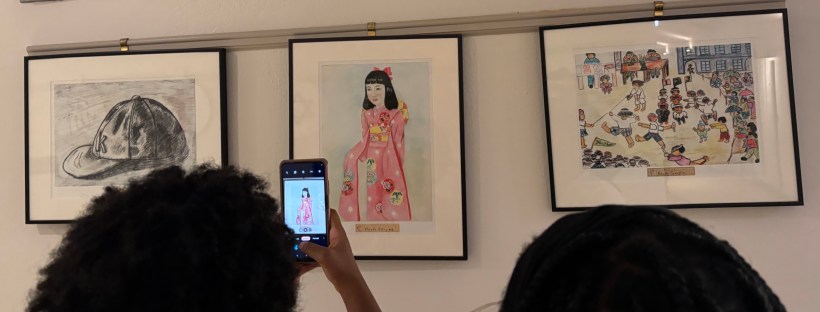
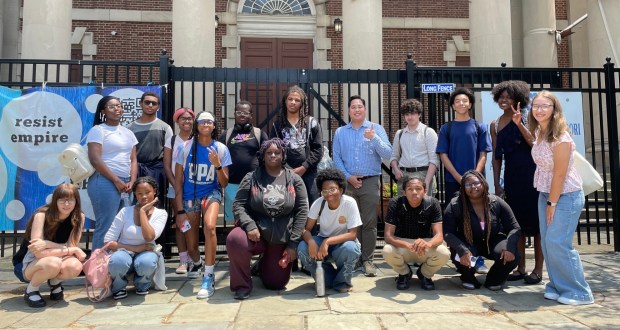
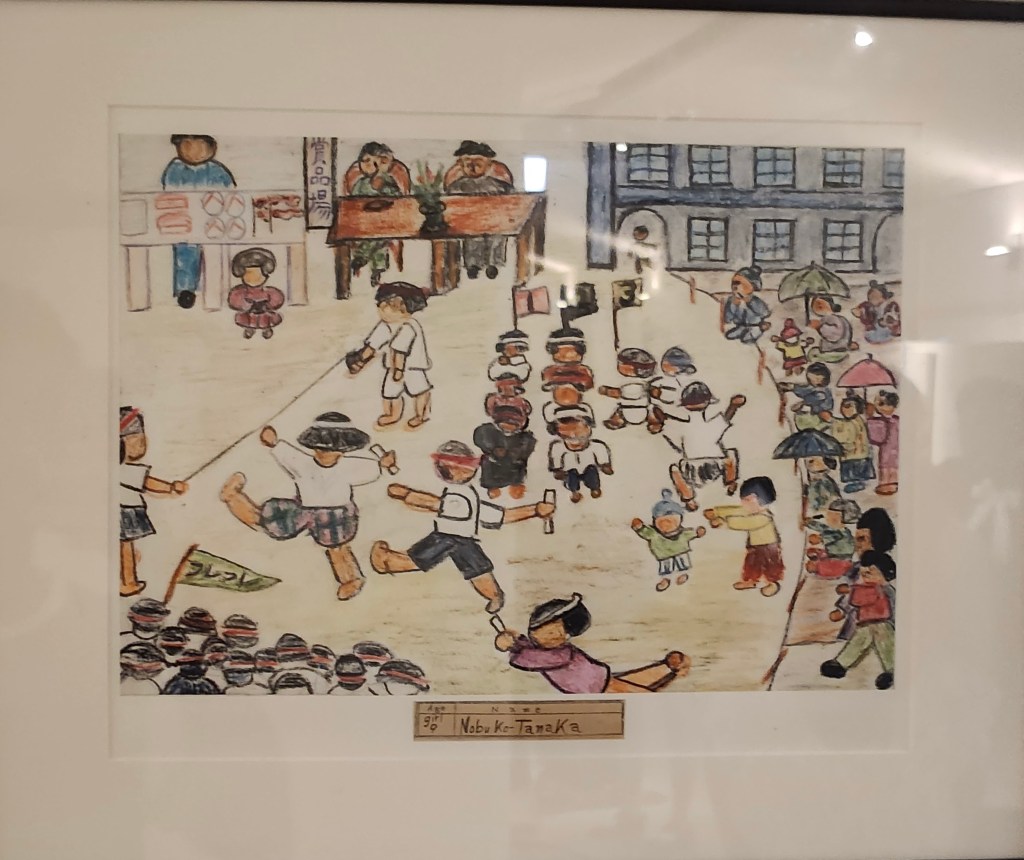
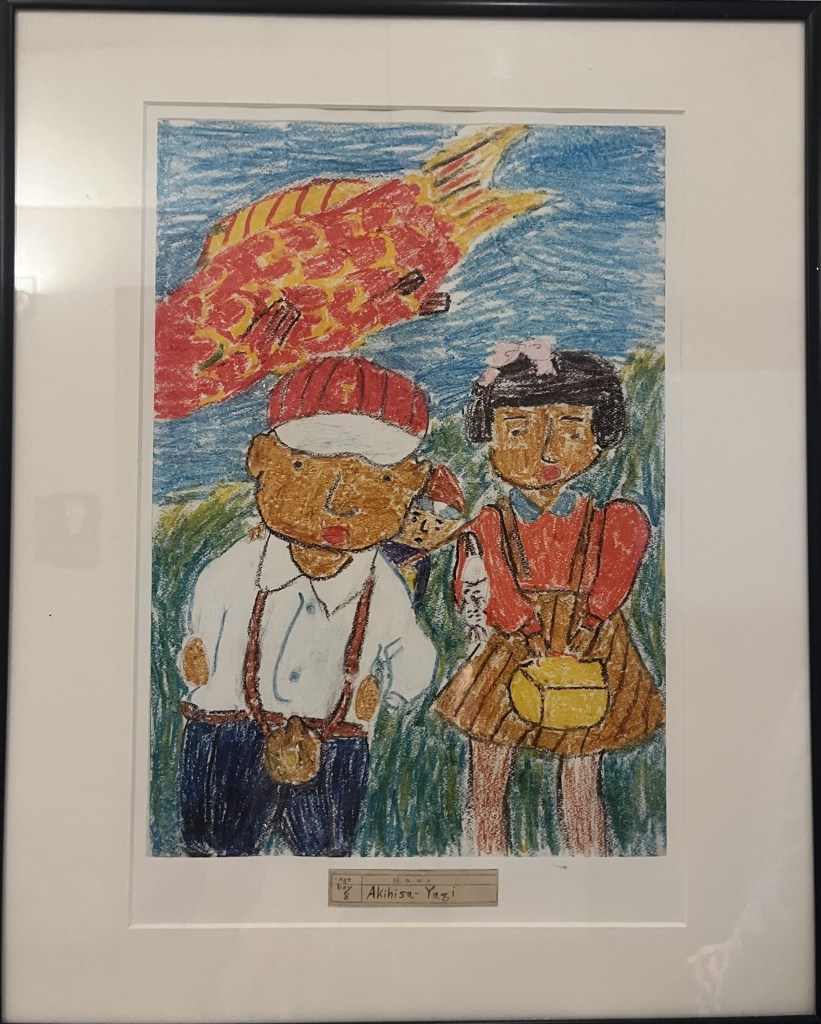
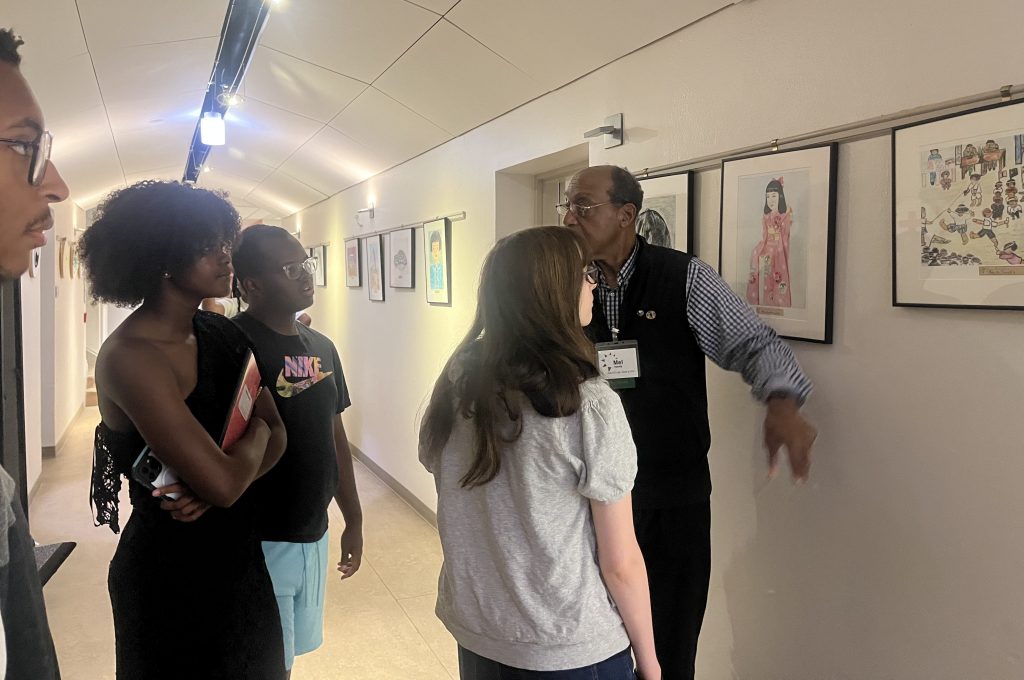
NOTE FROM THE PROGRAM DIRECTOR: A visit to All Souls Church Unitarian on 16th Street, at the intersection of Mt. Pleasant, Adams Morgan, and Columbia Heights, is the experience we look forward to in each Japan in DC program. All Souls is a historic DC church with a strong social justice tradition. After World War II, the children of All Souls collected art supplies to send to the surviving children of an elementary school in Hiroshima, Japan, devastated by the atomic bomb dropped on their city by the United States. This gesture of support from the All Souls community was reciprocated when they much later and unexpectedly received a box of children’s drawings from these same children as a gesture of appreciation. During our visit on July 14 our students were able to view this extraordinary exhibit of Hiroshima Children’s Drawings. We were welcomed by Rev. Rob Keithan, Charles Wooldridge, and peace activist Mel Hardy who shared information on the church, the history of this project, and the church’s ongoing Heiwa Peace Project.

This incredible history is documented in the film Pictures from a Hiroshima Schoolyard, which our students watched the day before our visit to the church. You can find the film streaming on a number of platforms. We highly recommend it.

We were also joined by Karl Tan, a Public Affairs Officer at the Embassy of Japan, who spoke to our group over lunch about his experiences as a JET teacher in Nagasaki, as well as his own interest in Japan and career trajectory.


Here are some of our students’ reflections on the visit:

Kiya:
The biggest impact was how kids have so much imagination. Also the impact kids can have to bring two nations together even though they were in deep hatred with each other. My feeling mainly was how much I loved that the church is doing their best to preserve the memory and the history of the beginning of the peace between Japan and America. The lesson I learned was that after a fight you don’t have to hate that person after. Happiness and peace is always a choice and it’s a matter of if you choose it or not.

Demetris:
I felt a lot of an old feeling, not because we were in a church, but because it seemed old with a lot of historic things inside and it was really quiet too, so it made it more peaceful than anything. The part of the program that had a big impact on me was that All Souls Church had the drawings of kids’ artwork from Hiroshima, Japan but not only that. It was mostly on how old and how long ago it was, mostly how the drawings were made only two years after the bombs but somehow were full of color and talent. It showed the optimism of the kids and we can learn from this by seeing even in time of despair we can still see the beauty in what life has given to you.

Life lesson: “Even after devastation, they chose to see beauty in life and create it for others to see.”

Kamaya:
Seeing all the kids’ drawings made it emotional to know that the kids still had the creativity. Visiting all Souls Church taught me that there are worship communities that do so much.

Madison:
Seeing the drawings of the Japanese boys and girls in Hiroshima was the most important to me because of the nature of the art pieces. Despite facing a traumatizing experience and losing their homes and all their connections and belongings, the drawings these children drew were not negative and gloomy, but bright and colorful. This shocked me, especially with how grateful they were when receiving colored pencils from the country who bombed them and sending gifts back to the church. I enjoyed seeing the drawings of the children. Not only were they beautiful and well drawn, but they are artifacts from real people. Aside from the drawings, I enjoyed hearing about the church’s history and what they do to honor it.

A valuable lesson that could be taken from the visit is to help others no matter who they are, and you shall be rewarded.

Zaevior:
At the All Souls Church, the biggest impact for me came from the Hiroshima children’s drawings in the basement. Knowing those drawings came from preteens following their homes being bombed breaks my heart. Before going to the Church, we watched a film about it. In the film, we learned that the church had created a Heiwa Peace Project to help after the war. After the visit, an idea that stuck with me was that art can tell many stories.

Lauren:
The thing that made the biggest impact on me was seeing how the kids were able to make such happy drawings full of color after a tragedy. This impacted me deeply because I could never imagine drawing such things after losing loved ones. The visit to the church felt so wholesome because Honkawa didn’t have to send anything back after receiving the supplies from All Souls, but instead of sending a thank you card they sent beautiful drawings which shows how kind Honkawa Elementary was to a nation that killed so many of their people.

A life lesson I would take away is to not let anything dim your happiness and kindness.

Aston:
The most impactful part of the program to me would be the pictures that the kids made since they could show how life was for them or even a symbolic reflection of their current life situation. I felt amazed because of their artistic abilities.

DeVonte:
The part that surprised me the most was how the paintings weren’t bad, like they showed colorful and heartwarming paintings. They didn’t show war and the chaos that just happened. I didn’t even know that a school survived and their kids drew amazing paintings that leave an impact on the world. It shows how, because of something, it didn’t affect the peoples’ minds. They could still find a way to have fun.

Christian:
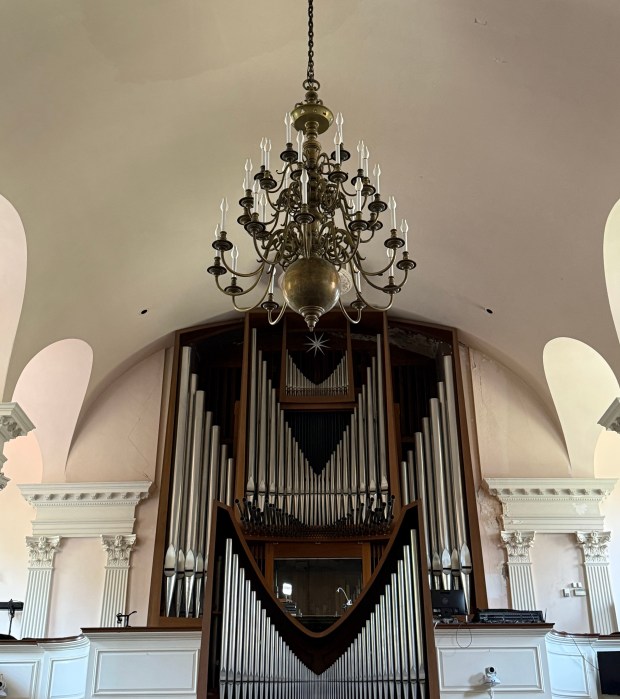
The biggest impact left on me was the pictures. How they weren’t war kids’ pictures but instead colorful, bright, and of people in places stuck in time. It made me feel a great sense of calm and impressed. I liked how much history and things were inside the Church – from Austrian organs to the Japanese kids’ pictures.

Life lesson: Colors make everything better.


Blessing:
The part of the program that made a big impact on me were the children who were innocent but had to face something so terrible. So young and beautiful. All of this because of the bombs that killed their family and their home. That’s not a good thing to do to children so innocent because of their parents. I feel so bad for the baby who died on the back of his brother. That was so much pain for a kid to lose his brother so young. This experience is related to all of the things that all countries cause each other. There are people who did not even talk but yet were killed just like that.

The life lesson is to not try to fight someone who has more power than yours or you could lose your family and your peace on one day, and also learn how to rebuild what has been destroyed.

Honesti:
The program left an impact on me because of how colorful and vibrant they were able to make their drawings despite the things they saw and lived through. I was deeply hurt after the bombing and how they progressed through the horrible situation they were in. I love how they were able to visualize things in such a beautiful light even through the mess and destruction of their Hiroshima.

Jaylen:
I think the thing that stuck with me the most was the fact that the children still remembered the times before the bomb, and also the fact that they could still keep moving forward after such a devastating attack, because I feel like if my whole city was bombed and thousands of people died, I would really struggle to keep on going. Also the fact that they forgave America so easily despite how devastating the attack was. Beyond the content, I noticed that people talked about the drawings and how just little kids made them, and I think that that view is not good because I feel like anyone can do anything as long as they really want it.

Pippa:
The part that had the biggest impact on me was just looking at all the kids’ art and seeing that even though they were not given any prompt about what to draw, all of them ended up drawing something related to life before the bomb or nature. It showed that in a time like this, most people’s desire was simply to return to a normal state of things and nothing more. I thought it was really nice and it was very cool to know that most of the originals had been reunited with those who made them. It helped with providing a human story to go with what we were learning about the bomb, which helped me feel the event on a deeper level.

Life lesson: Keep creating, even when in difficult situations.