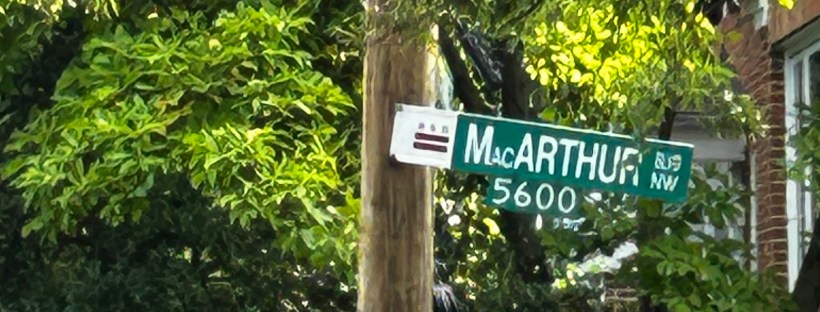
As part of Japan in DC’s ongoing efforts to unveil DC’s deep connections to Japan. I’m fortunate enough to live on a street whose name has great significance in the history of US-Japan relations: MacArthur Boulevard.
Walking to school every day, I always wondered how the name MacArthur Boulevard came to be. Living on this street I have so much love for the community I am a part of, the high school (MacArthur High School) I go to, and the people I am surrounded by. So when I discovered the rich history of this small community I was shocked. Long before MacArthur Boulevard was named after the American General Douglas MacArthur, it was simply named Conduit Road. Now one must wonder “Why was the street name changed?”
The actual answer is simple, drum roll please… war hysteria and patriotism were the cause. But, let’s back up even further to the year of 1859. The capital of the nation had just finished building another fresh water pipe that traced the route of the Washington Aqueduct and named the street above it Conduit Road. At that time, the only people living on or using this street were the people repairing the pipe, and it was like this for nearly a century.
Yet this all changed in the 1930s when a new community started to be built, the Palisades, which turned farmland into the suburbs of DC. Residents of the Palisades believed that the name “Conduit Road” was unflattering for a road that was turning into a desirable area to live in. However, at this time their push for a new name was ignored by officials.
Luckily for the Palisades community, an opportunity appeared to rename the street. In the midst of World War 2 after Pearl Harbor, the new name was put in front of Congress by a man named Chauncey Carter who suggested that Conduit Road be renamed to MacArthur Boulevard as a way to honor the rising American war hero Douglas MacArthur.
The Arkansas-born West Point graduate Douglas MacArthur was in the Philippines, leading the most grueling defensive stand in American military history against the Japanese invasion force. MacArthur was completely unaware of the bill that was being passed to rename the Washington DC street after him. During this time President Franklin D. Roosevelt had just ordered Douglas MacArthur to evacuate the Philippines and head to Australia to regroup. While there he wrote on the back of a letter to the press “The President of the United States ordered me to break through the Japanese lines… for the purpose, as I understand it, of organizing the American offensive against Japan, a primary objective of which is the relief of the Philippines. I came through, and I shall return.”
Nearly two years later, on October 20, 1944, during the Allied invasion of Leyte Island, in the Philippines, MacArthur broadcast his now iconic message: “People of the Philippines: I have returned.” After the nuclear bombing of Hiroshima and Nagasaki as well as Japan’s surrender in 1945, General of the Army Douglas MacArthur was placed in charge of building the new State of Japan which was now to be a pro-democracy and Western-adjacent nation.
Funnily enough, in 1951 President Harry Truman fired MacArthur for insubordination, yet the street name stayed the same.
MacArthur Boulevard is a perfect reflection of how Americans see the war hero Douglas MacArthur: A champion of American ideals and democracy. Today, MacArthur Boulevard runs from Georgetown through the Palisades all the way to Great Falls National Park in Maryland. It holds some of the best parts of Washington DC like Mac’s Market, MacArthur High School, Sibley Memorial Hospital, and my home.
*SPEAKING OF RENAMING: In August, 2026, at the beginning of the new school year, MacArthur High School itself was renamed for John Thompson Jr, long-time winning basketball coach at nearby Georgetown University and DC native.
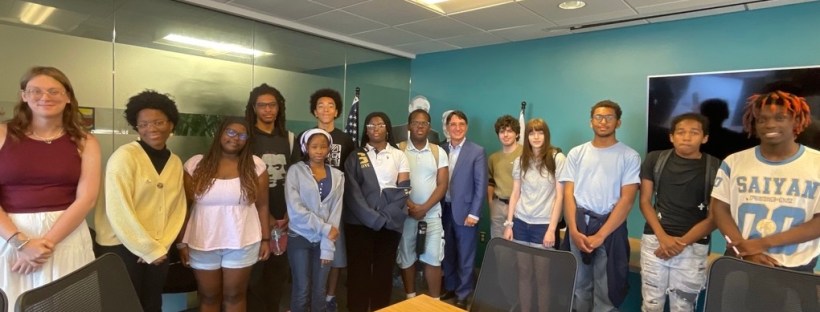
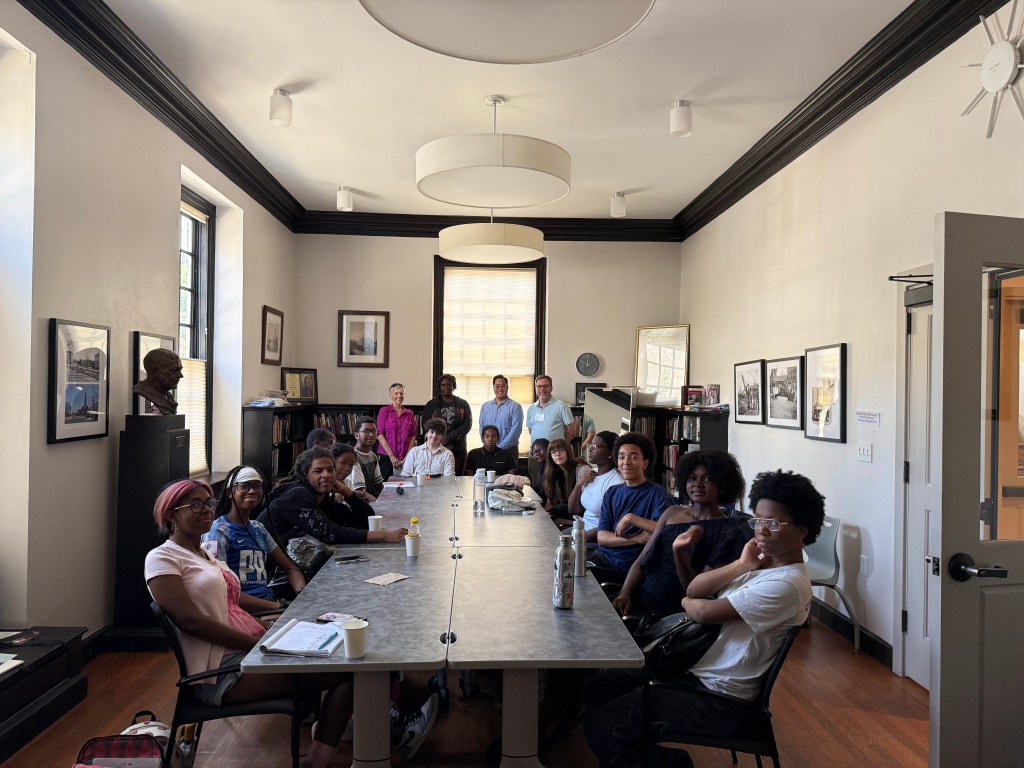
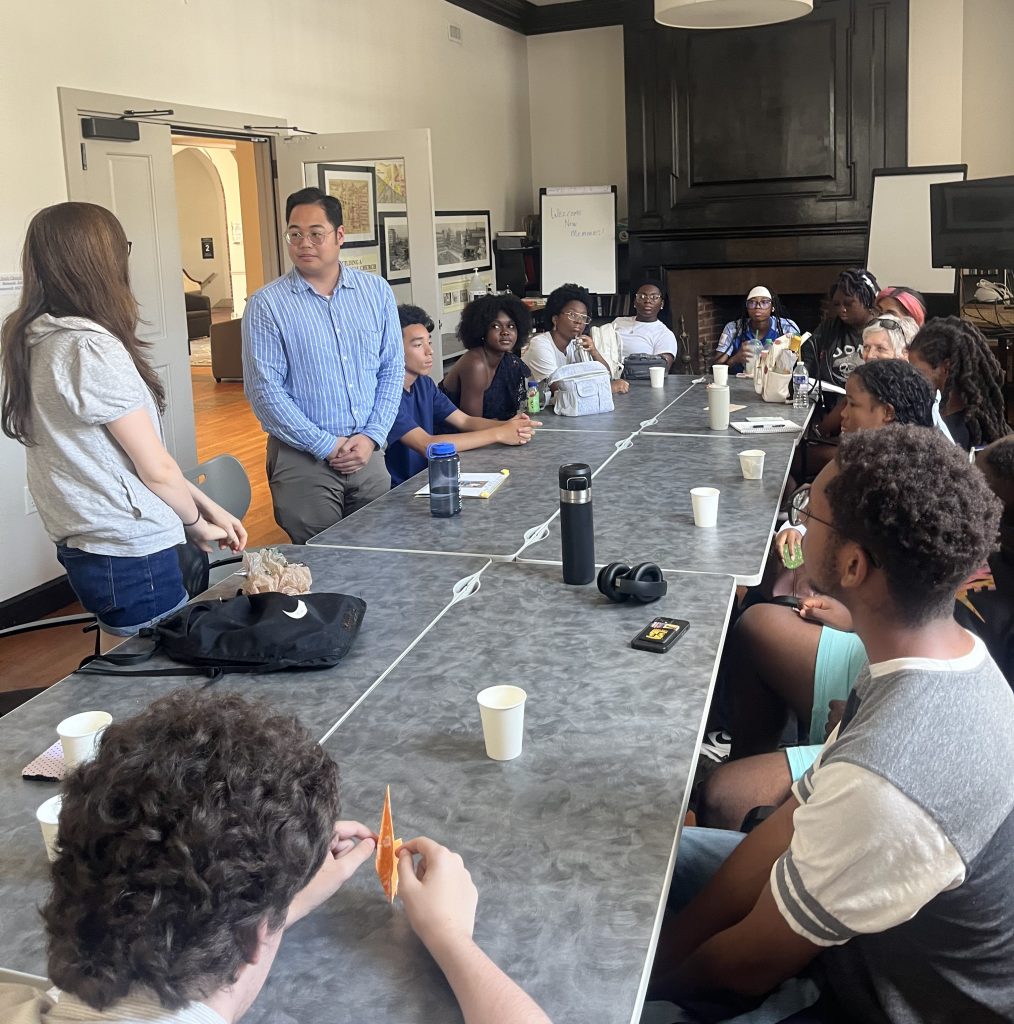
Note from the Program Director: On Thursday morning, July 23, our students had the opportunity to visit The Maureen and Mike Mansfield Foundation to meet with the organization’s President and CEO, Frank Jannuzi. The Mansfield Foundation is a 501(c)(3) nonprofit organization that works to promote understanding and cooperation between the United States and Asian nations, including Japan. It runs the prestigious Mansfield Fellowship Program, and organizes many different exchanges, policy discussions, research projects, and publications. Frank Jannuzi informed and entertained our students with stories about the too-little-known Mike Mansfield and his wife Maureen, and about the work of the Mansfield Foundation. He inspired students when he talked about his own career trajectory, including time in the US Senate and US Department of State, and gave us a lot of time to ask questions afterwards. The visit provided excellent insights into the US-Japan and Asia relationships – and how nations work to promote peace and avoid conflict. The discussion was lively and covered a lot of topics and concerns. Here are some of our students’ reflections afterwards.
Morgan: Mike Mansfield became the US Ambassador to Japan, and is the longest serving Ambassador plus the longest serving Senate Majority Leader. He helped to pass so many important laws pertaining to the civil rights and the Voting Rights Act while he was in the Senate. He was basically a bridge between East Asia and America, and yet was incredibly humble. His tombstone looks like any other army man’s tomb, nothing extravagant or special. I can’t believe he isn’t talked about at all.
Jaylen: I thought the visit was nice but I do wish there was even more time for questions. The part that stuck out most to me is the part where Frank was talking about Mike Mansfield and the fact that he was so humble about all the things he had done and how he has really no recognition. A life lesson I took away from Frank’s presentation is to stay humble and don’t let life get the best of you. And I did really like the view.
Demetris: The part of Frank’s presentation that had the biggest impact on me was how grateful he was and how persistent he was, and I want to keep going and work hard just like he did, because I want to learn more about the world like he did. I felt really surprised that he had many interactions with Senator Biden, which all were funny, but really I liked how more motivated I was and interesting it was. I love how Frank got hired in the Senate, and he told the story of Biden saying, “If someone is too proud to admit that they’re wrong or don’t know, and if I go up and say the BS you said, then I look stupid, and you need to find a new job.” So saying “I don’t know” is the best answer to give if you don’t know at all. So stay humble and don’t pretend you know everything, because YOU! DON’T! AT ALL!
Madisen: Frank’s talking about Mansfield’s life interested me because he grew up with little money and ran away from home. Mansfield even joined the military at 13 and dealt with government and international affairs over many decades. Despite his impactful life, he died with no fortune of money, which shows how Mansfield wanted to serve the common good, rather than get rich and earn a fortune. Life lesson: “Don’t pretend you know stuff, because then you’re going to give me a BS answer and I’ll tell that BS answer to other people.”
Pippa: I thought it was really cool to meet Frank because he had some really important roles in the government and worked with really important people. I thought the Mansfield Foundation was so interesting, especially when Frank said that at the very tables we were sitting at, they had just had a nuclear energy discussion with international groups. I think I would be interested in future internship opportunities there. The part that had the biggest impact on me personally was his response to my question about the intersection between sustainable energy and international affairs. It was impactful for me because I’m really interested in learning about that and hearing that the US and Japan are doing a lot of collaboration based on nuclear energy was really cool to hear about. The main lesson I take away is that you should choose a career relating to your interest, but your exact job doesn’t have to be set in stone. Frank had worked in a lot of settings and gained valuable experiences before going to Mansfield, so having variation in the work you do can actually be a good thing.
Christian: My feelings about the visit were positive and I felt like I gained a lot of knowledge – from Japan to China and how nations are moved to action through Fear. Frank speaking about his time in the State Department along with Joe Biden impacted me. The way he humanized and spoke truly about his time made the stories amazing. An important lesson I will take away is people can never be fully understood. Nations are the same, and with enough pressure can be forced into doing things they normally wouldn’t do.
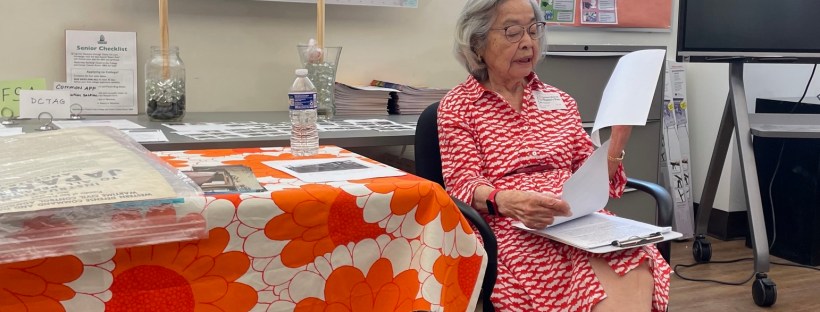
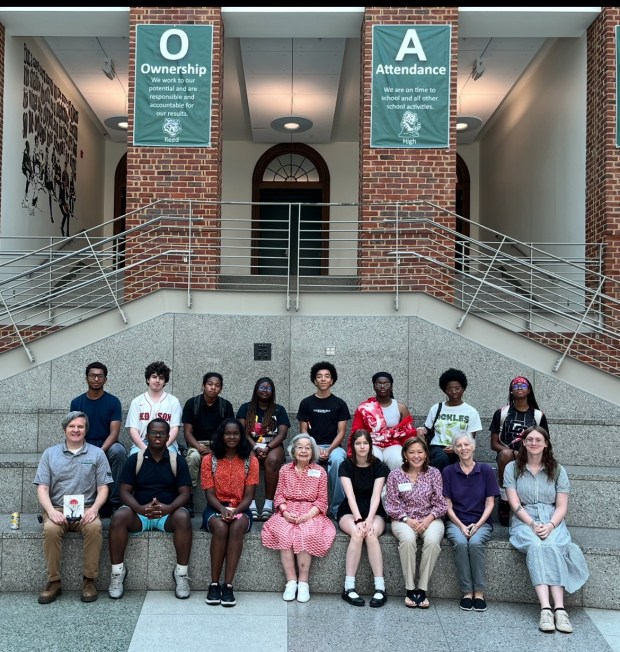
Note from the Program Director: On Friday morning, July 24, Japan in DC had the honor to meet with Mary Murakami to hear the story of her experience as a teenager living through one of the darkest chapters of American history – the incarceration of Japanese Americans during World War II. Mary was accompanied by her daughter, Kimi Murakami, who provided additional information and context.
Mary was 14 years old when the Japanese bombed Pearl Harbor in 1941, leading to the entry of the US into the war, followed by President Franklin D. Roosevelt’s signing of Executive Order 9066 in February 1942, which led to the incarceration of approximately 120,000 men, women, and children of Japanese descent – most American citizens. Mary described to our students in great detail what happened to her and her family before, during, and after her incarceration at Topaz Camp. Despite unbelievable hardships and disruptions to her high school education, through persistence Mary went on to attend the University of California at Berkeley, to earn her degree in public health/microbiology, and have a successful career as a microbiologist. We are so grateful that Mary has become a regular visitor to Globalize DC’s Japan programs. Mary is now 99 years old. She is a masterful storyteller. Her unrelenting commitment to sharing her experience and wisdom with younger generations is awe-inspiring, and our students felt the impact of this experience. Here are some of their reactions. Special thanks to Jackson-Reed High School and Assistant Principal Marc Minsker for hosting this program, and inviting students from the school’s Academy of Global Studies and Diplomacy to join us as well.
Lauren: The part of Mary’s story that made the biggest impact on me was at the start when she told us she was around our age going through this. Especially when she said she eventually could not attend school. I can’t imagine not being able to go to school, having to move into a camp in the middle of nowhere with my family and having to sell everything I couldn’t take with me. That part of her story impacted me most. A few feelings I have about Mary and the overall experience is proud, empathetic, and disappointed. I felt proud hearing Mary’s story, because even though she is 99, she is still able to go out and tell her story so that the next generation can carry it on. I felt empathetic because even though African Americans weren’t put into camps like Japanese Americans, they were still treated as badly, so hearing her side of the internment camps made me feel very empathetic. Lastly, I felt very disappointed with the US government because the US might not have been that diverse then, but people still should have been taught to treat others with respect no matter their gender or race. A life lesson I would probably take away is what she said at the end, “Remember your civil rights.” That is so important especially with what’s going on right now with ICE and deportation.
Christian: The lessons I learned are that civil rights and the American dream should be something that nobody should be able to stop – not the government or any person. And lives may seem hard but will get better through will and hope.
Jaylen: The part of Mary’s story that made the biggest impact on me was the part where she was answering a question about question 27 and 28 of the loyalty questionnaire. This really impacted me because she talked about families being separated and that is such an important thing to me because putting myself in their shoes, being around my age, being as clueless as I am, it would be really scary and I am not sure if I would have been able to do it. Beyond the story, I felt that this experience, similar to Gerald Yamada, was a great thing because it shows (no offence) that the history from back then is fleeting and we might not have much more time with these people so we should cherish our time with them. I think cherishing our time and listening to our elders is actually good for us and so that we can carry on the legacy of the past generations.
Malia: The part of Mary’s story that had the biggest impact on me is when she talked about how her dad didn’t believe that Japan and the US were at war. It shows that the most unexpected things can have big impacts. I feel like it’s good that she is able to share her experience so that people can make an effort so it won’t happen again. A life lesson I will take away is to always try to protect my civil rights. Because you never know when they can be taken from you.
Pippa: The part of Mary’s story that made the biggest impact on me was when she talked about how it was really difficult for her to receive an education, because even though it seems like she was really bright, she experienced a huge obstacle that stopped her from fulfilling her potential and living a normal life, and I think that goes for everyone in the camps, not just school kids. On the other hand, I thought the fact that she was still able to get into college was very uplifting. I thought it was interesting how she said, “at this point, this experience is a very small fraction of my life, but it still stays with me.” It shows that even though some historical events like this only lasted a short amount of time, the actual impact they have on people’s lives is immeasurable. I also thought Mary’s perseverance throughout it all was admirable. The life lesson I take away is, like she said, it’s important to protect civil rights. Her experience shows what can happen when they are ignored and so it’s really important to be active in defending and fighting for civil rights even now.
Blessing: The part of Mary’s story that made a big impact on me is how her education was very difficult for her and she missed her 9th grade, but did not give up on her education and still tried to find a way to go to the university after World War II. I feel like she is a strong woman because of the way and circumstance that she was living as a teen was very bad. I observed that she is a person that gets the thing that they want and has a strong family that did some of the things to help them survive during the time they were in the camps.
Madisen: Mary’s story of returning back to society after being incarcerated made the biggest impact on me because of how difficult it was to continue her life. Mary had only just received her diploma and chose to return to California, only to face racial discrimination. Because the government chose to negatively represent Asians, many Americans did not like Asians or Asian-Americans or want them in their community. This impacted me because of how unfair it must’ve been for Asian Americans continuing their life in America. I observed that Mary hadn’t been particularly depressed during this time in her life. Although she explained that her time at the camp was rough and often violent, she didn’t let that deter her. Mary had also described how fortunate her family was to receive rooms and overall be with each other, unlike many families who were separated. A life lesson I may take from Mary’s presentation is to preserve your education. When Mary and her family were incarcerated, she had to stop school for a time, and even before the camps she couldn’t go to school because of the curfew put on Japanese people. However, the incarceration camps did not stop her from trying to get her education.
Aston: I was deeply inspired when she had told us about the daily life of the kids in the camps because it showed me that you and the people around you can enjoy yourselves within dark times. From the overall experience I felt determined to take this knowledge and use it to try to prevent this from ever happening again. The life lesson I’ll take away – that even when you find yourself in a dark time, you can still come back stronger.
Liam: The part of Mary’s story that had the biggest impact on me was when she talked about her life before the camps, especially when she talked about how the FBI would go through Japantown and the Army blocking off streets. I’m not really sure why but that stuck with me. The life lesson I took away from Mary’s story is when she said “strive to do right without violence” at the end.
Morgan: The part where Mary said she originally wanted to answer “No. No” to question 27.28, but her family made a group decision to answer “Yes. Yes.” Those two questions sparked many fights and deaths inside the camps, and separated families because people who answered “No. No,” “Yes. No,” or “No. Yes” were considered disloyal and were relocated. I might take away the fact that sometimes you have to make do with what you have, because life will not always be kind to you. Also, to live is to keep going, even in the face of adversity. $25 and a train ticket . . . and she became a biochemist!!
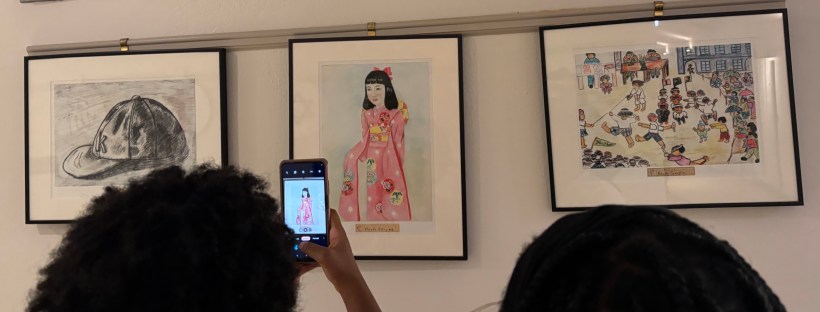
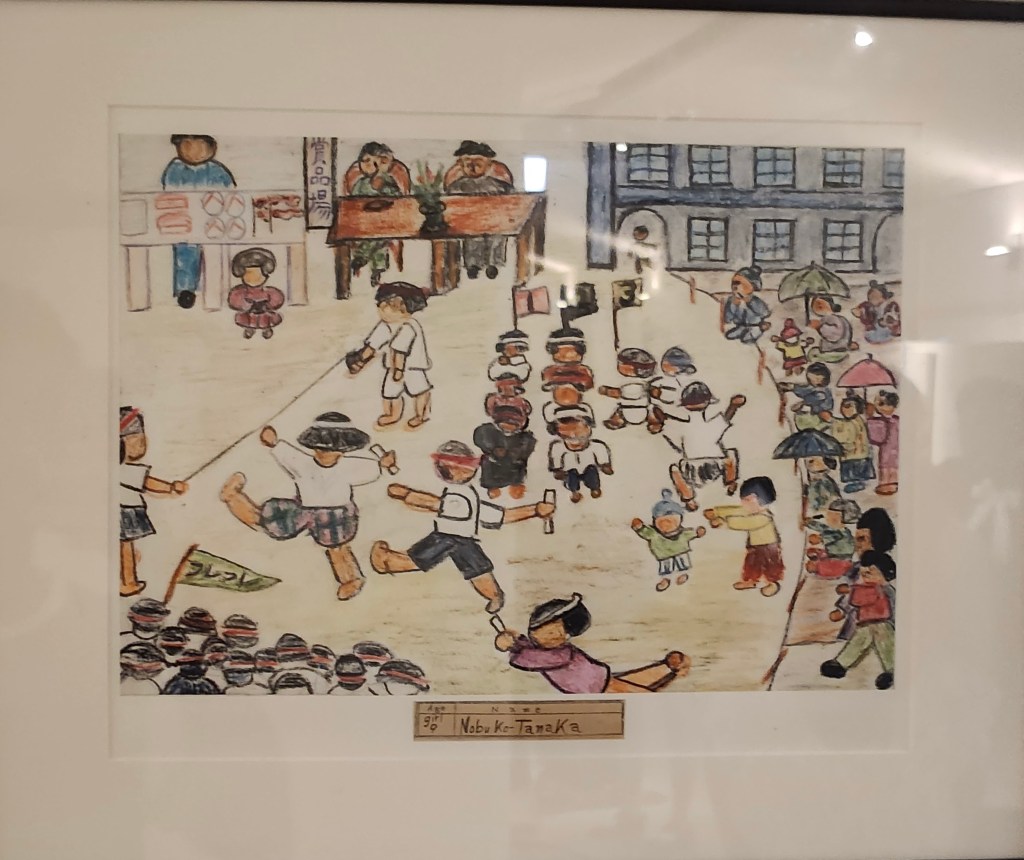
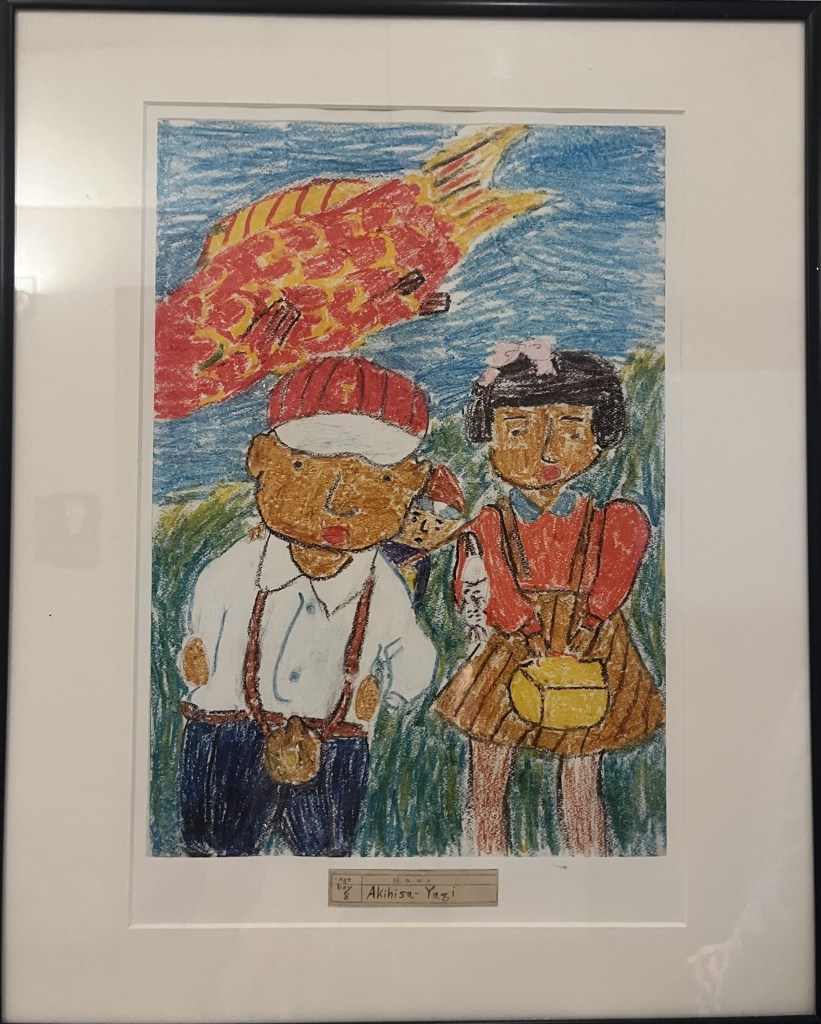
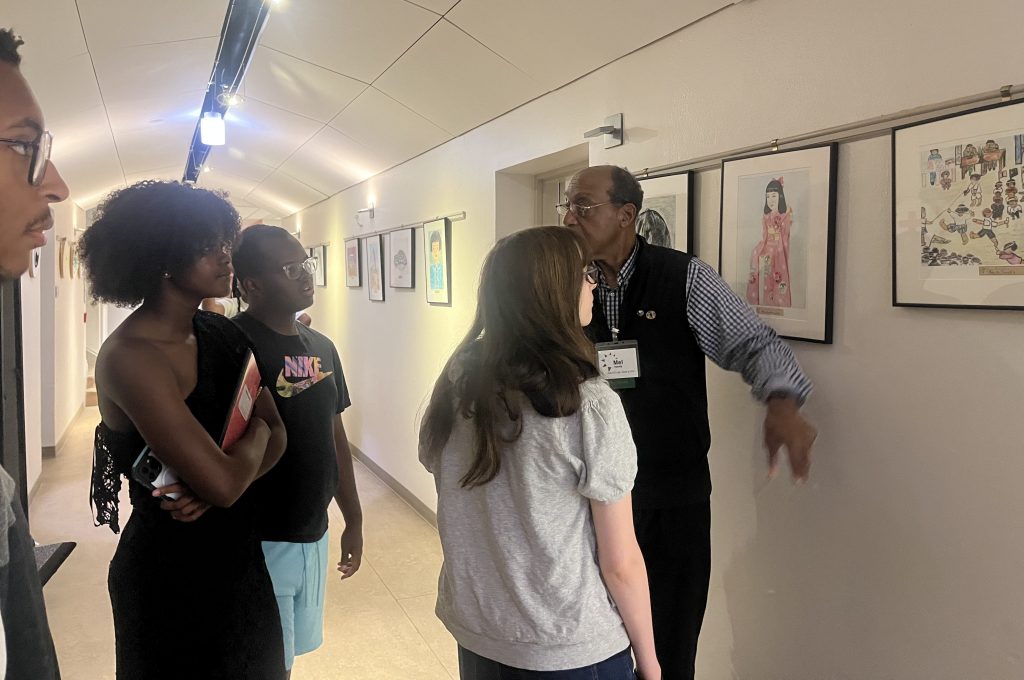
NOTE FROM THE PROGRAM DIRECTOR: A visit to All Souls Church Unitarian on 16th Street, at the intersection of Mt. Pleasant, Adams Morgan, and Columbia Heights, is the experience we look forward to in each Japan in DC program. All Souls is a historic DC church with a strong social justice tradition. After World War II, the children of All Souls collected art supplies to send to the surviving children of an elementary school in Hiroshima, Japan, devastated by the atomic bomb dropped on their city by the United States. This gesture of support from the All Souls community was reciprocated when they much later and unexpectedly received a box of children’s drawings from these same children as a gesture of appreciation. During our visit on July 14 our students were able to view this extraordinary exhibit of Hiroshima Children’s Drawings. We were welcomed by Rev. Rob Keithan, Charles Wooldridge, and peace activist Mel Hardy who shared information on the church, the history of this project, and the church’s ongoing Heiwa Peace Project.
This incredible history is documented in the film Pictures from a Hiroshima Schoolyard, which our students watched the day before our visit to the church. You can find the film streaming on a number of platforms. We highly recommend it.
We were also joined by Karl Tan, a Public Affairs Officer at the Embassy of Japan, who spoke to our group over lunch about his experiences as a JET teacher in Nagasaki, as well as his own interest in Japan and career trajectory.
Here are some of our students’ reflections on the visit:
Kiya: The biggest impact was how kids have so much imagination. Also the impact kids can have to bring two nations together even though they were in deep hatred with each other. My feeling mainly was how much I loved that the church is doing their best to preserve the memory and the history of the beginning of the peace between Japan and America. The lesson I learned was that after a fight you don’t have to hate that person after. Happiness and peace is always a choice and it’s a matter of if you choose it or not.
Demetris: I felt a lot of an old feeling, not because we were in a church, but because it seemed old with a lot of historic things inside and it was really quiet too, so it made it more peaceful than anything. The part of the program that had a big impact on me was that All Souls Church had the drawings of kids’ artwork from Hiroshima, Japan but not only that. It was mostly on how old and how long ago it was, mostly how the drawings were made only two years after the bombs but somehow were full of color and talent. It showed the optimism of the kids and we can learn from this by seeing even in time of despair we can still see the beauty in what life has given to you.
Life lesson: “Even after devastation, they chose to see beauty in life and create it for others to see.”
Kamaya: Seeing all the kids’ drawings made it emotional to know that the kids still had the creativity. Visiting all Souls Church taught me that there are worship communities that do so much.
Madison: Seeing the drawings of the Japanese boys and girls in Hiroshima was the most important to me because of the nature of the art pieces. Despite facing a traumatizing experience and losing their homes and all their connections and belongings, the drawings these children drew were not negative and gloomy, but bright and colorful. This shocked me, especially with how grateful they were when receiving colored pencils from the country who bombed them and sending gifts back to the church. I enjoyed seeing the drawings of the children. Not only were they beautiful and well drawn, but they are artifacts from real people. Aside from the drawings, I enjoyed hearing about the church’s history and what they do to honor it.
A valuable lesson that could be taken from the visit is to help others no matter who they are, and you shall be rewarded.
Zaevior: At the All Souls Church, the biggest impact for me came from the Hiroshima children’s drawings in the basement. Knowing those drawings came from preteens following their homes being bombed breaks my heart. Before going to the Church, we watched a film about it. In the film, we learned that the church had created a Heiwa Peace Project to help after the war. After the visit, an idea that stuck with me was that art can tell many stories.
Lauren: The thing that made the biggest impact on me was seeing how the kids were able to make such happy drawings full of color after a tragedy. This impacted me deeply because I could never imagine drawing such things after losing loved ones. The visit to the church felt so wholesome because Honkawa didn’t have to send anything back after receiving the supplies from All Souls, but instead of sending a thank you card they sent beautiful drawings which shows how kind Honkawa Elementary was to a nation that killed so many of their people.
A life lesson I would take away is to not let anything dim your happiness and kindness.
Aston: The most impactful part of the program to me would be the pictures that the kids made since they could show how life was for them or even a symbolic reflection of their current life situation. I felt amazed because of their artistic abilities.
DeVonte: The part that surprised me the most was how the paintings weren’t bad, like they showed colorful and heartwarming paintings. They didn’t show war and the chaos that just happened. I didn’t even know that a school survived and their kids drew amazing paintings that leave an impact on the world. It shows how, because of something, it didn’t affect the peoples’ minds. They could still find a way to have fun.
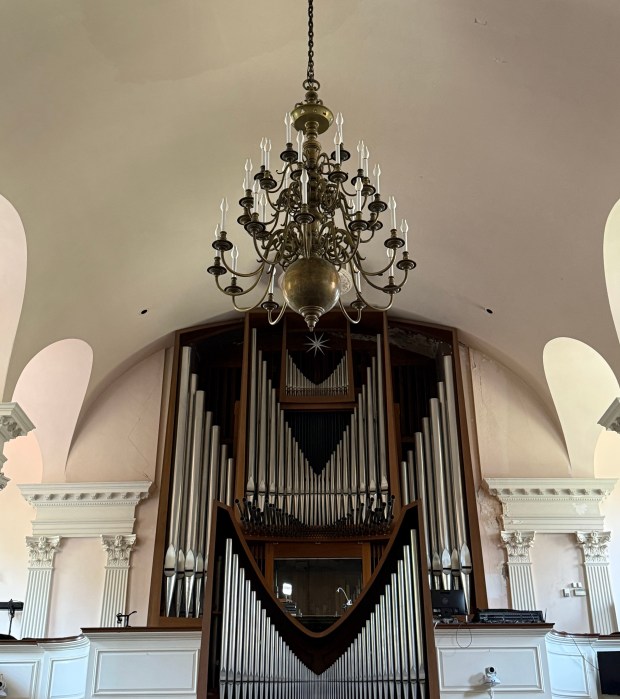
Christian: The biggest impact left on me was the pictures. How they weren’t war kids’ pictures but instead colorful, bright, and of people in places stuck in time. It made me feel a great sense of calm and impressed. I liked how much history and things were inside the Church – from Austrian organs to the Japanese kids’ pictures.
Life lesson: Colors make everything better.
Blessing: The part of the program that made a big impact on me were the children who were innocent but had to face something so terrible. So young and beautiful. All of this because of the bombs that killed their family and their home. That’s not a good thing to do to children so innocent because of their parents. I feel so bad for the baby who died on the back of his brother. That was so much pain for a kid to lose his brother so young. This experience is related to all of the things that all countries cause each other. There are people who did not even talk but yet were killed just like that.
The life lesson is to not try to fight someone who has more power than yours or you could lose your family and your peace on one day, and also learn how to rebuild what has been destroyed.
Honesti: The program left an impact on me because of how colorful and vibrant they were able to make their drawings despite the things they saw and lived through. I was deeply hurt after the bombing and how they progressed through the horrible situation they were in. I love how they were able to visualize things in such a beautiful light even through the mess and destruction of their Hiroshima.
Jaylen: I think the thing that stuck with me the most was the fact that the children still remembered the times before the bomb, and also the fact that they could still keep moving forward after such a devastating attack, because I feel like if my whole city was bombed and thousands of people died, I would really struggle to keep on going. Also the fact that they forgave America so easily despite how devastating the attack was. Beyond the content, I noticed that people talked about the drawings and how just little kids made them, and I think that that view is not good because I feel like anyone can do anything as long as they really want it.
Pippa: The part that had the biggest impact on me was just looking at all the kids’ art and seeing that even though they were not given any prompt about what to draw, all of them ended up drawing something related to life before the bomb or nature. It showed that in a time like this, most people’s desire was simply to return to a normal state of things and nothing more. I thought it was really nice and it was very cool to know that most of the originals had been reunited with those who made them. It helped with providing a human story to go with what we were learning about the bomb, which helped me feel the event on a deeper level.
Life lesson: Keep creating, even when in difficult situations.
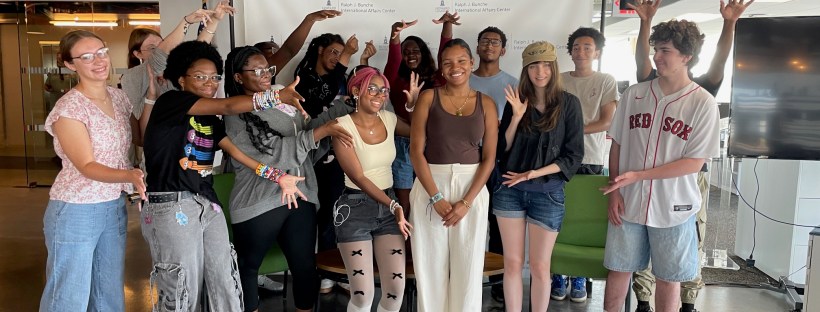
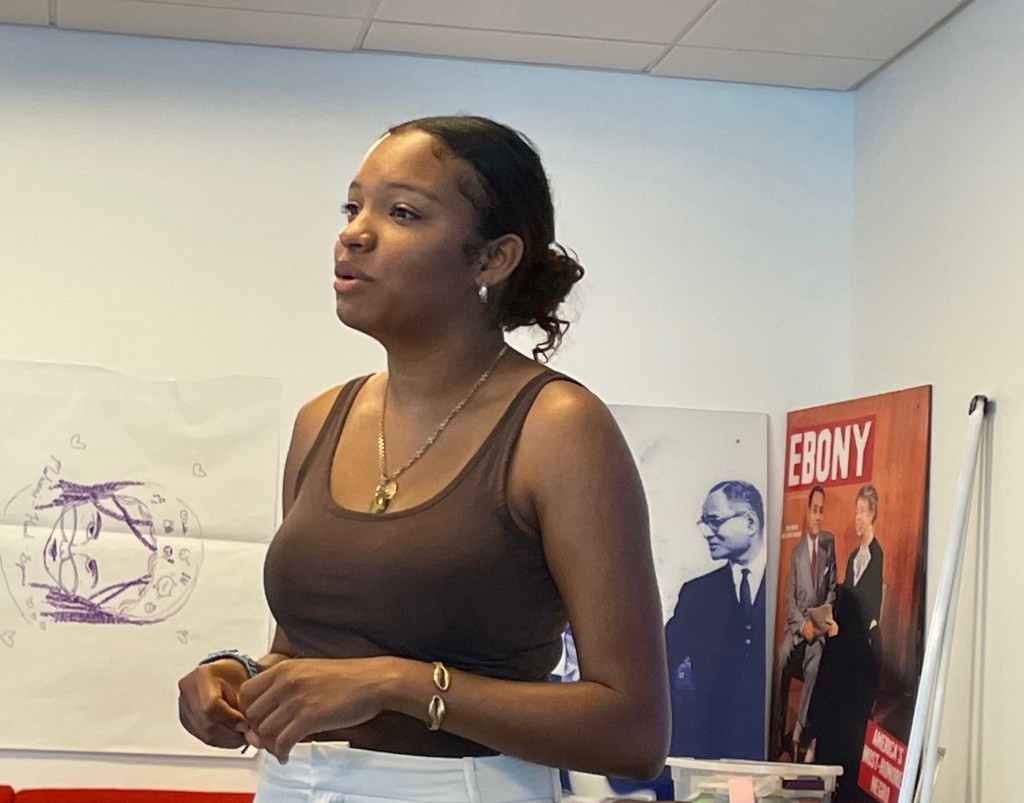
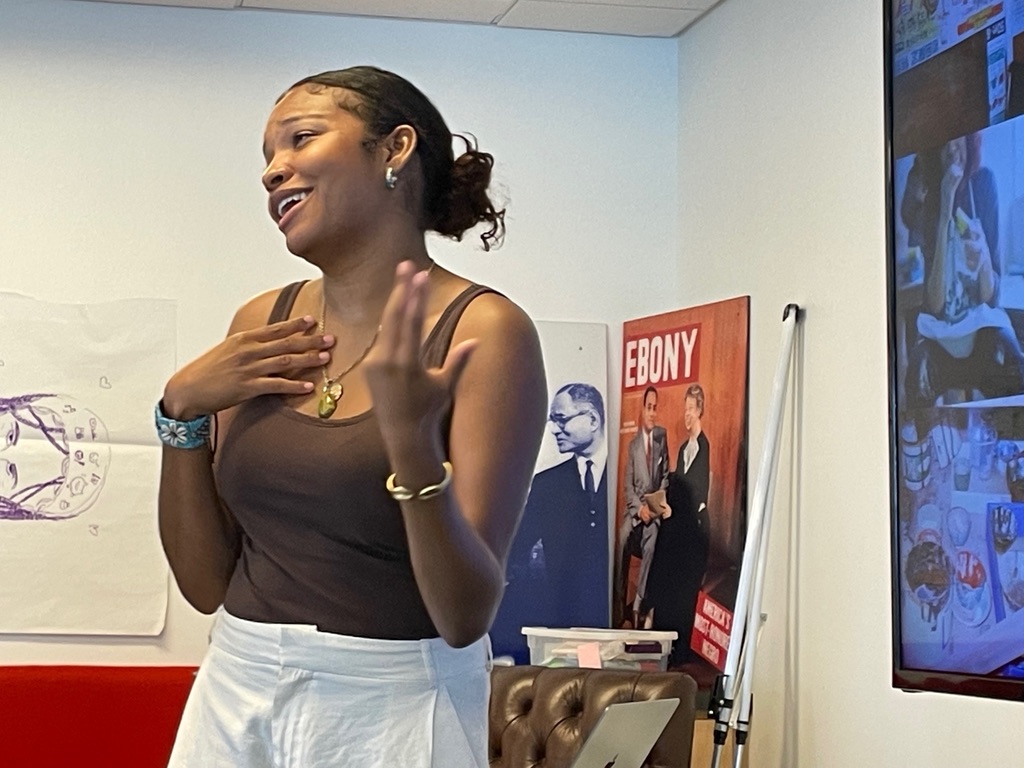
Note from the Program Director: It was the morning of July 1 at Howard University’s Ralph Bunche International Affairs Center. Gabrielle Headly, Exhibition Coordinator at the Embassy of Japan’s JICC (Japan Information and Culture Center), was our first guest presenter of the summer 2026 Japan in DC Program. She was the perfect choice – informative, engaging, personal, and open. Our students found much to relate to and be inspired by in her life story – from her visit to Okinawa as a child, to her time at Howard University and study abroad, her experience as a JET in Japan, her interest and training in the arts, and her current work at the Embassy of the Japan. She introduced the concept of “thinking globally” and the benefits of international travel and exchange – important messages as we kick off the summer program. Our students had a lot to reflect on. They were excited to see Gabby again the following week when we visited the JICC.
Madisen: Gabrielle’s exposure to Japan began during her childhood watching animes on television. From then on she began studying Japanese on her own because her school did not offer Japanese. When she visited Okinawa in 2015, she fell in love with the culture and close knit communities the residents had. Therefore, she studied abroad in Osaka in 2017 and was able to experience how Japan sees the Western world, and explore more of Japan. She then went to apply for the JET program and stayed in a mountain valley to continue pottery and teach English. She quit the program to live there for an additional 1 year but eventually moved back to America where she talks about Japan and exposes Americans to Japan through the Japan Information and Culture Center (JICC) and the Embassy of Japan. What stuck out to me was how she described how Japanese natives viewed Americans. Gabrielle expressed great frustration in having to argue against stereotypes of Americans, as well as comment about her naturally curly hair.
Christian: Gabby really pointed out the idea of exchanging cultures and ideas to expand/build new and better ones. Also she spoke about the Black experience/Identity that she found in Japan along with the American one. I also got a great sense of possible people who are interested in East Asia and Black!
Demetris: I learned mainly that Ms. Gabby’s love of Japanese culture was because it was different from her culture and of course because of anime. Her time in Japan in the JET program was in a small village and she ended up meeting a lot of people because of that. Something that I learned but kind of knew was the problem with black people’s hair and the misunderstanding about where black people come from, since it is shown that blacks are expected to be from Africa or the USA, not expecting them to be from Europe or South America too. Afro hair/fluffy is seen as really messy.
Jaylen: I learned that making your interests known, and being outgoing can result in some things that benefit you for the better. The most interesting thing I learned was that Japan is so long that it can go from a cold place to a nice warm tropical beachy area. Something that stuck out to me was that African Americans in Japan can appear very alien, and curly hair is seen as unkempt or messy, and people had no idea that curly hair could be natural. Life lesson: This presentation showed me how taking risks, and putting yourself out there can be very rewarding.
Blessing: The thing that struck me about what she said was that she had a safe feeling in Japan more than when she was in the US. The Japan Exchange Teaching (JET) Program seems very interesting and important for someone who would like to live in Japan, that would prepare them and at the same time help people. I like the way the program put her in a good place where she got to learn something about art in Japan. And I like the way people out their changed her view of life with people like how to make people feel when you are with them.
Zaevior: Some things that really stuck with me during the presentation was the JET Program. It’s something that I may be interested in after I finish college. From this presentation, I learned that some areas of Japan, “bens” like Osaka, have accents or that change how some words are said. The most interesting part of the presentation to me was her display of the Yokai exhibit that will be coming to the JICC.
Aston: The experience that she shared that stuck out to me the most was her stay at the military base in Okinawa, since it was a piece of America that was planted in Okinawa that had retained the American culture. Another experience that interested me was her time studying in Osaka where she was able to study art and film and then compare the Japanese culture of art and film to the rest of the world.
Morgan: From Gabrielle’s presentation, I learned more about the worldview of Japan. They are very welcoming, as shown from the elders that “adopted” her and welcomed her into their pottery studio, but they also have a limited understanding of Black people. They believe that all black people are either from Africa or America, and that hair like ours is seen as messy, or can only be achieved through a perming process. I’ve also learned about potential opportunities that could take me to Japan after college, like the JET program, and that would allow me to teach others while also exploring the country.
Kamaya: I’ve learned more about the JET Program and more about her life. I’m more interested in it cause I’ve always wanted to live there. Her experience there was unique and priceless and I wanna have the same experience. I have visited but that’s different from living there. What stuck out to me was that there was a ceramics place that basically adopted her. Her whole story is interesting overall.
Pippa: I knew about the JET program but I didn’t know there were other types of jobs than just language teaching. I learned that Japan has unique communities like art villages and counter-culture groups that even foreigners can connect with. I learned that you can have a Japan-related job without living there.
Liam: Okinawa is an island in Japan, but it has its own distinct culture and people. I thought it was just part of Japan, like any other city. Japan is much more diverse than I thought, and were very welcoming based on Gabrielle’s story. I’m very interested in that Japanese architecture exhibit.