Mary Murakami

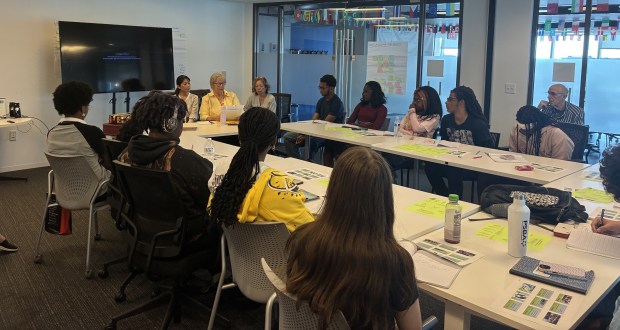
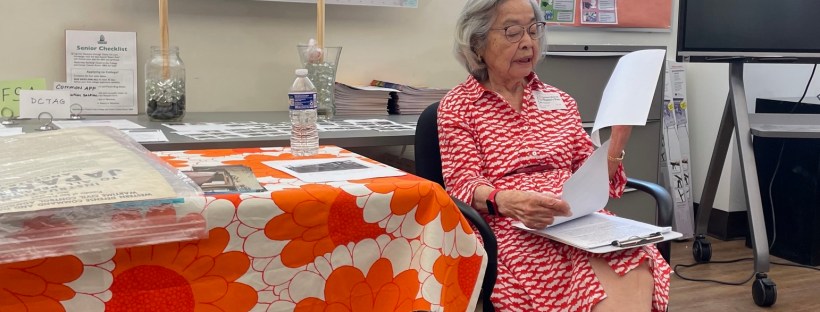
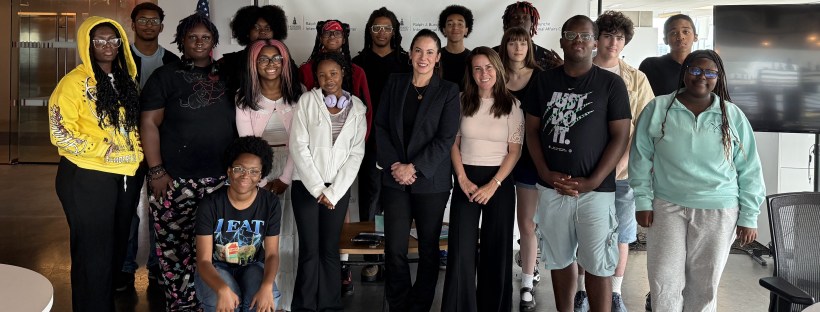
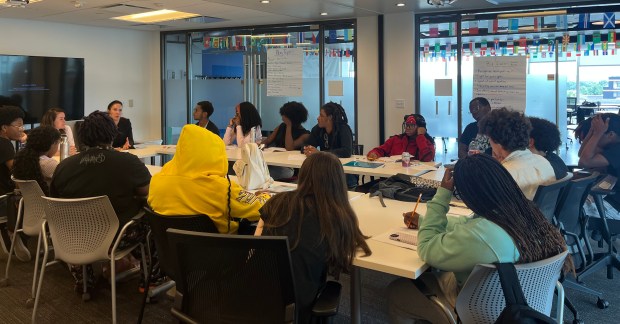
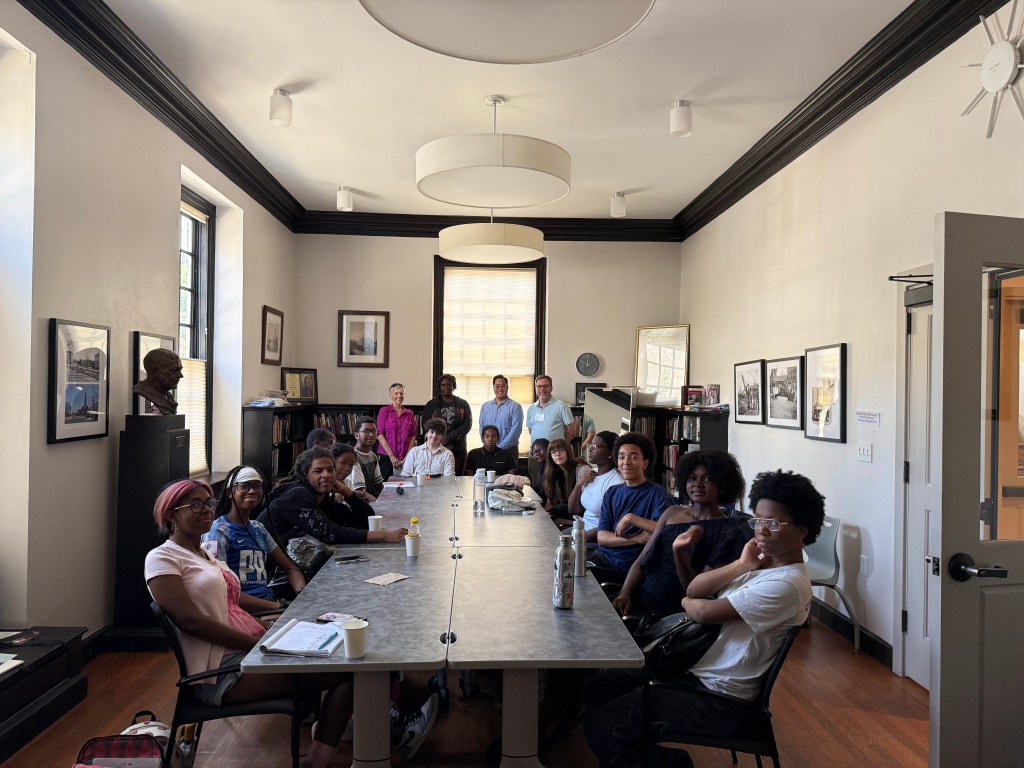
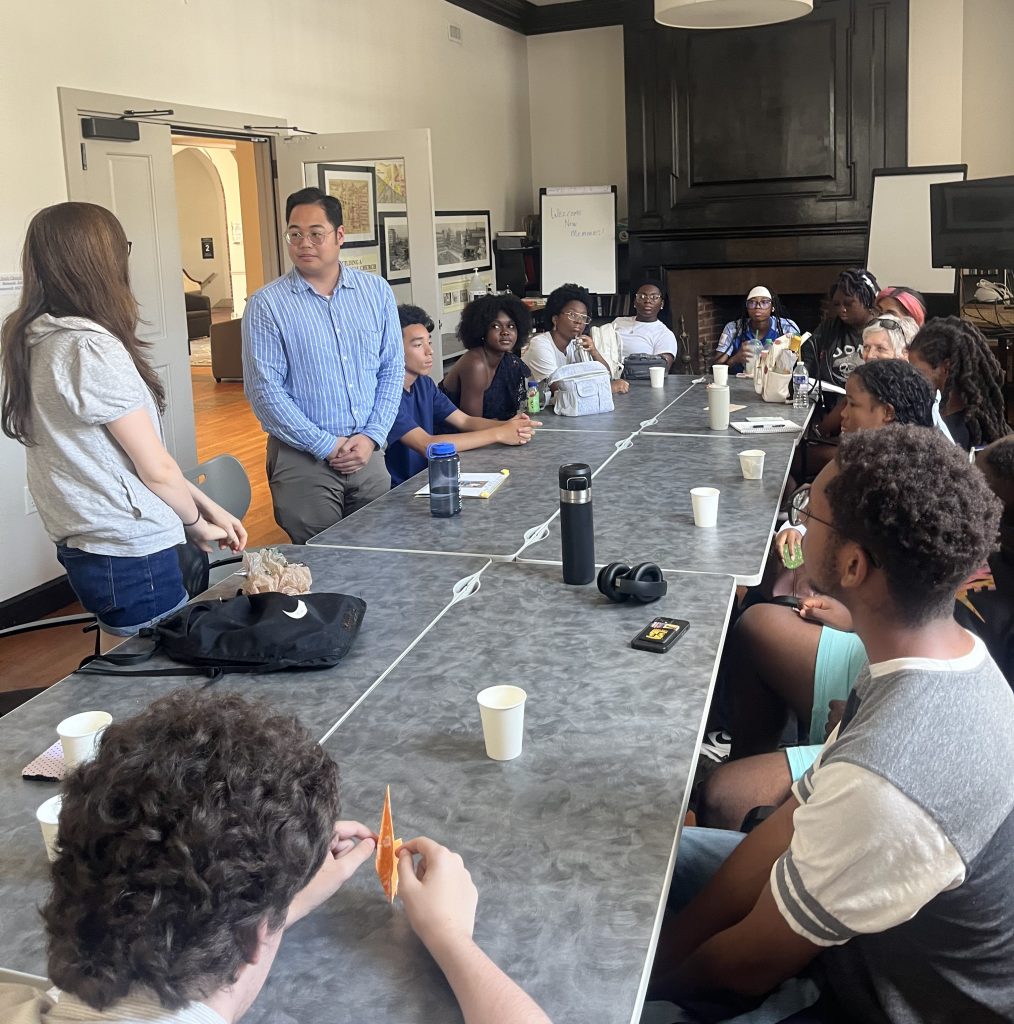
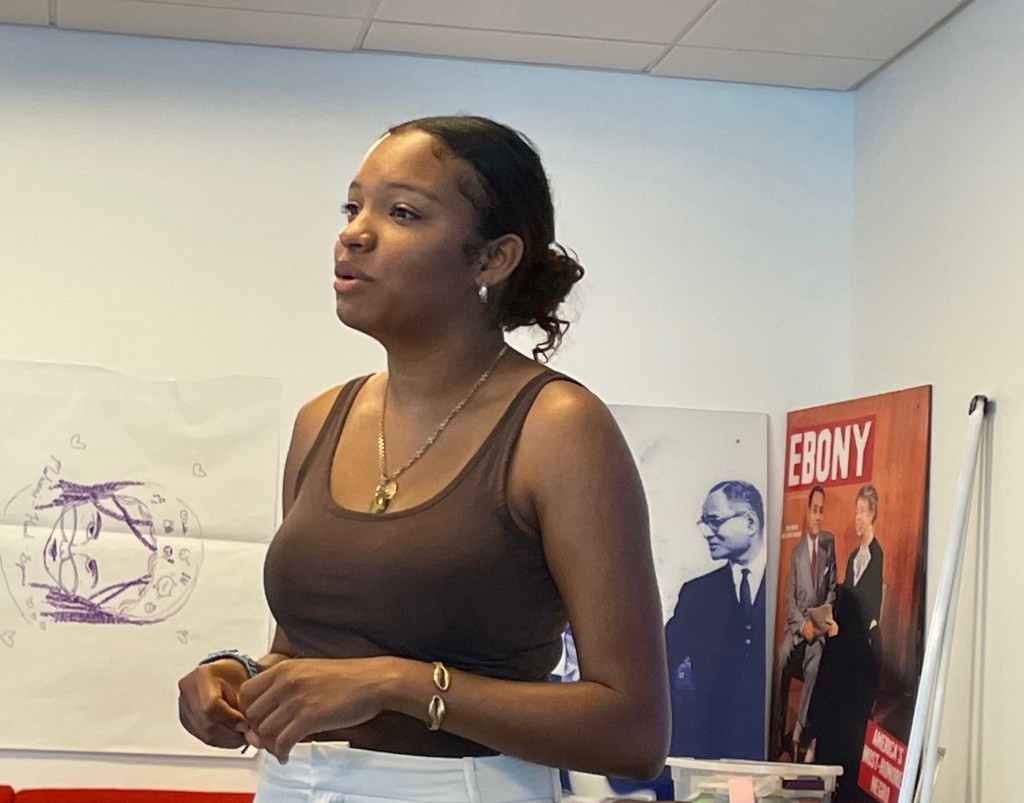
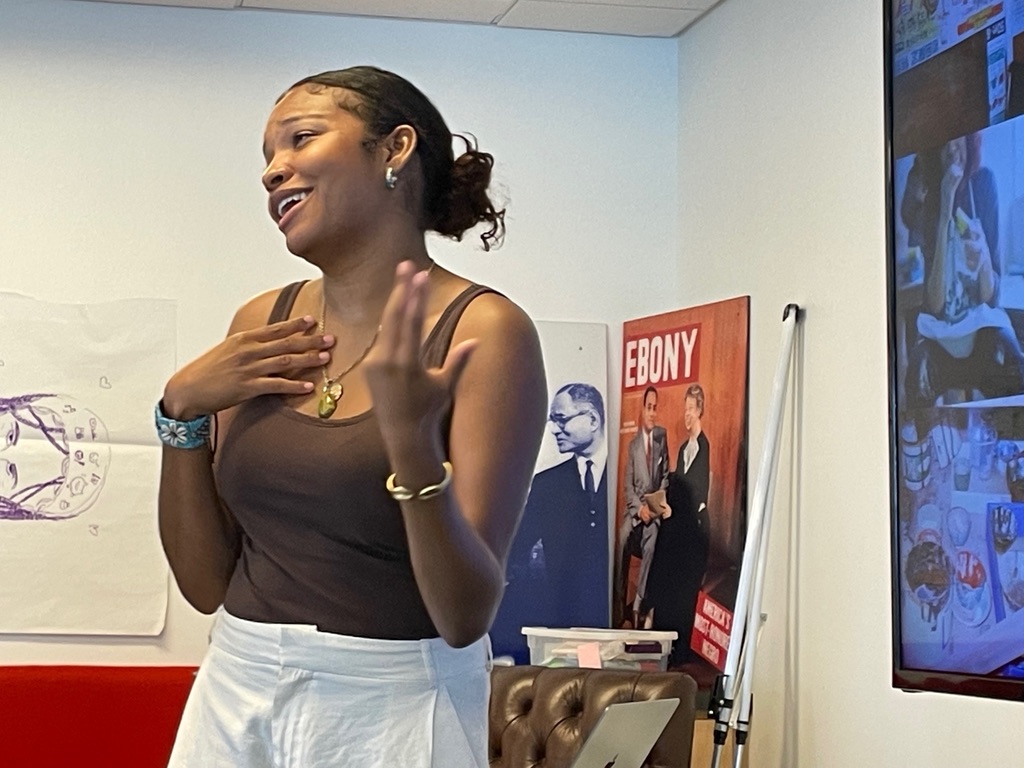
Note from the Program Director: On Friday morning, July 24, Japan in DC had the honor to meet with Mary Murakami to hear the story of her experience as a teenager living through one of the darkest chapters of American history – the incarceration of Japanese Americans during World War II. Mary was accompanied by her daughter, Kimi Murakami, who provided additional information and context.

Mary was 14 years old when the Japanese bombed Pearl Harbor in 1941, leading to the entry of the US into the war, followed by President Franklin D. Roosevelt’s signing of Executive Order 9066 in February 1942, which led to the incarceration of approximately 120,000 men, women, and children of Japanese descent – most American citizens. Mary described to our students in great detail what happened to her and her family before, during, and after her incarceration at Topaz Camp. Despite unbelievable hardships and disruptions to her high school education, through persistence Mary went on to attend the University of California at Berkeley, to earn her degree in public health/microbiology, and have a successful career as a microbiologist. We are so grateful that Mary has become a regular visitor to Globalize DC’s Japan programs. Mary is now 99 years old. She is a masterful storyteller. Her unrelenting commitment to sharing her experience and wisdom with younger generations is awe-inspiring, and our students felt the impact of this experience. Here are some of their reactions.

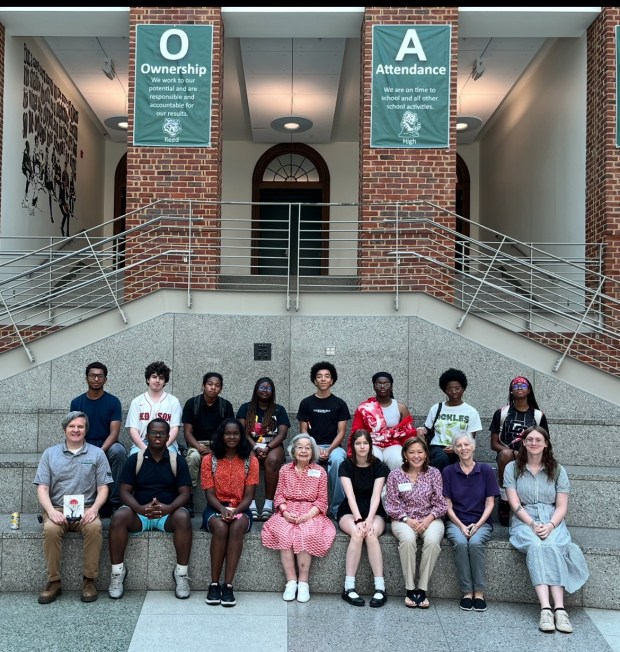
Special thanks to Jackson-Reed High School and Assistant Principal Marc Minsker for hosting this program, and inviting students from the school’s Academy of Global Studies and Diplomacy to join us as well.


Lauren:
The part of Mary’s story that made the biggest impact on me was at the start when she told us she was around our age going through this. Especially when she said she eventually could not attend school. I can’t imagine not being able to go to school, having to move into a camp in the middle of nowhere with my family and having to sell everything I couldn’t take with me. That part of her story impacted me most. A few feelings I have about Mary and the overall experience is proud, empathetic, and disappointed. I felt proud hearing Mary’s story, because even though she is 99, she is still able to go out and tell her story so that the next generation can carry it on. I felt empathetic because even though African Americans weren’t put into camps like Japanese Americans, they were still treated as badly, so hearing her side of the internment camps made me feel very empathetic. Lastly, I felt very disappointed with the US government because the US might not have been that diverse then, but people still should have been taught to treat others with respect no matter their gender or race. A life lesson I would probably take away is what she said at the end, “Remember your civil rights.” That is so important especially with what’s going on right now with ICE and deportation.

Christian:
The lessons I learned are that civil rights and the American dream should be something that nobody should be able to stop – not the government or any person. And lives may seem hard but will get better through will and hope.

Jaylen:
The part of Mary’s story that made the biggest impact on me was the part where she was answering a question about question 27 and 28 of the loyalty questionnaire. This really impacted me because she talked about families being separated and that is such an important thing to me because putting myself in their shoes, being around my age, being as clueless as I am, it would be really scary and I am not sure if I would have been able to do it. Beyond the story, I felt that this experience, similar to Gerald Yamada, was a great thing because it shows (no offence) that the history from back then is fleeting and we might not have much more time with these people so we should cherish our time with them. I think cherishing our time and listening to our elders is actually good for us and so that we can carry on the legacy of the past generations.

Malia:
The part of Mary’s story that had the biggest impact on me is when she talked about how her dad didn’t believe that Japan and the US were at war. It shows that the most unexpected things can have big impacts. I feel like it’s good that she is able to share her experience so that people can make an effort so it won’t happen again. A life lesson I will take away is to always try to protect my civil rights. Because you never know when they can be taken from you.

Pippa:
The part of Mary’s story that made the biggest impact on me was when she talked about how it was really difficult for her to receive an education, because even though it seems like she was really bright, she experienced a huge obstacle that stopped her from fulfilling her potential and living a normal life, and I think that goes for everyone in the camps, not just school kids. On the other hand, I thought the fact that she was still able to get into college was very uplifting. I thought it was interesting how she said, “at this point, this experience is a very small fraction of my life, but it still stays with me.” It shows that even though some historical events like this only lasted a short amount of time, the actual impact they have on people’s lives is immeasurable. I also thought Mary’s perseverance throughout it all was admirable. The life lesson I take away is, like she said, it’s important to protect civil rights. Her experience shows what can happen when they are ignored and so it’s really important to be active in defending and fighting for civil rights even now.

Blessing:
The part of Mary’s story that made a big impact on me is how her education was very difficult for her and she missed her 9th grade, but did not give up on her education and still tried to find a way to go to the university after World War II. I feel like she is a strong woman because of the way and circumstance that she was living as a teen was very bad. I observed that she is a person that gets the thing that they want and has a strong family that did some of the things to help them survive during the time they were in the camps.

Madisen:
Mary’s story of returning back to society after being incarcerated made the biggest impact on me because of how difficult it was to continue her life. Mary had only just received her diploma and chose to return to California, only to face racial discrimination. Because the government chose to negatively represent Asians, many Americans did not like Asians or Asian-Americans or want them in their community. This impacted me because of how unfair it must’ve been for Asian Americans continuing their life in America. I observed that Mary hadn’t been particularly depressed during this time in her life. Although she explained that her time at the camp was rough and often violent, she didn’t let that deter her. Mary had also described how fortunate her family was to receive rooms and overall be with each other, unlike many families who were separated. A life lesson I may take from Mary’s presentation is to preserve your education. When Mary and her family were incarcerated, she had to stop school for a time, and even before the camps she couldn’t go to school because of the curfew put on Japanese people. However, the incarceration camps did not stop her from trying to get her education.

Aston:
I was deeply inspired when she had told us about the daily life of the kids in the camps because it showed me that you and the people around you can enjoy yourselves within dark times. From the overall experience I felt determined to take this knowledge and use it to try to prevent this from ever happening again. The life lesson I’ll take away – that even when you find yourself in a dark time, you can still come back stronger.

Liam:
The part of Mary’s story that had the biggest impact on me was when she talked about her life before the camps, especially when she talked about how the FBI would go through Japantown and the Army blocking off streets. I’m not really sure why but that stuck with me. The life lesson I took away from Mary’s story is when she said “strive to do right without violence” at the end.

Morgan:
The part where Mary said she originally wanted to answer “No. No” to question 27.28, but her family made a group decision to answer “Yes. Yes.” Those two questions sparked many fights and deaths inside the camps, and separated families because people who answered “No. No,” “Yes. No,” or “No. Yes” were considered disloyal and were relocated. I might take away the fact that sometimes you have to make do with what you have, because life will not always be kind to you. Also, to live is to keep going, even in the face of adversity. $25 and a train ticket . . .  and she became a biochemist!!

War and Family

By Blessing Maya

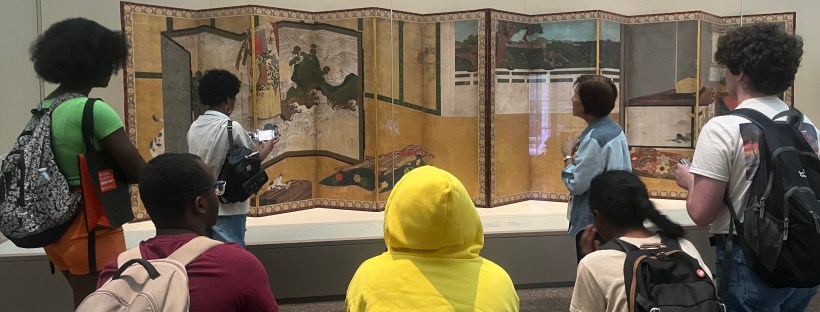
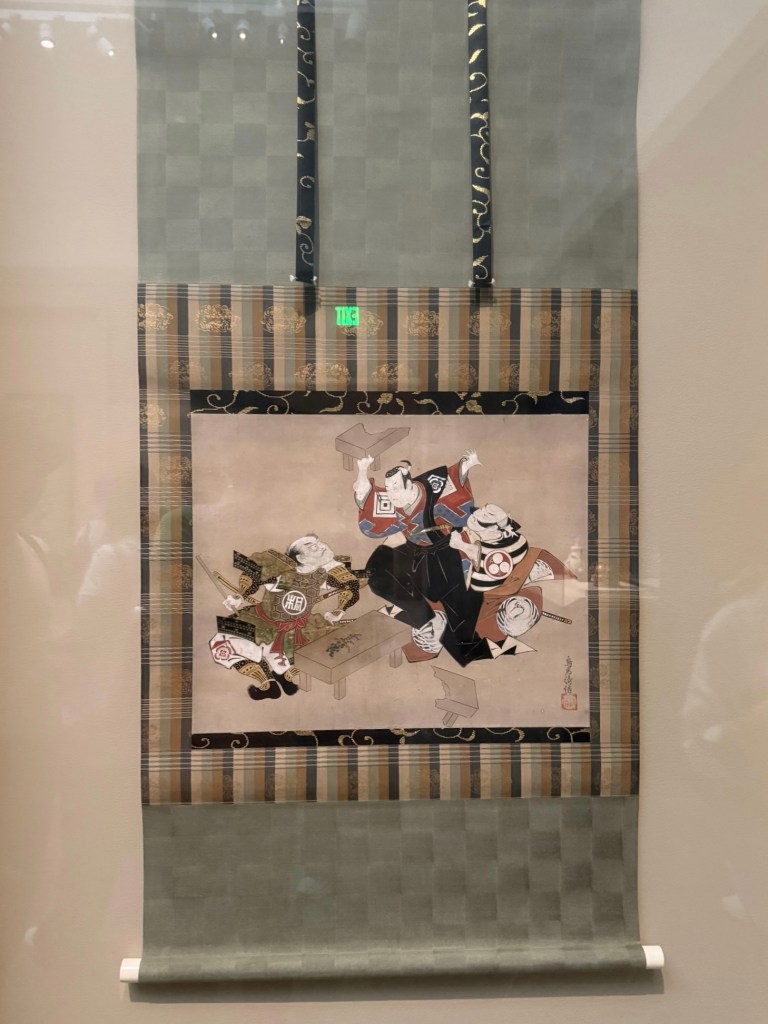
This Japanese print is from the National Museum of Asian Art. It represents the true story of two brothers, Soga Sukenari and Soga Tokimune, who spent eighteen years planning to avenge their father’s murder that happened in 1176. In the end, they successfully killed their father’s murderer in 1193. During the attack, the older brother, Sukenari, died in battle, while the younger brother, Tokimune, was captured alive. Their story became a very popular subject in Kabuki theater, and many artists created prints showing actors performing scenes from it. Through the Japan in DC program, I learned that many Japanese artworks are based on historical events, legends, and often depict famous theater performances. This also helped me to understand why stories like this are so important in Japanese culture and how artists used their prints to keep these stories alive. I found this story especially interesting because the characters were memorable. I also really enjoyed learning about their journey and listening to the story from our tour guide, Ru Fan.


Karin Tanabe and Victoria Kelly

NOTE FROM THE PROGRAM DIRECTOR: Our week, focused on World War II and the atomic bombing of Hiroshima and Nagasaki, continued with a visit on July 15 from Karin Tanabe and Victoria Kelly, co-creators of the documentary, Atomic Echoes: Untold Stories from WWII. This film, which is currently airing on PBS, tells the story of the impact of these horrific bombings on the lives of both Japanese residents and American veterans who lived the experience. Through the personal stories of survivors from both the US and Japan, Atomic Echoes shows the deep and long-lasting effects of the use of nuclear weapons, and the responsibility of the current generations to remember and learn from the past. Karin Tanabe is a first-generation American, and an author of historical fiction and a journalist. Victoria Kelly is also an author and poet, and granddaughter of an American atomic veteran. Karin and Victoria see their film as a “tool for peace” that can be used for discussions in school classrooms or community settings like ours. Our students had strong reactions to what they learned this day.


Pippa:
I liked how Karin and Victoria covered a variety of topics surrounding the bombing. They talked about both the human stories, political side, moral arguments, and health effects of the bomb. The part that had the biggest impact on me was hearing about the picture that they described of the boy by the crematorium. Hearing about that made me very emotional and made me think about how beyond all the deaths that happened, a lot of pain also happened through what the survivors had to deal with, both through grief for their loved ones and the lasting effects of radiation on human health. Life lesson: Always think about the people that may be affected by your actions.

Lauren:
Hearing Karin Tanabe talk about the effects the atomic bomb had on Hiroshima and Nagasaki was so saddening to hear. Even though it has been a long time since then, so many people are still affected. What shocked me the most was finding out survivors that had kids later on, their kids have radiation in their DNA, which I believe can be passed on still.

The part of Karin’s presentation that impacted me was finding out the US government wanted to keep the effects on Japan after the atomic bomb a secret from the public because first, they knew it was wrong and inhumane, and second, they knew it was so graphic and that many people died. They didn’t want people to know that people who lived in Hiroshima were affected more than the rumbled and almost gone buildings that were the only thing photographed after the bomb dropping, and what would be the only thing released to the public on the bomb dropping until the 1990s. Almost 50 years later.

The one thing I took away from what Karin spoke to us about is that all countries should get rid of atomic bombs as a whole. Everyone should be taught about the Hiroshima and Nagasaki bombings, and world leaders should recognize the effects and the amount of deaths that came out of one bomb and decide that nuclear bombs shouldn’t be a thing.


Aston:
The biggest impact that the meeting with Ms. Karin and Ms. Victoria had with me would be their description of the atomic bombing of Hiroshima and the experiences of the survivors due to how traumatizing and unbelievable the event seems. I felt shock and pity for the fallen victims throughout the visit. The information I learned here directly tied to the information we learned at All Souls Church and their Hiroshima Children’s Art project. Life lesson: Keep pushing forward even when it seems impossible.

Blessing:
The part of the program that had a big impact on me was the photograph of the boy who was holding his little brother on his back and did not know that he was dead. I feel so bad because they did not have to drop this bomb. They could find another way to fix things. Life lesson: We do not have to create a war for a misunderstanding. We can act like humans who are smart and think before doing something.

Kamaya:
Listening to this presentation made me realize that the impact of the atomic bombings went far beyond the destruction of all buildings in the area. I learned that survivors that didn’t just die right away suffered lifelong problems mentally and physically. The radiation did more than anyone realized. This made me think of the millions whose lives were destroyed.

Madisen:
When the United States dropped the bomb on Hiroshima and Nagasaki, they thought little of it and celebrated, while Japanese citizens were viciously killed in the explosion and lost everything. Hearing about the Barbie and Oppenheimer movies collaborative promotional campaign (“Barbenheimer”) and how it was disrespectful towards the Japanese showed me how insensitive people can be towards traumatic events if they don’t directly affect them.

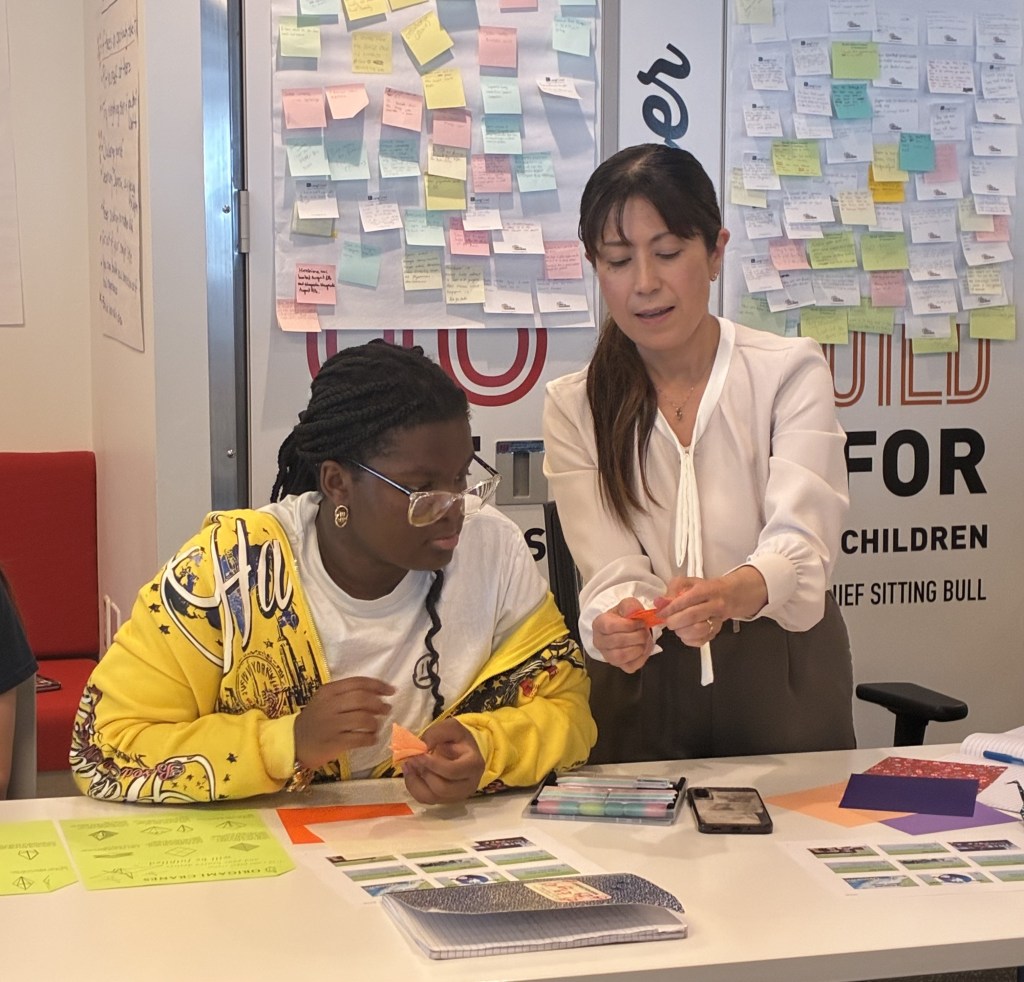
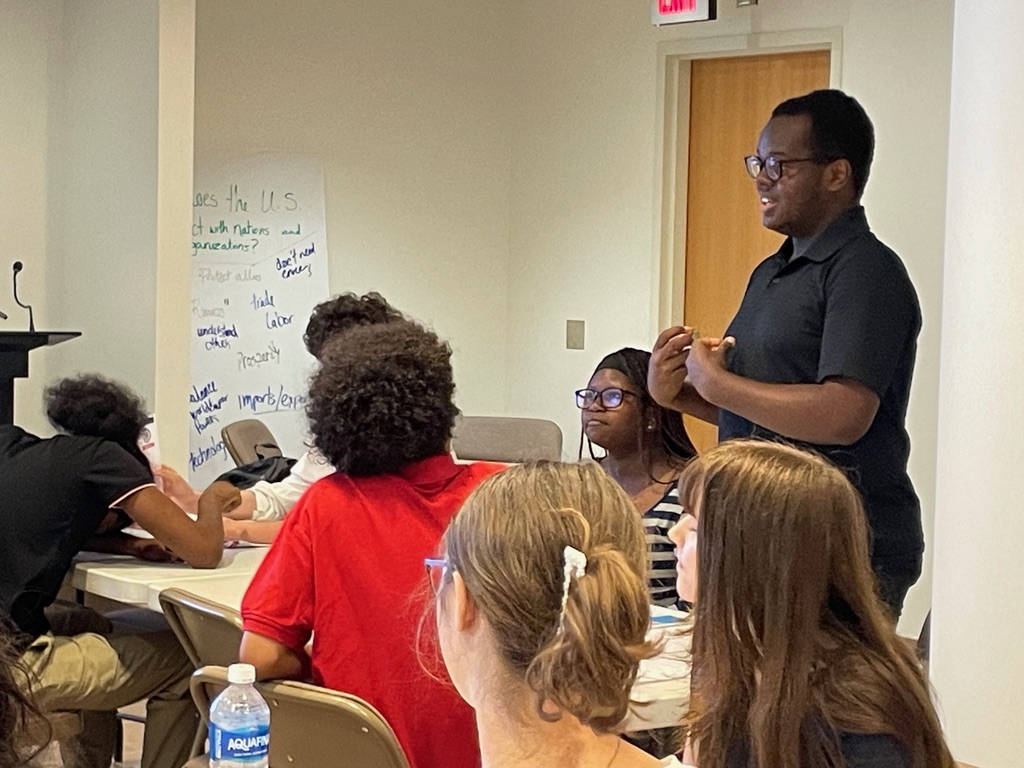
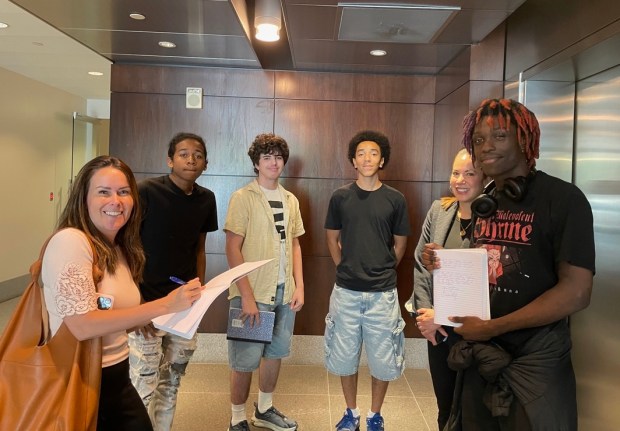
Karin and Victoria turned out to be celebrities! Demetris, Liam, Jay, and DeVonte getting autographs after a very meaningful session.


One Day, One Attack


By Blessing Maya

One day, one attack
Changed the lives of many people.
Many stories began, and many dreams came to an end.
Many lives were lost. Many did not know why.
Many died. Many fought for what was right.
Many could not fight.

I would send you many paintings,
The day you would no longer see me as an enemy.
I would place flowers at your door,
The day you would no longer see me as an enemy.

The children did not know they were trapped,
Living inside invisible prisons.
Born here, yet treated as strangers in their own land.
Japanese by heritage, American by birth,
Misunderstood, yet they stood strong.

Don’t hurt your own family
Just because their roots come from another tree.
Their roots are here too,
Just like yours and mine.

From the ashes of war, a new dawn rises.
Two nations, once divided, grow closer.
Cherry blossoms bloom beside the Tidal Basin,
As symbols of peace, friendship, and hope.

Together we stand across the ocean wide,
In friendship and hope, side by side.

Gabrielle Headly

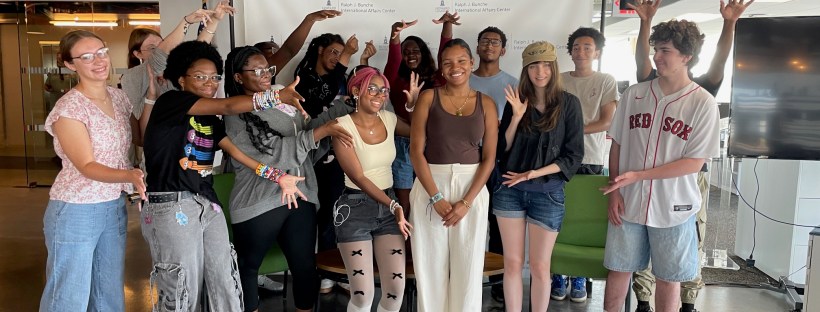
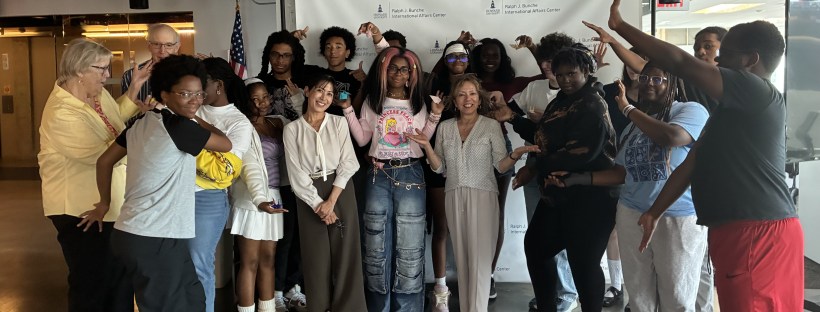
Note from the Program Director: It was the morning of July 1 at Howard University’s Ralph Bunche International Affairs Center. Gabrielle Headly, Exhibition Coordinator at the Embassy of Japan’s JICC (Japan Information and Culture Center), was our first guest presenter of the summer 2026 Japan in DC Program. She was the perfect choice – informative, engaging, personal, and open. Our students found much to relate to and be inspired by in her life story – from her visit to Okinawa as a child, to her time at Howard University and study abroad, her experience as a JET in Japan, her interest and training in the arts, and her current work at the Embassy of the Japan. She introduced the concept of “thinking globally” and the benefits of international travel and exchange – important messages as we kick off the summer program. Our students had a lot to reflect on. They were excited to see Gabby again the following week when we visited the JICC.

Madisen:
Gabrielle’s exposure to Japan began during her childhood watching animes on television. From then on she began studying Japanese on her own because her school did not offer Japanese. When she visited Okinawa in 2015, she fell in love with the culture and close knit communities the residents had. Therefore, she studied abroad in Osaka in 2017 and was able to experience how Japan sees the Western world, and explore more of Japan. She then went to apply for the JET program and stayed in a mountain valley to continue pottery and teach English. She quit the program to live there for an additional 1 year but eventually moved back to America where she talks about Japan and exposes Americans to Japan through the Japan Information and Culture Center (JICC) and the Embassy of Japan. What stuck out to me was how she described how Japanese natives viewed Americans. Gabrielle expressed great frustration in having to argue against stereotypes of Americans, as well as comment about her naturally curly hair.

Christian:
Gabby really pointed out the idea of exchanging cultures and ideas to expand/build new and better ones. Also she spoke about the Black experience/Identity that she found in Japan along with the American one. I also got a great sense of possible people who are interested in East Asia and Black!


Demetris:
I learned mainly that Ms. Gabby’s love of Japanese culture was because it was different from her culture and of course because of anime. Her time in Japan in the JET program was in a small village and she ended up meeting a lot of people because of that. Something that I learned but kind of knew was the problem with black people’s hair and the misunderstanding about where black people come from, since it is shown that blacks are expected to be from Africa or the USA, not expecting them to be from Europe or South America too. Afro hair/fluffy is seen as really messy.

Jaylen:
I learned that making your interests known, and being outgoing can result in some things that benefit you for the better. The most interesting thing I learned was that Japan is so long that it can go from a cold place to a nice warm tropical beachy area. Something that stuck out to me was that African Americans in Japan can appear very alien, and curly hair is seen as unkempt or messy, and people had no idea that curly hair could be natural. Life lesson: This presentation showed me how taking risks, and putting yourself out there can be very rewarding.

Blessing:
The thing that struck me about what she said was that she had a safe feeling in Japan more than when she was in the US. The Japan Exchange Teaching (JET) Program seems very interesting and important for someone who would like to live in Japan, that would prepare them and at the same time help people. I like the way the program put her in a good place where she got to learn something about art in Japan. And I like the way people out their changed her view of life with people like how to make people feel when you are with them.

Zaevior:
Some things that really stuck with me during the presentation was the JET Program. It’s something that I may be interested in after I finish college. From this presentation, I learned that some areas of Japan, “bens” like Osaka, have accents or that change how some words are said. The most interesting part of the presentation to me was her display of the Yokai exhibit that will be coming to the JICC.

Aston:
The experience that she shared that stuck out to me the most was her stay at the military base in Okinawa, since it was a piece of America that was planted in Okinawa that had retained the American culture. Another experience that interested me was her time studying in Osaka where she was able to study art and film and then compare the Japanese culture of art and film to the rest of the world.

Morgan:
From Gabrielle’s presentation, I learned more about the worldview of Japan. They are very welcoming, as shown from the elders that “adopted” her and welcomed her into their pottery studio, but they also have a limited understanding of Black people. They believe that all black people are either from Africa or America, and that hair like ours is seen as messy, or can only be achieved through a perming process. I’ve also learned about potential opportunities that could take me to Japan after college, like the JET program, and that would allow me to teach others while also exploring the country.

Kamaya:
I’ve learned more about the JET Program and more about her life. I’m more interested in it cause I’ve always wanted to live there. Her experience there was unique and priceless and I wanna have the same experience. I have visited but that’s different from living there. What stuck out to me was that there was a ceramics place that basically adopted her. Her whole story is interesting overall.

Pippa:
I knew about the JET program but I didn’t know there were other types of jobs than just language teaching. I learned that Japan has unique communities like art villages and counter-culture groups that even foreigners can connect with. I learned that you can have a Japan-related job without living there.

Liam:
Okinawa is an island in Japan, but it has its own distinct culture and people. I thought it was just part of Japan, like any other city. Japan is much more diverse than I thought, and were very welcoming based on Gabrielle’s story. I’m very interested in that Japanese architecture exhibit.