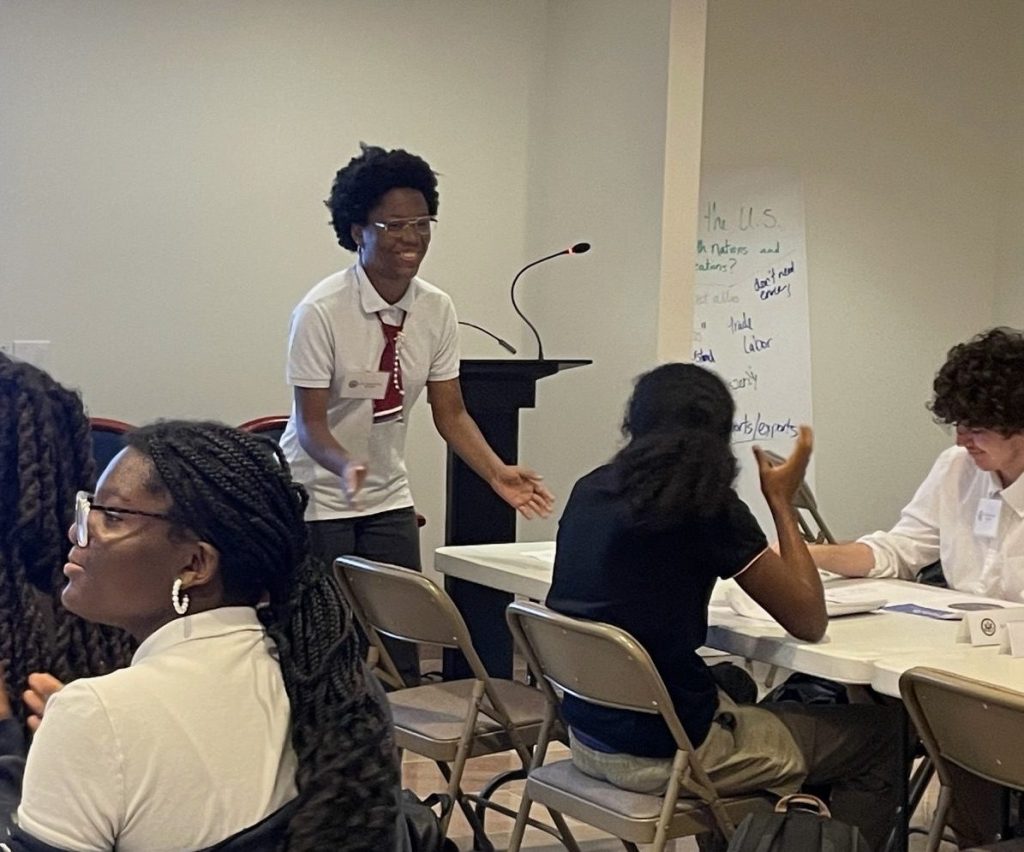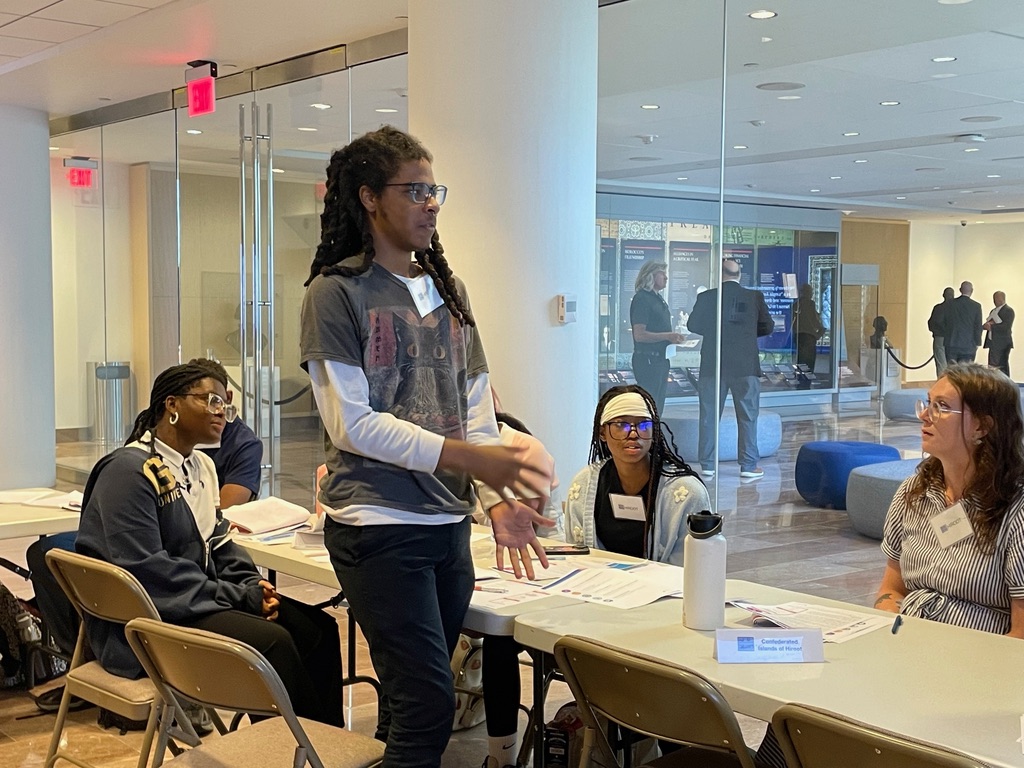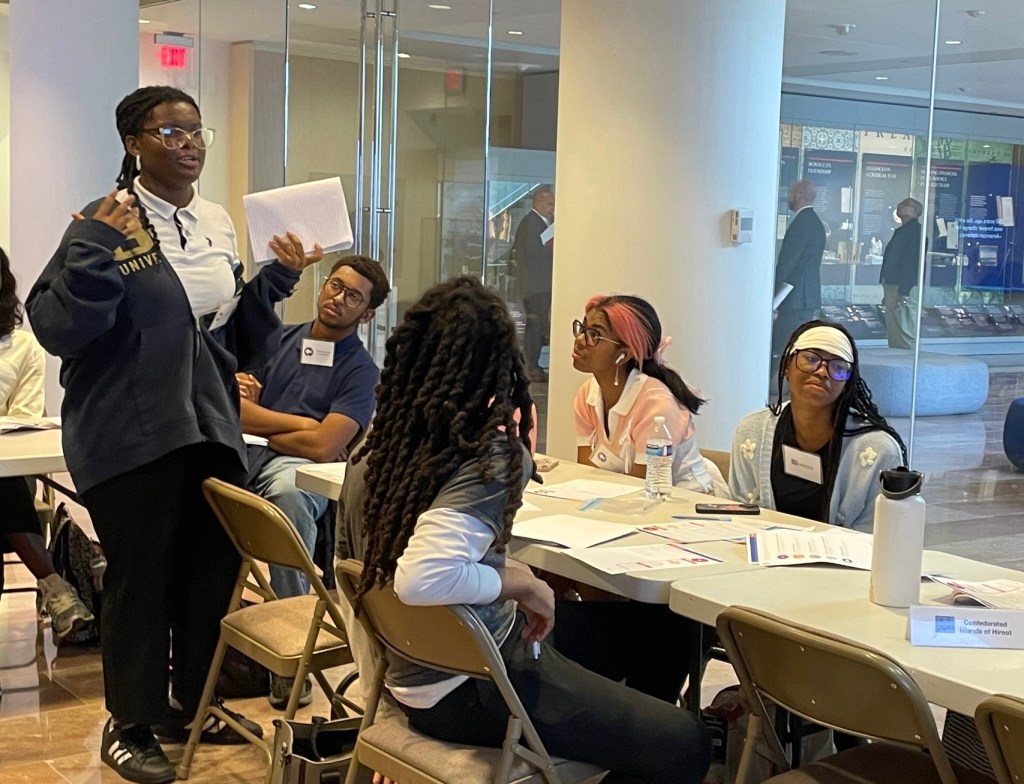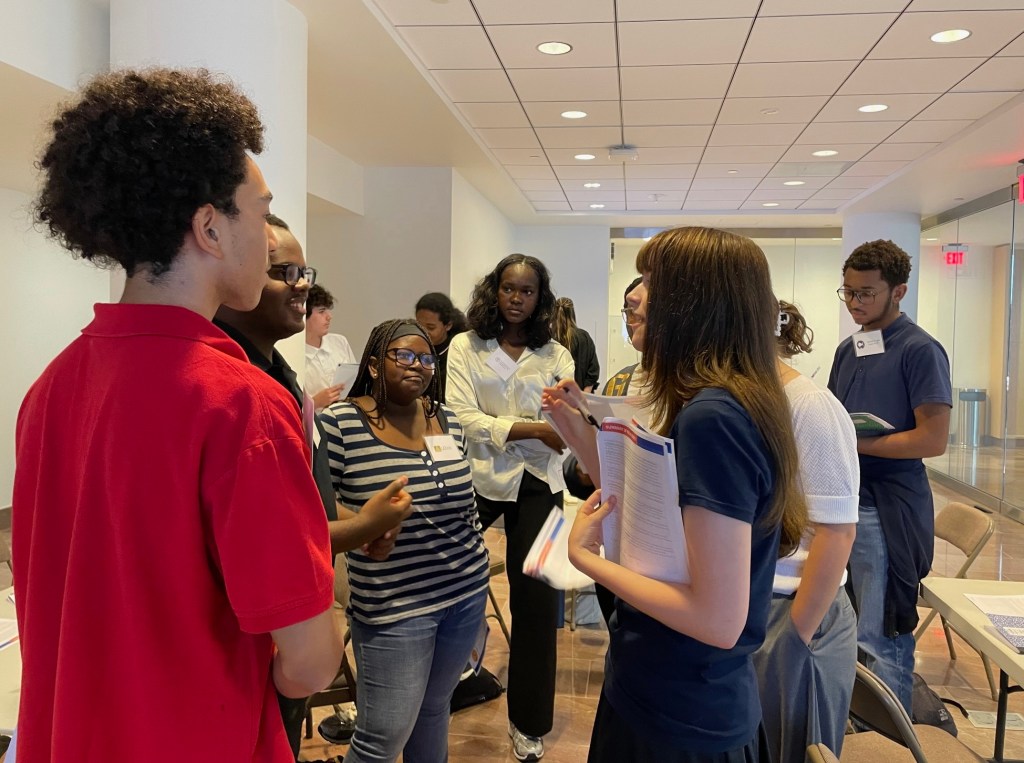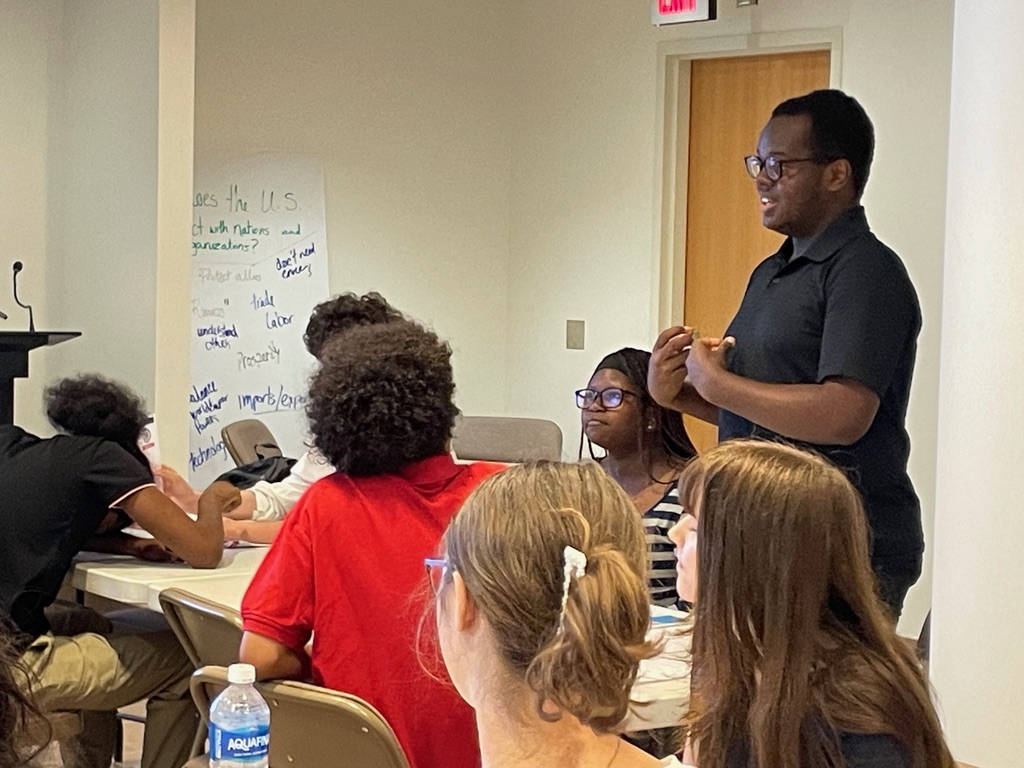
A central focus for our students in the 2026 Japan in DC program was on the history and nature of the US-Japan relationship. The question we kept coming back to over the summer was this – how have our two countries moved forward from war, mutual hatred and destruction during World War II to our strong alliance and friendship of today? Part of the answer can be found in the critical work of diplomats, and so we were thrilled to arrange for Japan in DC’s first visit ever to the US Department of State, thanks to the efforts of Lauren K. Fischer and Ciara Koepke at the National Museum of American Diplomacy. The program was rich in content, engaging, and gave our students the opportunity to imagine and experience what the life and work of a diplomat is all about.
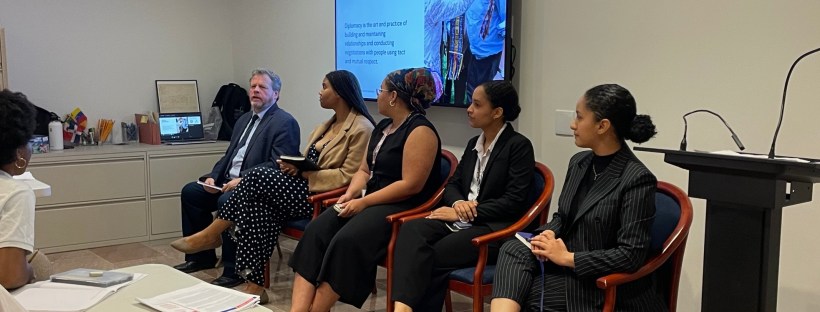
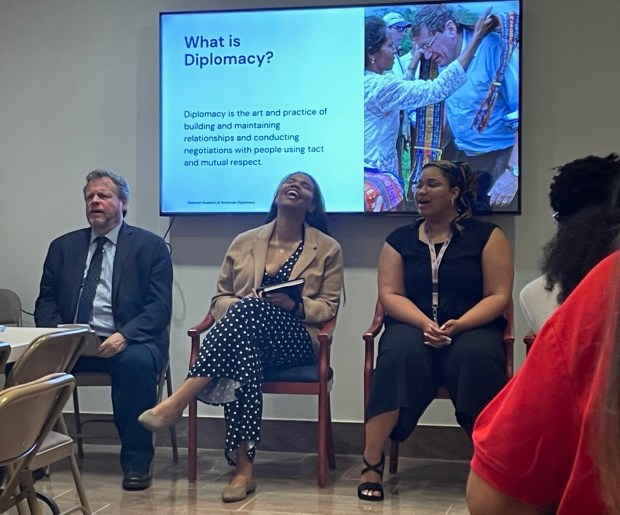
Our visit took place on Thursday morning, July 30, at the National Museum of American Diplomacy. It began with an overview of the “what” and “how” of diplomacy, followed by a simulation involving our students in a hypothetical international negotiation around the issue of overfishing and increasingly scarce fish resources. This intense experience was followed by an informal career panel, composed of young US State Department professionals, with considerable time built in for Q&A and discussion. The panel was organized and led by Tim Marshall of the East Asian and Pacific Programs Branch of the US Department of State. He was joined by colleagues Alithea McFarlane, Kylie Del Rosario, Clemencia El Antouri, and Lia Silva – all in the Bureau of East Asian and Pacific Affairs.
In our reflections we ask the students what aspect of the visit had the biggest impact, what lessons they learned, and how this program connected with other Japan in DC experiences.
Aston:
The part of the program that interested me the most would have been the simulation since it gave me a point of view of a meeting like that. I felt excited to be able to hear experiences from diplomats. The information learned here connected to our earlier visit to the Embassy of Japan.
Blessing:
The thing that had a big impact on me was the story of the five people we saw yesterday. Their stories were interesting and we learned about new programs. I feel so happy to hear that they speak many languages and had the opportunity to get into this program. I really liked to see them talking about their stories. This experience is related to the JET program, because the young people we heard from have many options and opportunities to learn something new in a new country.
Life lesson: Do not be afraid of something new.
Malia:
The part of the program that made the biggest impact on me was having the experience of being a diplomat. It showed me the process of making decisions through governments. I felt invested. It reminded me of relations with Japan and China. I learned that it takes a process in order to make decisions that involve different governments.
Lauren:
The part of the program that made the biggest impact on me was listening to the group of people speak, because they made it seem so easy to talk to them. It didn’t feel like a professional talk. They were laughing and made a few jokes, which made it feel more comfortable rather than having a total serious conversation. I also felt very happy doing the Uzan and Hiroot fishing simulation because it reminded me so much of when I did Model UN in middle school, which I enjoyed so much.
Demetris:
The part of the program that impacted me the most was how we played the roles of different groups and learned how to come to an agreement (ended OK but badly in a way), but my group was the State Department itself. To be honest, I was pretty happy because I love to learn about government, countries, and geography a lot. Relationships with countries take a long time to make and I learned how different people all need to learn languages to work.
Life lesson: “Relationships are all the same, human or not.”
Jaylen:
The part that made the biggest impact on me was when I heard that some of the diplomats actually read about us, and it stuck because I think it’s nice that they had an opportunity to get to know me before meeting me. The information they related to earlier was maybe the fact that some of them studied abroad in Japan.
Life lesson: You can’t please everyone.
Pippa:
The part that made the biggest impact on me was the simulation, because I thought it was really good in giving us insight into the job of a diplomat and I also just thought it was a fun experience. I thought it was good because the combination of the simulation as well as the panel made it so that we got different types of learning out of it. We had talked to a lot of people before who worked in international affairs, so it gave us more insight into what those people we met actually do.
Life lesson: If you like world cultures and languages, you don’t have to devote yourself to learning about only one. It’s also good to be interested in and learn about multiple at a time.
Madisen:
I liked the simulation about illegal fishing because it was fun to think with a team and discuss/argue with others. The mock negotiation also reminded me of Model UN, which I also enjoy at times. I learned that sometimes you need to make sacrifices for your job. For example, the people who work for the State Department can be out of the country for months, and missing family or important events like weddings. I also learned that it can take months of intensive language training when working for a State Department branch requiring a foreign language.
Morgan:
What we talked about and the problem we solved showed me how stressful it is being a diplomat. I didn’t like that. I did not like being a diplomat. I don’t think that’s gonna be on my job list. I also learned that being a diplomat means constant learning, being on the move, and being prepared for pop-up assignments.