Globalize DC is currently seeking two dynamic part-time Co-Teachers to lead this summer’s JAPAN IN DC Program, which will serve up to 20 DC public high school students from across the city. JAPAN IN DC will again be offered as part of the Marion Barry Summer Youth Employment Program (MBSYEP), running June 29-August 7, 2026. Ideal candidates would be secondary teachers (especially social studies), international education professionals, JET alumni, graduate students, or others with relevant experience. High energy, dedication to high school student learning, and basic knowledge of DC geography a must.
About the JAPAN IN DC Program: Over six weeks, students will move around the city to explore and experience a wide variety of people, places, organizations, businesses, government agencies, and cultural institutions in DC with connections to Japan. This is a really fun program – and for many students, life-transforming. Students will document their experiences through writing, photography, and other creative expression. In 2026 we will have a special focus on the World War II era (including investigation of Japanese American incarceration, Japanese American veterans, the atomic bombing of Hiroshima and Nagasaki, and other themes and legacies of these wartime events), as well as the nature and history of the US-Japan relationship. Students will be developing content for our website and creating their own JAPAN IN DC tours. Check the Japan in DC program webpage for background information and updates.
SPECIAL NOTE: We are excited that this year Globalize DC will be developing a social studies curriculum for DC high school classrooms, based on this JAPAN IN DC program. This is a project that any selected Co-Teacher (as well as other local teachers) may wish to be participate in – during the summer or in SY2026-27.
To Apply: Review the posted job announcement at the link below. If you are interested, please send an email to Sally Schwartz at sally@globalizedc.org with your statement of interest in this position, and your updated resume. We will review applications as received. Our goal is to fill these two positions by the end of April. Any questions, contact Sally at the email address above. For more information about our Japan work, we invite you to explore this Globalize DC:Japan website.
Globalize DC is now preparing for the launch of our new school year Japan in DC program that will be open at no cost to interested DC public high school students. We’re very excited about the plans we have for this year – and hope many of you will wish to be involved.
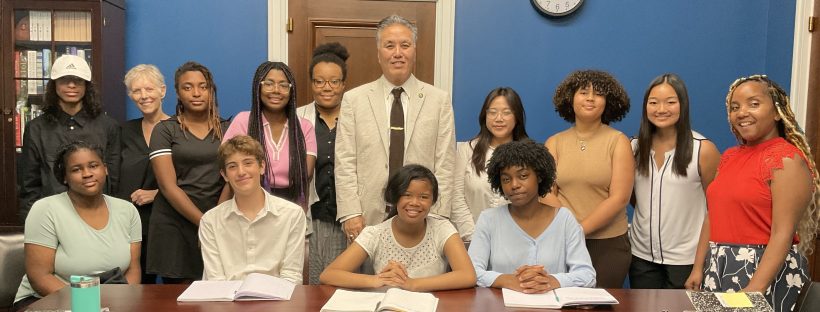
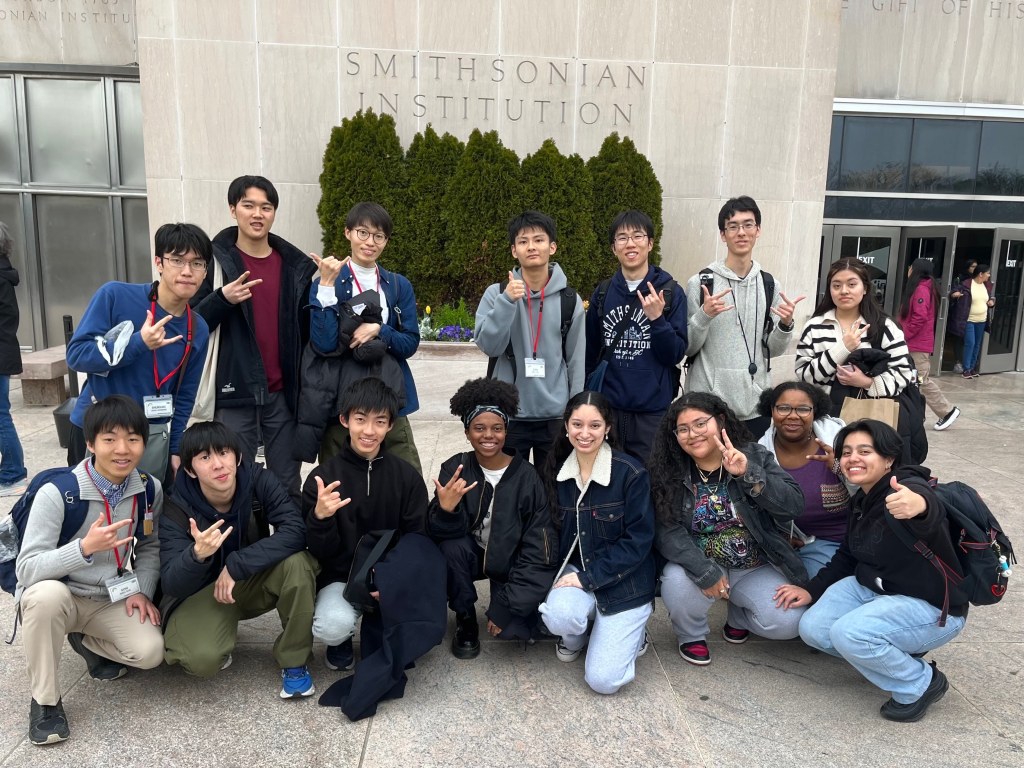
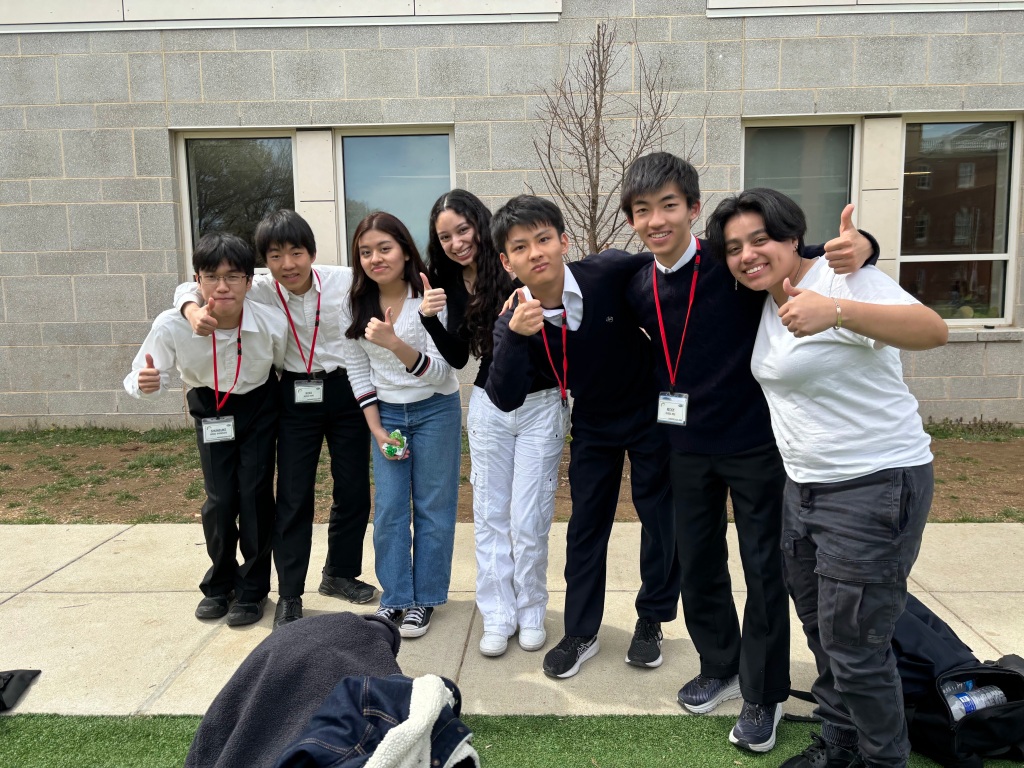
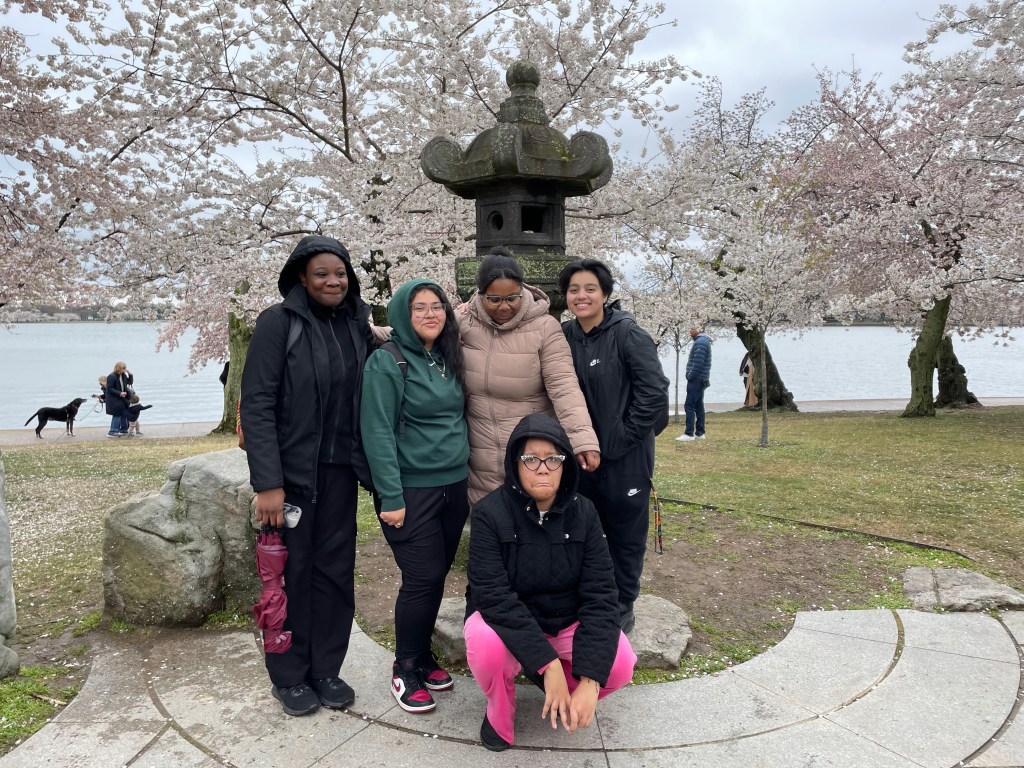
photo above: Japan in DC students with Cong. Mark Takano (D-CA)
About Globalize DC
We created Globalize DC in order to expand opportunities for DC public school students to learn about and experience the wider world – through global education, language learning, study abroad, and cross-cultural exchange. We want our students to see their connection to the world – what makes us the same, how we are different, and what we can learn from each other. We want our students to see themselves as actors on a global stage, whether in their future careers, in civic engagement, or in their daily lives. We serve as a bridge between our local students and DC’s unique wealth of globally connected resources, institutions, and people, so they understand and feel empowered to take advantage of the many ways in which the world exists right here in their own hometown.
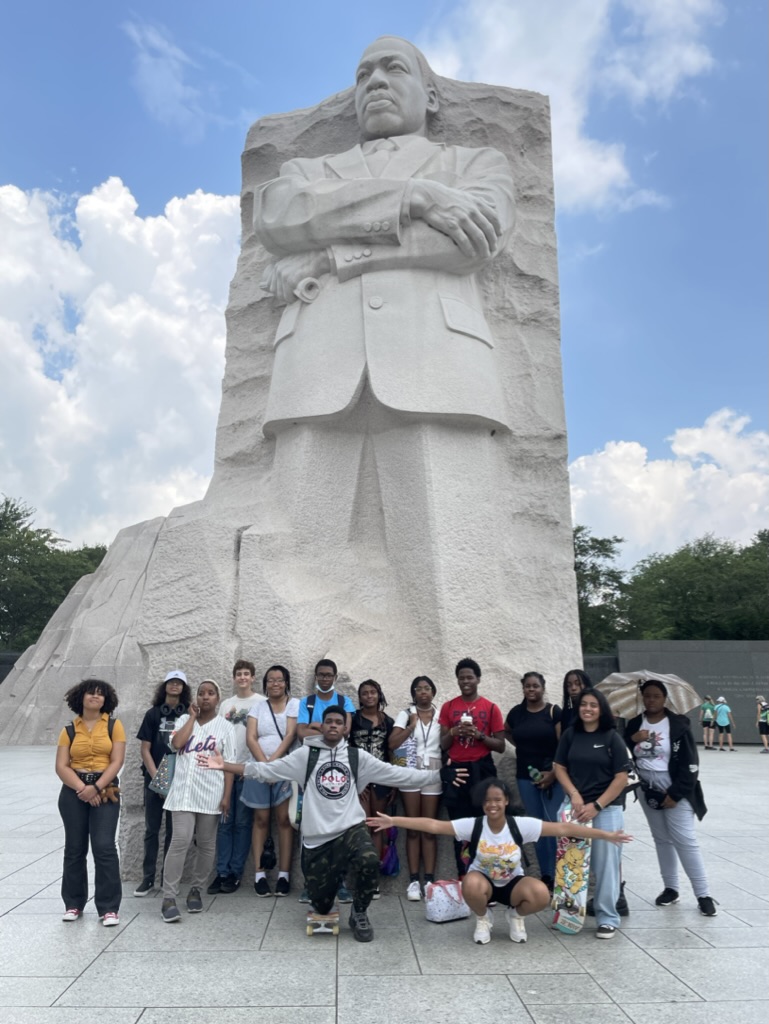
At a challenging moment in history, on this special day dedicated to celebrating the life and work of Dr. Martin Luther King, we draw inspiration from his words, carved into his Memorial at the Tidal Basin in Washington, DC. “We are all caught in an inescapable network of mutuality, tied into a single garment of destiny. Whatever affects one directly, affects all indirectly.”
This is the belief animating our work.
PLANS FOR OUR NEW 2026 SCHOOL YEAR “JAPAN IN DC” PROGRAM
This year marks the 10 year anniversary of our organization’s Japan programs. Our goal is to bring the many lessons we’ve learned about Japan and the US-Japan relationship to a much wider audience – with DC students taking the lead. We’re able to do this work thanks to a major grant from United States-Japan Foundation. We also wish to acknowledge CEPEX for its generous donation in support of our Japan programs.
This year our plan is to introduce a school year version of our summer Japan in DC program to a new group of DC public high school students from across the city. Students will investigate, document, and reflect on the presence of Japan in their own city – engaging with a wide variety of people, places, organizations, institutions, and cultural experiences. They in turn will share what they’re learning about Japan and the special nature of the US-Japan relationship with a much wider community – through engaging website content, social media, maps, tours, and public programs. We also plan for the first time to develop social studies curriculum for local K-12 classrooms, based on this same content and real world experiences, with special attention to the lessons of the World War II era and the US-Japan relationship. We have a lot of ideas, and we know our students will as well, so we have much to look forward to.
Did you know we’ve already published a book based on our students’ work in previous Japan in DC programs? You can purchase one here (use discount code 10YRS for 20% off) to learn more about the program, while also supporting our Japan work financially.
Now we are looking for like-minded members of our community who wish to play a role in these efforts. Interested?
DC high school students: We are beginning our student recruitment efforts now. We encourage all interested students from any DC public high school (DCPS or charter), with time to commit, to apply for this free afterschool program.
Volunteers and part-time staff: We will hire one part-time staff member as co-leader of the program, in addition to recruiting volunteers to assist with a variety of tasks – both working with students and in other roles.
Technical expertise: We are particularly interested in identifying individuals who are experienced with website design (WordPress), video, graphics (CANVA), and social media.
Teachers and curriculum writers: We are recruiting interested educators to work with us both in developing curriculum and strategies for bringing these resources to DC classrooms and teachers.
Speakers, site visit hosts, and workshop providers are a core part of the program. Many of you have generously worked with us before. We’ll be doing more of this kind of programming in 2026 and will welcome your help again – as well as those who are new to us.
Behind the scenes: Program planning, fundraising, research, partner development, and program promotion are all areas where we can use support.
If you’re interested in possibly being involved with us this year, or simply wish to learn more, please fill out the form below to start the conversation. That includes students interested in applying to Japan in DC. We will respond within a few days.
Anyone with questions can email sally@globalizedc.org. Thank you for helping to spread the word about this great free afterschool opportunity for DC teens.
Globalize DC is currently seeking a dynamic part-time Japanese language teacher for JAPANESE PLUS, our award-winning afterschool Japanese language, culture, and career exposure program for DC public high school students.
Refer to the following links for much more information about Japanese Plus:
This is a Washington, DC-based, in-person program, so applicants must reside in the DC (DMV) area. We will prioritize candidates with relevant teaching credentials and experience with high school students, but we are flexible and open to any candidates who feel they would be right for the position. We will fill the position as soon as we find the right candidate. We are hoping to launch the program later this fall. Please share this announcement with anyone you think might have an interest.
Nardo (Clinard Smith, in the beige shirt on the right) was a student from Eastern High School when he joined our 2016 TOMODACHI US-Japan Youth Exchange Program. It was only after a random encounter many years later on the streets of DC that Nardo shared this poem he wrote about the enormous impact of his TOMODACHI experience.
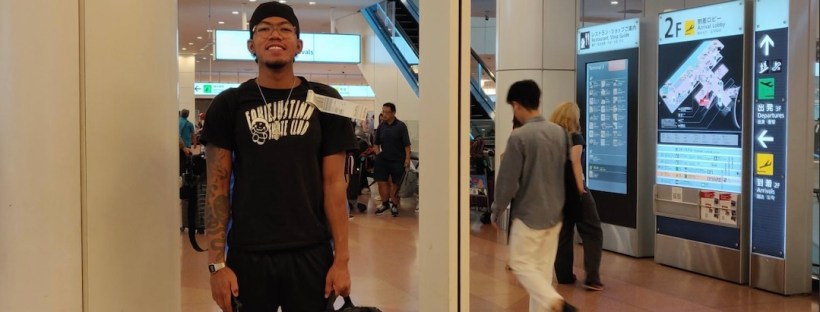
I began my voyage yesterday. Only fourteen hours have passed since I had left my home to travel to a realm far, far away. I am now in the future of those that I love, gradually descending from the clouds to bounce and roll across a long runway. With my heart pulsating, my fists clenching, my legs bouncing, and smiling from ear to ear, I trade my wings for legs so that I may walk the foreign lands. I have arrived. My eyes have existed for fifteen years and I have never seen anything like this before. A whole new world with a whole new language, living and breathing as an entirely different society. My dreams come to reality as I take my first steps on Sakura’s soil. I gaze directly into the blazing sun and imagine myself made into a manga. Just setting foot here sets my soul at ease. I see the blank sheet with the red dot and I focus on it as it wildly flails in the air while attached it’s slender metal. I’m existing in a timeline parallel to my own, refining myself while looking back at my world’s past, acquiring new mementos while remembering what I have left behind. It is real. I’m indeed far from home, challenged to reside with and encouraged to learn from entities both alike and unlike. I just can’t believe that I’m really here at my desired place — 日本, where everything is so perplexing.
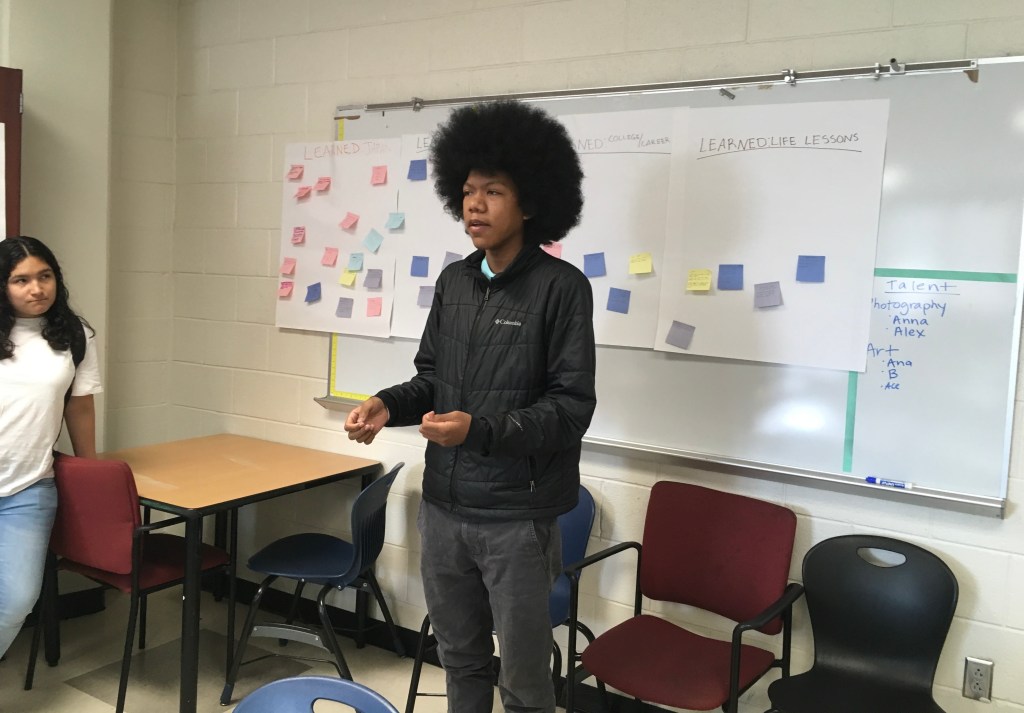
Hello, I am Jonah Nguyen-Conyers and Japan completely saved my life in ways I would have never expected. Before I involved myself with Japan in high school, my childhood was harsh, as my family was dealing with homelessness and a plethora of consequences associated with that. After finding housing in 9th grade, I was able to properly feel more security and stability that allowed me to venture into my interests, and that’s the same year I started investing into Japan. These initial moments with Japan in my 9th grade year would be the catalyst that would ignite a path of opportunity and ambition in my life, allowing me to leave behind who I was before, and the child I was when I was homeless and desperate.
While in high school at DC International, I delved into the US-Japan space with a great sense of admiration and ambition with every moment. My initial interactions with Japan happened in 9th grade during a summer job experience with Globalize DC. During this summer we would go around DC and document aspects of Japan and Japanese culture to later publish in a book called Japan in DC. Then during my 10th grade year in high school, I was selected to be a part of the KAKEHASHI Project, where the Japanese government sponsored me and other DC students to visit Japan. After such an exciting and insightful eight-day trip to Japan, I would take a Japanese language class with Japanese Plus. I chose to show up outside regular school hours to invest in this relationship with Japan through study of the language twice a week for the last two years of my high school education.
Back in high school during Japan in DC, summer 2017.
After my first year of studying Japanese with Japanese Plus in the 11th grade, I was selected to be an OSSE Scholar, where I would be sponsored to study at a prestigious university and get university credit over the summer. During my time as an OSSE Scholar, I studied Japanese at Northwestern University. Money has always been a big determining factor in my education and my life, which is why I had to seek out and involve myself in all these free programs that were outside the regular school opportunities.
Being so heavily invested in Japan going into my 12th grade year, I knew I wanted to attend college in Japan. I knew college was one of the biggest expenses a person can involve themselves in. But I knew I was not only going to college, but I would also be starting a new life across the world in Japan. I knew I could not rely on my family for financial help in this situation, keeping my family’s past and current situation in consideration. I knew I needed to craft a plan to make this dream of studying in Japan a reality and be the first of my siblings to graduate college.
I was accepted to Temple University, Japan Campus (TUJ) and I was truly overjoyed. I knew my whole senior year that I was going to attend TUJ in the fall of 2020. However, the pandemic threw everything up in the air with timelines, departures, financial support all at the mercy of the developments relating to the virus. After many setbacks, border restrictions, and much more, I was finally allowed to enter Japan as a student January 1, 2021, to start my first semester at TUJ. I was now in Japan, but I was taking online classes, had a lot less time to find housing and develop security and comfort, and I was unable to access my scholarship money due to the circumstances related to the pandemic when I arrived in Japan. After my Spring 2021 semester, I decided on coming back to Washington, DC as problems relating to my finances in Japan and the pandemic were too cumbersome and unclear.
Back in DC I remained invested in Japan. I knew wholeheartedly that I wanted to go back to Japan and study, but I needed to make a more concrete plan on how I would finance and navigate the situation regarding the pandemic. I would decide to go to Montgomery College, a community college in the DC area, to stay close to home to mitigate any pandemic effects, while also letting me engage with higher education at a more accessible cost. While at community college, I still engaged with Japan on campus and outside of campus. I took on the responsibilities of being the Japanese Culture Club’s Secretary, where I helped facilitate and conduct matters relating to the club. During my time at community college, I was able to reach out to a lot of the people who supported me in high school, while also making new connections with people in the US-Japan space. All these efforts were in the support of my long-time goal to graduate college in Japan.
Finally now, being back in Japan, I am working on developing a life and a source of stability here. I would not have been able to make this dream of mine a reality without the support of those looking to aid students to study in Japan, especially the Toshizo Watanabe Scholarship, the Bridging Scholarship, and Globalize DC. Here in Japan, I am hoping to develop a career focused on engaging with those in Japan and the United States that come from troubled backgrounds like my own. I hope in my career and the work I dedicate myself to that I can offer the same optimism and hope to the next generation of students. Japan was able to save a young child’s life, my life, in ways I didn’t think were possible, and I know I have an obligation to support the next generation of students and children who have faced similar struggles like I have had in the past and allow them to see a similar saving grace and opportunity-rich future for themselves that the US-Japan space has offered me.
There I am as a high school junior – on the right, middle row, in the pink flowered top.
By Kharan Pierce
The day I’ve been waiting for not just for the past four months, but for the past nine years, is finally this week. I will never not tell the story of how I knew I’d be embarking on the JET Program: when my Japanese Plus class visited the Japanese Embassy my junior year of high school, we got information on so many programs and opportunities, and the one that stuck with me was JET. I said to myself that day “I’m going to be in that program one day.” It is surreal, humbling, and satisfying that that day is here.
I went into the application process expecting to be re-applying next year, but at every step of matriculation, I kept getting through! I felt my interest in Japanese history and pop culture, food, environmental practices, and the pockets of Japanese culture I’ve experienced in DC only scratched the surface of what would make a great JET candidate. However, betting on myself in this process clearly paid off because JET was looking for someone just like me to send on the program. The application process has enhanced my confidence and reaffirmed my caliber of character as a global citizen.
As I’m only just beginning my journey in Japan, I’m excited to tap into my courage by living in another country, make new and hopefully lifelong connections and impacts, but most of all, learn all I can. Having studied Anthropology in college, I know that being immersed in this country will be the best way to absorb the ins and outs of Japanese culture. I’m also recommitting to my Japanese language studies and striving to pass the N4 level JLPT. Outside of these goals, I’m just excited for Japan to surprise me. I can’t wait to report back all the ways which it does.
My Prior Interest in Japan and Japanese Before the Program
Before attending Globalize DC’s Japanese Plus program, my main interests in Japan and the language were anime and the possibility of living in Japan with some knowledge in Japanese. At the beginning my goals were to develop a routine to learning Japanese because I wasn’t as motivated to do it entirely by myself because I didn’t know where to start. I felt anxious because it was my first time committing to a language outside of school using my own time, contemplating if I should actually go through with this or not. But I eventually settled in and built friendships that settled that anxious feeling I had.
Moment #1: Our Hybrid Zoom Classes
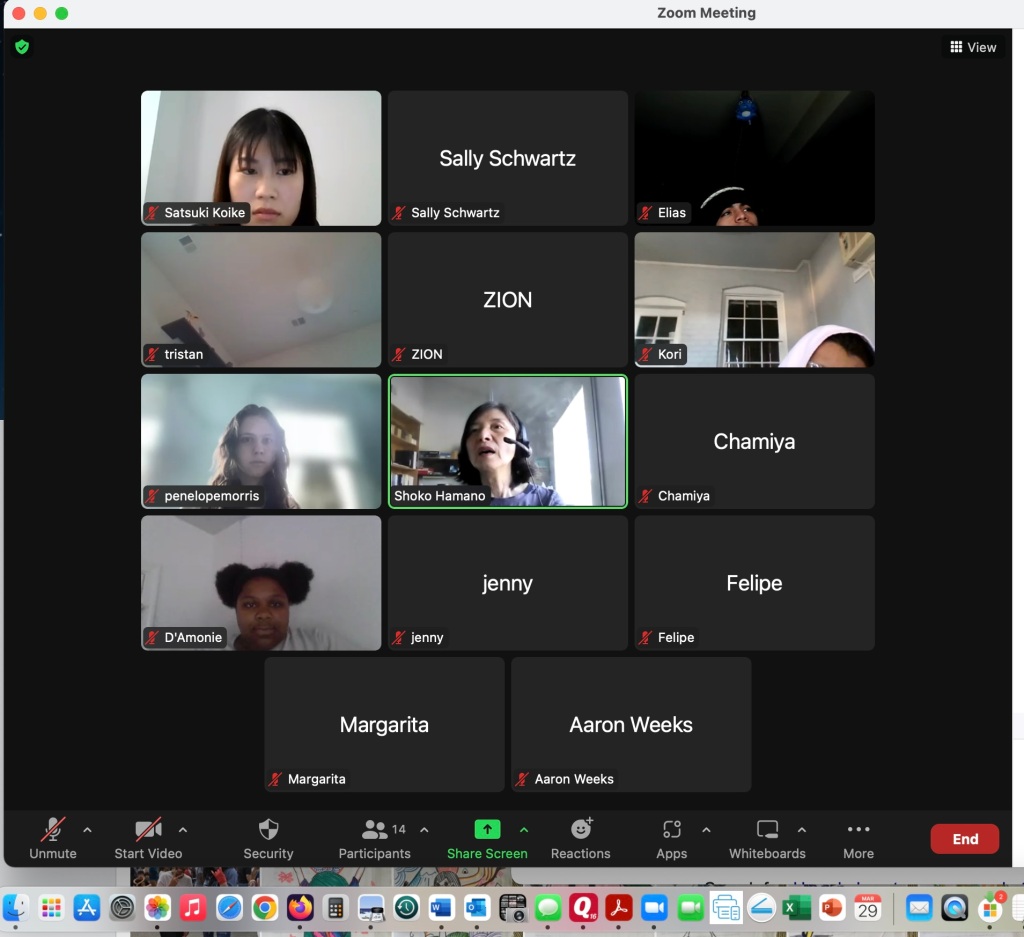
The zoom classes were filled with empty screens but also students who participated on camera at times. We had them during Wednesdays and it was beneficial to me because it helped me develop habits and techniques to studying Japanese in the comfort of my own home. It was also convenient because it meant that I didn’t have to go outside of the house on Wednesdays, which at the time I didn’t do a lot of. It was a pleasant period of time in our learning journey but also a very inconsistent one as well, since we failed to turn our cameras on most of the times.
Moment #2: Onigiri Action
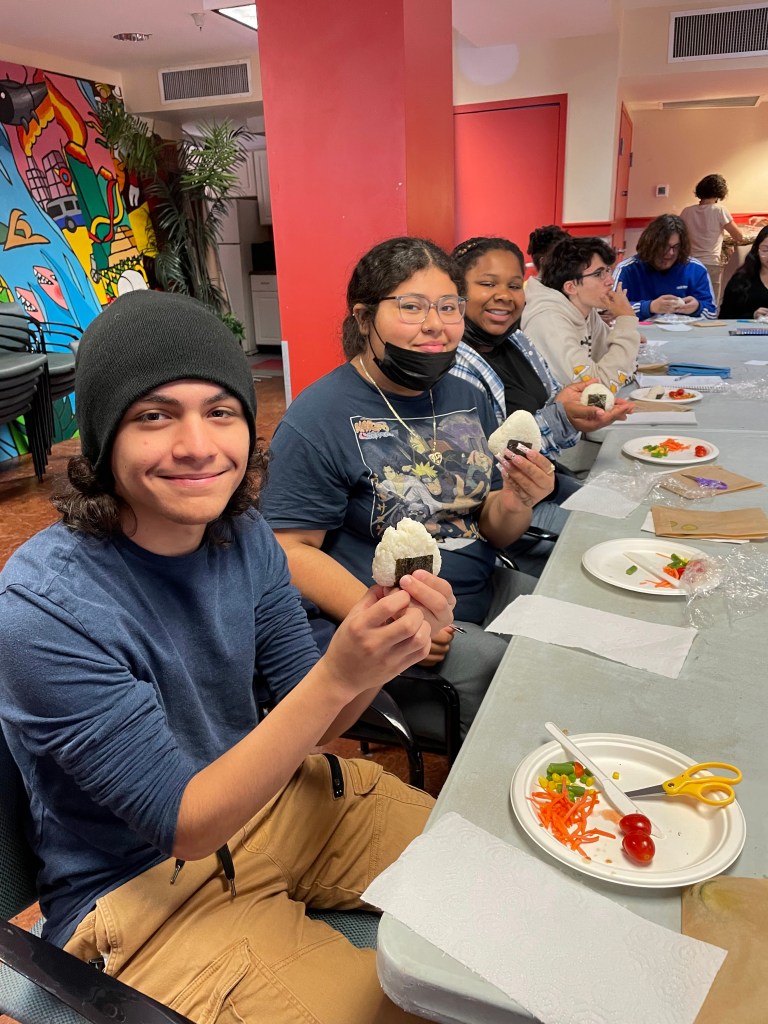
The experience I had when making rice balls was a pleasant one, I really did enjoy it as you could see from the smile on my face. Onigiri is a very common food you see in Japan in multiple stores and is also convenient, I assume, because of the price. It’s generally filled with different types of food in it as well, being topped with seaweed over it or covered all over to make a fine seaweed taste. Onigiri Action taught me the proper way to make an onigiri and I will forever appreciate it.
Moment #3: First Couple of Days Learning Hiragana
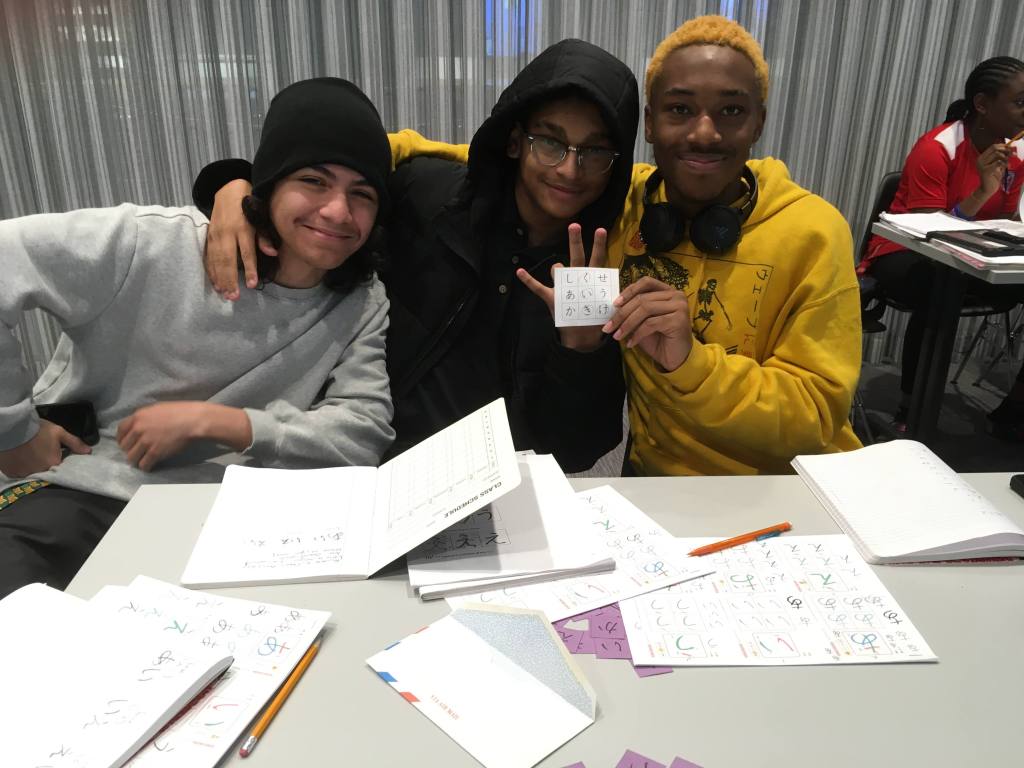
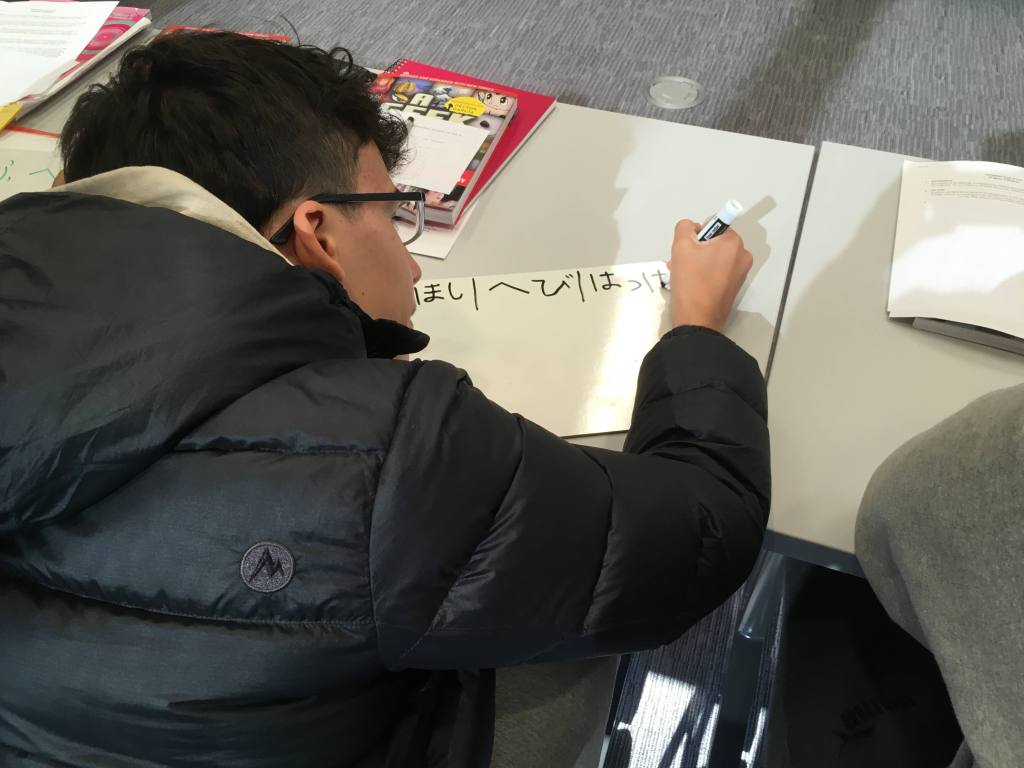
The times I spent learning hiragana in class were filled with countless questions and laughter. Now that I think about it, it is easy to learn the characters and their meanings but very hard to remember them and implement them into conversation and expressions. These experiences benefited my learning because it gave me an opportunity to talk to everyone in the class and that would later on make it easier to talk to them as time went by, further helping me hone the language.
Moment #4: Exchanges with Japanese Students
The multiple exchanges we had with different groups of Japanese students are moments I will never forget. These experiences tested a lot of us and our skills in understanding and speaking Japanese; moreover, it also connected all of us with the Japanese students as we exchanged social media profiles and gifts. The different activities like certain topics on a piece of paper really helped us start somewhere to continue conversing with the students. These interactions usually showed me how underleveled I was at speaking, but I kept pushing forward.
Moment #5: Discovering Different Historical Moments and History About Japan
Not only did we expand our knowledge with learning Japanese, we also learned about the history of Japan with the US and explored different monuments tied to Japan. Different history like the bombing of Hiroshima and Nagasaki to the monuments of a gift from an Emperor to the US. I was excited to learn this content in more specific events because I only knew so much about it and started growing curious.
A Final Word.
If the pre program me saw the progress I made over the two years I spent with Japanese Plus, I would’ve thought that I was a completely different person. Committing to the class was something I had doubts on at the beginning of the year but the constant reminder of wanting to live in Japan kept pushing me to strive for it every day. A piece of advice I’d like to give to students beginning their journey in learning Japanese is to never look back at your past self who made the decision to sign you up for the class; sometimes you have to listen to yourself and follow through with the decision you made in the past because if you participate in the class for multiple years then your past self was onto something about your future self and simply wanted you to strive for something you love. My plans for the upcoming years involving Japanese are to obviously go to Japan but to also continue my studies of the language at home. I don’t want 2 years of learning to go to waste but there’s also obstacles I will eventually tackle as well.
Before I joined Japanese Plus, my knowledge about Japan was limited to their advanced technology and the architecture of their ancient temples. When I learned that my school offered a program to study Japanese language and culture, I knew I had to take the opportunity. I wanted to explore a culture entirely different from my own and broaden my horizons. Initially, I had no idea what to expect and assumed the class would involve extensive studying and take a long time to master, given how different Japanese is from English. My only goal was to be able to hold a conversation in Japanese, as I lacked confidence in my language-learning abilities. Despite my nervousness, I was excited to learn something new and unique.
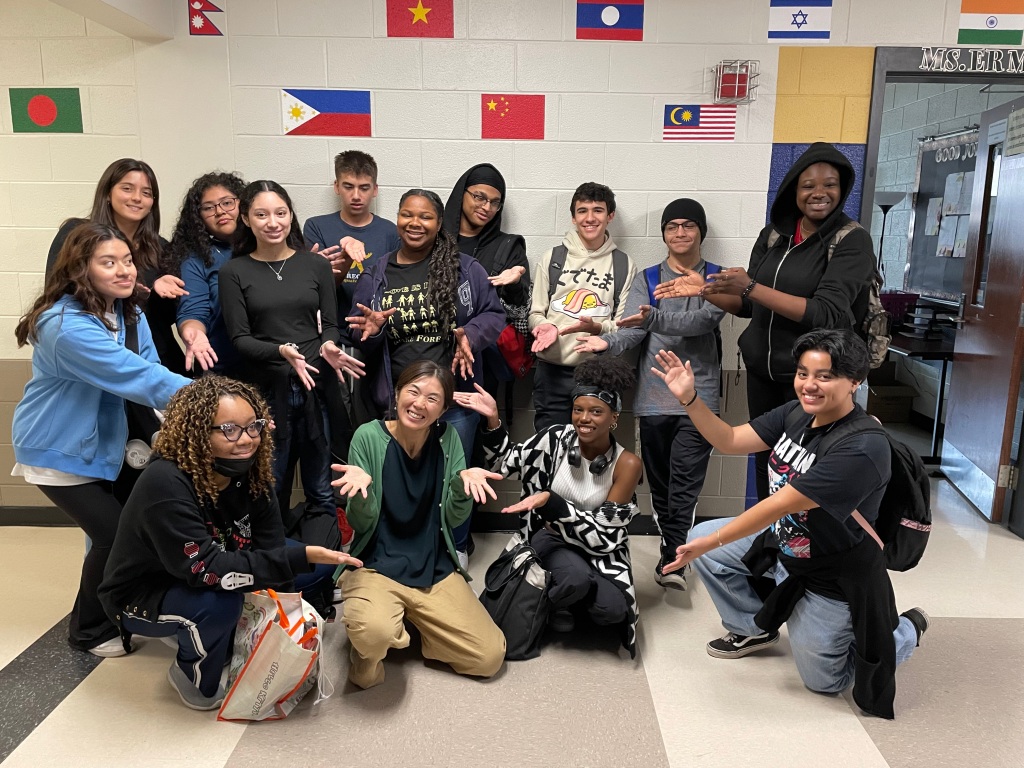
Looking back, the early days of the program now seem amusing. In the first few weeks, we painstakingly learned each hiragana character, which now we can read effortlessly. It’s surreal to see old pictures and realize how much we’ve memorized. I remember how stressed we used to get over hiragana tests, yet we recently took an entire Japanese language exam and performed better than expected.
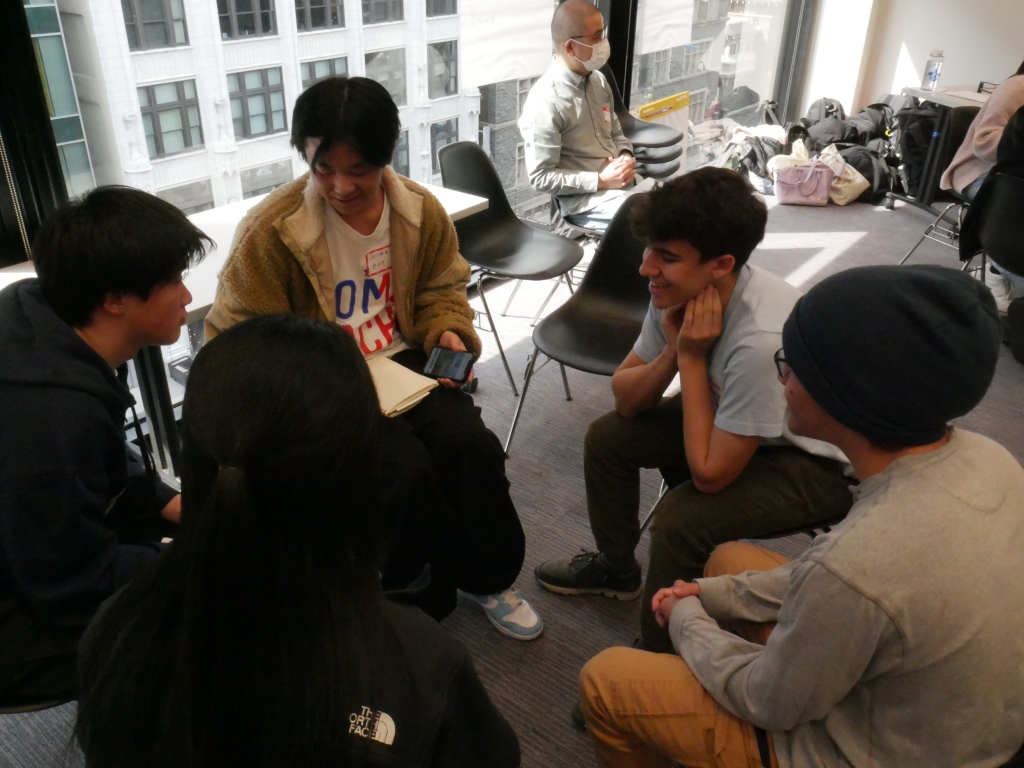
One of the most memorable moments was when we were told we would meet Japanese students. For weeks, we prepared by studying various conversation topics, practicing introductions, and thinking of questions to ask. When we finally met, we mainly spoke in English, but it was an invaluable experience. Despite our limited proficiency, this meeting was significant for me as it pushed me out of my comfort zone and motivated me to continue learning Japanese. The Japanese students taught us about their culture and school life, and it became clear that I had learned a lot more Japanese than I realized. This encouraged me to keep improving my language skills for future interactions.
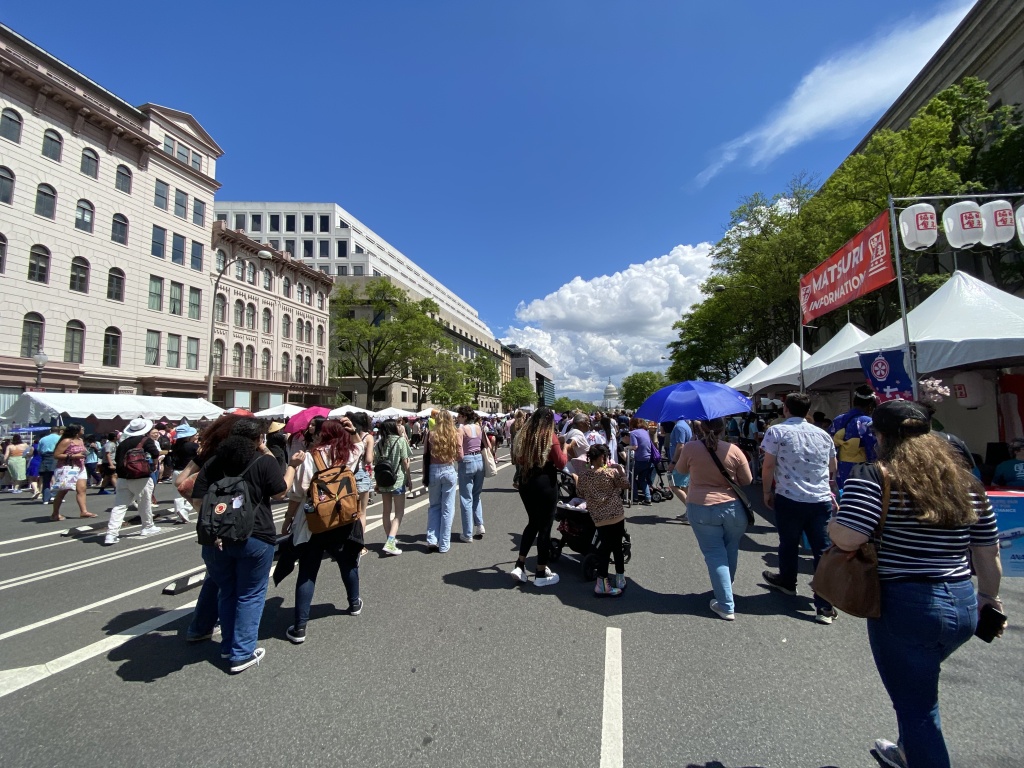
Attending the annual Sakura Matsuri (Japanese street festival) with Japanese Plus was another highlight. The festival allowed me to immerse myself in Japanese culture beyond the classroom, using some Japanese with native speakers and observing the blend of modern and traditional aspects of Japanese culture. Learning about things like strawberries from Kyoto was particularly enjoyable. The Sakura Matsuri was a fun and engaging way to deepen my understanding of Japan, and I plan to continue attending in the future.
The beginning of my second year in Japanese Plus was also significant. I felt more motivated, knowing I had limited time left in the program. Meeting a new teacher and seeing my progress since the start was enlightening and made me eager to learn more. Reuniting with friends and participating in more activities outside the classroom added to the enjoyment of the program.
As we neared the end of our second year, our final exchanges with Japanese students were memorable and unique. These interactions showcased my progress, as I could hold conversations about various topics, including city life, food, hobbies, and TV shows. One group even visited my school, allowing them to experience American high school life. Playing soccer and exploring a museum together were highlights that made me feel accomplished and slightly sad, knowing I might not have such exchanges again soon.
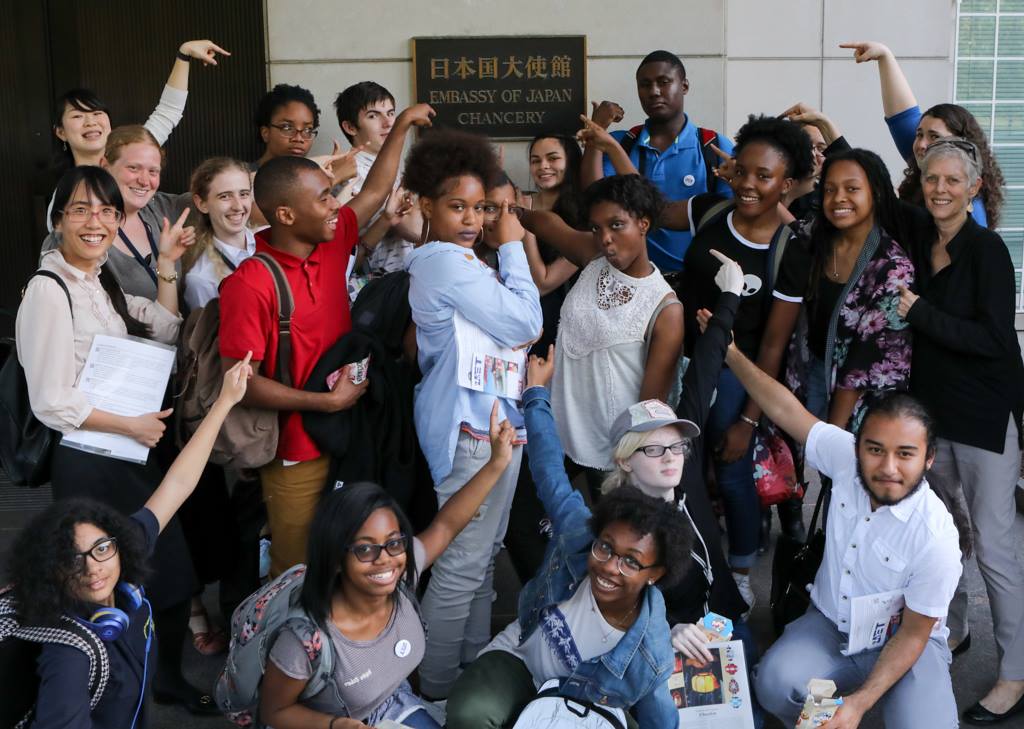
Visiting the Japanese embassy in DC was another moment of accomplishment. From knowing no Japanese to being invited to the embassy felt surreal and made me realize I had exceeded my expectations. The visit showed me that studying in Japan is accessible and much cheaper than in the US. It was a fitting conclusion to my two years in Japanese Plus, reinforcing that a connection to Japan is within reach if I pursue my interests.
Going forward, I plan to continue learning Japanese and possibly study in Japan for university. If you had told me two years ago how far I would be in my knowledge of Japanese, I wouldn’t have believed you. It’s amazing to see how much I’ve learned in just two years. To anyone trying to learn Japanese or any language, I would say the most important thing is to track your progress because looking back and seeing how much you’ve achieved is a big motivator. I am very grateful to have participated in Japanese Plus and hope more people take the initiative to do the same.
Before joining Japanese Plus, I had some interest in Japanese culture but very little interest in the Japanese language. Unlike some of my other classmates, I was first introduced to Japanese culture by visiting there with my family when I was 11 years old. I loved the trip and the country so much that I decided when I got back to start learning Japanese with a private tutor. Unfortunately, that idea fizzled out since my tutor had to move for work just 6 months into my journey. For years after that I never even thought about Japan or the Japanese language, I wasn’t too interested in Japanese history or pop culture, and I would have never joined the program had my mom not gotten an email advertising it. She asked me if I was interested, especially considering it would not be my first rodeo with the language, and for the sake of trying new things (and hearing that learning a new language was really good for your brain), I decided to sign up. When I first walked into class at MLK Library for the first time, I had no idea how much I was going to learn. I mean I had no idea what even “mina-san” meant the first time I had heard it. I hoped to at least be able to speak some level 1 or 2 Japanese by the end of my two years with the program, but I had no idea of the fun memories, cultural experiences, and immense studying and learning that was still to come.
The Hiragana Test:
Learning Hiragana was our first real test of any sort of real Japanese learning. Up to then we had been learning the occasional words and theorizing about the way grammar and sentence structure worked but we had no real thing we could point to that proved our knowledge and what we had learned. Hiragana was like the steppingstone into an entirely new realm of the Japanese language, writing. Just looking at my hiragana writing from the past makes me reminisce about how much I struggled memorizing those darn characters. However, it really gave me the first benchmark of my progress with the language. Something to be proud of that would keep me motivated to keep learning. While I don’t remember doing too well on the test itself, the entire learning process of Hiragana challenged the whole group in a new way and made us realize how much we had learned even though this was just the beginning.
The Haiku Competition:
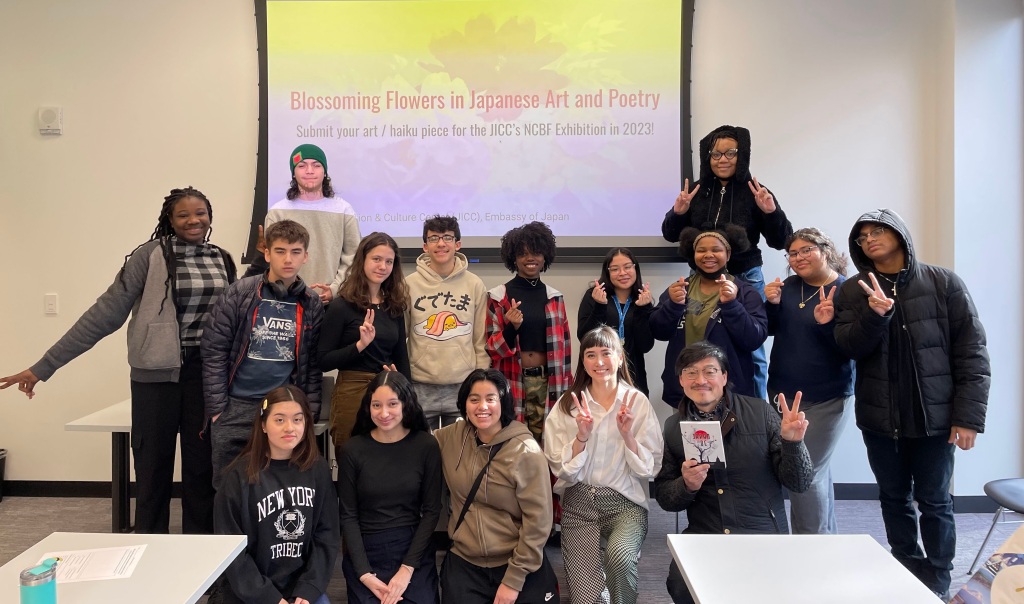
While it wasn’t a huge event for everybody in the group, this competition holds a special place in my memories of the program because it made me realize that I had a passion for learning the language and could accomplish things using it. I submitted my haiku at the last minute, expecting nothing and received an award and had my poem displayed in an exhibition at the Japan Information and Culture Center (JICC). This was a special moment to me as it showed me that there were real-world benefits to this. I was really getting to make connections and even win awards through the program which just motivated me more to keep going.
The First Exchange:
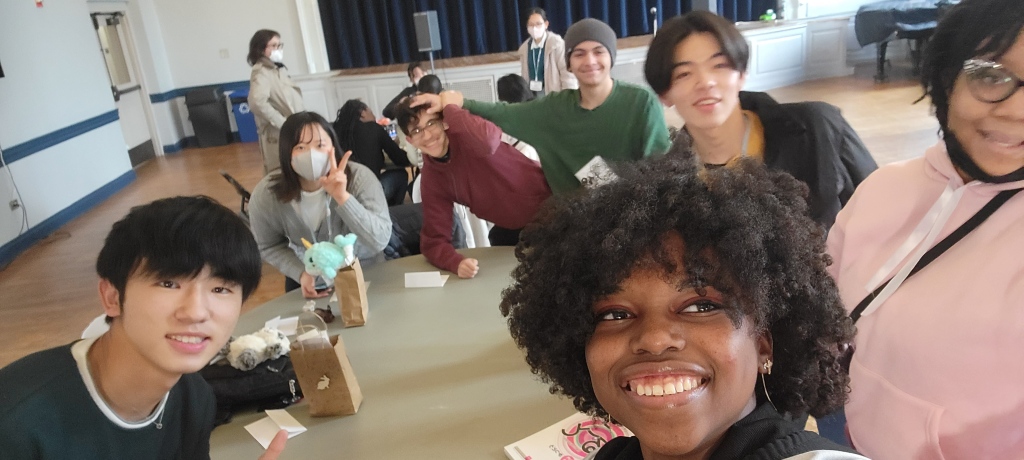
The first exchange group of high school students we met will always be a fond memory for me. Being able to tap in more to the cultural learning part of the program by actually meeting people from Japan who were our age was fascinating. Comparisons were drawn over every part of our everyday lives making me realize that there was so much different between us yet so much the same. This was also our first chance to really try and have sustained conversations with native Japanese speakers which admittedly didn’t go too well but it was a fantastic experience nonetheless. It was humbling seeing how little we really knew but this experience also opened our eyes to realize that there was still so much to learn in the next years and that maybe one day we would be able to converse on equal footing.
The NAFSA Conference:
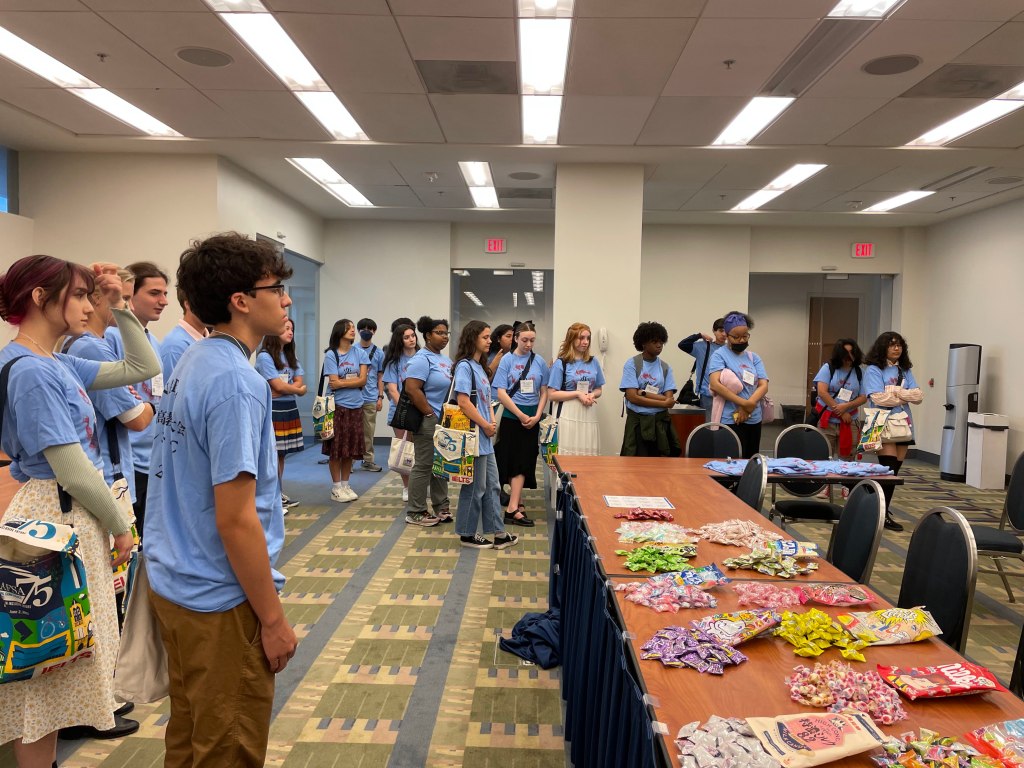
The NAFSA conference was an opportunity for me to branch out into a new possibility for my future with Japan, study abroad. The conference hosted many colleges from around the world including many from Japan. The COI (Connection, Opportunity, and Initiative) program that we visited with invited us to meet with many of these Japanese college representatives to learn about their campuses and the programs they offer both in English and in Japanese. This event really gave me a view into what Japan could mean to me in the future of my education, maybe not as a full 4-year college experience but as a shorter study abroad opportunity.
The Tidal Basin Walk:
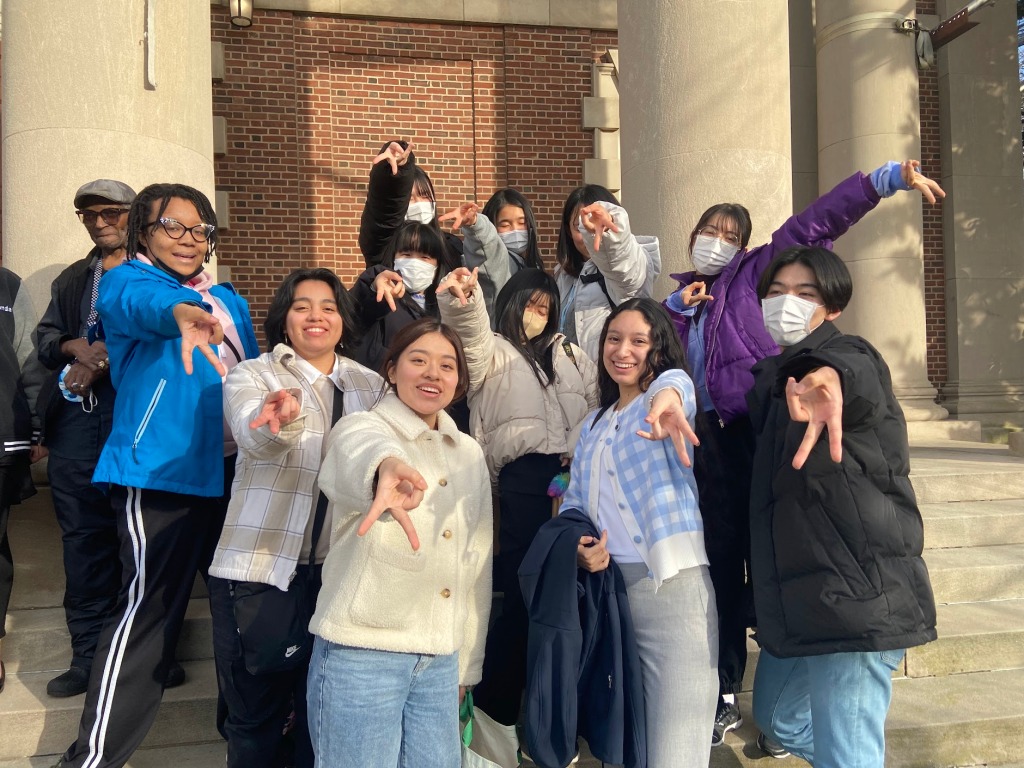
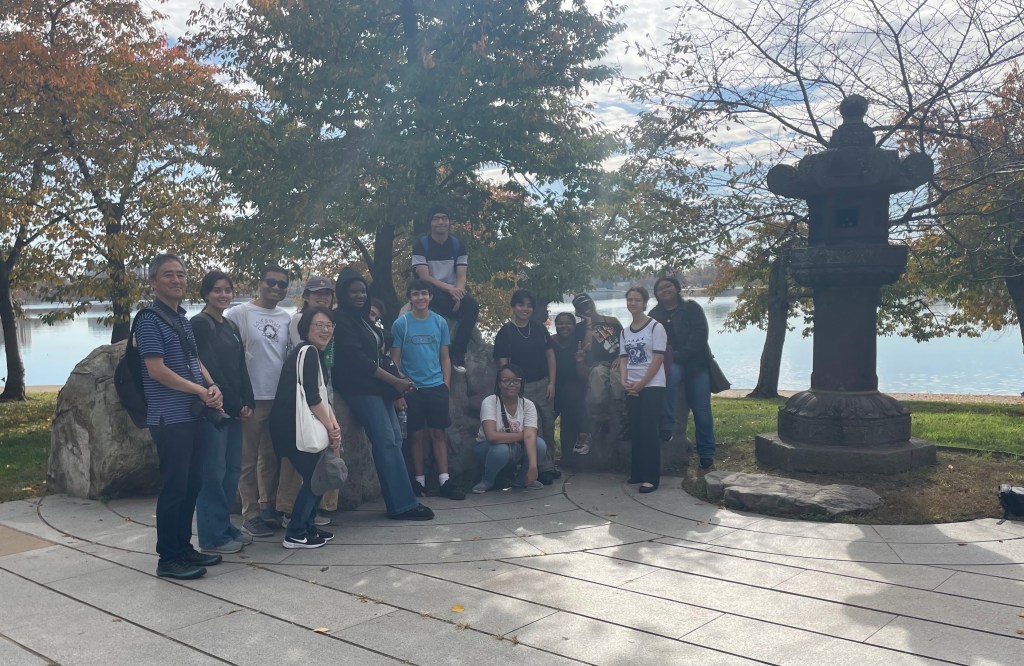
Around the beginning of our second year we went on a walk around the Tidal Basin but with one important rule. We were only allowed to speak Japanese with each other on the whole walk. If we wanted to comment on anything we saw or have any conversations we had to try and make it work using what we had already learned. Throughout the walk, we learned how to play rock paper scissors and many variations of it in Japanese to keep us entertained. We even learned a version where the way to win was to count the total amount of fingers the players had up after picking rock, paper, or scissors. This walk helped me familiarize myself with common Japanese phrases and slang speech as I was talking in a new context that I hadn’t been in before.
The Navy Yard Visit:
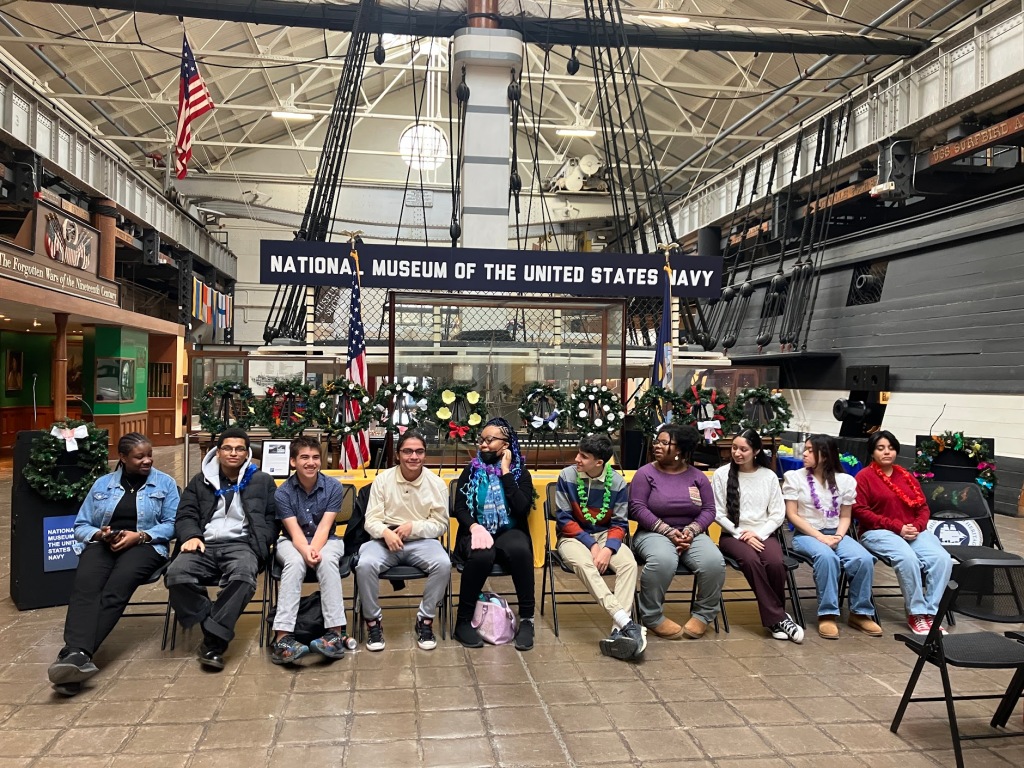
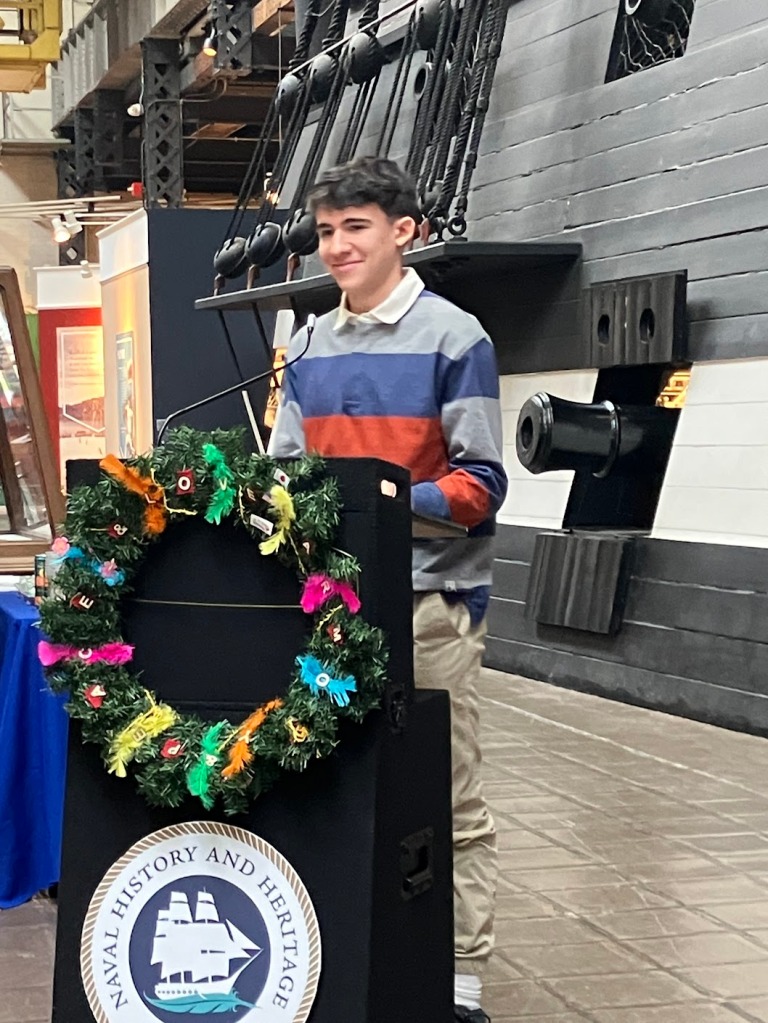
The Navy Yard visit was an important event to me because it was a real project and presentation that we did outside of our program. Doing this remembrance project I felt like I was doing something in the community outside of just learning, which is a key part of Japanese Plus and Globalize DC. To remember the events of Pearl Harbor, we decorated wreaths and wrote statements acknowledging the events and paying condolences to those who lost their lives. We then visited the Navy Yard complex and presented our wreaths and our statements out loud. This felt like a significant event we prepared for and involved us in the community outside of the classroom.
The Final Exchange:
The final exchange we did was with a group of children from the TOMODACHI Program, a program created following the 2011 East Japan Earthquake to form friendships between Japanese and American students. The word “tomodachi” means friend in English and the program brings students from the Tohoku region affected by the earthquake to the US. In their visit to us, we had a panel where we talked to a variety of people who have lived in both the US and Japan. We also set up conversations to talk to each other in Japanese to practice and also went to the Smithsonian American History museum as a visit. I think what I liked the most about this program was comparing it to our first ever exchange over 1 and a half years before. I knew how to speak so much more the second time compared to the first time which made me proud of my progress. It also gave me hope just like the first time that the next time I tried speaking in a group setting I’d be able to speak even better.
The Final Presentation:
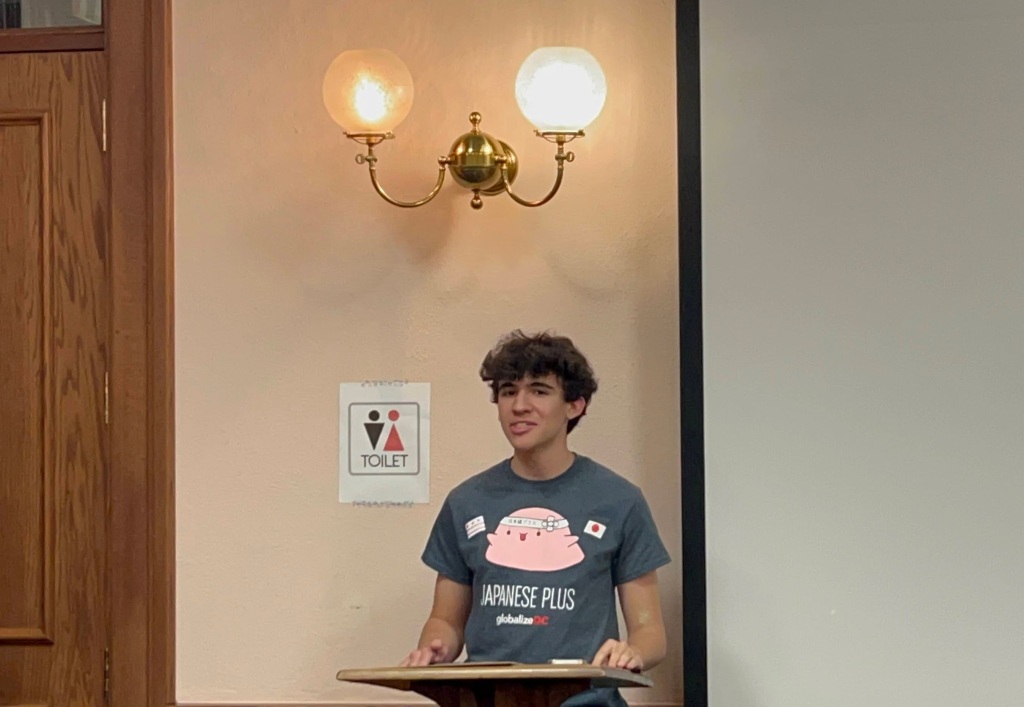
The final presentation marks the end of my Japanese Plus journey. Throughout all the trials and hardships I had faced up to this point, I had finally made it and I had my final skit performance to show for it. I was able to perform my lines flawlessly, making little to no mistakes in my speaking and having good pronunciation. Unlike in my first skit performance, I knew the meaning of almost every word I was saying and felt comfortable as if I was speaking a language that I knew. This success compared to the subsequent speech I gave and diploma I received rounded off my Japanese Plus experience perfectly.
If pre-program me could see the progress I have made over these two years of learning, I believe he would be impressed by how much I had learned and how much I was able to say. I think he’d also discover how many friends and connections I made throughout the program who have changed my life for the better. I think just him seeing how I was able to perform on the STAMP test would have impressed him, especially with the listening and speaking portions.
If I were to give one piece of advice to somebody looking to start learning Japanese, I’d say first of all to go for it since I think it is a beautiful language that is challenging but rewarding to learn and has thousands of years of history and culture to be discovered. I’d also recommend trying out the basics of it on your own before committing. While Japanese may appear very difficult at first, Hiragana and Katakana can be used to read a lot and is easily learned through self-study. Basic sentence structure is also fairly easy to learn once you get the hang of the grammar. Following that, I’d enroll in any basic class and always study 5-10 minutes a day to brush up on anything you may be struggling with. I’d especially suggest dedicating a chunk of that time specifically to reading because the more you master the basic reading of Hiragana and Katakana, the less you will regret it later on.
As for the future, I am adamant in continuing my Japanese learning journey. I hope to enroll in a higher-level course for my senior year outside of the program and carry that learning on into college. I’m not sure quite yet if I want to commit fully to studying 4 years in Japan but either way, I will definitely do all I can to study abroad for some period of time in the country. I hope to not only remember and continue my learning of Japanese going forward, but always keep a special place in my heart for this program, Japanese Plus, which kickstarted my journey and provided me with invaluable friendships and fun for these fantastic two years.
Thank you to my teachers, Takahashi-sensei, Tsujioka-sensei, and Hamano-sensei, as well as all of my classmates and of course, Sally, for making this program possible and making it what it is today.
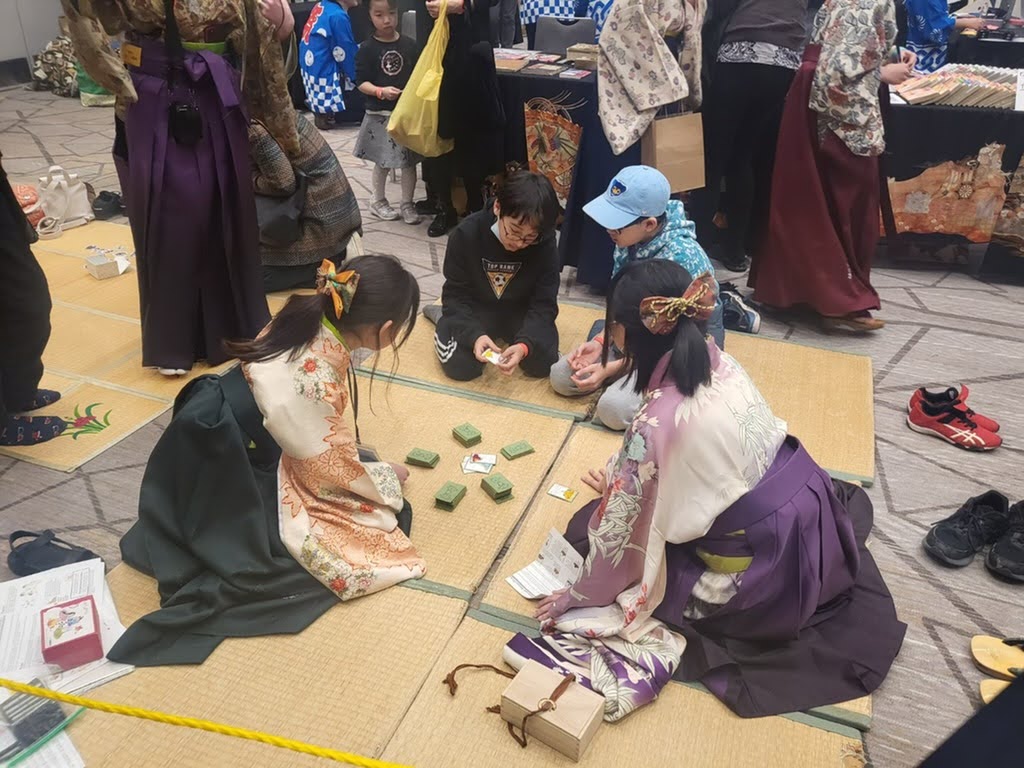
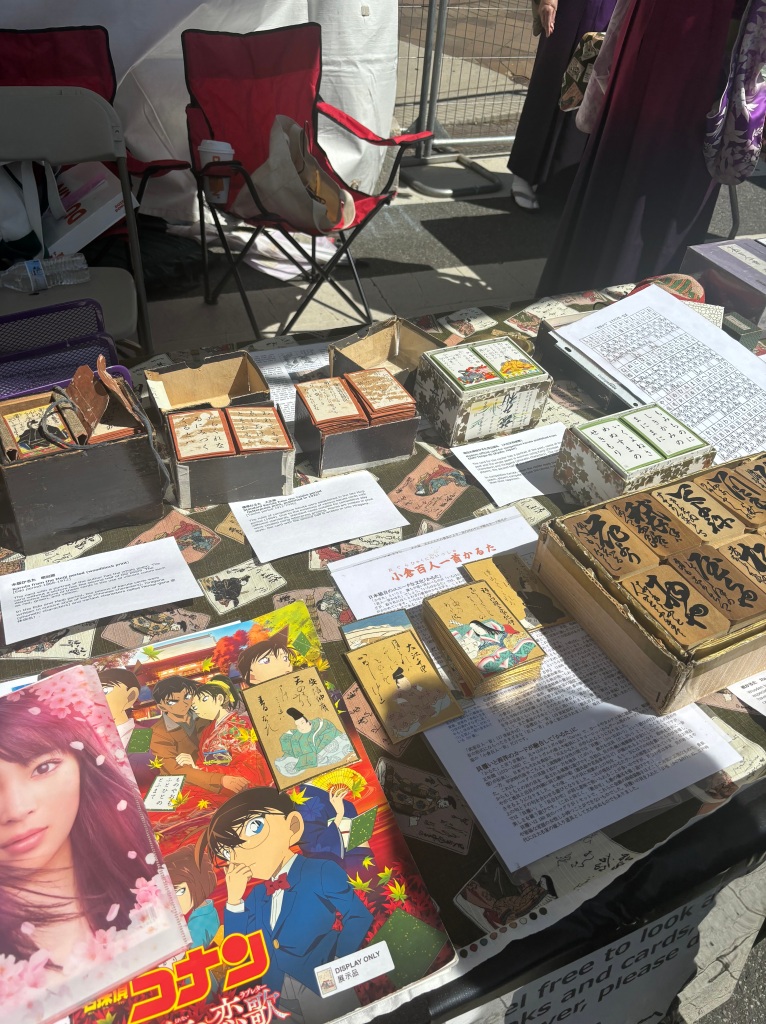
In the beginning of our first year in Japanese Plus we attended the Lunar New Year Festival, sponsored by Japan Commerce Association of Washington DC. There were lots of different activities such as live performances, calligraphy, food, drinks, and games. One game stood out to my classmates and me. It was a card game – karuta. There was an announcer and the game was played on a tatami mat without shoes. When my classmates and I started to play we were very confused as to what words were being said and how the game was played. With the little Japanese we knew, we managed to play the game not very well. The game was fun to play even with the little Japanese we knew and the event was a big joy to attend to.
The second year of Japanese Plus we went to the Sakura Matsuri and saw the same organization, DC Inishie, presenting karuta. This time the game was on top of a table at a booth. The same classmates and I decided to play the game once again. This time it was more competitive and we were able to understand how to play the game and what to look for. The game consisted of poems and the first hiragana character to be said was the card that was looked for. It was more enjoyable playing the game because we knew more Japanese than before and understanding the language helped us understand the game better. It helped me realize the progress I have made over the years from knowing nothing to being able to understand what is being said and how to read Japanese.
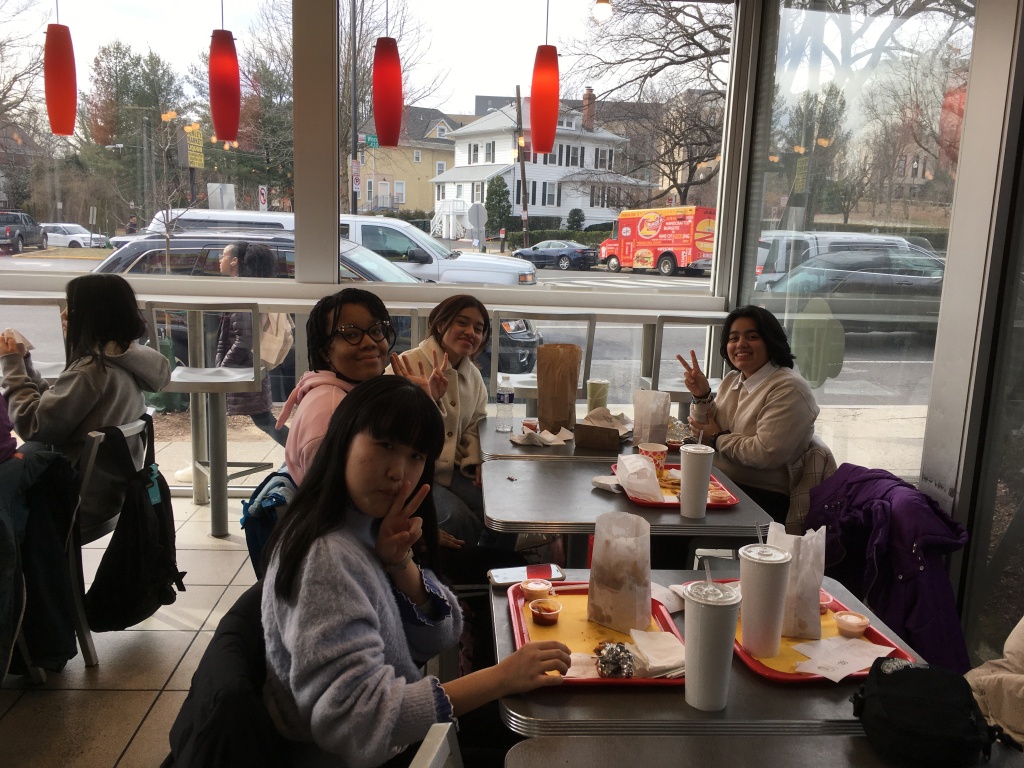
Another thing I have realized while being a part of Japanese Plus is that I’ve grown to be more social and learned to network. At the beginning of the program, I would often keep to myself and talk to the same people I knew because I was too shy to talk to others. This became especially hard during exchanges. Because I was shy I would minimize my talking but still try to speak Japanese. I was self-conscious of my Japanese skills and afraid to practice. I would feel more comfortable talking in English than in Japanese.
In our second year of Japanese Plus, we had a lot more exchanges and learned more Japanese. This helped boost my confidence in Japanese. I tried speaking more Japanese because I’ve realized that the process of learning a language involves mistakes and more practice. I’ve learned to network more like introducing myself and creating small talk which turns into more Japanese-focused topics. I’ve grown closer to my peers and made strong connections with them and fun memories that I will cherish. I’ve also made connections with exchange students and memorable moments.
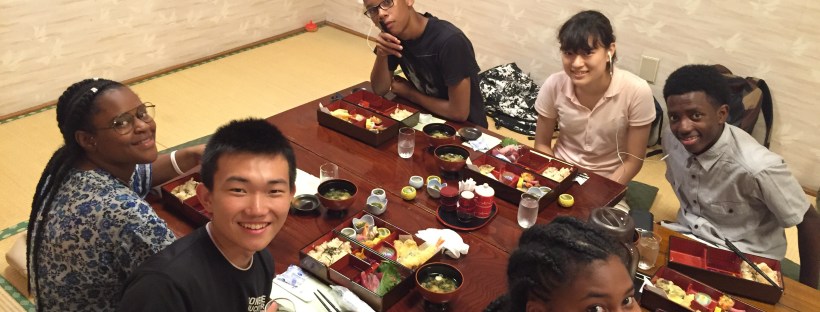
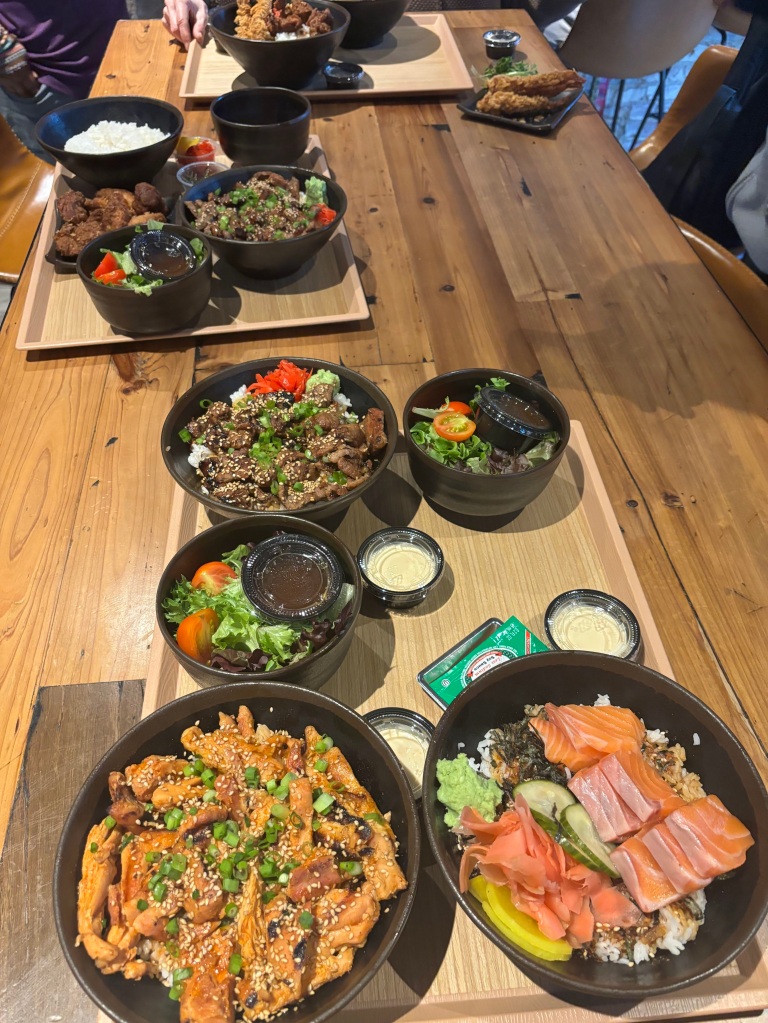
I’ve learned so much about Japanese culture. I feel as though I had the honor of experiencing a lot of Japanese-related things. For example, I’ve been able to have a Japanese meal. This is only the tip of the iceberg. I enjoyed having a meal and trying different flavors than what I am used to. Another thing is being able to cook a small Japanese dish such as Onigiri. It was a reoccurring thing in Japanese Plus and now on my own, I continue to make Onigiri for myself, my friends, and my family. I’ve been exposed to many different Japanese-related events such as the Sakura Matsuri, Lunar New Year Festival, Embassy of Japan, dance performances, etc. I feel like exposure to a different culture is crucial to understand another country.
I really enjoyed learning Japanese and its culture. Japanese Plus allowed me to open my horizons, meet new people, create connections, find opportunities, enjoy another culture, and so much more. I cannot express my gratitude enough and how lucky I am to have experienced this program. I am glad to have met my teachers, peers, other students, and friends. As the year comes to an end it is a sad feeling but with much hopefulness and happiness at the same time. Similar to the Cherry Blossom tree, happiness for a short time feels very beautiful in the moment but sad that they will go away soon. I am now aiming to study abroad in Japan and continue my studies of Japanese and Japanese culture in college.