By Pippa Byron
On Friday, July 17, we visited the National Museum of Asian Art. We were given a tour of the Japanese art collection. During the tour, I ended up being really surprised by the amount of influence that other cultures had on Japan, and how those influences could be seen just by looking at their art.
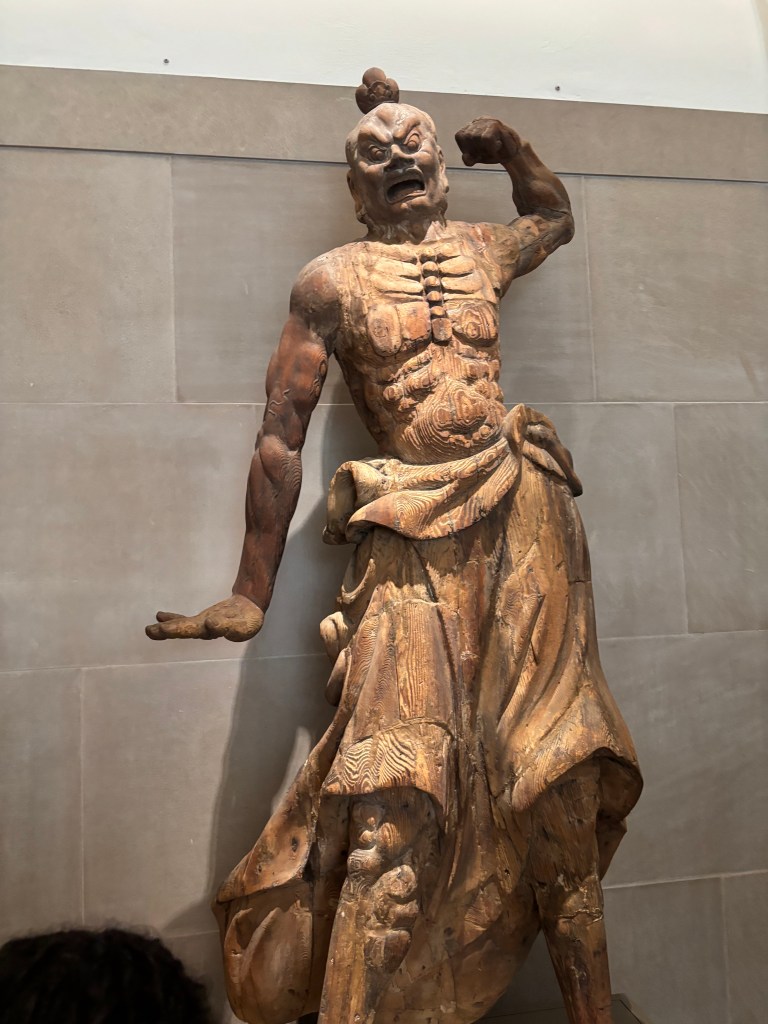
To begin the tour, we saw a wooden guardian figure from the Kamakura period. We learned that these types of statues were placed at the front of shrines to ward out things that weren’t compatible with Buddhism and let in those that were. Our tour guide, John Brennan, explained that Buddhism and Shinto were the most prominent religions of Japan for much of its history. But the religions were not practiced separately. Instead, many shrines served both as Buddhist and Shinto shrines, and it became valued in Japan to follow and coexist with both Buddhism and Shinto. This was really interesting to me, because I’ve never heard of two religions being practiced together – it seems to go against the idea of devoting yourself to a religion in the first place, especially thinking about it in the context of the Abrahamic religions that most of us are used to. But thinking about what I’ve learned about Buddhism and Shinto in the past, it actually makes sense. Neither Buddhism nor Shinto has a “God.” In fact, neither religion includes the idea of any sort of all-powerful, universal creator. Therefore, you can worship both without having to “choose” a God. Additionally, I’ve learned before that Shinto doesn’t even have a central text, making it easier to combine it with Buddhism. In the end, we were told that during the Meiji restoration, most “foreign” things and ideas in Japan became taboo, and Buddhism, having originated from India, was pushed out. But to this day, we can still see Buddhist influences in Japan reflected in these art pieces.
Chinese Influences
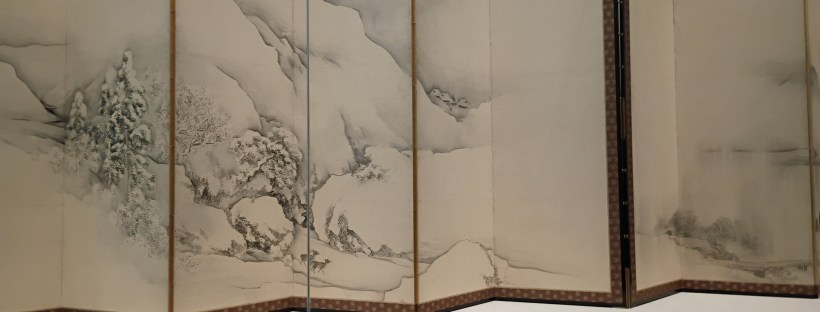
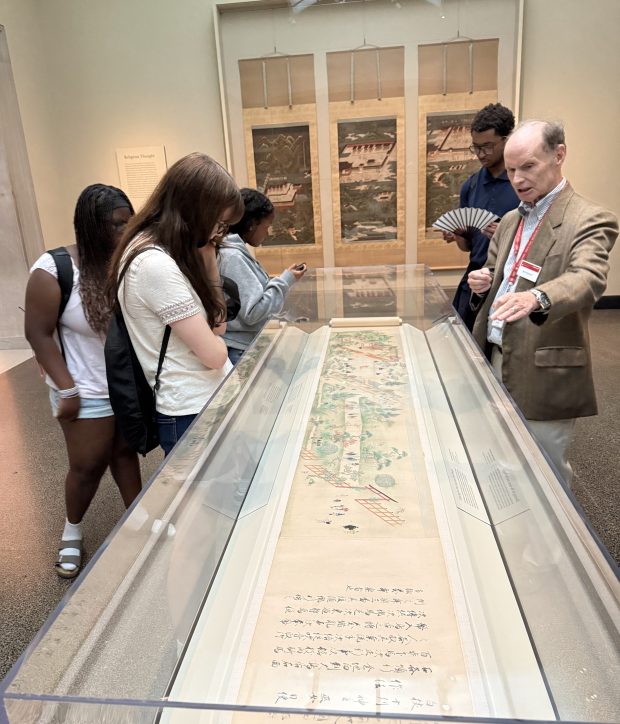
While looking at the art and being told its history, one thing became clear — Chinese art was one of, if not the most prominent outside influence on Japanese art. Mr. Brennan was the perfect person to tell us about this. He had studied both Chinese and Japanese for a long time, had lived in Japan and China, and knew their history well. Through the art piece below, we learned that a long time ago in Japan, there was a certain writing style that used only Chinese characters and was comprehensible to both Japanese and Chinese speakers. I thought this was really interesting, because when it comes to spoken Japanese and Chinese, they are completely different. Yet, since Chinese characters are used to convey meaning in both written languages, using written language can actually produce something that can be understood on both sides. As far as I know, there’s no other pair of languages that have this attribute. The text in this specific art piece wouldn’t be very easy to understand for Japanese speakers today, but it’s still fascinating to know that there was a time when the written language worked this way.
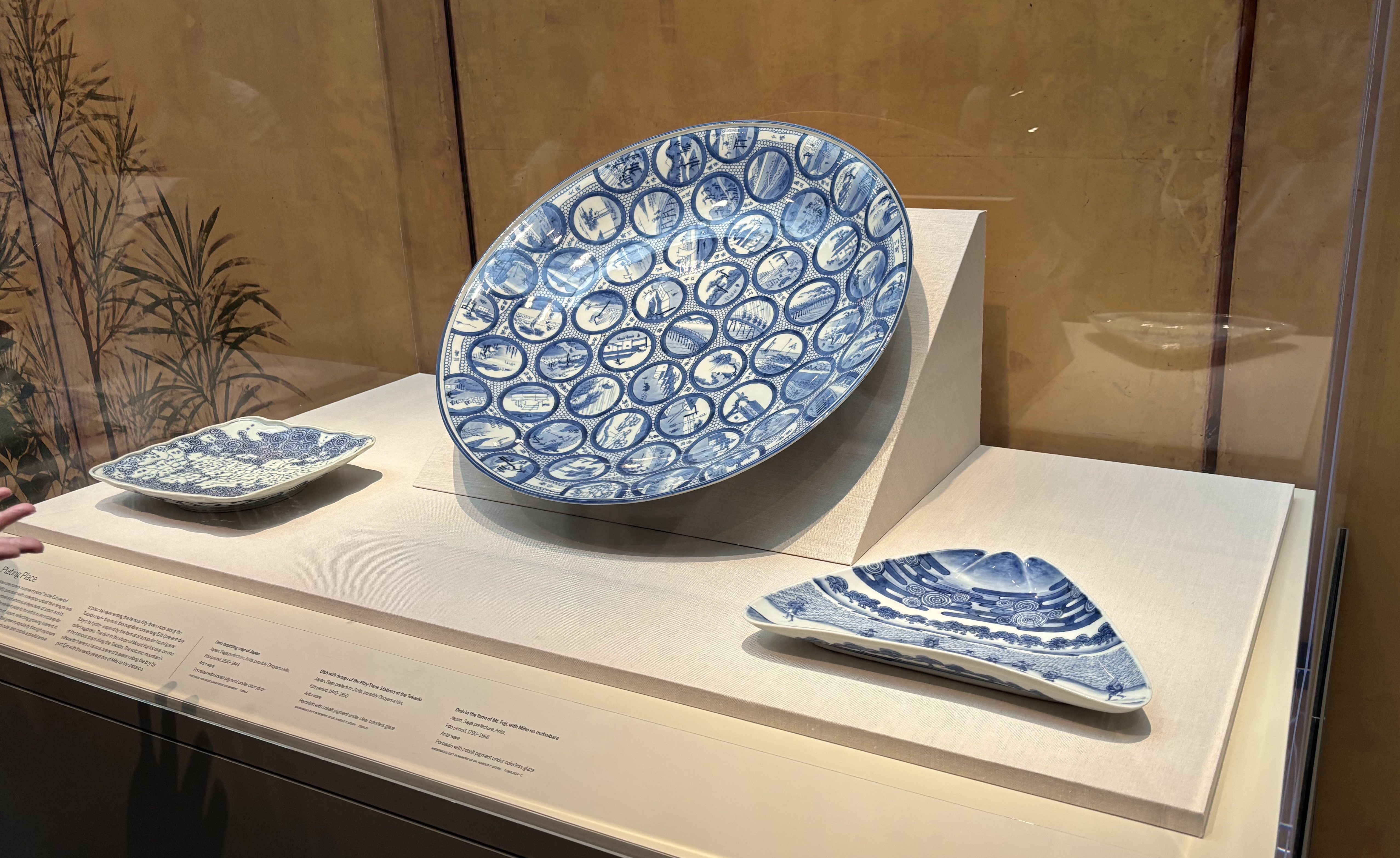
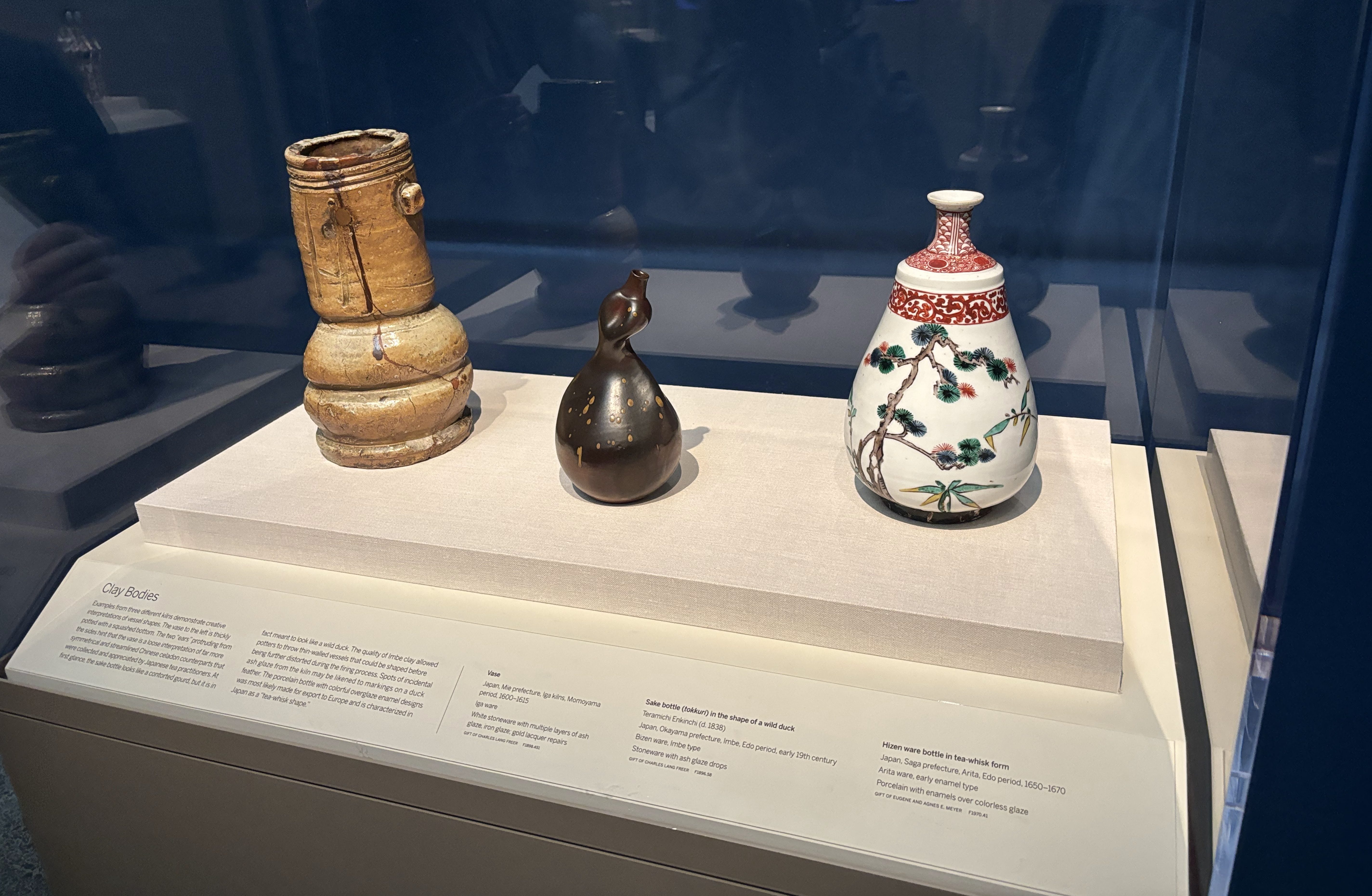
Below are more Japanese art pieces that were influenced by Chinese art. As our tour guide stated, although the inspiration is clear and the pieces show a lot of similarity to traditional Chinese art, none of them are exactly the same as their inspiration. For example, while the porcelain plate appears very similar to the well-known Chinese blue and white ceramics, its design is actually based on a board game played long ago in Japan. In the other picture with 3 pieces of pottery, the piece on the very left uses a pottery shape popularized in China. But rather than being a flawless, smooth and evenly glazed work, as these types of pieces usually were, it is purposely made to look imperfect, conveying the Japanese concept of wabi-sabi (meaning to see beauty in imperfection). It goes to show that while many cultures, and evidently Japanese culture, have taken in many outside inspirations and influences, they often change to reflect the culture itself, despite being something originally foreign.
In Modern Times
Seeing these cultural exchanges through Japanese art made me think about how these same cultural influences happen even in the modern day. Take Jazz, for example. It’s one of the most important genres in American music, and it is fully American-born. However, I’ve always found it interesting that Jazz is also extremely popular and has a large presence in Japan. Apparently, this phenomenon starts from the early 1900s, at the very beginnings of Jazz. During World War 2, Jazz was banned by the government, being considered “enemy music” because of its American origins. But despite this, it continued to flourish, especially after the war and beyond. And just like what I talked about when it came to the porcelain and pottery, this movement of Jazz to Japan didn’t just mean that they took an American genre and popularized it there – instead, they’ve developed and molded it into “Japanese Jazz,” having a distinct sound from what the music originally came from. There are lots of other examples of this sort of movement of culture, from America to Japan, Japan to America, and all countries, all throughout history, as shown in the art we saw.
I’m really glad we got to have a tour of the exhibition and I learned a lot!


It was lovely to host you and the Japan in DC program, Pippa! Thank you for sharing about your visit. It sounds like you were inspired by the objects and stories at the National Museum of Asian Art. You made some very powerful connections about art being a bridge and influence between cultures. Hope you keep coming back and to learn from the museum.
LikeLike