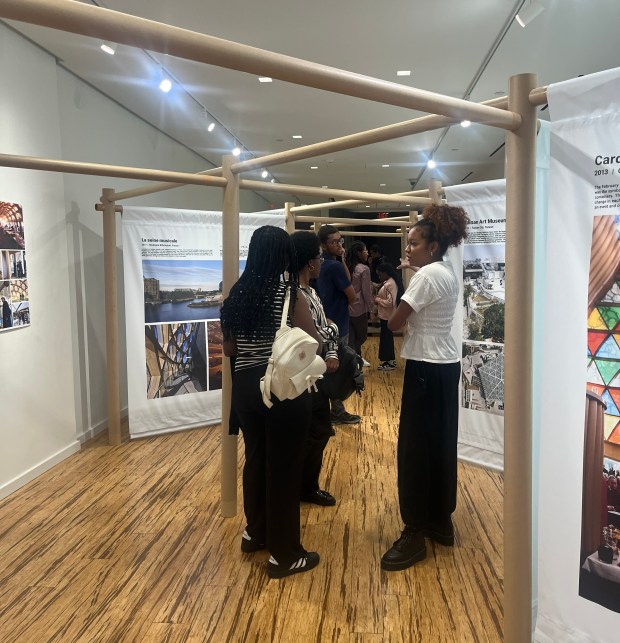
When you’re in a conversation about architecture, your brain immediately goes to metals, stones, or other generic foundation materials. Nobody expects to hear that someone is using paper tubes and cardboard to create living spaces. Going to the Japan Information and Culture Center (JICC) on July 10 was very eye opening. The speaker during the first part of our program was Gabrielle Headly, who we had met earlier in the program, and who now guided us through the exhibit and shared the history behind Shigeru Ban and his peculiar building ideas.
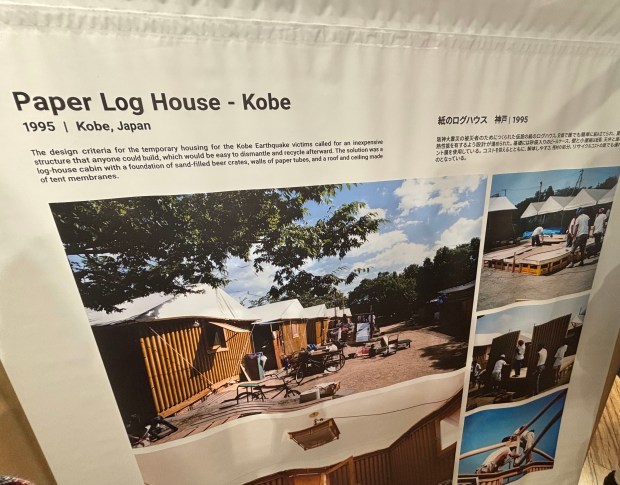
Ban’s style of architecture was an interesting one, beginning back in 1986 with experimentation, and humanitarian aid beginning in 1995. During that time, he worked on his first major project: designing low cost, easy to build houses out of paper tubes for Japanese disaster victims following the Kobe, Japan earthquake. These homes, despite being built of a widely known fragile material, were very sturdy, and allowed for sustainable living.
Ban’s style is a very intriguing one to me, because who thought one man could put together a whole organization solely for disaster aid, let alone with paper and cardboard?? Shigeru Ban is a huge inspiration for me to innovate and be more creative with my works, and I’d love to research more about him.
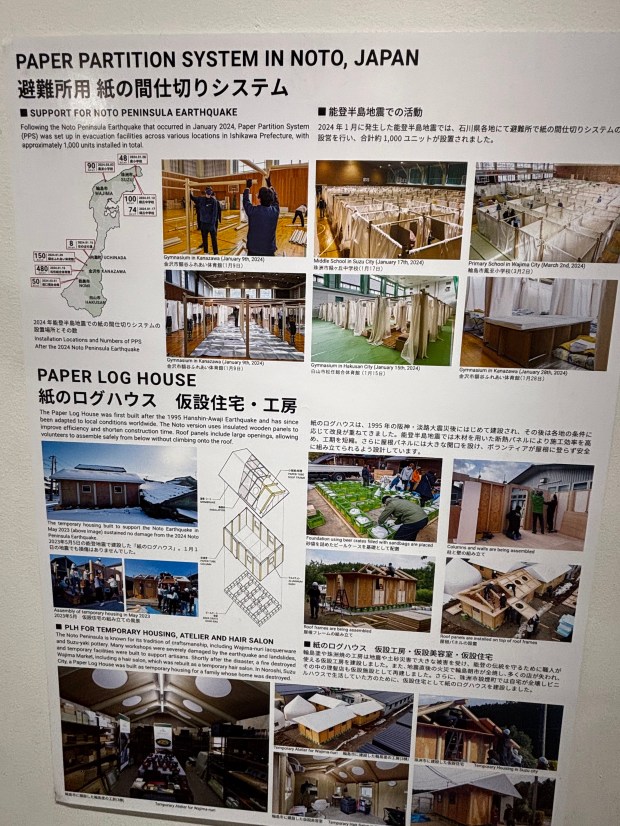
Something I’d like to briefly talk about is his Paper Partition System, used in Noto, Japan following their earthquake in 2024. The Paper Partition System provided privacy and homes for families who were victims of the earthquake. These systems were deployed all over workplaces, gyms, and community centers, allowing many people to be guaranteed to have a safe place to live while dealing with their circumstances.
Being an extension of Ban’s already innovative paper log houses, the PPS was already majorly impressive, garnering respect from not only the citizens of Japan, but many humanitarian aid organizations as well. Shigeru Ban was and still is an impressive architect, and his influence is still around today, you just have to look for it.
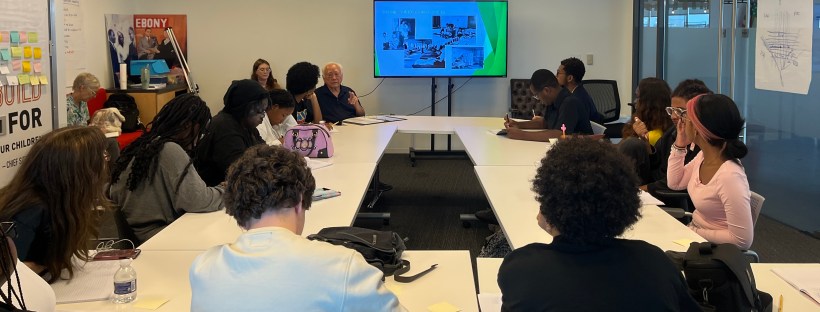
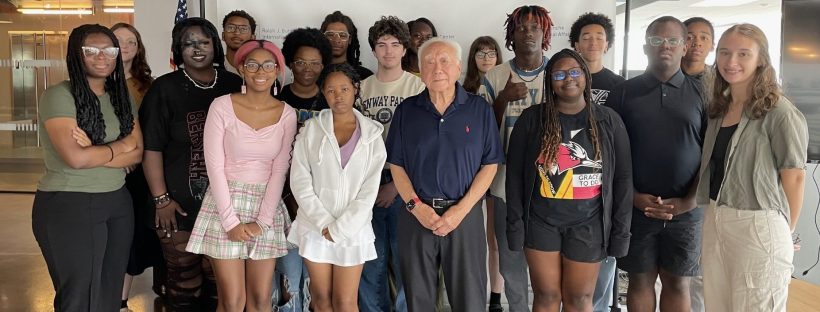
On July 7, 2026 in Japan in DC we had Mr. Gerald Yamada come in to present information on Japanese Americans during World War II. He was former President of the Japanese American Veterans Association (JAVA). He came to talk to us about the events that happened during and after Pearl Harbor, when the US entered the war, about Japanese Americans in incarceration (or what I call concentration) camps, and a little bit about his own family during this time. He went over how during World War II, after the attack on Pearl Harbor, the US government forced Japanese Americans from their homes and put them into concentration camps. Because the United States got attacked by Japan, the government believed that any Japanese Americans in America could be spies or try and affect America in the war that would lead to Japan’s and Germany’s victory. Next he went into the concentration camps and the conditions there. Also he discussed how there were Japanese American military units, like the 442nd Regimental Combat Team and the 100th Infantry Battalion, that made a big impact during World War II. Mr. Yamada also talked about his own family life a little, like his mom and dad, and a person named Bob Fletcher, who agreed to take care of his grandfather’s farm while they were away. Bob Fletcher would give the farm back to his family after the war was over.
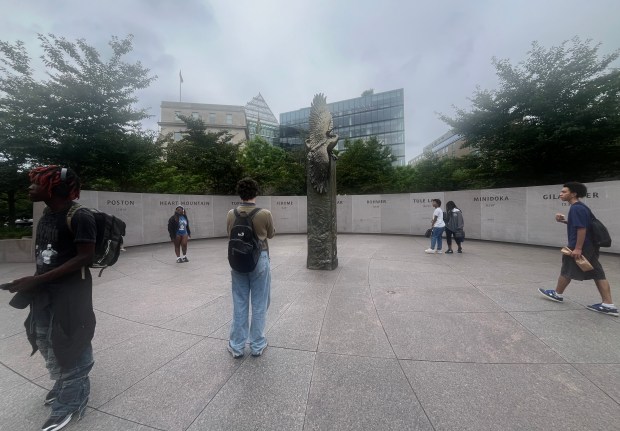
Visiting the peaceful National Japanese American Memorial near Union Station.
When Mr. Yamada was talking, the part that stuck out to me the most was when he was talking about the concentration camps. He was talking about how during World War II Japanese Americans were forced out of their homes, forced to sell their property, like their land, crops, etc., and leave their jobs. The only thing they were able to keep was the stuff that fit in their arms, like a suitcase, but not to mention they were also required to bring things like utensils, because the camps didn’t provide any of that.
When Japanese Americans arrived at the camps, the place was big, but small, because the barracks were 20 feet by 120 feet, and depending on whether you were single or a family, it determined how many people lived in each barrack. It was up to 25 single people, or 4-6 families together per barrack, depending on the family size. Also living in there was terrible. The places had no walls, so they had to use their blankets to cover the walls, no running water, no air conditioning, so it got really hot in there, because there were a lot of people sharing one room. When it came to anything like going outside to get food, they had to go into lines which made everything longer and more tiresome, but the kids enjoyed it. I don’t know why, but they had fun while being there. But one thing that surprised me was that of course they had guards so no one leaves, but the thing was the guards weren’t facing outwards to stop anyone from coming in, they were facing inward so no one leaves, which surprised me the most about it. But while they were there, it was boring, so they did things for entertainment like singing, playing sports, teaching, and farming, because most of the Japanese Americans in there were farmers, teachers, and so on, so that was something they could do in the meantime while World War II was happening.
After the war was over and the victory of America, the death of Hitler, and the surrender of Japan, everything was over. All concentration camps for Japanese Americans were done and they were set free, and when that happened, it’s not like Japanese Americans got their property back. What they got was a train ticket back home and 25 dollars. When I heard that, it pissed me off, because I feel like they should have gotten all their things back. In 6th grade I remember reading a book (I forgot the name) about people escaping from concentration camps. Also I watched a video about a Japanese American girl in a concentration camp and it went into more depth about it and how bad Japanese Americans had it during WW2. Next in 9th grade we learned about President Roosevelt (FDR) and the good things he did, and how he made America great again after the Depression. After this, I feel he was never good. He never cared about colored and only white people. Learning about this changed my way of thinking about FDR and what he did.
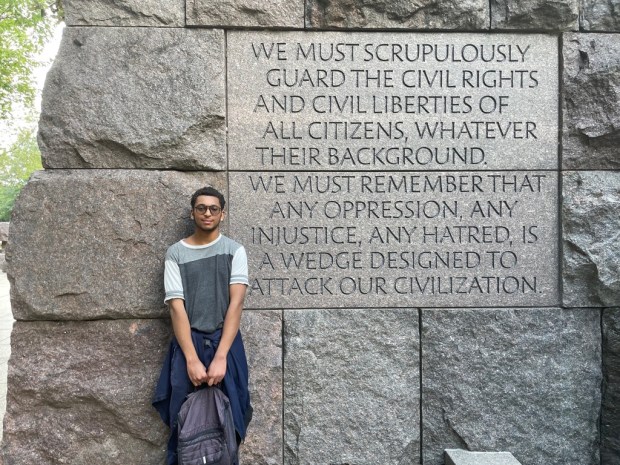
Overall, I believe Japanese Americans are probably one of the top five races that went through terrible stuff and I wish none of these things happened to them. I learned at the FDR Memorial down at the Tidal Basin it doesn’t show anything about what he did to Japanese Americans. It’s like he never did it and he was all great even though he wasn’t any of that. It’s like they’re trying to hide the bad about America, or the President specifically, especially with Donald Trump trying to do that too.
Teammate Aston at the FDR Memorial at the Tidal Basin. No mention of Japanese Americans!
On Thursday evening, July 9th, we went to a Tanabata Festival, also called the Star Festival, as part of an extended workday. The Tanabata Festival actually originates from the Chinese Qixi Festival. Tanabata means “evening of the seventh,” and celebrates the meeting of the deities Orihime and Hikoboshi. Tanabata is celebrated by writing a wish on a piece of paper called tanzuku and hanging it on bamboo.
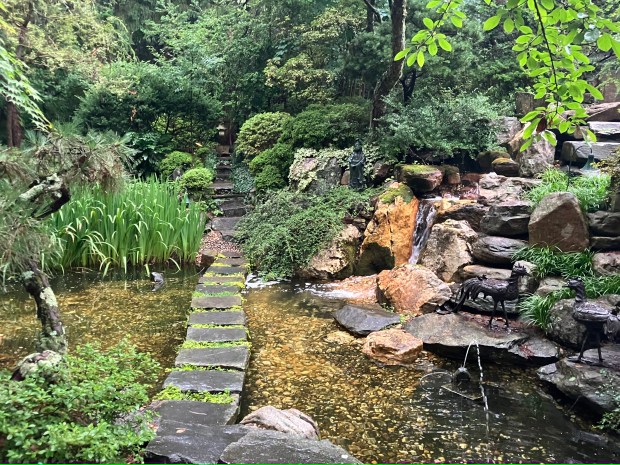
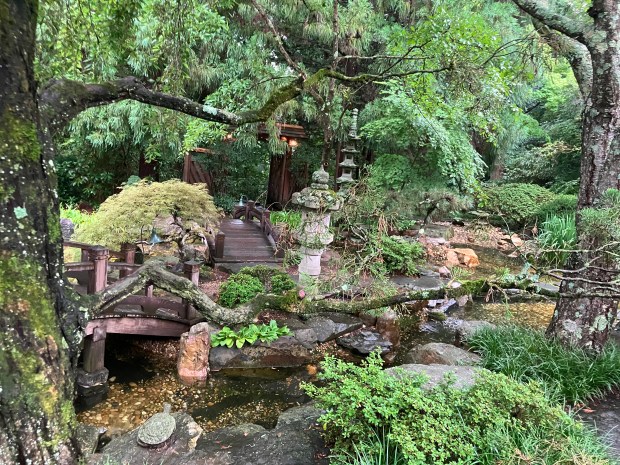
In DC, the Tanabata Festival, sponsored by the Japan America Society of Washington DC, was held at the Hillwood Estate near Rock Creek Park. There were a few activities like writing wishes and making lanterns. However, the part I enjoyed the most were the gardens, which were just a part of the estate. The nicest part was the section inspired by Japanese gardens. It was fairly small, but very beautiful. My favorite part were the paths that went through the water.
In Japanese culture, these bridges have a deeper meaning, they represent a transformation. In Shinto mythology, bridges connect our world to the gods and spirits. The reason why they’re so arched is so evil spirits cannot cross over them, because evil spirits are believed to travel in straight lines only.
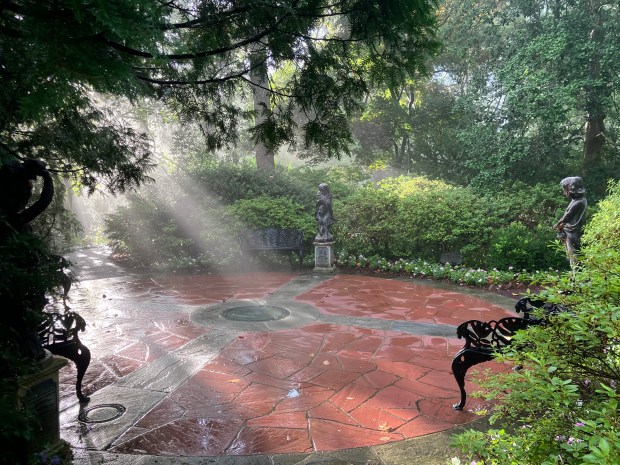
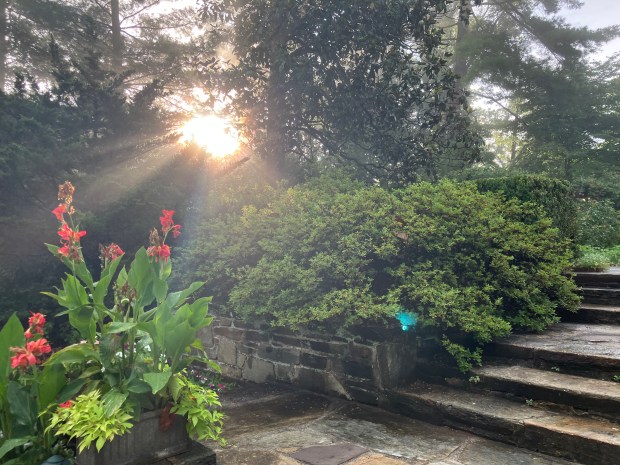
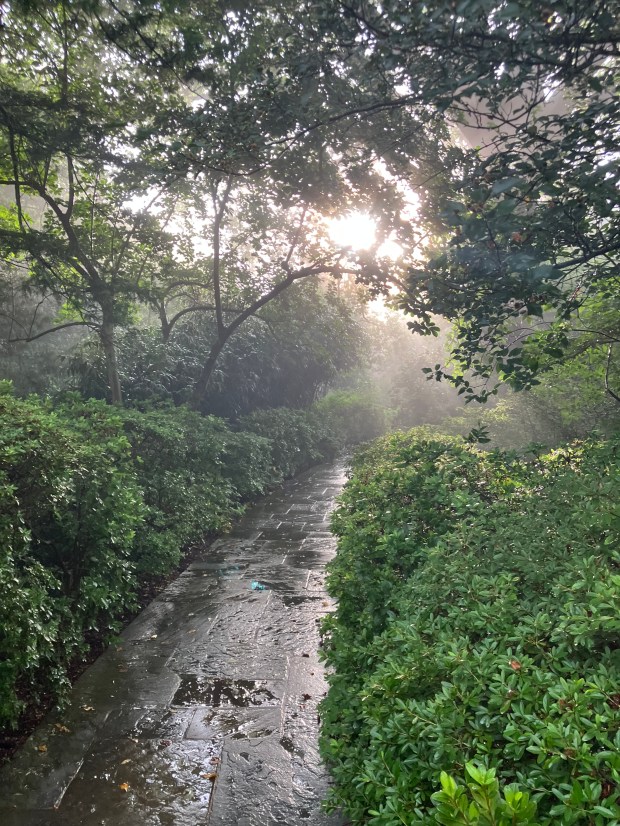
It felt amazing going through the gardens after walking around by the monuments all day, cleansing even. I had a headache when we arrived at the Tanabata Festival; after I went through the gardens it was completely gone. It had just stopped raining when we got there, so it started to get foggy. The second time I went through the gardens, the fog was at its thickest, and the clouds had parted just enough for the sun to shine through. We could see the rays of light shining through the trees, the only word I could use to describe it was mystical.
We heard from Mr. Gerald Yamada of the Japanese American Veterans Association (JAVA) about some of the history of Japanese Americans and the military regiment that was composed of Japanese Americans, named the 442nd Regimental Combat Team.
Mr. Yamada started off by informing us about how Japanese American civilians were treated before World War II. Then after the attack on Pearl Harbor, the USA started to discriminate against the Japanese Americans more through racism and creating the assembly centers and incarceration camps, which were remote barracks meant to keep a hold of a mass amount of Japanese American supervised and isolated from the rest of the USA. When he finished informing us on the treatment the Japanese Americans had faced after Pearl Harbor, Mr. Yamada then told us about the 442nd, which is a highly decorated Japanese American military regiment that gave Japanese Americans a chance to prove their loyalty to the USA and played a crucial part in defeating Germany in April of 1945.
After all of that, Mr. Yamada told us that the US Government finally let the Japanese Americans leave the incarceration camps, but gave them only $25 and a train ticket home. Eventually in 1988, after various debates and disagreements on whether Japanese Americans should receive reparations, President Ronald Reagan signed the Civil Liberties Act that offered $20,000 and an official apology to all of the living survivors of the World War II camps.
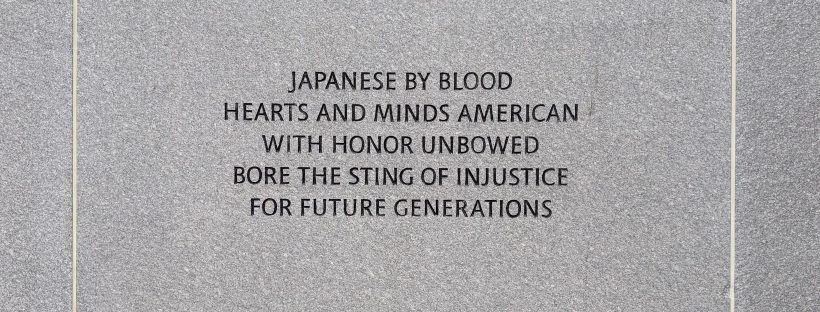
Note: The above engraved words are found at the National Japanese American Memorial which we visited as part of Japan in DC.
Today, July 7th, former Japanese American Veterans Association (JAVA) President Gerald Yamada shared his story on Japanese American exclusion. Many believe that the discrimination against Japanese and Japanese American individuals began with the bombing of Pearl Harbor, but this just isn’t the case. In fact, the discrimination dates all the way back to the late 1800s, when Japanese immigration began. The year 1942, after Pearl Harbor, was when it got bad. During this time, incarceration camps were established. At the same time, interestingly, a military unit for Japanese Americans, the 442nd, was formed. This regiment is famously the most decorated unit for its size and length of service in the history of the US military. After the end of World War II, and the 442nd’s service, incarceration camps were closed down and the Japanese were allowed to go home, but weren’t fully integrated.
Mr. Yamada’s presentation was very insightful. I learned many things I previously hadn’t known. One thing I hadn’t known was how far back Japanese American discrimination had dated, which both intrigued and frightened me. I encourage everyone to research about the War Relocation Authority (WRA) camps and the history behind the discrimination of Japanese Americans. Additionally, I was surprised by the amount of awards the previously mentioned battalion, the 442nd, was given. Their awards consist of 4,000 Purple Hearts, the Congressional Gold Medal, 21 Medals of Honor, and many more.
On Day 6, we were given a presentation by Mr. Gerald Yamada, the former President of the Japanese American Veterans Association (JAVA). Gerald Yamada helped to create the annual celebration of the Day of Affirmation, which this year will be celebrated on July 18th. The Day of Affirmation’s origins go back to 1946, when President Harry S. Truman acknowledged the patriotism of the Japanese Americans who served in World War II, even after their incarceration. “You fought not only the enemy, but you have fought prejudice – and you have won.”
Mr. Yamada talked about events that transpired and groups that existed during World War II, which includes the 442nd Regimental Combat Team (also known as the Purple Heart Battalion), and the 1399th Engineer Construction Battalion. Both groups were solely comprised of Japanese Americans.
The 442nd was comprised of 4000 initial Japanese American volunteers from Hawaii and the contiguous US, which grew to 14,000 to 18,000 members by the time the war ended. They had fought in five major battles. The 442nd was sent on a rescue mission to rescue Texas’s Lost Battalion from imprisonment by German forces. Saving the 211 surviving members of the Lost Battalion cost the 442nd over 800 casualties of both killed and wounded men. The 442nd also pierced the Gothic Defense Line in only 34 minutes, which is regarded as a key factor to ending the war. In total they have been awarded 7 Presidential Unit Citations, 21 Medals of Honor, 29 Distinguished Service Crosses, and over 4,000 Purple Hearts, all in 30 months. The 1399th was a team stationed in Hawaii that consisted of almost 1,000 men. They were responsible for 54 construction projects that contributed to the defense of Hawaii after the attack on Pearl Harbor.
Personally, I find it inspiring that people can find the will to fight for a country that has unfairly stripped away their rights and freedoms purely because of their ethnicity, and the faith that the country that had betrayed them can turn it around for the better. Especially since the Japanese Americans didn’t know what was going to happen to them during the war, so volunteering was essentially a leap of faith. I don’t think I could gain the courage to take a risk as big as that. Choosing to take the risk was really commendable!
One day, one attack Changed the lives of many people. Many stories began, and many dreams came to an end. Many lives were lost. Many did not know why. Many died. Many fought for what was right. Many could not fight.
I would send you many paintings, The day you would no longer see me as an enemy. I would place flowers at your door, The day you would no longer see me as an enemy.
The children did not know they were trapped, Living inside invisible prisons. Born here, yet treated as strangers in their own land. Japanese by heritage, American by birth, Misunderstood, yet they stood strong.
Don’t hurt your own family Just because their roots come from another tree. Their roots are here too, Just like yours and mine.
From the ashes of war, a new dawn rises. Two nations, once divided, grow closer. Cherry blossoms bloom beside the Tidal Basin, As symbols of peace, friendship, and hope.
Together we stand across the ocean wide, In friendship and hope, side by side.
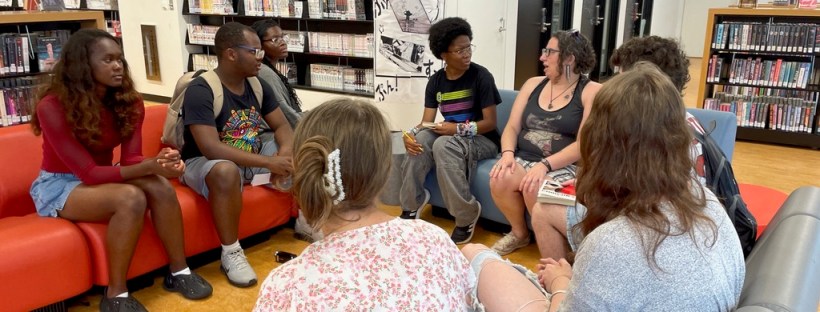
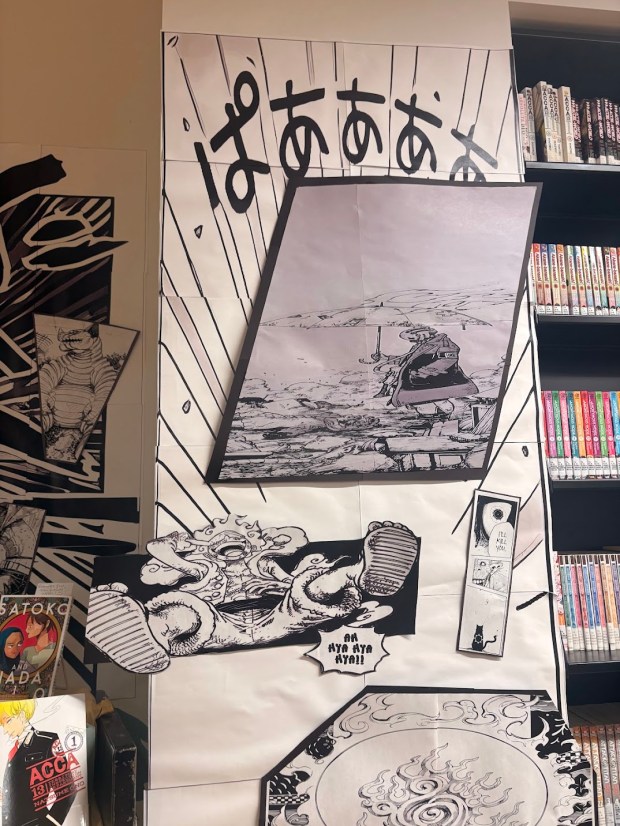
On Wednesday, July 1st, Japan in DC paid a visit to Martin Luther King Jr. Library located near Gallery Place metro stop. The MLK Library hosts many activities and clubs, such as the anime club. For our program, we went to the Teen Center located on the second floor. We first looked around their huge manga collection and I was pretty impressed by the size of the collection. Near the shelves filled with manga, they also had cool artwork showing snippets of different mangas that were created by one of the staff at MLK.
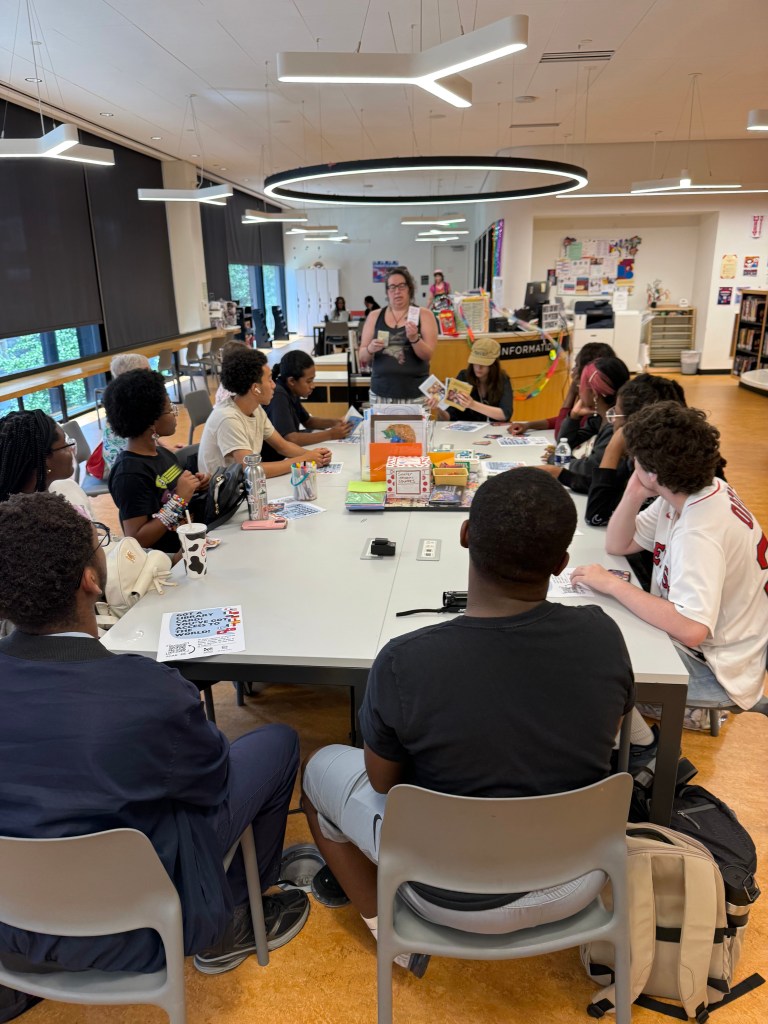
At the Teen Center, we also had a workshop about the process of making zines with Brandy, one of the staff members there. While Brandy was explaining how to make zines to us, she mentioned that she actually had a Japan connection as well.
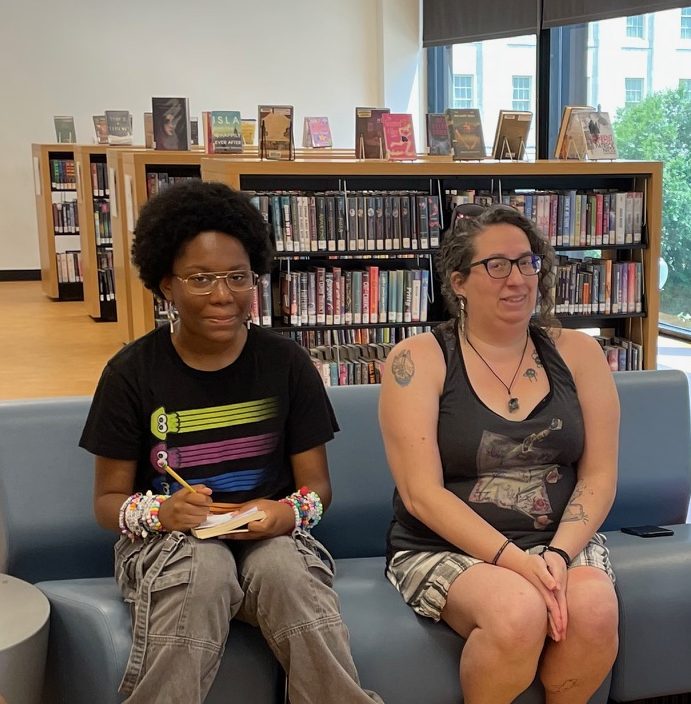
To learn about her Japan connection, we conducted a mini-interview with her. We learned that she is a 4th generation Japanese. In the 1920s, her great-grandparents migrated from Japan to Hawaii to work on the sugarcane plantations. She explained that many Japanese people decided to migrate to Hawaii during that time period to work on the sugarcane and pineapple plantations because it was a pretty profitable job opportunity. Additionally, her grandmother was a grade schooler during the Pearl Harbor attack and she mentioned that after the attack, her grandmother had to wear a gas mask to school due to the toxic environment left by the destruction. The windows of the school also were painted black after the attack to obscure artificial light in case of more surprise bombings.
After the bombing of Pearl Harbor, FDR signed Executive Order 9066 that ordered Japanese-Americans to be placed in internment camps. As for Brandy’s family in Hawaii, they were not sent to the internment camps because it was far too expensive to send all of the Japanese people in Hawaii to the mainland. Lastly, Brandy shared that she tries to connect with her Japanese heritage by cooking Japanese foods and watching anime. I enjoyed hearing about her heritage and how she still connects with Japanese culture.
TABLE FOR TWO USA is a nonprofit organization that focuses on promoting healthy eating while also helping provide school meals to children in need around the world. The organization partners with several groups and companies on its annual fall ONIGIRI ACTION campaign to support its mission of reducing hunger and encouraging healthier lifestyles.
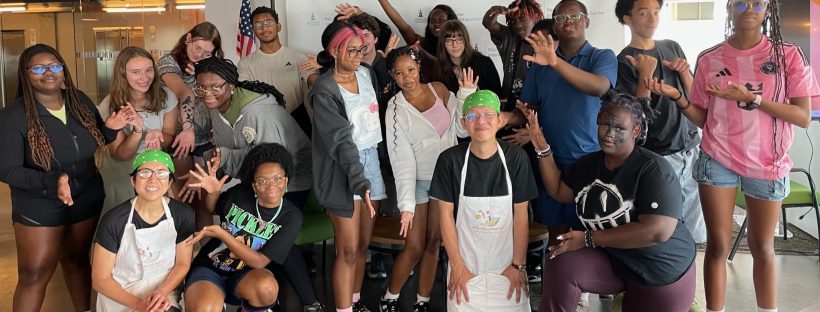
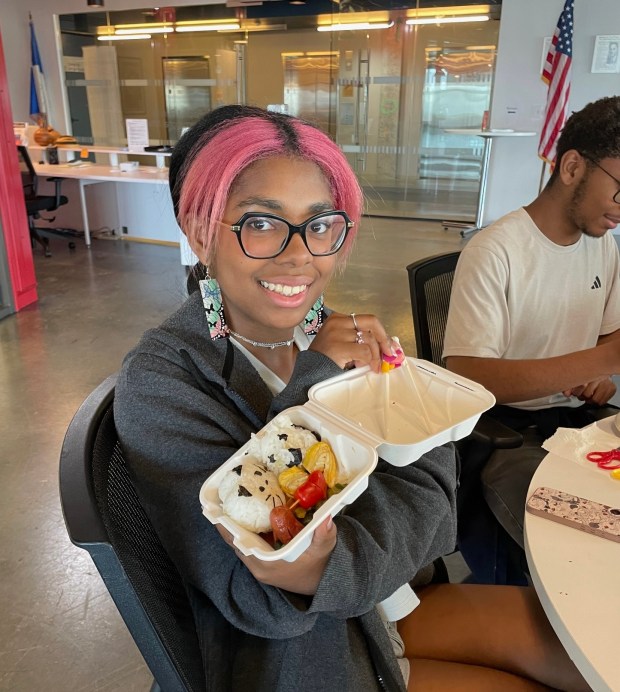
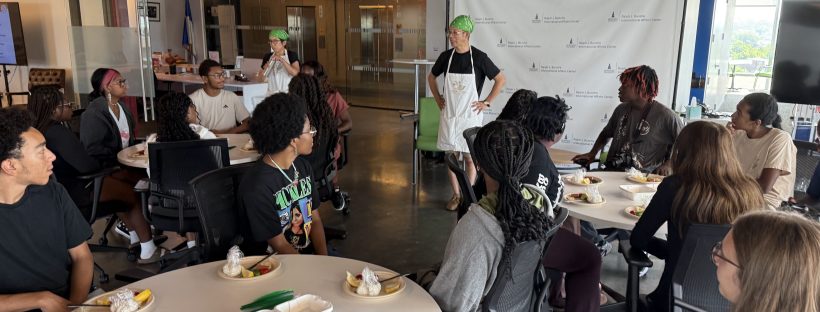
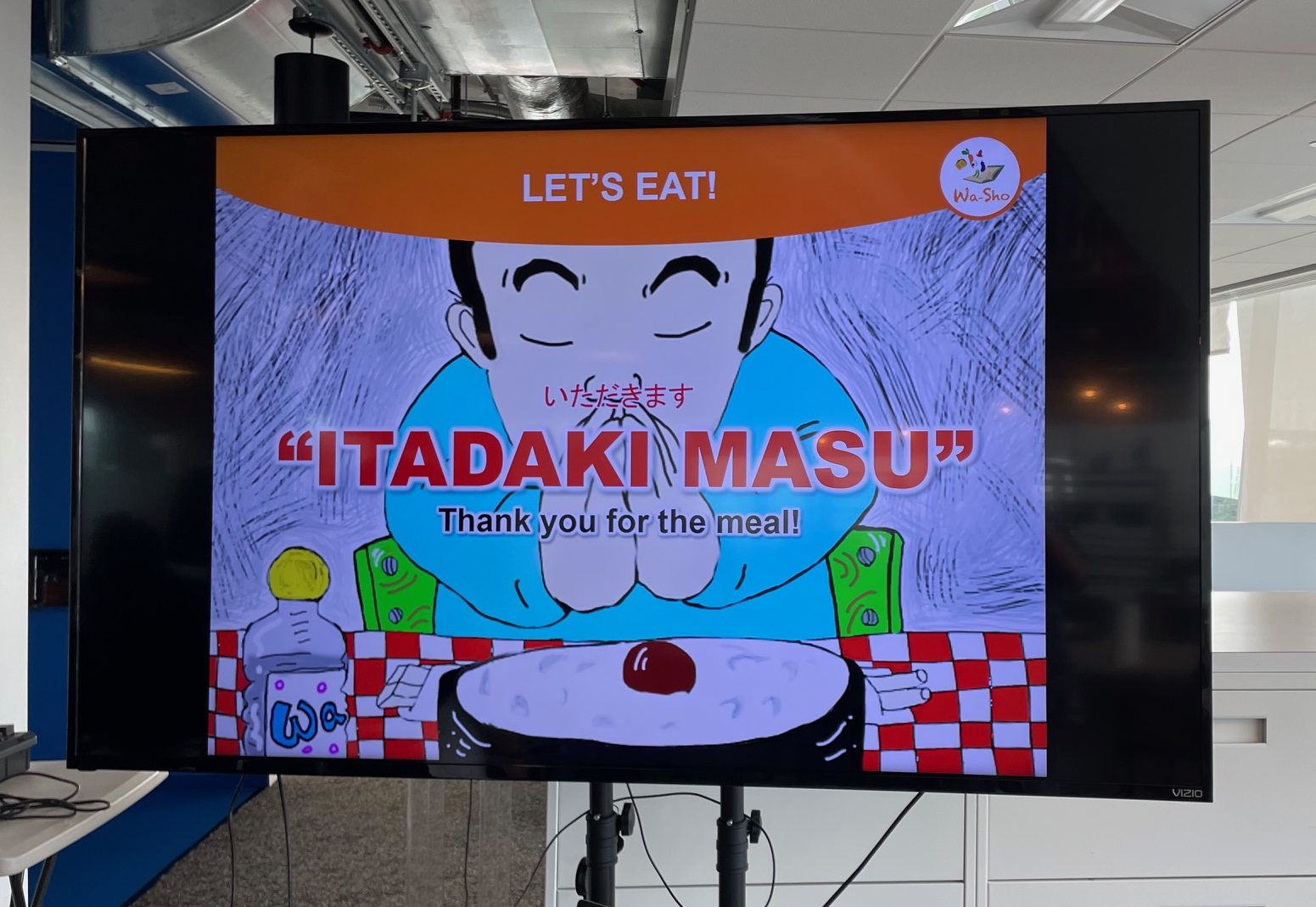
Recently, on the second day of my Japan in DC program, we had the opportunity to attend a presentation from TABLE FOR TWO USA where we learned about their work and participated in a bento box workshop. During the presentation, our guest, Miwako Felix, explained that in Japan both the presentation of food and the quality of ingredients are considered very important. Food is not only meant to taste good, but it should also be visually appealing and balanced.
One of the most interesting things I learned was the five color system used when creating a bento box. The colors are red, white, yellow, black, and green, and each color represents different types of foods and nutrients. For example, yellow foods can include eggs or yellow peppers. By including foods from each color group, a bento box becomes more nutritious, colorful, and enjoyable to eat. Before this workshop, I never really thought about how much effort goes into planning a balanced meal. I usually focused on whether food tasted good, but this experience showed me that nutrition and presentation are important too. I learned that adding a variety of colors to a meal is an easy way to make sure you are getting different nutrients. Seeing how much care is put into bento boxes helped me appreciate the connection between healthy eating, creativity, and mindfulness. This experience taught me how thoughtful meal planning can make healthy eating both fun and appealing.
On Thursday July 2nd, Miwako Felix gave us a presentation on Table for Two and their social action initiative called #OnigiriAction. Table for Two is a non-profit organization that started in the USA back in 2010. They started this organization because out of 8 billion people, 750 million suffer from hunger. Onigiri Action is an activity that takes place in the fall each year. If you post a picture of your onigiri (Japanese rice ball) or anything related to onigiri on any social media site (like TikTok or Instagram) between specified dates in October and November, then their partners will donate 5 free school meals to be delivered to kids around the world in need of healthy meals. Last year photos were posted from 47 countries around the world while 233,321 photos were taken and 1,166,605 meals were delivered around the world to kids in need. It is so important that kids around the world are getting healthy and nutritious school meals, because not only does having a good school lunch improve students’ well-being and work ethic, it also improves attendance. Since the launch of Onigiri Action USA in 2016, the campaign has provided 10 million school meals to kids around the world.
Table for Two also goes around to different schools in the U.S. and internationally to do a bento box workshop which we got to experience also. During the workshop, led by Miwako Felix and Marehiko Sakai, we were able to learn how to make onigiri. It is surprisingly easy and simple. Learning about this campaign was amazing, since it’s so simple and easy to be a part of if you don’t have money to donate, or if you’re too busy to volunteer anywhere. A few things I found surprising was that they post recipes and videos on their website on how to make it so that you don’t have to experiment or search up how to make it yourself. Another thing is so many people have participated which is more than I thought would have participated, and that this initiative doesn’t just benefit people struggling with hunger only in Japan. Onigiri Action helps people struggling with hunger in the United States and Africa.