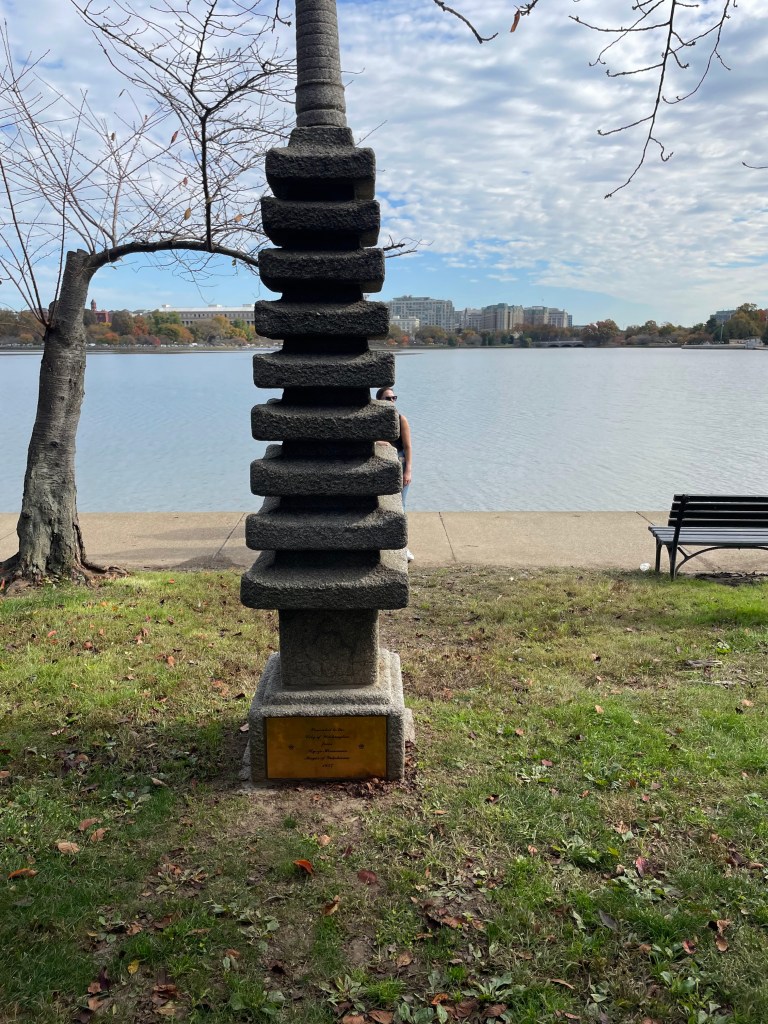
Walking around the Tidal Basin was a fun experience with my classmates and visiting educators from Japan. Although it was hard to speak only Japanese, it was a great way to learn while having fun. I enjoyed looking at the different sites such as the Japanese Lantern, and Japanese Pagoda, and taking photos with everyone. One thing that really stood out to me while we were walking around was the Japanese Pagoda. It’s funny to imagine the amount of confusion when trying to put together the 3,800 pounds of granite. As an American, most of the time, these things seem normal and we don’t really look into the history of those things, but when being told that they had relations to Japan, it gave those sites a deeper meaning. It shows the connection between America and Japan, realizing that there are pieces of Japan even in your own area and you might not even know.
Globalize DC’s Japanese Plus Program and the Japanese Language Program at Columbia Heights Education Campus are very pleased to co-sponsor an information session for DC high school students on applying to attend Temple University’s Japan Campus.
Date and Time: Monday, October 16, 2023, 5:00-6:00 pm Place: Columbia Heights Education Campus (CHEC), 3100 16th Street, NW (metro: Columbia Heights-Green Line)
Students, have you ever wondered about the possibility of actually attending university in Japan? It’s a real option that more and more American students are considering. Please join us on Monday, October 16 at 5 pm to learn how to get an American degree at Temple University’s Japan Campus (TUJ), located in the amazing city of Tokyo. The school welcomes students from all over the world and all different backgrounds. Japanese language proficiency is NOT required for admission; classes are conducted in English. This free information session, led by Joy Uetake, a TUJ graduate turned Admissions Counselor, will cover everything from student life to curriculum to how to apply to financial aid options.
Watch this video to get an idea of what TUJ is all about.
Any student interested in attending this session should preregister by simply sending your name, school, and email address to sally@globalizedc.org. Any questions? Send them to the same address.
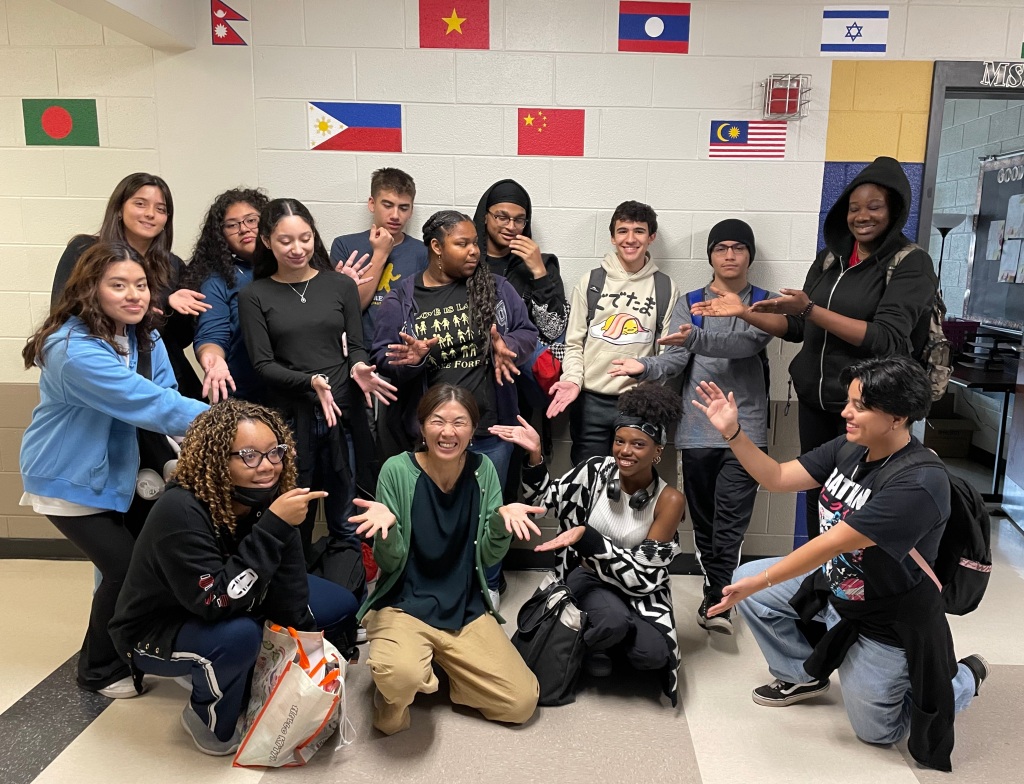
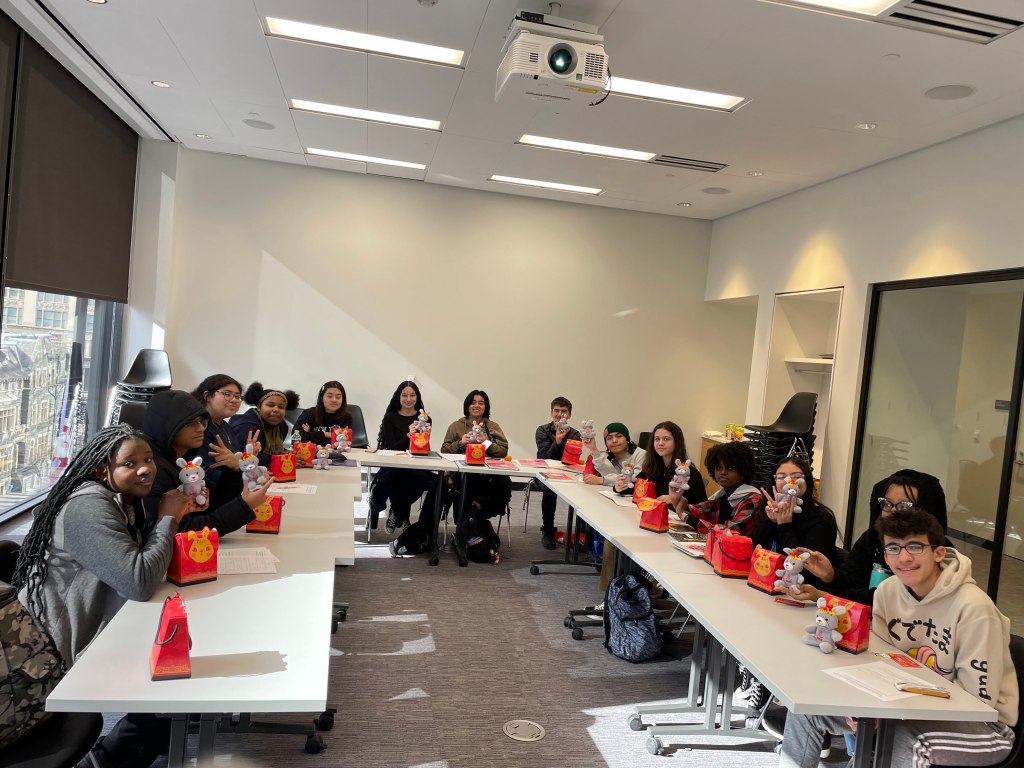
Saturday, September 30 was a happy day for us! The second year of our citywide afterschool program, Japanese Plus, launched at Columbia Heights Education Campus, with 14 returning students and a new Japanese teacher, Chihiro Takahashi. These super-dedicated DC public high school students will be meeting twice a week from now through the end of May – studying Japanese; exploring Japanese culture, history, and potential college/career pathways; and engaging in cultural exchange with peers and others in the US-Japan space. In other words, soaking up all things Japanese. Excitement is the operative word.
So what were they thinking on this first day back?
D’Amonie
In this present moment, I am very excited to be back. I have looked forward to this time again. I still love learning languages and I’ve been very proud of my Japanese learning journey thus far. Being able to go places and read the hiragana and katakana on Japanese products is so exciting for me, but there’s more to learn, which is why I am back. I am confident that I will get to my goal of natural conversational Japanese this year. I can’t wait to go to the next level. I can’t wait for more exchanges and interactions. And I can’t wait to go out and explore firsthand.
Zitlaly
As I was going through the metal detector here at CHEC, it hadn’t hit me that I’d soon be sitting in my Japanese class. I guess you can say it felt surreal. I’ve always been hesitant to push myself beyond limits, especially with languages. Though due to my past year experience, I feel as I can finally reach my language goals in Japanese. So I’m not as nervous nor scared to admit when I need help. I wish myself the best of luck this year especially because I’m a senior and REALLY BUSY!!
Elias
It’s the start of Japanese learning level 2 and honestly I feel good. I’m not particularly nervous. It’s more of a joyful, can’t wait type of feeling. But now that I’m also thinking about my senior year, that sorta does slow me down a little bit but I can manage. Learning through all the challenges and going to places relating to Japanese and Japanese culture keeps me motivated. And because of that, I’ll continue to push through in order to learn Japanese and experience the culture and more.
Aaron
I’m very excited for this year of Japanese Plus. I’ve gotten to see some friends from the class that I’ve missed. I hope to find a way to incorporate my knowledge and learning of the Japanese language into my college courses next year. My dream is to be able to tour my music in Japan or the UK one day.
Kori
I am looking forward to learn more about Japanese culture as well as being able to extend my language. I feel confident that I’ll learn more than I did before, and meet new people, like how I met a Congressman, and traveled to the Embassy of Japan during the summer, which helped me learn more on the history of the persons and embassy. I want to be able to experience more than what I’ve done like the tea ceremony, and being able to try on a traditional outfit.
Aitana
I’m looking forward to the new possibilities year two has to offer to our Japanese class this semester. After my time in Japan these last four months, I am excited to share all about my experiences with my classmates and hopefully inspire them to want to study abroad too. Overall, my goals this year are to maintain my Japanese skills, stay connected with the Japanese community in DC, and seek out new exciting opportunities.
Zion
Coming back to Japanese Plus is like remembering the first time I walked through the doors of our room for Japanese 1. I was late for my first class on Japanese, remembering my first teacher, our first exchange program with Japanese students where we all got to practice our Japanese with native Japanese speakers. It is sort of like going from middle school to high school, with all that I have learned from Japanese 1. I plan to take that knowledge with me to Japanese 2 to further expand my knowledge.
Mai
I am feeling really excited and happy coming into my 2nd year at Japanese Plus, to improve my Japanese skills that obtained last year. This year I am looking forward to learning and understanding daily life Japanese conversations, such as being able to talk about our day and things we like. I also look forward to building complex sentences using kanji. Outside the language aspect of the program, I hope to engage with the Japanese culture such as learning to play taiko drums, Japanese festival, and host again a Japanese high school exchange program.
Felipe
I’m now a level 2 Japanese student which makes me happy but nervous at the same time. I feel like I came out of last year with a good understanding of the language but I think level 2 will ramp up the pace a lot quicker and I’m gonna have to keep up. Luckily I went to Japan over the summer for 3 weeks which definitely helped with keeping my Japanese memorized. I was able to get some speaking and reading practice in as well as just being surrounded by language. This year I’m looking forward to hopefully get to a basic conversational level of Japanese and start learning some kanji.
Chamiya
My main goal for the year is to converse and meet Japanese students. While I was in Japan over the summer, I had the opportunity to practice and learn more Japanese. However, I wasn’t able to talk to students who were my age except for my host sister. Talking in a different language to converse with someone from a different culture was super fun and exciting to me. I learned so many different aspects of their culture and I was able to teach my own culture. There were similarities too and I wish to do it again. That is my goal for this year – to converse with a Japanese student and learn about their culture.
Margarita
Glad to be back!!! Seeing my friends and using Japanese again is making me feel so excited. Although I need to review some things, I am glad I get to do it with a new teacher. Hopefully this year we all grow closer as a class now that we will spend more time in person, and expand our knowledge of Japanese language and culture. I am excited to see how much Kanji we can learn this year and hopefully be able to use it with more Japanese people.
Jennifer
Coming into my second year of Japanese Plus I feel a bit nervous and excited. I feel nervous because I think my Japanese skills aren’t good enough but then I reflect on where I started. I knew nothing but here I am having small conversations and I know how to introduce myself. I am excited to continue learning. I aspire to be fluent so that it may better prepare me for college. I hope to study abroad and this program helped me seek opportunities in which I can. I also hope to get a better understanding of Japanese culture, the language, making connections, and growing with my peers.
Penelope
Although it’s been a while since our last Japanese class, I’m looking forward to picking up where we left off and advancing our language skills even further. I hope that this year we can go to more events around DC to experience Japanese culture, because I enjoyed so many of the ones we attended last year, like Sakura Matsuri and the exhibit at the JICC. I’m also looking forward to learning more kanji, and, of course, working with our new teacher!
Tristan
When I first came back to the program I was surprised by how my peers had changed over the past five months. Along with this I felt a bit awkward initially re-entering the program. I hadn’t many opportunities to practice Japanese over the break, so I felt a bit rusty almost as if I were lagging behind. With that said it would be a lie to say that I didn’t miss the program.
Well now that the program is over for the year, I looked at some of the pictures from throughout the year, and reflected on the growth made. Here are some major points (portrayed as pictures) in my progress with the program.
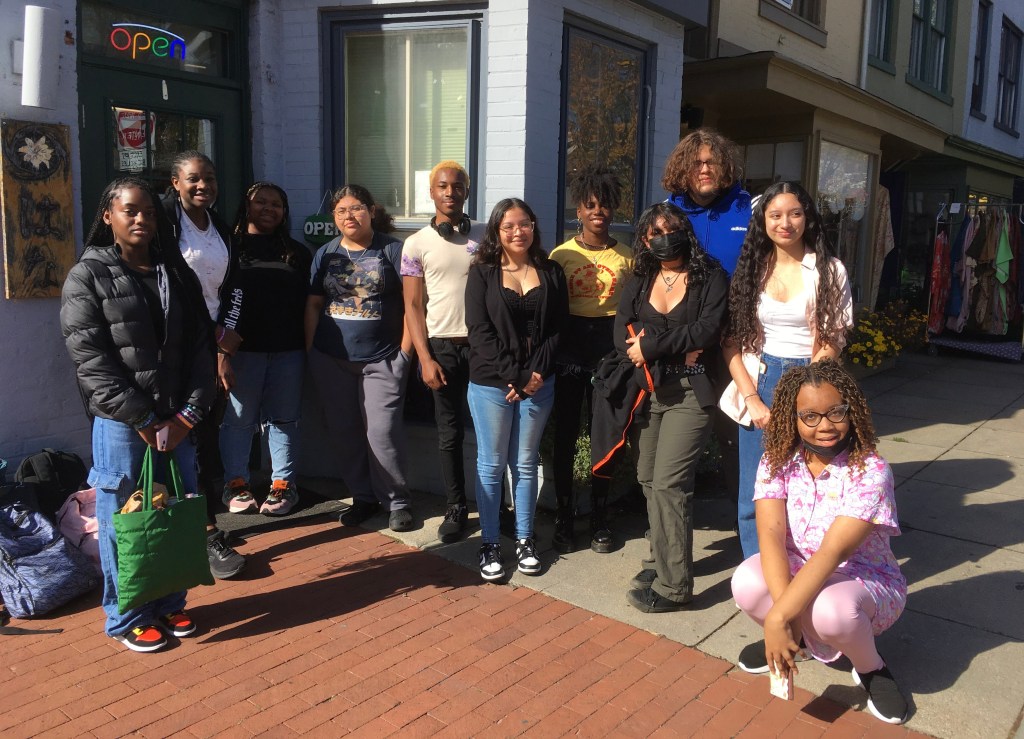
Here is a photo from the beginning of the year. I’m there in the black coat. I’m an ambivert so I’m usually very antisocial in instances where I’m in a new place. I was very antisocial and kind of against the whole program in general. Not for a specific reason, its just harder for me to get accustomed to things like the Japanese Plus program.
I’ll be using the JICC visit to detail my middle point in my progress with the program. I think the JICC visit was where I kind of opened up a bit more than I was used to. Especially with the haiku I submitted for their exhibit.
That haiku was very personal to me and was normally something I wouldn’t write, much less show in an exhibit. I also think I was getting more accustomed to being in contact with the other students in the program and making genuine friendships.
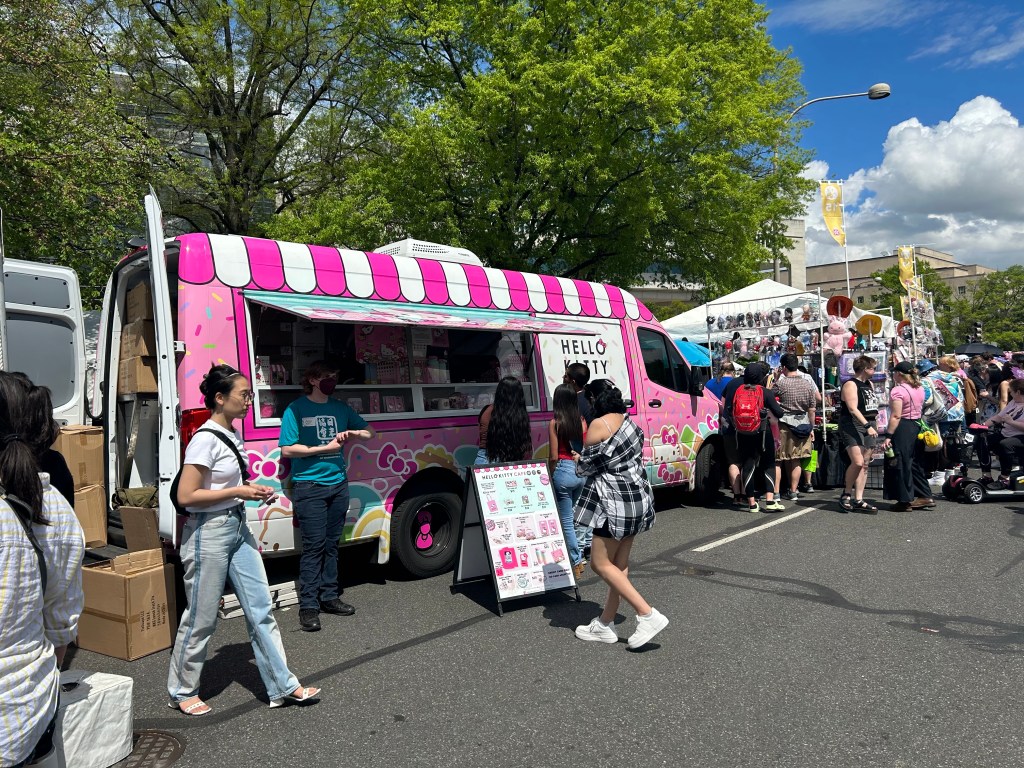
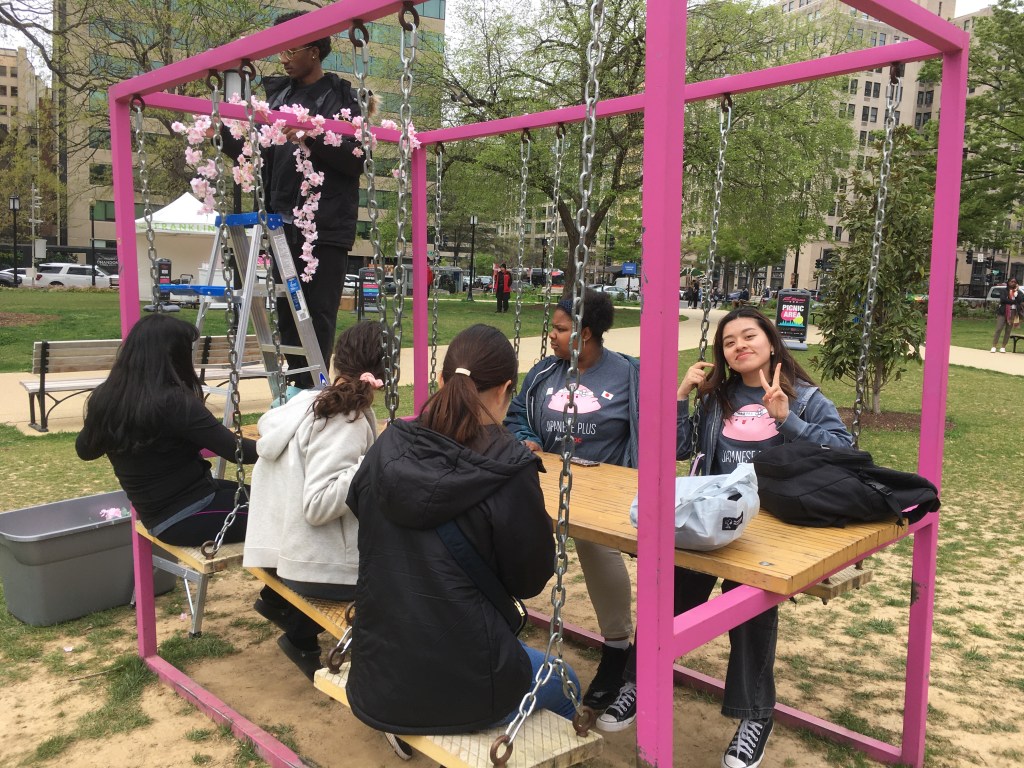
You can’t see me in this image, but the Sakura Matsuri Festival was a really big final turning point for me in the Japanese Plus program into accepting the program into my life and enjoying it. I was way out of my comfort zone being that much in a public place, but I didn’t feel anxiety, or anything being there because I was there with the Japanese Plus group. Overall, being in this program helped me a lot with being open to new experiences. I hope that all of my classmates have a great summer, and that next year will be as great as this one was.
I gladly registered in Japanese Plus when the chance to study a new language and get immersed in another culture presented itself. I had no idea that this adventure would enhance my linguistic skills while also giving me a lovely and life-changing experience. Japanese Plus provided doors to a fantastic world that I will always treasure, from the intriguing language to the rich cultural history.
Language Learning
Japanese Plus introduced me to the complexities and nuances of the Japanese language. The procedure was productive and engaging because of the qualified instructors, and interactive teaching techniques. I gradually started to understand the complexities of the language, from simple vocabulary to complex vocabulary. My ability to speak, read, and write Japanese has improved thanks to the properly designed activities, conversations with other students, and the direction of my instructors.
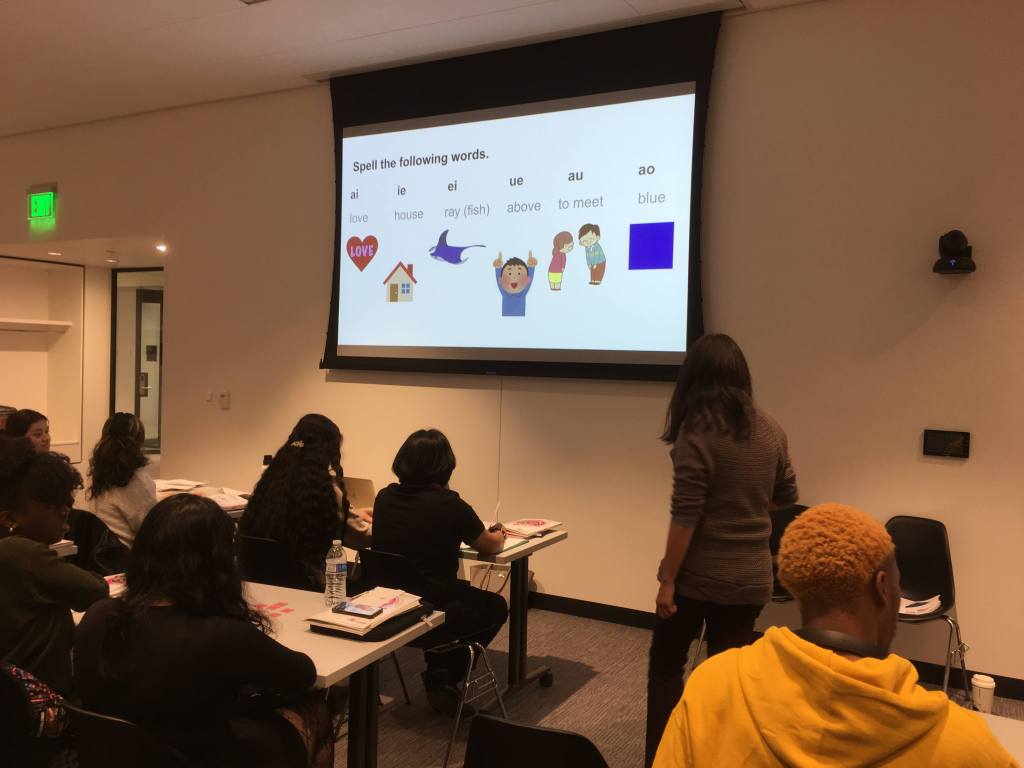
First Japanese Class
Cultural Immersion
The emphasis on cultural immersion was one of Japanese Plus’s most impressive features. Beyond improving my language abilities, the program gave me the chance to learn about Japanese traditions, customs, and history through a variety of cultural events, such the Japanese Street Festival, Sakura Matsuri. I have a deep appreciation for the Japanese focus on detail and how much respect is put into everything. I was able to develop a stronger bond with the culture through immersion in these events that went beyond merely learning the language.
Table for TwoRajio TaisoHana MarketCultural Exchange
Connections and Friendships
Japanese Plus not only provided me with the opportunity to learn from qualified instructors, but it also fostered a supportive and inclusive community. Interacting with fellow learners who shared my enthusiasm for Japan created a space where we could exchange knowledge, practice together, and develop lasting friendships. Through group activities, study sessions, and shared cultural excursions, we created a network of individuals who not only supported one another’s language learning but also shared a genuine passion for Japanese culture.
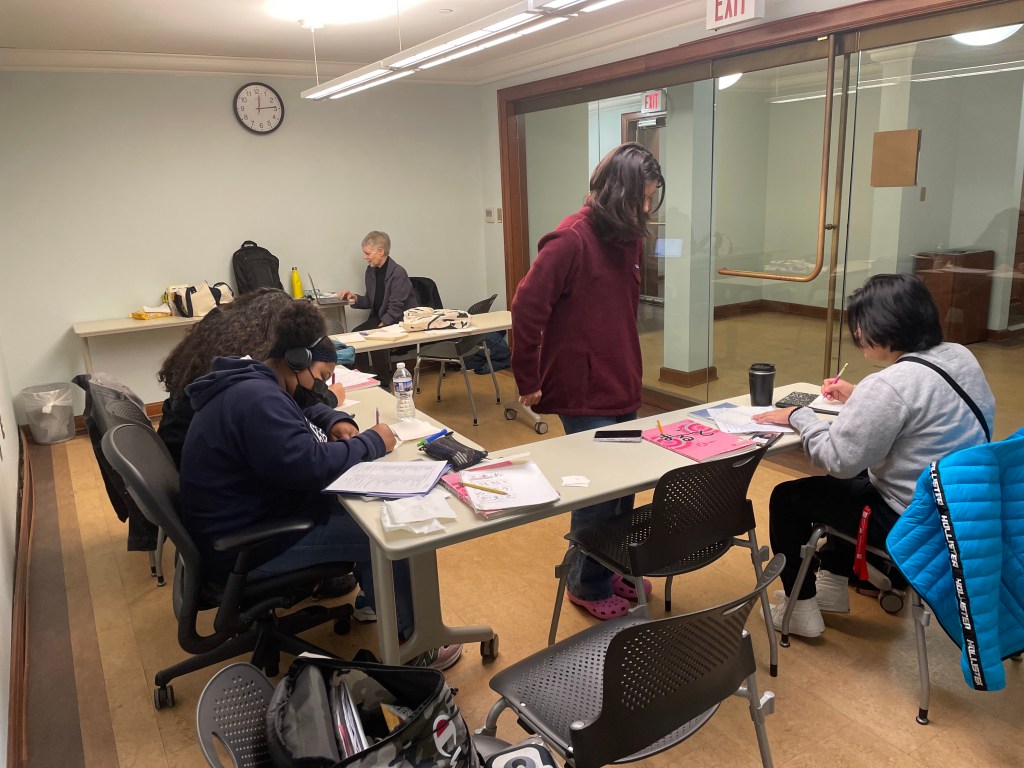
Study SessionSaturday Class
Real-world Applications
One of the most rewarding aspects of my experience with Japanese Plus was the ability to apply my language skills in real-world situations. The program encouraged us to engage with native Japanese speakers, whether through conversation partners, language exchange programs, or community events. These interactions provided me with invaluable opportunities to practice what I had learned, enhance my conversational abilities, and gain a deeper understanding of Japanese society.
KAKEHASHI Exchanges
Personal Growth
My involvement with Japanese Plus went much beyond merely learning the language and becoming immersed in the culture. It evolved into a transformational journey of personal development. I was forced beyond my comfort zone by the difficulties I had learning a difficult language, adjusting to a new cultural setting, and making connections with people from other backgrounds. I was able to grow in my self-awareness and understanding of the value of human connection as a result of the experience.
With our Language AssistantsKAKEHASHI Exchange at All Souls Church
Japanese Plus has been a wonderful and enlightening experience that has profoundly impacted my life. I have learned so much more than just Japanese ability through language study, cultural immersion, contacts, and personal development. My understandings have been broadened by the program, and I have developed a greater appreciation of other cultures. I will also be appreciative of this fantastic experience to our wonderful instructors, Shoko Hamano and Takae Tsujioka. Sally Schwartz, who provided me with outstanding mentoring, support, and direction throughout my time in Japanese Plus, deserves a special mention as well.
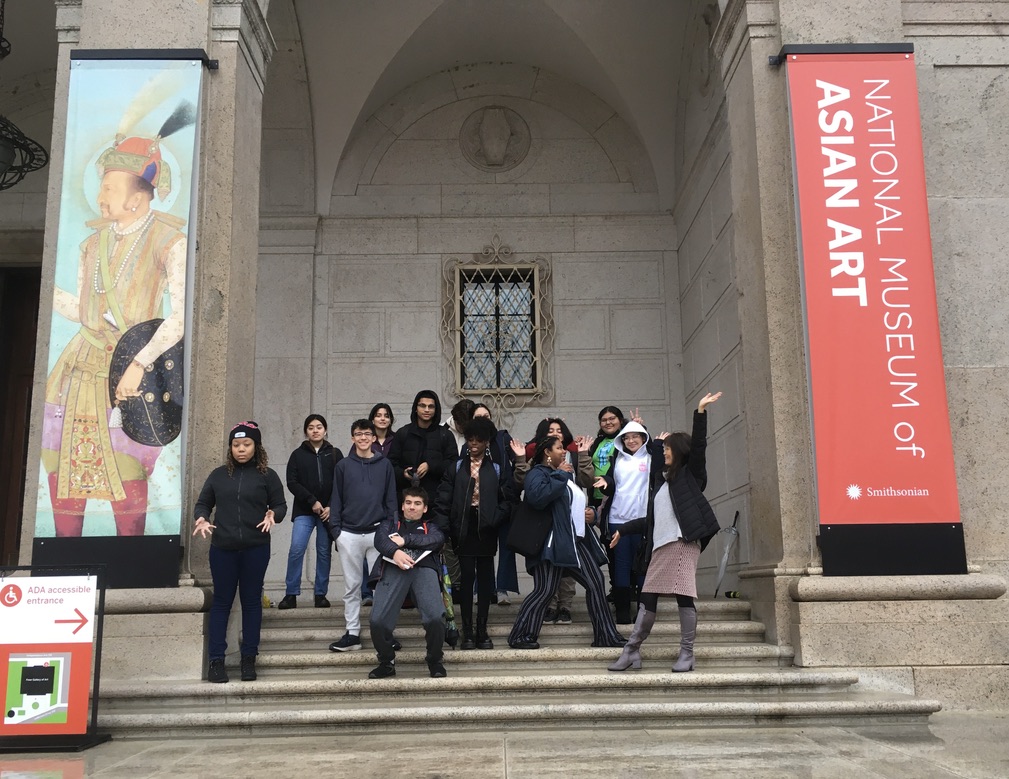
Japanese Plus is an after school program for DC students who are interested in Japan, its culture, and language. However, for me personally and probably for most of my peers, it became more than just an after school program. Personally, Japanese Plus allowed me to identify parts of myself that I didn’t even know were there. And parts of DC that I had never explored. For example, I had never gone to the Smithsonian Museum of Asian Art, but one of our out of class trips was to go. And it was very interesting; we got to see traditional/historic art from Japanese artists.
In addition, I was known to be shy or that I kept to myself but I figured out that in order to make connections with others both parties have to be willing. I have always been shy and quiet but once I get comfortable I’ve been known to reveal more of my personality. But despite the fact, Japanese Plus helped me put my shy persona to the side in order to take charge and create relationships with Japanese students, adults that can help open new doors to opportunities, and others who would be interested in tutoring/advising us on how to improve our linguistic skills.
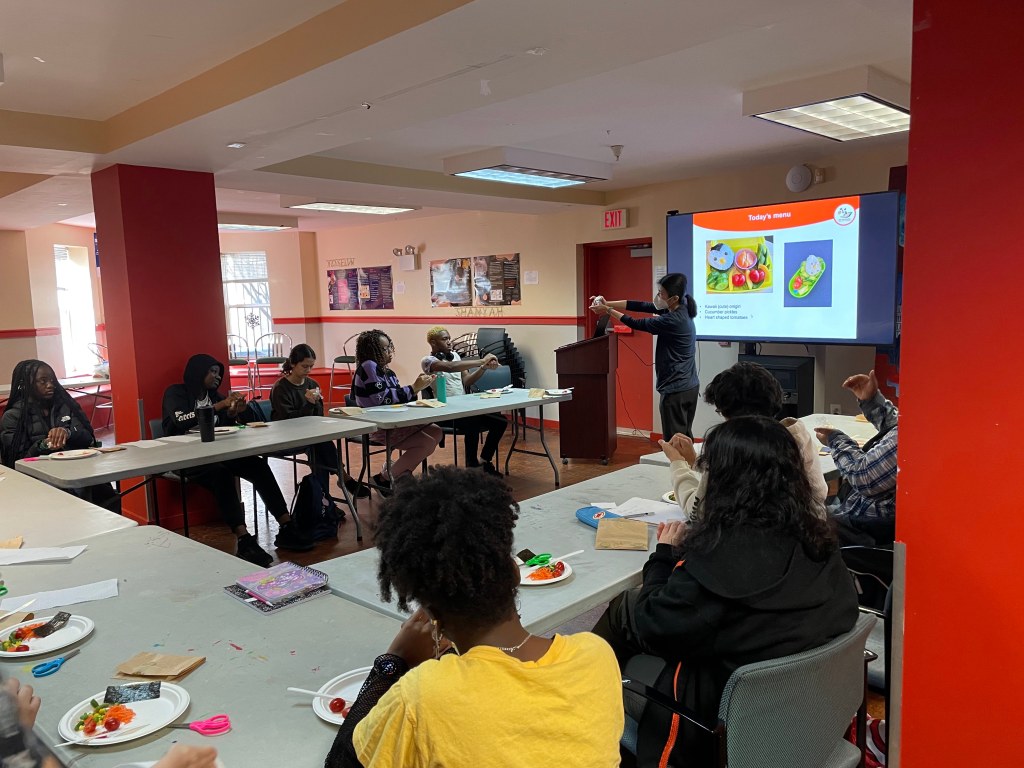
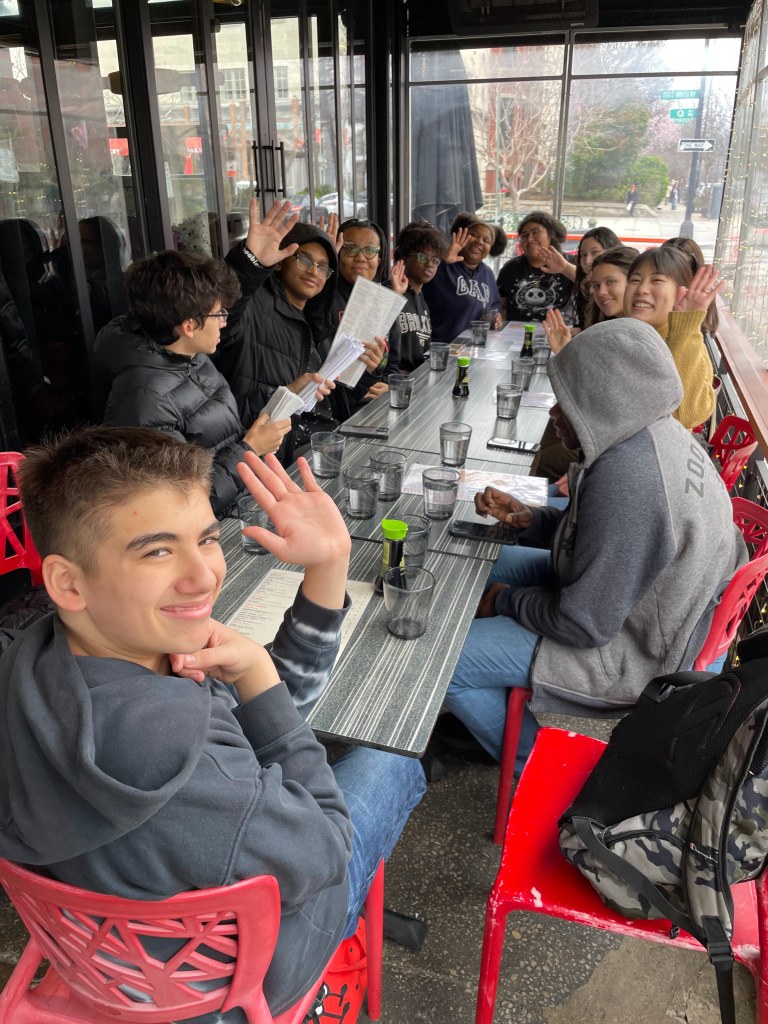
Another example would be when we went to the Hana Market near U Street and I bought my first bento box and 2 onigiris. Though the Hana Market was small, it was fun exploring the variety of foods that are a part of the Japanese or the AAPI (Asian-American Pacific Islander) community as a whole. It’s to say that Japanese Plus was a journey that I wish to continue next year.
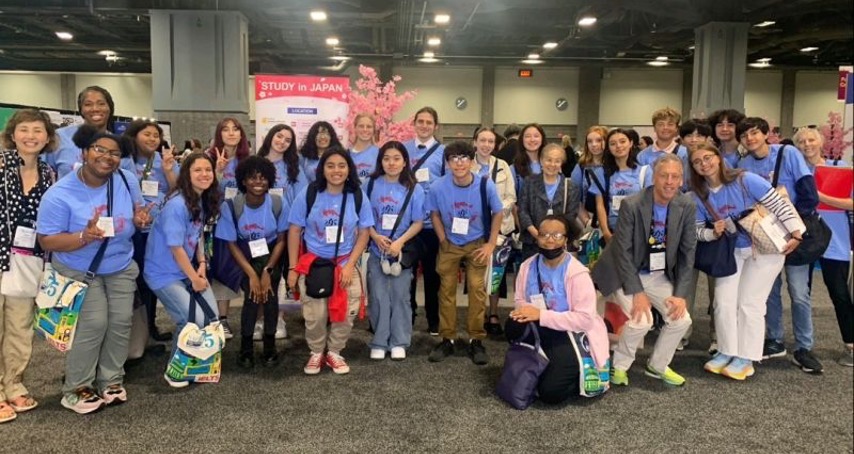
On June 1, a few students from Japanese Plus got the amazing opportunity to attend the NAFSA Conference, a huge gathering of study abroad programs and universities at the Convention Center in DC. We spent an entire morning in the section dedicated to Japan, and there was a lot to take in: so many different universities from all over Japan with varying class structures, opportunities, and programs. One university that particularly stood out to me, however, was the Kyoto University of Foreign Studies. As someone considering a career in International studies, I found this institution very appealing because it is in a large city with many opportunities to learn about diverse international cultures, and specializes in many different languages. The University also emphasizes community engagement, which I find very important in today’s world because individuals and enterprises are becoming more and more interconnected. I was happy to see a university that aligned so neatly with my career goals at NAFSA, and am looking forward to exploring study abroad further!
The Japanese Plus students got invited to attend the 75th anniversary NAFSA Annual Conference and Expo, the world’s largest association dedicated to international education and exchange. I was very excited to be attending the event because it’s an event that is held every few years in different places of the world. When arriving at the NAFSA event, we met other high school students from different schools who are also learning Japanese. It was amazing to see other students around my age who had the same passion and interest in learning Japanese. We had the chance to interact with the other high school students during the conference, and subsequently we were given the assignment to introduce a student from a different high school in Japanese. I was nervous about having a conversation in Japanese with other students because we all had different levels of Japanese, but later on I learned that the high school student that I was with like me only had 1 year of learning Japanese which made me feel less nervous since we had something in common.
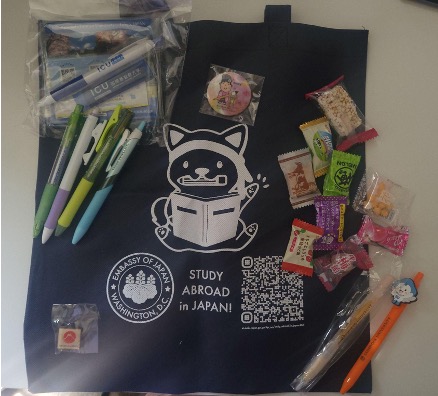
During the conference we also received a COI T-shirt with the words “Connection, Opportunity, and Initiative” which I believe were the perfect words to describe the event and high school student language learners. We also got a NAFSA bag and a bag from the JET program which I liked very much. And we received different Japanese candies, pens/pencils, and merch from different universities in Japan. However, the most valuable experience from this conference is being able to hear the personal experience and advice from people of different organizations about their language learning and studying abroad journey. Some of the people we were able to meet are Taichi Kaneshiro, Education Counselor, and Tim Folsom, Education Coordinator, at the Embassy of Japan.
They presented the JET Program and we learned that The Japan Exchange and Teaching (JET) Program is an opportunity for young adults to study abroad, work in schools, and boards of education across Japan. When presenting the different positions people can take through the JET program, the position that interested me the most is being an Assistant Language Teacher. The reason is because we are able to work with Japanese teachers to help enrich and improve Japanese students’ English. Moreover, being able to interact, make connections, and share each other’s culture with Japanese students of different ages through activities and clubs sounds amazing and a lot of fun!
On a final note, I am very grateful to receive the opportunity to go to the NAFSA event and take part in the COI program as it stoked my enthusiasm and gave me a push to pursue studying abroad and to learn and experience Japanese culture and not just the Japanese language.
On June 1st, 2023, I was invited to attend NAFSA’s Annual Conference and Expo and connected with international educators from a variety of countries. I mainly went to the conference to connect with Japan’s universities and after talking to several universities, I was able to discover 5 that I am most interested in going to. I am studying to become a veterinarian, which means that I need to major in biological or veterinary sciences. Most of the universities that I interacted with were liberal arts schools and did not offer degree programs in English for biological sciences. However, there are 5 universities — Hokkaido University, International Christian University, Sophia University, Tohoku University, and Tokyo Metropolitan University — that offer biological sciences degree programs in English. I was so excited to add these colleges to my list, especially since I want to study in Japan!
When first entering the event it was filled with many different booths. I expected to only see booths from Japan but NAFSA had booths from all over the world. The atmosphere felt very professional and welcoming. When approaching the booths someone was there to welcome you and talk about the university. I found a university I’m really interested in. It’s called Meiji University. They offer an anime course over the summer. That University stuck out to me out of all of them. I hope that I will be able to attend the University to pursue my hopes of becoming an animator.










 GLOBALIZE DC: JAPAN