By Felipe Lemos
On June 1st, I along with 7 other Japanese Plus students were invited to the NAFSA 2023 Conference here in DC. The conference is an Expo for universities and organizations from across the world to come together and encourage studying abroad. We were invited through the Japan SIG COI (Community Outreach Initiative) program which brings together Japanese learners from different schools in the DMV area to attend the conference as a group. The students from the other schools — Walt Whitman HS and South County HS — were also very kind, but a lot of them were at a much higher level of Japanese as they studied for years through their school while our program just finished the first year of its cycle.
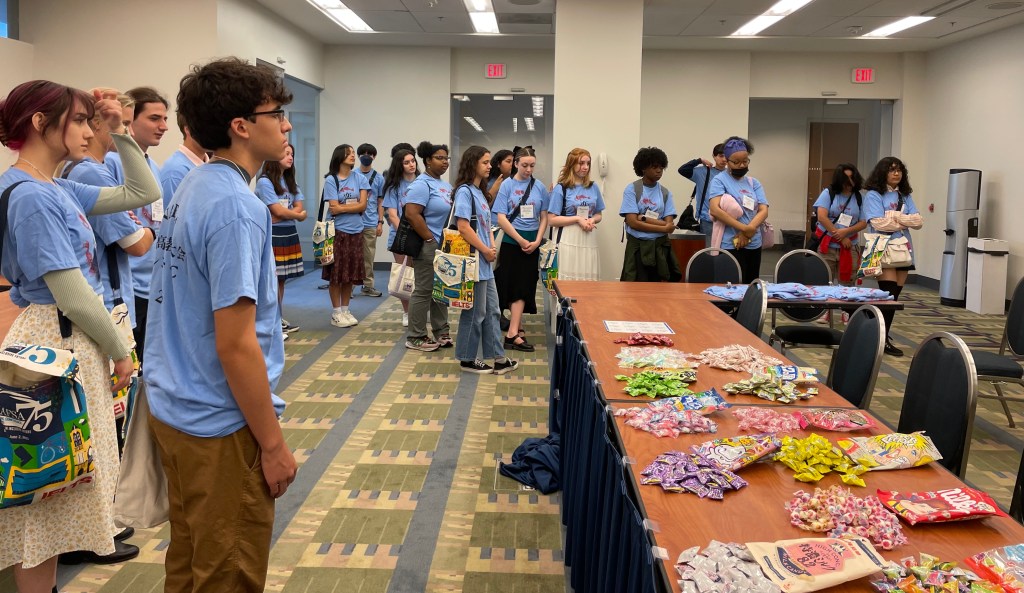
When we first arrived at the Convention Center downtown, we were taken to a room where we met the students from the other schools and were given custom T-Shirts to show that we were with the COI program. Once all the students arrived and were comfortable, our Japanese was immediately tested as we were told we needed to pair up with a student from a different school than us and introduce our partner to everybody. Luckily I got paired with a level 4 speaking student who was able to guide me through how to introduce her and everything went well. We then heard speeches from some of the people who helped get us there, such as the director of the COI program, Brian Masshardt, two representatives of EducationUSA, representatives of the Embassy of Japan, and others who helped get us to the conference. After that, we were offered a ton of different Japanese candies and sweets as well as gifts like pens, folders, and even sunglasses from various Japanese universities.

After all the initial welcomes and introductions we finally made our way down into the Expo Hall for the main event. We were directed to the Japan area which was one of the largest in the whole conference. There were over 25 different Japanese universities present, many of them with representatives willing to talk to us. They then gave us this super useful guide to the different universities where they had a chart of a bunch of different college majors, which universities offered each as a major, and whether those classes were taught in only English, only Japanese, or both. This was extremely useful as I was able to pinpoint 6 or 7 universities that offered majors I liked in English.
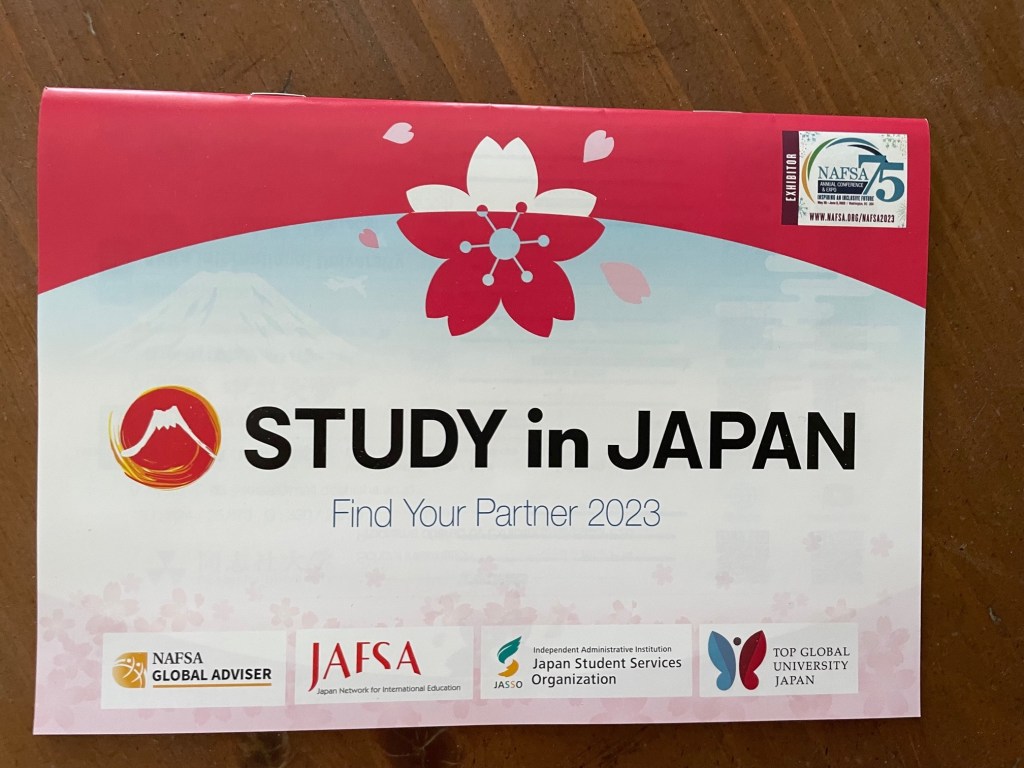
Being able to take classes abroad in English is very useful as it allows you to study and get a degree fully in Japan, while also learning the language and being immersed in the language and culture, which makes it way easier to get a job in the country vs learning the language in the US and trying to apply from abroad. I was able to talk to representatives for some of these universities, which gave a good impression on a lot of them, and I was even able to exchange business cards with some of them, using the process we learned about in our class.
I am extremely grateful to have been invited to this conference. For me, it took the possibility of studying abroad in Japan from a far-out goal, to a very real possibility. The conference allowed us to make a ton of important connections and pick up a ton of information about the process of studying abroad. If I hadn’t been able to attend the conference, I feel like the process of researching different universities, their locations, and what classes they offer would have been way more tedious and may have discouraged me from even considering it as an option. I hope that the information I got from this conference will help me in my future study of Japanese or any other languages.

