My First Tap Experience

Kazu Kumagai

By Raven Bluford

This was my first time ever seeing someone tap dance, so I didn’t really know what to expect and I was really anxious. Once we met Kazunori Kumagai, my anxiousness turned to anticipation because when he talked about how he got into tap dancing it really showed me that there was so much more to tap dancing than what I originally thought. I learned that tap dancing tells a story and the story can be told with more than one story-teller. The story can be told with tap dancers, trumpet players, bass players, and drum players.

The performance overall was really intense and I loved seeing how everything had a solid contribution towards each other. The background music and the lights really set the mood for the music being played and made the experience more intense, which caused me to be quite emotional. I loved seeing how attuned all of the musicians were with each other, because every time the musicians played something, Kazunori knew how to tap to it in a way that made you feel like it was rehearsed, but also made you feel like it was impossible for it to not be impromptu. If given the chance again, I would love to be able to watch another tap performance.

Japan meets Europe: Koto

By Bryson Torgovitsky

Yumi Kurosawa’s koto performance was not at all what I had anticipated. Then again, I did expect it to be unlike anything I had ever heard or seen before, so I suppose my expectation was to be surprised! Kurosawa-san’s skills are undeniable. Not only could she play classic Japanese songs on her koto, she added her own unique spin to the art by meshing it with classic European music.

In what I believe was Kurosawa-san’s third piece, she played a tune that I recognized, but I could not remember its name for the life of me! Afterwards, she informed the audience that she had played Vivaldi’s “Four Seasons.” If Kurosawa-san had not told us the original composer, I would have thought that she had played a Japanese piece. She was that adept at transferring a European piece into her style! That meshing of cultures reminds me of what we are doing in Japanese Plus, and it was amazing to see on stage.

At the end of her performance, Kurosawa-san played an original piece of hers. It felt simultaneously calm and energetic; something that I have found in much of my favorite Japanese music. She added that this piece, as well as several other of her original compositions, would be available for purchase next month. I hope that I can buy them, even though I am in the US!

Kennedy Center Experience

Kennedy Center Japanese Connections

By Rakiya Washington

On Wednesday, October 18, 2017, I had the great opportunity to watch Koto Player, Yumi Kurosawa, and So You Think You Can Dance dancer, Virgil Gadson, perform together for the first time. While watching the duet, I was in tears as the beautiful Koto playing and the breathtaking, skillful dance meshed together perfectly. Since I had never experienced something like this before, I was simply stunned with the amount of skill and technical competence that both performers inhabited. I have always been a fanatic for great music and beautiful dance, yet this experience has made me love both so much more than I have ever before, and I would love to have the opportunity to watch something as breathtaking as this was again.

Hip Hop Dancer at the Kennedy Center

By Chi Onyeka

When we went to the Kennedy Center on Wednesday, October 18th we received a talk from Kazu Kumagai (the tap dancer we later saw perform) and Reiko Sudo (the designer for Fantasy in Japan Blue, featured in the Kennedy Center Hall of States). After the discussions, we then had dinner and watched performances from Kazu Kumagai and Yumi Kurosawa, a koto player.

During Ms. Kurosawa’s performance, I was left in curiosity about the instrument she was playing, the koto. I wondered how she interacted with the strings to make such clean, quick, repetitive sounds. After the first two songs, Virgil Gadson was introduced as her hip-hop dancing partner. When she said that he was a hip hop dancer, I was excited to see how it would turn out, because I listen to rap so it was interesting to think of how he would incorporate his dance into her music. Watching him dance seemed really engaging to me. The way he moved around the stage, he was very intact with his balance, as he could put himself into poses that would require an immense amount of focus on one part of the body, say the forearm. I realized that he kept his tempo in sync with the tempo of the koto player, making it easier to follow him and the music as well.

I also liked trying to figure out what message he was trying to convey, or was he just going with the flow? In the end, I loved how he interacted with the koto player, kind of breaking the fourth wall in a way. The two made it seem like they weren’t working on their parts separately, as with this small little section when he changed the direction of Ms. Kurosawa’s focus to an imaginary apple tree, as if playing charades because he didn’t speak. He ended his portion of the performance by making reference to this episode and pulling what seemed to be an apple out of his jacket.

As a person who can’t dance, or at least has no rhythm, I was just star struck and surprised after he finished, because I was expecting him to do sort of stereotypical hip-hop moves, like two-steps, three-steps, I was imagining him touching his toes with one of his hands pressed firmly against the ground with a boombox beside him, but his dance was more like ballet to a beat. I could sense that he had experience in ballet, judging by how flexible he was, and how fluid his movements were, and how he could easily shift where he put his balance.

Watching the performances at the Kennedy Center gave me a sense of intercultural appreciation. I thought maybe I would just see one Japanese tap-dancer on  the stage tapping his toes as fast and rhythmic as he can and a gorgeous koto player, stringing her heart out, both by themselves. But both performances were very diverse. One of my favorite performers was  Alex Blake who played the bass during Kazu Kumagai’s tap dance. I loved how dedicated he was, almost falling out of his chair at one point (a point that admittedly made me giggle), showing his enthusiasm.

My first time at the Kennedy Center, will be something I’ll always remember, reminiscing about the enjoyment I experienced watching these performances.
Japanese Connections: Kazunori Kumagai

By Skyy Genies

Today October 18, 2017 was an extremely emotional and eye opening day. I was given the opportunity of witnessing a beautiful artistic performance from Kazunori Kumagai, a world renowned tap dancer from Sendai, Japan at the Kennedy Center in Washington, DC. My emotional journey started when we first arrived at the Kennedy Center, and we were lucky enough to be able to actually speak with Mr. Kumagai. He told us his story about how he was inspired by Michael Jackson’s Thriller when he was five and then became interested in tap dancing. When he was 18, he moved to New York City to study tap dancing among the best in the business.

fullsizeoutput_625c

The most touching aspects of his story to me were how he took in criticisms from his teachers and peers back in Japan when he said he wanted to be a tap dancer. Kazunori Kumagai was not afraid to follow his heart and disregard social expectations and opinions of him that may have led him down a path that he wasn’t happy with. Despite obstacles such as race that may have arisen in Mr. Kumagai’s path, he was able to receive praise and accolades for his determination to showcase his self expression. Additionally, since I traveled to Tohoku, Japan this summer, I was extremely inspired by Mr. Kumagai’s dedication to his hometown as he often returns to Japan to assist with the reconstruction process after the 3.11 earthquake and tsunami, and raise awareness about the arts.

Then came his tap performance. Honestly speaking, before witnessing his performance, I didn’t think much of tap dancing. But boy, was I wrong. I don’t even know how many times I cried during his performance. His ability to tap in sync with the other instruments present during his performance simply amazed me. When we spoke to Mr. Kumagai earlier, he told us that tap dancing sounded like a conversation between his feet and other instruments. There is truly no better way to put that. The melody, rhythm, and balance of the performance sounded like a story that directly related to my life. I couldn’t help but feel my emotions well up. I was so amazed. After today’s experience, I learned a few new things:

  1. Don’t have opinions about something you’ve never experienced for yourself because it’s most likely wrong.
  2. Don’t let social expectations deter you from the path your heart is leading you down.
  3. And, never forget where you came from or who helped you get to where you are.

An Evening of Tap and Koto at the Kennedy Center

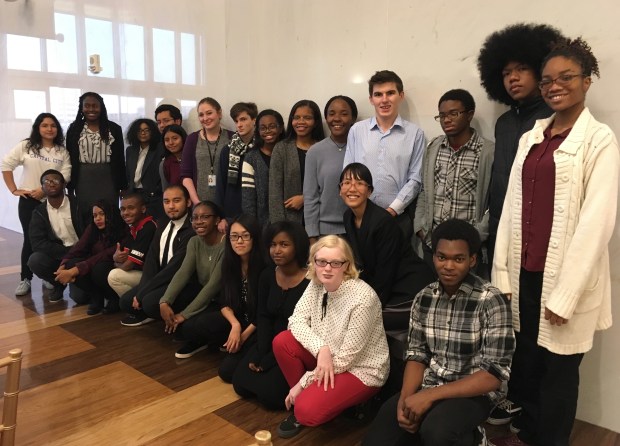
On October 18, at the Kennedy Center’s generous invitation, students from our Japanese Plus and Japan in DC programs had the opportunity to experience a unique cultural event, called “Japanese Connections.” The program featured two ground-breaking Japanese artists. Kazunori Kumagai, a tap dancer, performed in collaboration with a jazz trio — Masa Shimizu (guitar), Samuel Torres (percussion), and special guest, Alex Blake (bass). Then virtuoso musician, Yumi Kurosawa, played the traditional koto with hip hop dancer and Dancing with the Stars contestant, Virgil Gadson. The performance took place in the Kennedy Center’s renovated Terrace Theater, and was a tribute to the government and people of Japan, who supported the original opening of the space. The impressive program demonstrated the power of artistic collaboration across cultures – and left our students amazed, emotionally moved, and motivated to learn more! For many of our students, this was their first visit to the Kennedy Center.

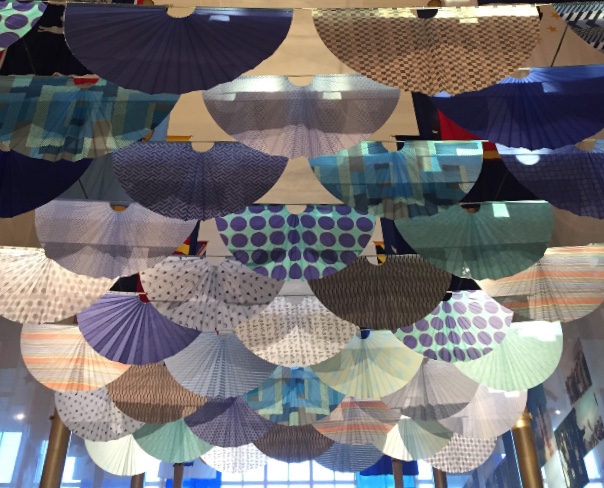
Even more exciting, before the performance, our students were treated to a special discussion with Kazunori Kumagai, who shared his inspirational life story and answered questions about his career pathway. He gave us a whole new way of understanding the art of tap dancing. Then the students heard from Reiko Sudo, a renowned Japanese textile artist responsible for the beautiful art installation, “Fantasy in Japan Blue,” on display at the Kennedy Center (October 3-November 12, 2017).

Read our student writing here, here, here, and more in our Student Blog.

This slideshow requires JavaScript.

IlluminAsia

By Tara Martin

I went to IlluminAsia as a visitor since I was too young to volunteer. IlluminAsia was a two-day festival (October 14-15, 2017) marking the re-opening of the Smithsonian Freer and Sackler Museums of Asian Art. Me and my mom went around 9 on the Saturday it opened. It was very crowded, which we sort of expected. We first explored the festival outside before going inside the Sackler/Freer. We first went to a paper lantern station. I made a very simple paper lantern by cutting a piece of construction paper and attaching a little light to it. It was really cute! We then went to the food section (which was even more crowded) and went to a poster and screen-printing tent. Sadly, therer we waited for a long time in the poster making line but it wasn’t too bad! It gave us time to take in the festival (and start to get hungry). My mom really liked how that section was lit and arranged; she said that it reminded her of a Thai street market at night. When it was my turn, I choose stencils and colors and they spray-painted the designs on. We then went over to the next tent, which was the Japan-America Society’s tent. They had this really cute game called “The Chopstick Game”, where you picked up a piece of folded up paper and you would open it and learn a Japanese phrase or word. My mother and I then tried to get momo (a Nepali food), but the line was really long; so we decided to go to the museum. On our way in, we saw a craft station with stencils and rubbings and really gorgeous mandalas opposite of the station.

Inside the Sackler, we saw the Subodh Gupta (terminal). Downstairs, we saw two exhibits: Divine Felines: Cats of Ancient Egypt and Encountering the Buddha. The Divine Feline exhibit was about how cats were valued in Ancient Egypt and how they were mummified. The Encountering the Buddha exhibit has a lot of Buddhist statues from all parts of east and southeast Asia. They even had a model Tibetan temple (which put our little Buddhist shrine to shame). We then went to the gift shop where i bought a book on Japanese folklore and fairy tales. Afterwards, we tried to get over to the Freer (emphasis on tried). It was at least 10 minutes before we found our way into the Freer Gallery. In the Freer, the exhibits were separated by region/country. We saw the jade exhibit (China), the origins of Japanese Buddhist paintings (Japan), and early Iran/Iraq gold plates and treasures. They had a “Tea in the Courtyard,” where you could go in and buy tea ($1). In the courtyard, they had tables set up for playing games like Mahjong.

We left IlluminAsia around 12 am (midnight)!

Seeking New Japanese Language Teachers

Globalize DC is growing its Japanese language programs in the 2017-2018 school year!!

We are seeking one or two new dynamic part-time Japanese teachers to join our team. Interested? Download the job announcement here:

2017 Japanese Teacher Recruitment

We will fill the position as soon as we find the right candidate(s). Please share this announcement with anyone you think might be interested.

Feel free to contact sally@globalizedc.org if you have any questions.

Japan Is My Life

By Skyy Genies

So today, my blog is going to be about how everything Japanese has become a part of my daily routine. I have been taking Japanese for around 8 months now, and just from that, I have noticed a drastic change in the way I carry myself and the way I speak. How, you ask? Well, since learning the Japanese language, I haven’t gone one day without speaking Japanese. Yes, we only take the class two days out of the week, but whether it’s intentional or not, some Japanese slips out every day.

Additionally, in the way I carry myself, after reading the chapters about social life and communication in Geek in Japan, I unconsciously changed my behavior. Especially after actually being around Japanese people on multiple occasions through the Japanese Plus Program, I have been more accepting and open-minded of things I am new to. Also, I find myself trying to avoid confrontation and saying things blatantly. Although these things aren’t that far off from how I originally acted, I think more in a way of “How would this look in Japan?” and “Would I do this in Japan”. These thoughts cross my mind constantly and they push me to further indulge myself with what I love, which is Japan! I love how much learning the Japanese language and simply participating in the Japanese Plus Program has influenced my everyday life. One time I even stood up and said “Kiritsu” (stand up) in my History class, everyone looked at me crazy and I realized what I was doing. Just that one school tradition that is practiced in Japan stuck with me and has become a part of my daily routine, cool right?

When I joined the program, I expected to learn things about the Japanese culture, but I never thought that I would start to notice those characteristics within myself after a while.

A brief appreciation of classical Japanese art

By Jeff Jenkins

Konnichiwa minasan!

Today’s blog will be about my new favorite thing that I’ve come to love and appreciate about the Japanese culture. – that being the classical/old Japanese art, including the literature often written with it. A few days ago, I and a small group from my Japanese class visited the Utamaro exhibit at the Sackler Museum. We could gaze at his original artworks and see how art was portrayed during his time.

There’s something about the level of detail and delicacy put into each piece of work that you can’t find often in modern day art. Just by looking at some of the older Japanese murals you can truly see the amount of patience and integrity that the artist used to put into his work before displaying it to the public. Also, the different writing styles were unique in the sense that each character was written together to flow like a stream. Though it was difficult to make out what some of the characters meant, it was still cool to try and read some of them, which I did manage a few times.

The biggest thing that stood out to me was the craze for Japanese art back in the 1800’s, which ended up spreading across most of Europe, but mainly in France.  Like how people have a craze for Japanese anime which is still very popular until today, I just find it very interesting that things that come out of Japan usually have a massive impact on the outside world, whether it’s through art, technology or entertainment.

Well, I hope you all enjoyed this short blog and sorry for not including any personal pictures (we couldn’t take any inside of the exhibit).

If you’re curious, here’s a link to the exhibition: http://www.asia.si.edu/exhibitions/current/utamaro/default.php

Till next time! (Mata ne)