Tale of the Crane

By Katie Nguyen

The Tale of The Crane is a story about how a man saves a crane that was about to be killed. Soon after, a beautiful young woman comes to the man’s house for a night’s lodging. She later marries him and reveals that she was the crane who the man had saved. So she then promises him a long and prosperous life and returns to being a crane and flies away. This story illustrates how doing good deeds will be later rewarded. This handscroll was made in the Edo period in the early 17th century and was created by ink, color, gold, and silver on paper.

The reason why I decided to choose this artwork from our visit to the Freer was because it reminded me of a vocaloid song, originally by Rin Kagamine & Len Kagamine, called “Seasonal Feathers” sung by Youtubers Lyrratic and SirHamnet. The song is based on The Tale of The Crane, however, the ending is different. In the song, after the man saves the crane and gives her a place to stay, the crane falls in love with the man and was scared that the man would not love her and abandon her because she was a crane. During the summer, the man grows ill while working in the fields, but does not have enough money to buy medicine and cannot earn any more because of his illness. The crane decides to weave cloth to sell, however, she uses her own feathers to make the cloth. The two eventually died later, the crane from overworking and the man from his illness, and it is revealed that the man knew that she was a crane all along, but had still loved her for who she was.

Check out the song here: https://www.youtube.com/watch?v=y0dvRMnmN2w

A Walk Around the Tidal Basin

By Alexx Thompson

Have you ever been to the Tidal Basin in Washington DC? It’s an amazing place with strong ties to Japan! How, you might ask? Well you’re about to find out!

This time, we all met up at the Freer Sackler Gallery of Asian Art, where we headed in to enjoy their Japan collection. In the collection we all stared in awe at gorgeous paintings and pottery alike, and took in the beauty of it all. After the museum, we left off towards the Tidal Basin.

At first, I thought we were only going to view the cherry blossoms, and the stone pagoda, and the stone lantern, however there was a little bit of a twist. Once we arrived, Sally and Eshita-sensei explained the rules of the game. For the entire time touring the Tidal Basin, we could only speak in Japanese. Soo… NO ENGLISH!!! Everyone instantly became nervous, none of us thought we’d be able to speak for that long. In my case, it was as if all my Japanese had flown right out of my head! A few of us even joked about doing sign language so that we could at least try and pass the challenge.

Then, it started, and we set off. The start was a little shaky but I found myself making good conversation. I joked about eating sakura tree ramen, as someone had asked me what I was eating, as I hadn’t the faintest idea what to even say/talk about! The time flew by honestly, and we were able to convey what we were trying to say, as well as sharing new vocabulary through miming! We arrived at the stone lantern and still, not allowed to speak English, we learned about the history, and snapped a pic with it! Then we kept going on, joking around in Japanese and also playing music for unknown reasons. But the music was all really good! Soon after, we arrived at the stone pagoda, and we learned about the different levels and what element each represented. Having to translate it all into Japanese was cool, as we found we already knew most of the words and their kanji!

By the time we’d circled back around and realized we were back where we started, we couldn’t believe it! It was almost as if it’d only been thirty minutes! We all looked at each other in amazement and were really proud of ourselves! We’d managed to have fluid conversations together for an entire two hours! All in Japanese! It was really encouraging to see how far we’d come and we were all super excited! We can’t wait to do it again!

Girls Playing Kickball

By Asa Marshall

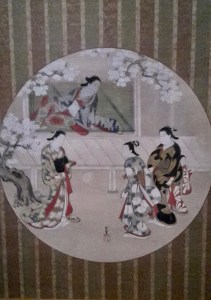
The artwork I saw at the Freer Gallery was “Girls Playing Kickball,” which portrayed a scene from the Tale of Genji, which is a great work of literature written by Murasaki Shikibu in 1008. This piece visualized the scene when the courtier, Kashiwagi, is playing kickball and he sees the Third Princess behind bamboo blinds, but in this painting the gender roles are reversed with a man watching a group of girls playing the game.
This piece was made by Kawamata Tsuneyuki in the 18th century, which is considered the Edo period of Japan. The story behind this work interested me partly because I love the Tale of Genji. The fact that the gender roles were reversed in this revisited version of artwork was interesting because I wondered why the artist made this alteration. To me it gave an impactful presence, because oftentimes women are spotted by men, but seeing the women active and engaging in sport activities, while the man being more hidden and reserved, is very different to other artworks where women would be portrayed as the more subtle character. It was a great contrast to what ideals would be considered more traditional and I like the simplicity of the artwork.

My Summer Trip to Japan

By Cyrus Johnson

This summer, I got to go to Japan. It was my first time out of the country and I was pretty excited! My aunt paid for a plane ticket and the hotel, and my mom came with me.

After a 13-hour flight, we landed at Haneda Airport in Tokyo. We got lost in the airport pretty quickly, but once we found the bus that would take us to our hotel, it was pretty easy to navigate. When we got to our room on the 20th floor and got settled, the first thing I did was look out the window. We had a great view of the Rainbow Bridge and could see both the Tokyo Skytree and Tokyo Tower from there. The next day I checked out the nearby malls, Aqua City and Diver City. Diver City was cool because they had an entire shop dedicated to Gundam, and they also had an arcade there. The arcade games are a lot more fun than the ones in a Dave & Buster to me. They had a bunch of rhythm games, a lot of crane games, and this really fun mecha piloting game, among others I wasn’t really paying attention to. I ended up playing until closing multiple times while I was there.

After that, we went to Akihabara, an area with a lot of electronics shops. We got lost almost immediately, but we found our way to a bookstore and bought some manga before we got back on the subway to go to Sensō-ji, a large Buddhist Temple. We went and got fortunes, but they were both bad, so we tied them up on the bad fortune rack, I don’t know what it was called. The next day we went to Shibuya and saw the Shibuya crossing, a famous spot surrounded by malls known for letting pedestrians cross through the middle of the intersection at the same time.. We were going to go see if we could take pictures from the top of a building, but you had to pay per picture after you paid to get up there. After we were done checking out nearby shops, we went to the Tokyo Skytree. It was cool seeing so much of Japan from so high up, but since it was pretty cloudy that day we couldn’t see too far out.

The next day my mom wanted to check out the National Museum of Modern Art in Tokyo. They had an exhibit on Takahata Isao, who worked on Grave of the Fireflies, Heidi, Girl of the Alps, and The Tale of the Princess Kaguya, which I enjoyed. Afterwards, we went to the Tokyo Imperial Palace grounds. The gardens there were pretty, but our feet got tired pretty quickly. We were only there for a week, and it was a pretty nice trip. The week went by fast, and I’d love to go back someday.

This slideshow requires JavaScript.

Visiting TOKIYA JAPAN

By Asa Marshall

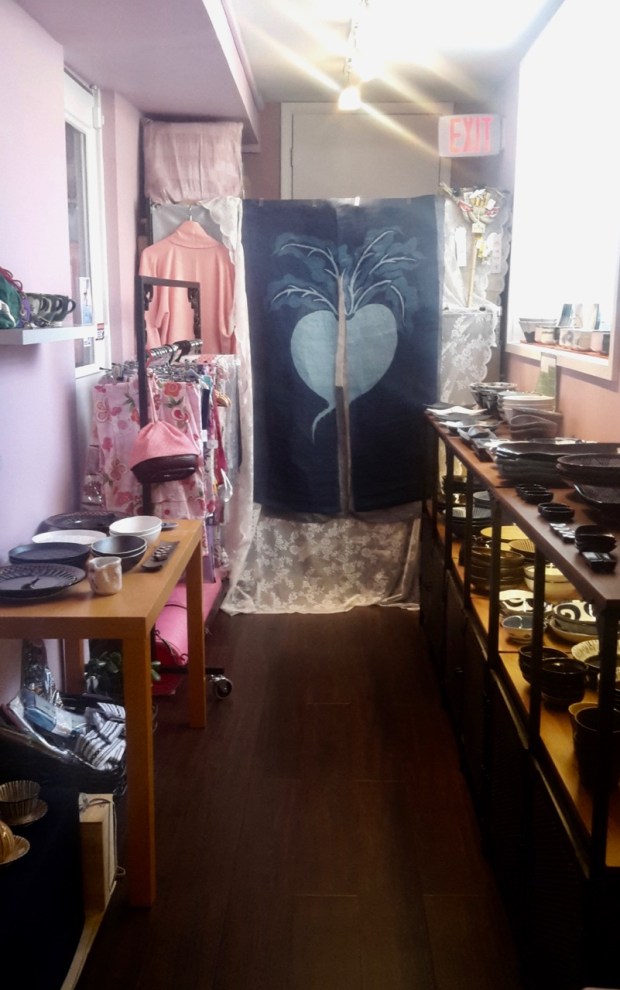
On Saturday, September 28th, 2019, I visited TOKIYA JAPAN. It is a little shop next door to Hana Market, which is a small Japanese market. TOKIYA JAPAN is a kimono shop located at 2002 17th St NW, Washington DC. I visited a couple times before, because it is a very quaint shop and it’s very cozy and welcoming. This shop actually is a place where you can buy pottery and jewelry made with traditional Japanese methods and designs, as well as trying on and buying kimono. I often visit this little shop every time I go to Hana Market, because it’s really interesting and everything is so beautiful. This time however, I noticed that all around the shop there are pieces of historic information about the pieces, and also how to properly wear yukata (kimono worn in summer).
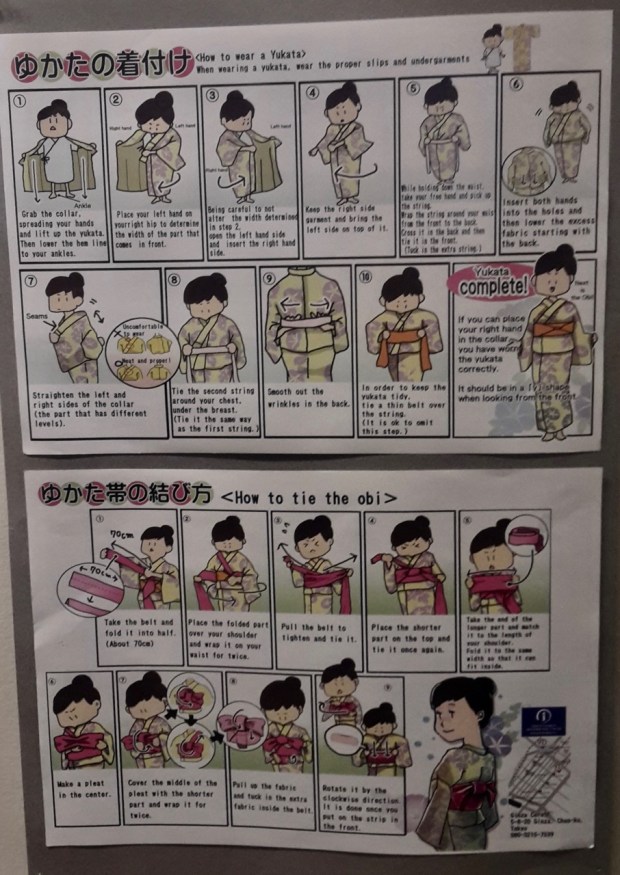

I was really captivated by all the trinkets and art pieces in the shop and I think it would make a nice trip for the class, because we did recently discuss an article about the foreigners wearing a kimono incorrectly. I’m sure it would make a cool learning experience and it might be very fun because I’m sure many in the class would want to try on kimono!


Things to Do in Tokyo, Japan

By Katie Nguyen

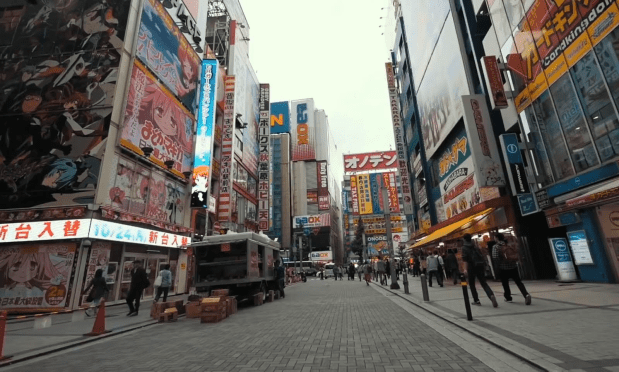
In Tokyo, Japan, there are many things to do. Kim Dao, a youtuber who does makeup, fashion, and lifestyle videos, made a video about 100 things you should do/visit in Japan. In her video, she lists many places in Tokyo like Omoide Yokocho, or “Memory Lane,” an alleyway with small restaurants and bars to go back to what Tokyo used to be; Shin-Okubo, a Koreatown; Akihabara, electric town of Tokyo with lots of electronics and anime based stores; and many more.

All of the place she lists are very cute and interesting and I would really love to go to all the places she mentioned if I ever had the chance. A lot of places are purely based on your interests, whether it would be anime based or about culture, like many shrines, festivals, and Japanese food. It amazes me how Tokyo is really spaced out and open, even though it can be crowded at most times. I can’t even imagine what it would be like in Japan. In DC, it is mostly compact, while in Japan there is a lot of space and many stores featuring a lot of anime merchandise.

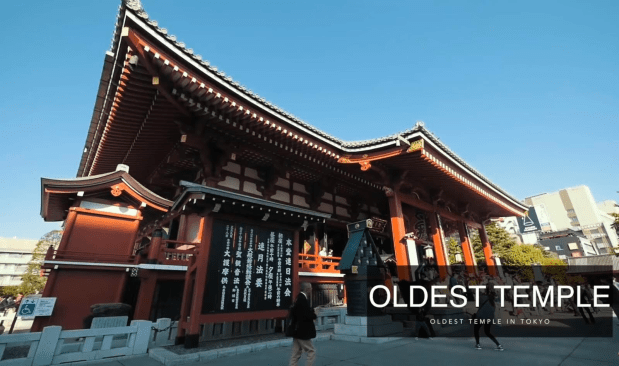
This video really got me thinking about where I should go since I never really thought about what I would do in Japan. Places where I would like to go/do is capsule hotels; Shibuya109, a Japanese fashion mall; Akihabara, electric town of Tokyo; Omikuji Fortune, a fortune teller in Asakusa; Gachapon, a store of capsule toy machines; the Ghibli Museum; Don Quijote, a discount chain store for Japanese goods; Sensoji Temple, Tokyo’s oldest temple; Sukiyaki, Cup Noodle Museum, exploring, even if I get lost, and many others. I highly recommend watching Kim Dao’s video if you want to know what to do in Tokyo, Japan, or if you are ever planning to go to Japan. Tokyo is it, and it is a great place for tourists to explore.

You can watch Kim Dao’s video for yourself here: https://www.youtube.com/watch?v=HYSMJ-lM2t0

Photos are from the video.

Rugby tattoos and cultural conflict

By Lucca Bey

Lucca wrote this post after a classroom reading and discussion about the Sept 18, 2019 Washington Post article, Rugby World Cup stars will cover their tattoos at times to avoid offending Japanese hosts.

With the date of the Japan Bowl coming closer and closer, we’re really beginning to dive into the intricacies of Japanese history and culture, as well as their crossroads with cultures besides our own. One of the really interesting points of conflict we discussed as a class was actually about conflicting cultural aspects that were introduced in this article about the Rugby World Cup in Japan, which we analyzed as a class. Since Japan is hosting the Olympics in 2020, there’s going to be a mecca of cultures intersecting, but specifically the Samoan rugby players. But first allow me to provide some context.

In the American Samoa, tattoos (commonly referred to as Tataus within the Samoan language) serve as an extremely important cultural rite of passage. Tattoos date back to more than 200 years in Samoan culture, and are representative of the hardships, status, and a mark of pride that are only to be worn by Samoans.

However, Japan has a very complicated history and associations with tattoos, more specifically crime syndicate associations. In Japan, those who wear and proudly display tattoos are considered to be part of the Yakuza, going as far as to ban tattoos in the 1800’s. The real question I find myself asking is: To what extent does honoring one’s cultural traditions go too far? While Tattoos have an important cultural significance to the Samoans, that significance is seen in Japan for a very different reason.

This is what I find the most interesting about studying Japanese culture, a whole world of extra cultural interconnections happen, and you start to view things around you through a more global and educated view.  What do I personally think the correct course of action should be in this case? After a bit of reflection, I feel that it’s not my place to decide what’s objectively right or wrong. Cultural conflicts are always subjective, and it’s especially important to keep being open minded.

An Exciting Summer!

By Alexx Thompson

This summer I had a blast and worked with our super awesome director Sally Schwartz on a publication entitled Japan in DC. Throughout the summer we met up with people who had strong connections to Japan as well as went to places related to Japan. It was my first ever official job, and was a really helpful work experience. Getting to meet people who are so closely connected to Japan was a great experience, especially since I plan on having a Japan-related career in the future.

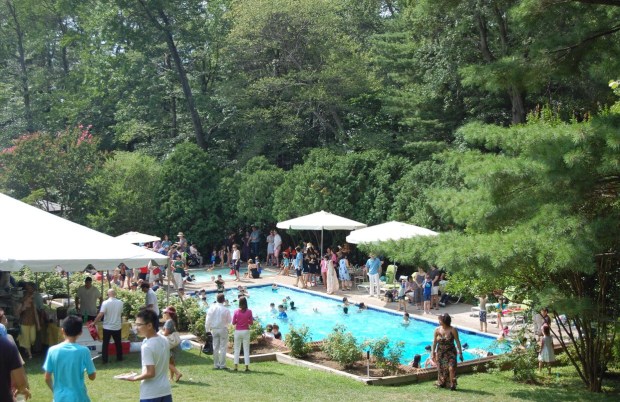
The work was pretty similar to our Japanese class, but now I had to interview them. The interviewing was a little nerve wracking at first, especially so since me and Tara were coming up with the questions! I was mainly in charge of photography, so I finally used my photography class knowledge and pulled out my Nikon D40 camera and snapped away! I got to meet people like Robin Berrington, who served as a cultural attache for the US government in Japan, and I even got to visit the Japanese Ambassador’s Residence for a fun summer barbecue!

Throughout my summer I managed to learn how to use the metro, as well as time management, and professionalism. Since all of the writing I did would be going into a book, Sally also helped me on improving my grammar and diction, and as I enjoy writing it was nice to get some critique on how certain images convey things, and also when to insert my own thoughts or hold them back! It was really fun and I’d love to do it again!

The Ambassador of Japan’s summer barbeque

The traditional tea house at the Ambassador’s residence

Back to Karuta


By Jazmin Angel-Guzman

We are back to Japanese Plus year two school year! We are starting off with a game of Karuta, a game where a speaker sings Japanese poems and the players have to look for a card that matches what the speaker sings. It was my first time playing Karuta, and it helped me get back to reading hiragana as review. Hiragana is one of the three Japanese scripts for writing. I did not know how competitive Karuta is until I saw my teammates and the other players kept on snatching the Karuta cards within nanoseconds. I barely had enough time to read some of the Karuta cards myself.

Playing a game with my classmates made me feel happy that I got to see them again. I hope that this year all of us can grow and achieve things together. Hopefully, this year we would have the opportunity to go to Japan and make a lot of memories! I am also happy to see my teacher Eshita Sensei and my coordinator Sally Schwartz again.

Is crossing you legs impolite?

By Alexx Thompson

Did you know in Japan there are many cultural taboos considered polite in America? Things such as pointing, walking on the wrong side of the road can be considered rude in Japan. One of these things is crossing your legs. Here it’s considered a polite thing to do, especially for those who wear skirts. It saves space, compared to when people sit with their legs slightly spread out, so people can sit in tight spaces. In Japan, crossing one’s legs is seen as disrespectful. It is because when you do this you show the bottom of your feet to guests, and since they have picked up dirt,  you are showing that dirt to your guests. This makes for very bad business relations.

It’s okay to cross your legs in a casual setting, but in business relations it’s seen as too casual and improper. It is preferable to sit in seiza, the traditional Japanese way of sitting where you sit upright and your legs are tucked underneath you. If you are sitting in a chair, then simply keep your legs together, rather than folding one over the other.

If you are ever in relations with Japanese people, always remember to receive and give business cards with both hands, give gifts after travels, and remember not to cross your legs!