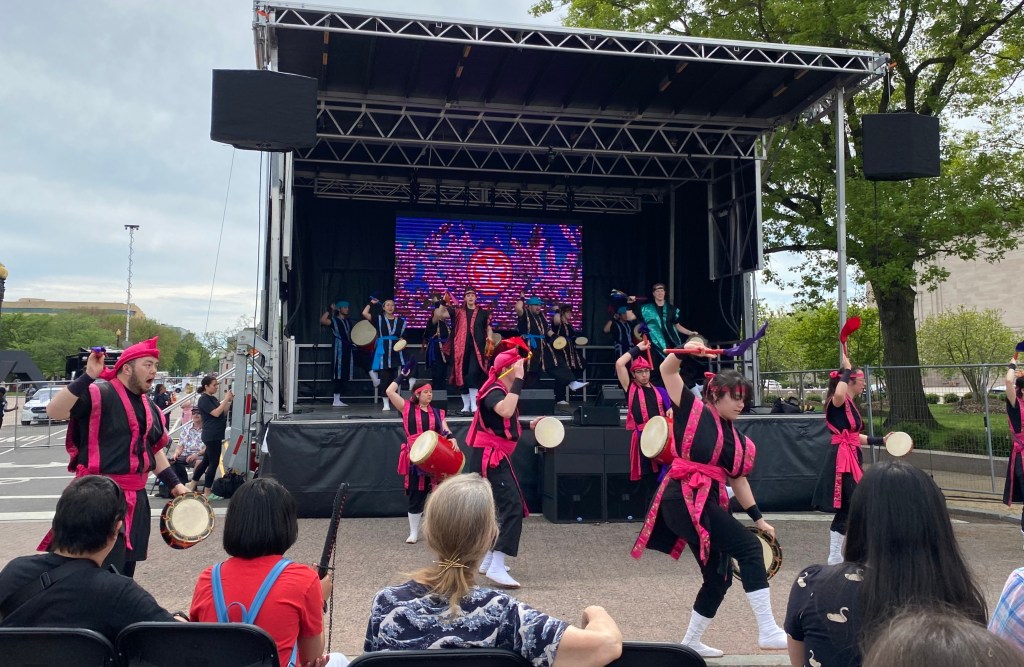
The Sakura Matsuri was an amazing experience! I’m so glad I was able to attend the festival. One highlight I had of the festival was meeting new people and experiencing some of the cultural aspects like the food, the dancing, and looking at Japanese traditional clothing. During my time there I was able to share out what I’ve learned during the program and how much I’ve grown. During my shift at the booth, we had to meet students my age who live around the DMV area. I was able to connect with other teens my age on certain interests. During the festival, I went out to look at other booths and got my name written in katakana, see a show, and looks at the college booth. We were right next to Temple University-Japan!
On February 11th, 2023 I and the Japanese class went to the Hirshhorn Museum in DC to visit the Yayoi Kusama exhibit. We were all excited to see the wonderful artwork and go through the interactive art pieces. I think everyone was excited to go through the “one with eternity” floating ball pits. A lot of the students had “omg” reactions, the colors were vivid and were something out of the ordinary. Kusama’s artwork was amazing to look at but the background of her work and the deeper meaning of her work had a bigger impact and made you understand how she is as a person and how her work reflects that way. Going to see the exhibit with a group of people is a good experience but I would recommend going alone because you could take your time to read the captions of each art piece. The exhibit will last until July 16th 2023!
Learning Japanese isn’t easy. Listen to our Japanese Plus students to get an idea of what it’s like – the ups, the downs, the triumphs, and the challenges.
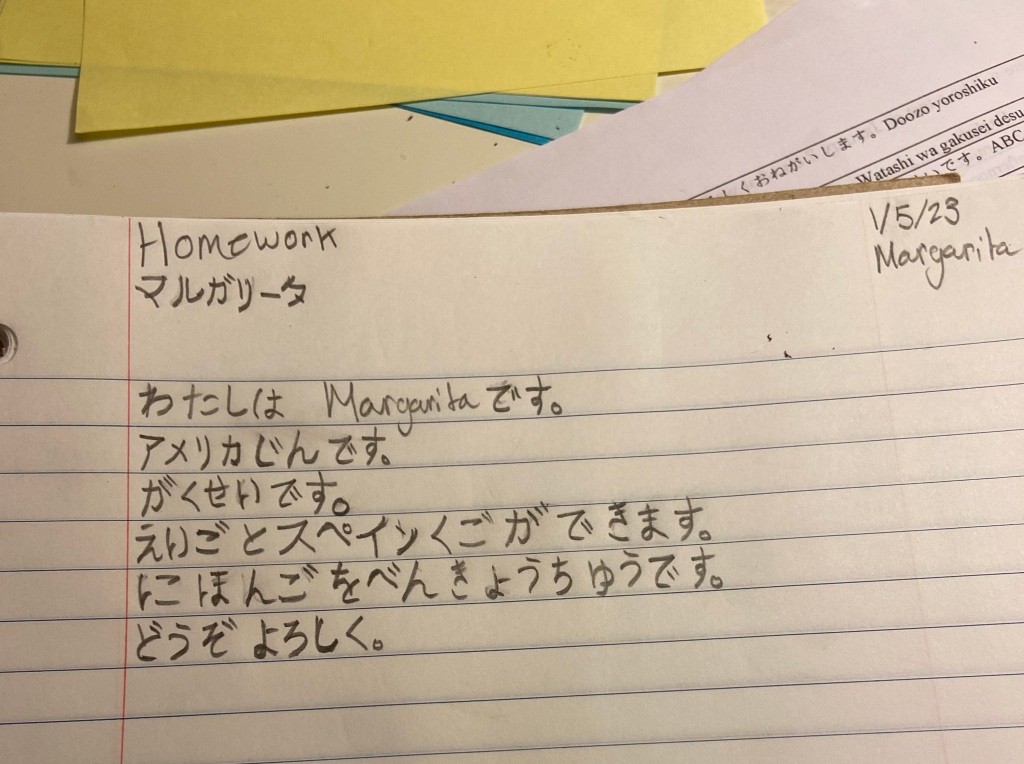
By Margarita:
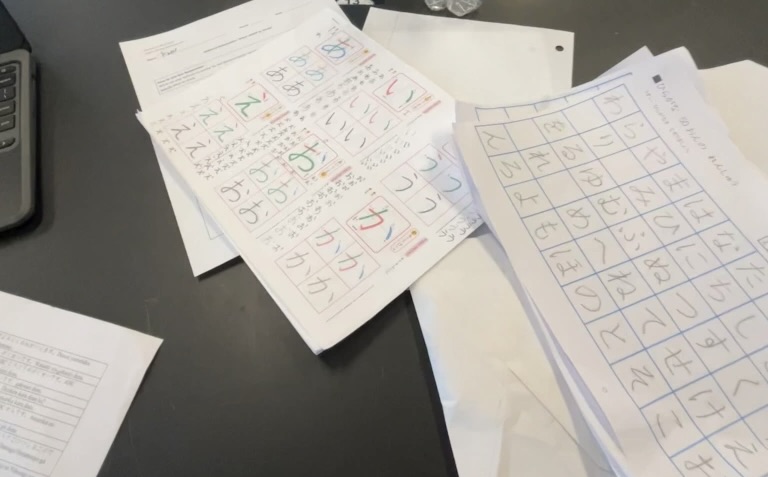
Hiragana. One of the three Japanese alphabets. I thought it would take me years to learn it, but I was wrong. Hiragana actually sounds a lot like Spanish, so it was easy to remember the pronunciation. Every time we would learn a new character, it felt like art class, drawing the long and curvy lines actually felt calming. Writing the simplest word in Hiragana made me feel like I was making a masterpiece though I’m still memorizing some characters, it will never not be fun.
By Chamiya
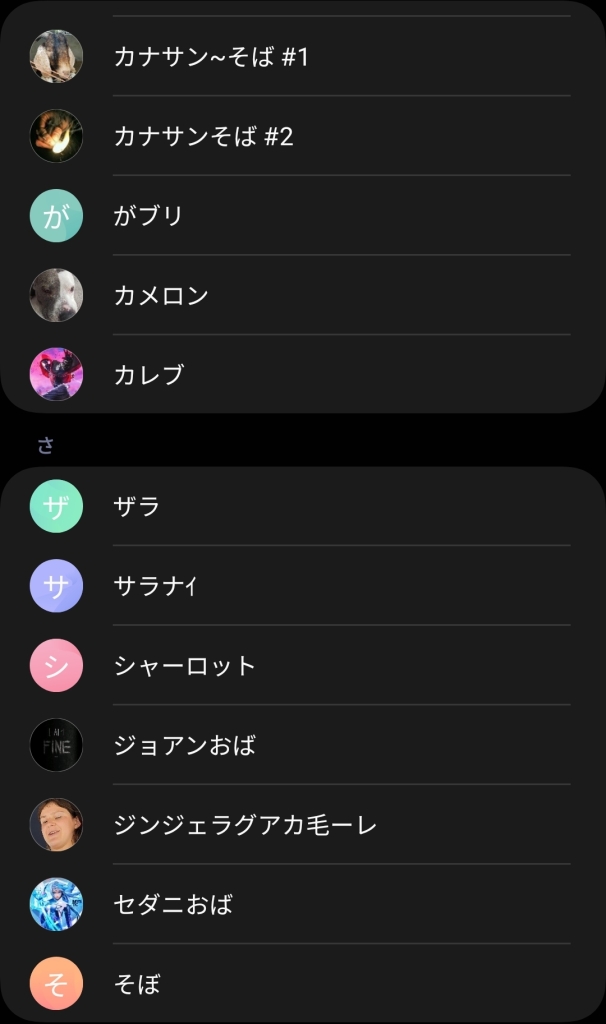
I have always wanted to travel to anywhere and everywhere ever since I traveled to Thailand. And of course, Japan is on my bucket list. But ever since I started learning Japanese, I’ve been wanting to go more. I like the aspect of learning a new language and immersing myself in a completely different culture from my own. And I especially like converting names to katakana. If you look on my phone contacts, half of the contacts are in Japanese. Katakana is so cool to look at, to read, and to figure out what the word is in English. My own family can’t figure out what the words mean but once I say it to them, they can understand it completely fine. It’s really cool immersing myself in another language and I can’t wait to travel to Japan one day.
By Thalia
For me learning Japanese has been such a fun experience. I’ve met new people who I can connect to. I think trying to learn all the Hiragana at once has been a struggle because some letters look similar. I was having a hard time with M-N but once I got it, it was so easy and made it easier to read.
By Penelope
I’m still really enjoying Japanese class. Recently, we started learning about family and kinship terms, and I like this because it’s fun to be able to ask about other peoples’ lives and to have longer conversations. Something I find particularly interesting is that there are different words for your own relatives and for others’. This is because politeness is very important in Japan, so you have to use a more respectful term if you’re inquiring about someone else’s family. I find it interesting how language and culture are intertwined and how they affect each other, and this is a cool example of that.
By Zitlaly
Japanese . . . is a whole obstacle course you have to go through these hurdles just to go through the same hurdle, and another one and . . . another one. But through time you start to comprehend and memorize the hurdle and get through them way easier than the time before. But if you don’t adjust, you’ll only start to get tired and stressed from how many times you keep falling/failing.
By Mei
During these last few months of being in Japanese class I learned so many things about the Japanese language. One of the things that stood out to me is the different terms to have a conversation with someone. Having a conversation or even addressing someone depends on your relationship with that person and if that person is older than you. In English, people almost always talk in a casual way to their friends, teachers, family, and even to strangers. But in Japan, this shifts into a formal manner when addressing someone older than you. For example, in English we only have one way to thank someone no matter their age or status and that’s by saying “thank you.” But in Japan when thanking someone close like a friend or family they will say “arigoto,” but when thanking a teacher, co-worker, boss, stranger, or just someone older they will say “arigato gozaimasu.”
Our SY2022-23 Japanese Plus program has begun, and that means intense Japanese classes twice a week. Here are some quick reflections from some of our students about starting out to learn one of the world’s most challenging languages.
Kayla:
So my name is Kayla and I joined my Japanese class almost a month ago and it has been one of the best things I’ve done for myself. Learning Japanese has expanded my intelligence. I don’t only know Spanish but I also am learning Japanese and as a young black lady that is wonderful and my family is very proud. Something that I really like about this class is the diversity. There are many different people trying to learn a new culture and language, that is very beautiful to me. I will continue my classes and I hope to learn so much more with my wonderful teachers and classmates.
Jahshawn:
I’m a little bit worried about keeping notes and keeping the knowledge I learned in each class in my head. The three alphabets also scare me a bit, especially because of the chance I’ll feel overwhelmed. I’m honestly scared of feeling overwhelmed and falling behind, but I’m excited to see all the amazing things we’ll do in this program, and the amazing and unique people I’ll eventually meet.
Margarita:
With Japanese classes I am surprised on how much we are learning so far. I feel that when we interact with the teachers and other classmates we learn more which I also find very fun. I like it when we talk to each other, because it makes us all feel closer as friends and/or a community. It’s also fun to see other people learn with you.
Chamiya:
Since I have started learning Japanese 2 years ago, the beginning lessons are reviews for me. I know the hiragana and katakana alphabet and a few phrases. But, there are still a few phrases that I have learned. For example, “Anoo, onamae-wa?” which means what is your name. I am really excited for future classes for this 2 year program.
Aaron:
I’ve been enjoying the classes so far. I feel like I’ve been keeping up well. I find it interesting how everyone is referred to a different way, depending on your relationship with the person. For example, you would always call your teacher sensei even when you leave school.
Thalia:
I think learning Japanese will help me grow – to try new things. So far I’ve had a nice experience. I’ve met people who have the same interest as me. I think the lessons are just right and if I practice and study, it can really help me.
Penelope:
I’m really enjoying Japanese Plus so far. I’ve studied Japanese before, but never in person, and I find that I’m learning new vocabulary much faster this way. One thing I find challenging is knowing when to use each level of formality, for example おはよう versus おはようございます. I’m looking forward to learning more during the next two years.





 GLOBALIZE DC: JAPAN