Okayama University Visit

By Bryson Torgovitsky

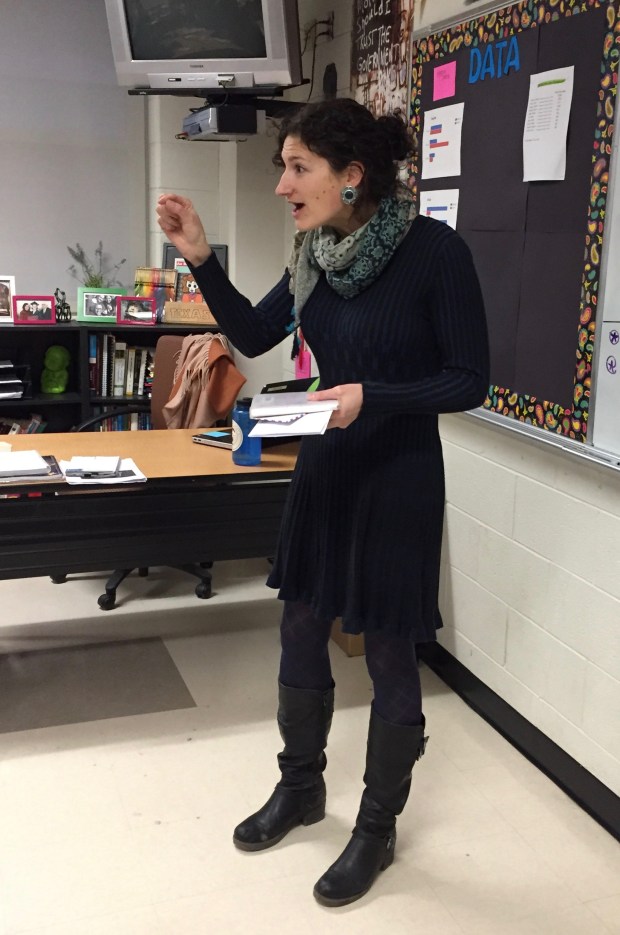
On 28 January, Professor Takayuki Yoshioka of Okayama University came to our class and told us about his school’s normal program and the extended Discovery program. I was surprised to hear about the price of Okayama University’s tuition, a little less than $5,000, and the price of their normal housing, $100. My sister has been going to the College of Charleston in South Carolina, but I frequently overhear my parents and her complaining about the expenses of college. Since she is paying for college out of state, the price of her overall expenses during her 2015-2016 school year was just over $28,000. This is about five times more than Okayama University’s tuition and housing fees combined. Professor Yoshioka even told us that the tuition fee could receive a 50 to 100% waiver!

The reasonable price of Okayama University caught my eye first, but the Discovery program sealed the deal for me. I have a personal desire to study marine biology, and the promise of a school with a program that encourages foreign exchange students is very appealing to me. Besides the Discovery program’s expression of Okayama University’s intention to host exchange students, Professor Yoshioka told us that the Discovery program presented eligible students with a monthly research grant of $350. The potential for an affordable education in a country that I want to learn more about, with an additional grant so that I can fund my marine biology research, are more than reason enough for me to plan to apply to Okayama University next year when I am a high school senior.
Arlington Cemetery with the Kakehashi Students

by Skyy Genies

On Sunday January 29, 2017, two of my classmates, Rakiya and Chidera, and I met the Kakehashi Japanese exchange students at Arlington Cemetery in Virginia. Even though, I was born and live here in DC, I have never been to Arlington Cemetery, so from the beginning, I knew this was going to be a life-changing experience for me in many ways.

When we first arrived, we were kind of shy so we walked behind the Japanese students for a while. Then when the crowd slowed down to take pictures, we introduced ourselves to the Kakehashi leader. Immediately, we were greeted and thanked for coming by the Japanese students. This felt, amazing because not only did it make us feel comfortable, but appreciated even though we were the ones who were thankful.

We trekked along the paths throughout the cemetery, taking pictures, learning facts about the sites. This was very fun and educational, however for me, the most memorable moment about this experience was watching the “Changing of the Guard” Ceremony at “The Tomb of the Unknown Soldier.” We all watched in awe as the precise and synchronized guards saluted the tomb, checked their rifles, and yelled their duties. Afterwards, the Japanese students asked if we’ve ever been here before and what that meant, in this moment, we were the same. I didn’t know any more about what we just watched than they did. We learned and grew together as a group despite our cultural differences.

After the ceremony, we walked through the amazing amphitheater and museum. Then we walked to the peak of the cemetery where you could see the Capitol and monuments. It was here that we took the group photo. Even though we weren’t formally a part of the Kakehashi program, we were graciously invited to be a part of the photo. This was our last stop at the cemetery. After the peak, we walked to the seating and were asked to take selfies with the Japanese students. This was so nice, even though we had just met, I felt comfortable around these students as if I have known them for much longer than just a day ago.

It was then that I realized, that Japan was the place I wanted to be, I am so grateful that I was able to spend that time with the Kakehashi students. It changed my life drastically.

Gift Exchange

Ana –

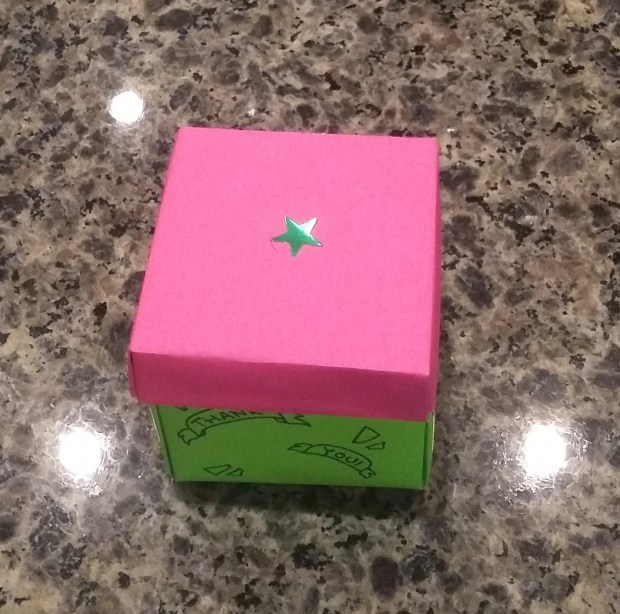
Everyone from the Shikoku University Kakehashi group was very nice and welcoming. As a person who has social anxiety, I was enjoying interacting with them and their presentations. It left a huge impact on me so I wanted to say/show how grateful I was. So we made these thank you note boxes with candy inside.

Daniel –

It was a bit tiring on my bones, but I did not regret it. I wanted to help make the gifts because I felt a need to show my gratefulness and give them the same happiness that was given to me. Both receiving and giving gifts left a huge smile on my face, and engraved good memories in my mind.

shikoku-gift1

shikoku-gift2

shikoku-gift3

Humility

By Raven Bluford

In the third chapter of Geek in Japan, the topic I found most interesting was the section about the importance of humility in Japan. The Japanese language holds many forms of honorifics to show respect, which in retrospect is different to English because it doesn’t have any honorifics and the language only really holds informal dialogue. The Japanese also show humility by not taking credit, even if they worked hard, because it shows that they respect the people around them who in some way had a contribution to their success. This is quite different from America, because we usually don’t acknowledge other people in our success unless it is a big accomplishment, in which case we thank our families but no one else.

Stouder-Sensei’s Visit

By Rakiya Washington

stouderWhile in the Japanese Plus Program, I have been informed by multiple presentations by various visitors. One of the most interesting visits was Stouder-Sensei’s visit. She was a foreign language teacher from Washington Latin who spoke of how she learned Japanese and the struggles she went through. Most importantly, she provided us with tips on how she overcame obstacles with learning Japanese and the determination she applied to her desire of learning Japanese.

She told us that since she was born in a place without much diversity, she was not exposed to other cultures, but when she learned about other cultures, she wanted to connect more by learning the language. When she traveled to Japan herself, she was able to adapt to the Japanese culture and way of thinking. For example, she explained how in Japan she was considered a “giant,” but in America she was average size. Her story just pushed me to be even more interested in Japan and it also made me desire traveling to Japan in order to experience the things she had. I really like Japan and its culture and I would love to be able to become semi-fluent in Japanese and immerse myself in the culture physically.

“Priest”

By Bryson Torgovitsky

Just after New Year’s Day, I attended a Karuta Competition hosted in Bethesda, Maryland by the DC Inishie Karuta Club. I had never heard of Karuta competition but I recognized it from anime after I saw the first match. Unfortunately, I could not play since Karuta involves being able to understand spoken and written Hiragana. As of now, I have only partial comprehension of written Hiragana and I have not learned enough to understand spoken Japanese (yet!). Instead, I played a different Japanese card game with my classmates Dakharai and Daniel, and other people who were at the tournament: Pick-Up Priest.

karuta-boards

Pick-Up Priest does not involve language comprehension, but it does involve interesting cultural references. The cards are a regular man, a demon, priests and a high priest, and nobleman and the emperor. The goal of the game is to collect as many cards as possible, but the cards are all selected at random from the stack, which creates the game’s difficulty! Each card has a unique function. The priests force you to put all of your cards in the central pot while the high priest makes you and the two people adjacent to you put all of your cards in the pot. Whoever draws a card depicting a woman can take those cards from the pot! The emperor takes the cards of the two players who are next to you and you add them to your pile, and the nobleman can take from the person on your left or right. The demon allows you to take from the pot and from your two adjacent opponents, so everyone wants that card!

I won twice when we played, but Daniel won at least four times! He kept using the nobleman cards to steal mine, so I could have won if I sat further away from him. Dakharai, on the other hand, kept losing all of his cards to the priests so he only won the last match. Daniel and I like to tease him about his bad luck; now we call him “Priest!”

karuta-winner

Nengajo Contest

By Ana Nguyen

The Japan Information & Culture Center (JICC) holds a nengajo contest near new years where the winner receives a new years goodie bag called a fukubukuro. It was the year of the rooster and everyone in our class made a nengajo. Everyone had a different design. One person drew a chick hatching, another person drew muscular roosters, one person drew a robotic rooster with aliens. Below are a few examples of what our class drew.

A’mee:

nengajo-amee

Charity:

nengajo-charity

Tara:

nengajo-tara

And me, Ana:

nengajo-ana

New Year Tradition and Celebration in Japan

By Nuu Hightower

Around the Christmas holiday season, we were having a discussion of how people in Japan celebrate New Year’s. I figured we would eventually talk about that since it was the season. Plus, I actually was wondering about that at some point and thought that maybe it would be similar to Chinese New Year, like wearing more traditional colors and such; even thinking that they send red letters to family members. Part of me also thought they celebrate it according to the Lunar Calendar since Japan follows Chinese Zodiacs in their calendar. Let’s start off with the fact that the Japanese don’t necessarily celebrate it at Lunar Year, unlike some other East/South East Asian countries. They celebrate it at the usual January 1st like western countries. Their activities, customs and traditions, however, are different to how usual westerners would celebrate. And no, they don’t send red letters. They DO send something else however!

Those letters are called “Nengajo”, which are basically greeting cards to send as appreciation and good luck for the New Year. Although, don’t give those cards to people who have a family member who died recently to cheer them up because they “need time to mourn.” While I understand that, I personally wouldn’t mind a card to show that someone cared but I guess it’s just a different mindset…!

Another tradition is these small, bamboo-like trees outside people’s homes called a “kadomatsu (門松)”. While I thought they were for decoration (though people definitely decorate them though), they’re essentially there to purify homes and welcome gods. Also they apparently always have an orange along with the tree to offer as a gift to said gods. What if you end up changing up the fruit instead of the usual orange? Like an apple? I mean I’d take the apple.

Anyway, a lot of these traditions are from their belief called Shintoism, which wasn’t discussed in class at all…not yet anyway. There were other ways New Year’s is celebrated in Japan, like flying kites and visiting shrines and temples (again, following their beliefs), but they weren’t discussed in detail in class. If we had enough time to talk about that further, it would’ve been nice to have a discussion of cultural differences…! Something about discussing cultural differences really intrigues me, like the fact that people celebrate things DIFFERENT from my own culture!! That’s wild. Wonder how much fun they have on that holiday with lots to do…

Japanese New Year Celebration

By Chidera Obiwuma

On Sunday January 29, 2016 the Japanese students from Shikoku University invited some of the Japanese Plus students to go along with them to a Japanese festival. The festival was a Japanese New Year Celebration, and it was sponsored by the Japan Commerce Association of Washington, D.C.

I was one of those who went along and it was honestly a fun experience. At the festival I got to see and taste new things that I never knew about before. I got to try a melon flavored Japanese soda. It was tricky to open compared to American soda; however it was quite tasty. I also learned about a traditional Japanese game called Kendama. At the festival they had a competition amongst the kids to see who was the best skilled and there was also a presentation by two young men who participate in Kendama competitions around the world.

Afterwards, I got to have a little experience myself. Kendama is a traditional Japanese toy that has three cups, a spike, and a ball hanging by a string. The goal is to get the spike into the hole at the bottom of the ball and you can also use creative ways to do this. On my first try it was really difficult but I kept trying until I finally made the spike go in the ball. The game requires a lot of balance and precision. The trick is in the knees.

Who Was Hiroshige?

By Talia Zitner

Back in November, we were lucky enough to visit an exhibit at George Washington University about Japanese artist, Hiroshige. I didn’t fully understand how big of a deal this guy really was until we started studying him in my AP world history class. Known for his colorful woodblock prints, Hiroshige can perhaps be considered one of the most important artists of the Edo period.

Born in 1797, Hiroshige (born Ando Hiroshige) lived in Edo, Japan, which is now Tokyo. He was the son of the warden of the Edo fire brigade, and the job was eventually passed down to him after his father resigned following the death of his mother, all while Hiroshige was around 12 years old. However, his father died shortly after as well, and Hiroshige began to pursue his passion for art. He entered the school of the ukiyo-e master Utagawa Toyohiro. After gaining his school license at age 15, Hiroshige would not be recognized for his work until six years later, in 1818.

Eventually, Hiroshige passed his position as fire warden onto his own son. He devoted himself to his art. His work can be divided into three categories:

  • The Student Period (1811-1830): Hiroshige followed the work of others, mainly focusing on figure prints of girls, actors, samurai, and warriors.
  • The Landscape Period (1830-1844): He created his own ideal of landscape design, including many bird-and-flower prints. This culminated in perhaps his most famous venture, Fifty-three Stations of the Tōkaidō, and other Japanese landscapes.
  • Last Period (1844 to 1858): This was his later period focused on landscapes and figure-with-landscapes prints. Unfortunately, overpopularity and overproduction diminished the value of his work.

Hiroshige is credited with over 5,000 prints, and as many as 10,000 copies made of his woodblocks. In 1832 he made a trip between Edo and Kyōto along the highway called the Tōkaidō. He stayed at the 53 overnight stations along the road and made numerous sketches of everything he saw. These sketches eventually were made into prints known as the Fifty-three Stations of the Tōkaidō. The success of this series was immediate and made Hiroshige one of the most popular artists of all time. Hiroshige died on October 12th, 1858. He died in the midst of a Cholera epidemic.

The photos included below are from the exhibit we attended, and they are scenes from Fifty-three Stations of the Tōkaidō. The exhibit was really interesting because I had not been exposed to this type of art before, and it was really cool to see it up close and in person!

Talia Hiroshige-2

Talia Hiroshige-1