By Lucca Bey
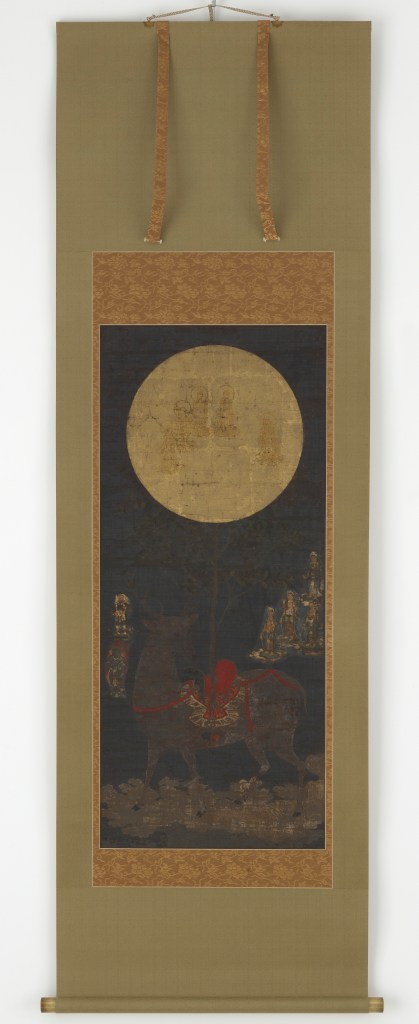 Last week, we ended up visiting the Freer|Sackler museum to expand and apply the Japanese history we’ve been studying in class about the happenings of different historical periods. Seeing how the different events affected the style and content of art during that period is way more interesting than it sounds on paper. For example, most of the artwork in the Japan exhibit was from the Kamakura period, which depicted a lot of religious symbolism as well as primarily paintings, which matches up to the events during that period. I won’t go too much into that though, I plan to talk about an art piece that in particular, caught my eye:
[Pictured: Carrying the Sun by Kasuga Mandala, courtesy National Museum of Asian Art]
For context, deer are considered messengers of the divine in the Shinto religion, and the sun above the deer is meant to symbolize the kami Amaterasu as well as the Buddha Mahavairocana. I found this piece particularly eye catching due to the symbolism of two distinct religions depicted here, and what’s more, the museum’s explanation for this was the fact that during the Nanbokucho period, both the Kasuga Grand Shrine and the Kofukuji, a Buddhist monastery, maintained close ties to each other and were sponsored by the same clan. I’d personally like to imagine the piece as a symbol of solidarity between both groups, and the gold painted onto the sun as well as the border of the scroll makes this art even more beautiful.
 By Katie Nguyen
 By Alexx Thompson
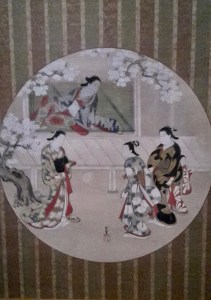 The artwork I saw at the Freer Gallery was “Girls Playing Kickball,” which portrayed a scene from the Tale of Genji, which is a great work of literature written by Murasaki Shikibu in 1008. This piece visualized the scene when the courtier, Kashiwagi, is playing kickball and he sees the Third Princess behind bamboo blinds, but in this painting the gender roles are reversed with a man watching a group of girls playing the game.
 By Asa Marshall
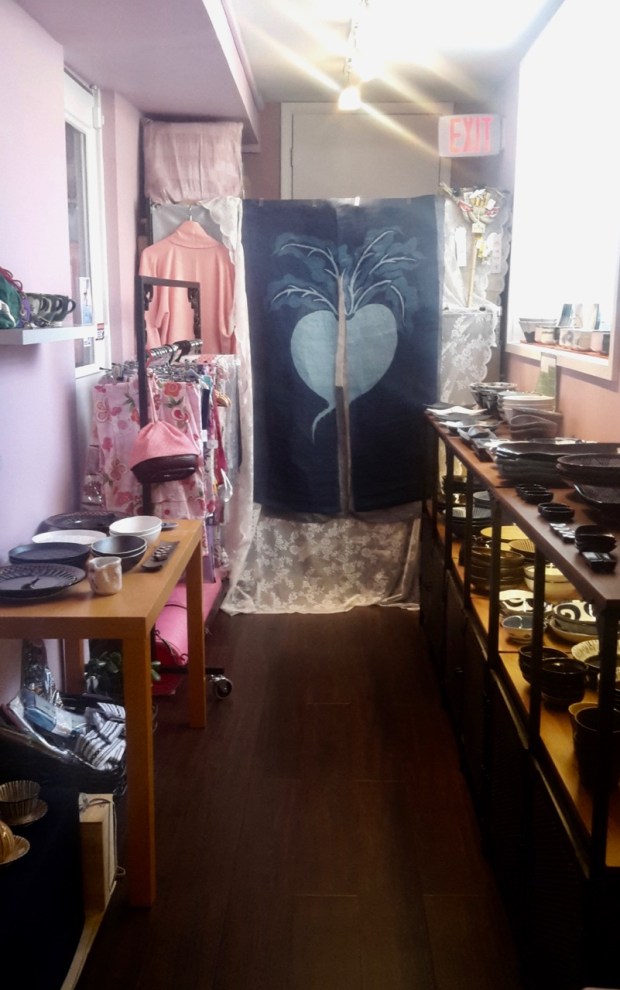
 On Saturday, September 28th, 2019, I visited TOKIYA JAPAN. It is a little shop next door to Hana Market, which is a small Japanese market. TOKIYA JAPAN is a kimono shop located at 2002 17th St NW, Washington DC. I visited a couple times before, because it is a very quaint shop and it’s very cozy and welcoming. This shop actually is a place where you can buy pottery and jewelry made with traditional Japanese methods and designs, as well as trying on and buying kimono. I often visit this little shop every time I go to Hana Market, because it’s really interesting and everything is so beautiful. This time however, I noticed that all around the shop there are pieces of historic information about the pieces, and also how to properly wear yukata (kimono worn in summer).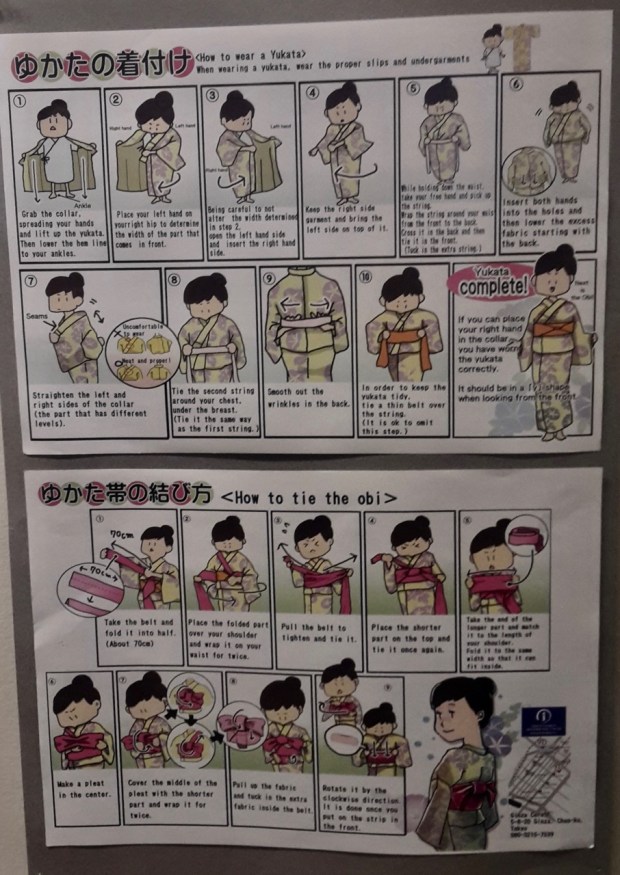
 By Katie Nguyen
 GLOBALIZE DC: JAPAN