Jennifer’s Final Japanese Plus Reflection

By Jennifer Pineda


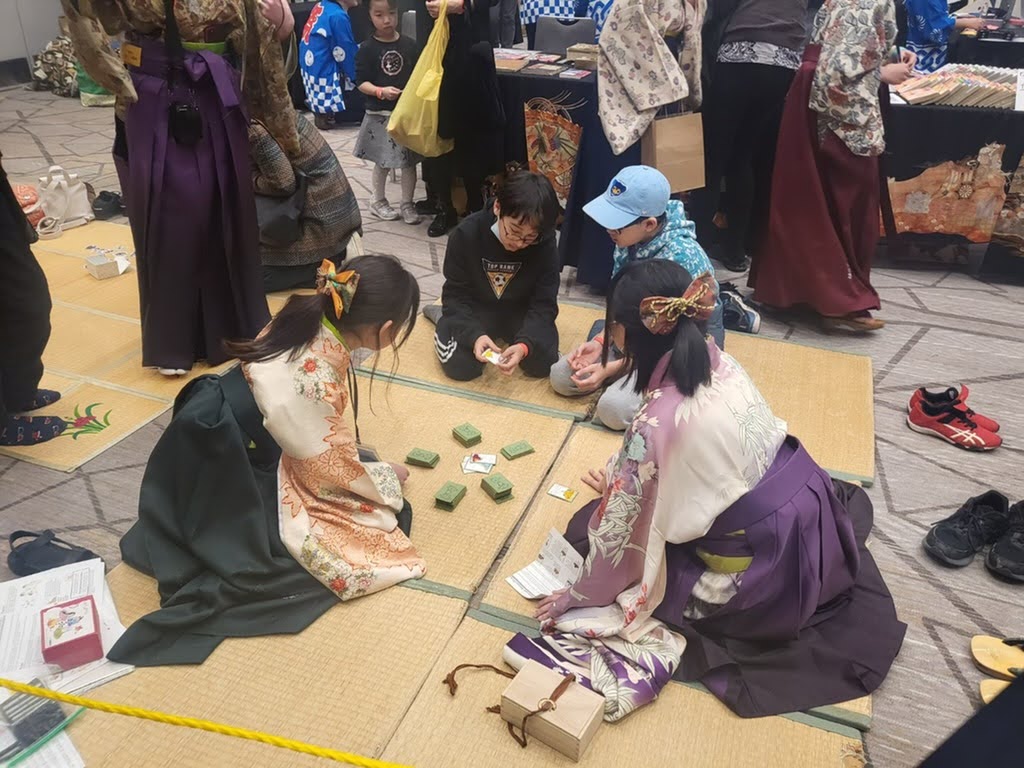
In the beginning of our first year in Japanese Plus we attended the Lunar New Year Festival, sponsored by Japan Commerce Association of Washington DC. There were lots of different activities such as live performances, calligraphy, food, drinks, and games. One game stood out to my classmates and me. It was a card game – karuta. There was an announcer and the game was played on a tatami mat without shoes. When my classmates and I started to play we were very confused as to what words were being said and how the game was played. With the little Japanese we knew, we managed to play the game not very well. The game was fun to play even with the little Japanese we knew and the event was a big joy to attend to.
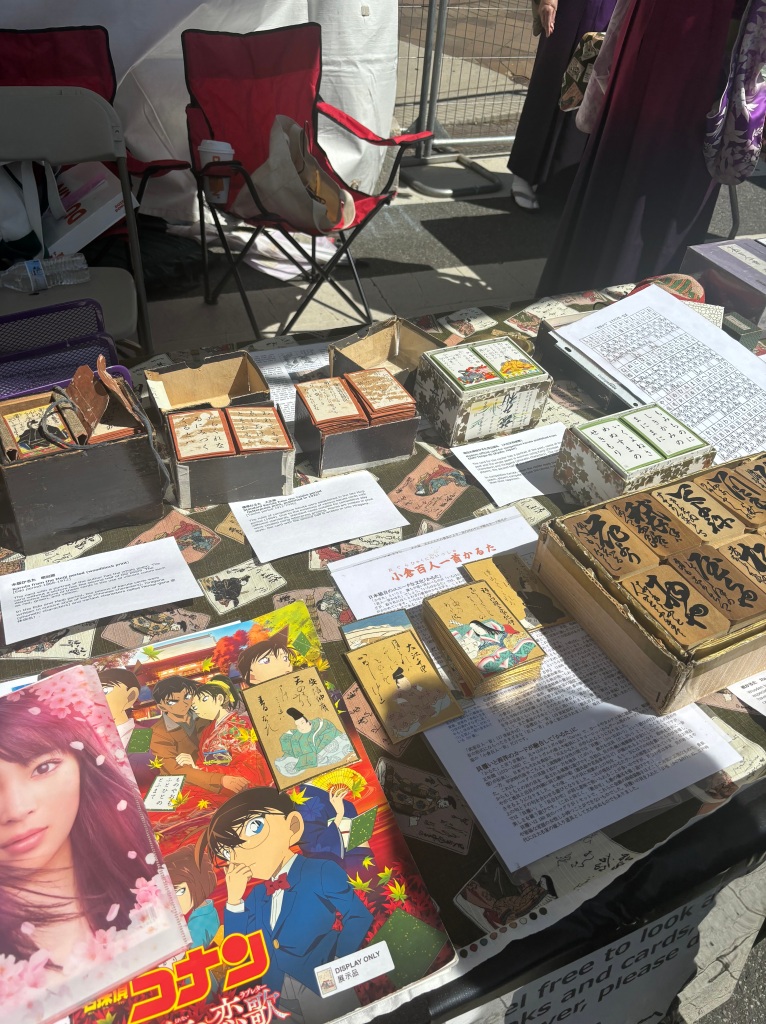

The second year of Japanese Plus we went to the Sakura Matsuri and saw the same organization, DC Inishie, presenting karuta. This time the game was on top of a table at a booth. The same classmates and I decided to play the game once again. This time it was more competitive and we were able to understand how to play the game and what to look for. The game consisted of poems and the first hiragana character to be said was the card that was looked for. It was more enjoyable playing the game because we knew more Japanese than before and understanding the language helped us understand the game better. It helped me realize the progress I have made over the years from knowing nothing to being able to understand what is being said and how to read Japanese. 
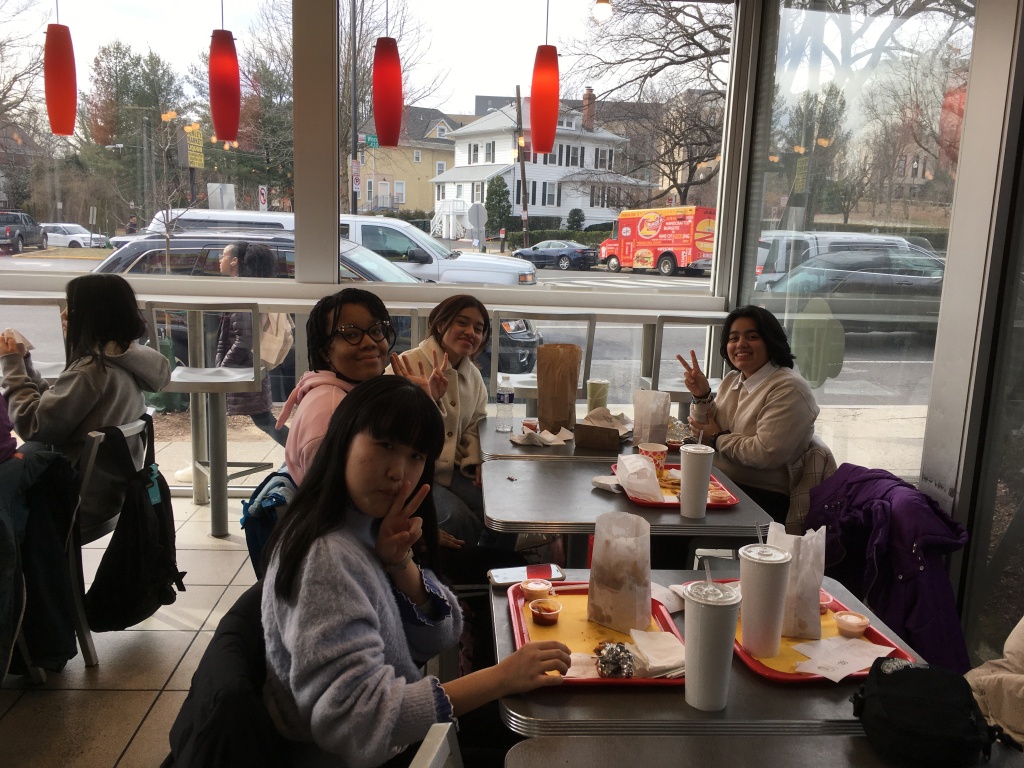

Another thing I have realized while being a part of Japanese Plus is that I’ve grown to be more social and learned to network. At the beginning of the program, I would often keep to myself and talk to the same people I knew because I was too shy to talk to others. This became especially hard during exchanges. Because I was shy I would minimize my talking but still try to speak Japanese. I was self-conscious of my Japanese skills and afraid to practice. I would feel more comfortable talking in English than in Japanese.
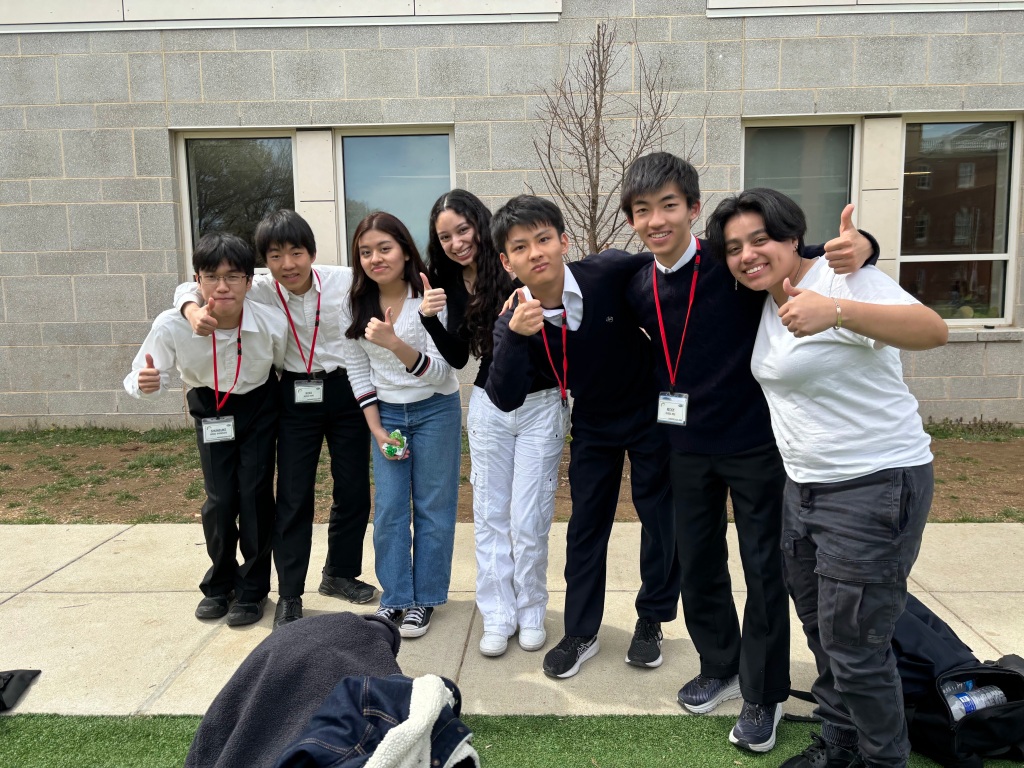

In our second year of Japanese Plus, we had a lot more exchanges and learned more Japanese. This helped boost my confidence in Japanese. I tried speaking more Japanese because I’ve realized that the process of learning a language involves mistakes and more practice. I’ve learned to network more like introducing myself and creating small talk which turns into more Japanese-focused topics. I’ve grown closer to my peers and made strong connections with them and fun memories that I will cherish. I’ve also made connections with exchange students and memorable moments. 
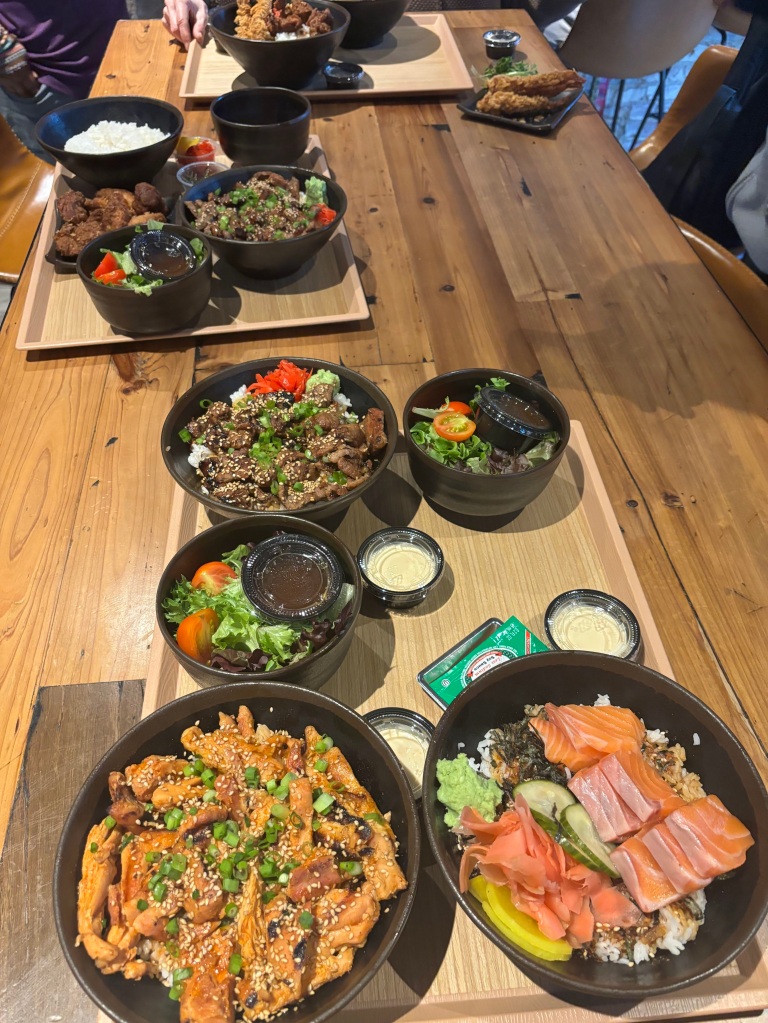

I’ve learned so much about Japanese culture. I feel as though I had the honor of experiencing a lot of Japanese-related things. For example, I’ve been able to have a Japanese meal. This is only the tip of the iceberg. I enjoyed having a meal and trying different flavors than what I am used to. Another thing is being able to cook a small Japanese dish such as Onigiri. It was a reoccurring thing in Japanese Plus and now on my own, I continue to make Onigiri for myself, my friends, and my family. I’ve been exposed to many different Japanese-related events such as the Sakura Matsuri, Lunar New Year Festival, Embassy of Japan, dance performances, etc. I feel like exposure to a different culture is crucial to understand another country.

I really enjoyed learning Japanese and its culture. Japanese Plus allowed me to open my horizons, meet new people, create connections, find opportunities, enjoy another culture, and so much more. I cannot express my gratitude enough and how lucky I am to have experienced this program. I am glad to have met my teachers, peers, other students, and friends. As the year comes to an end it is a sad feeling but with much hopefulness and happiness at the same time. Similar to the Cherry Blossom tree, happiness for a short time feels very beautiful in the moment but sad that they will go away soon. I am now aiming to study abroad in Japan and continue my studies of Japanese and Japanese culture in college. 

Our KAKEHASHI friends


By Jennifer Pineda

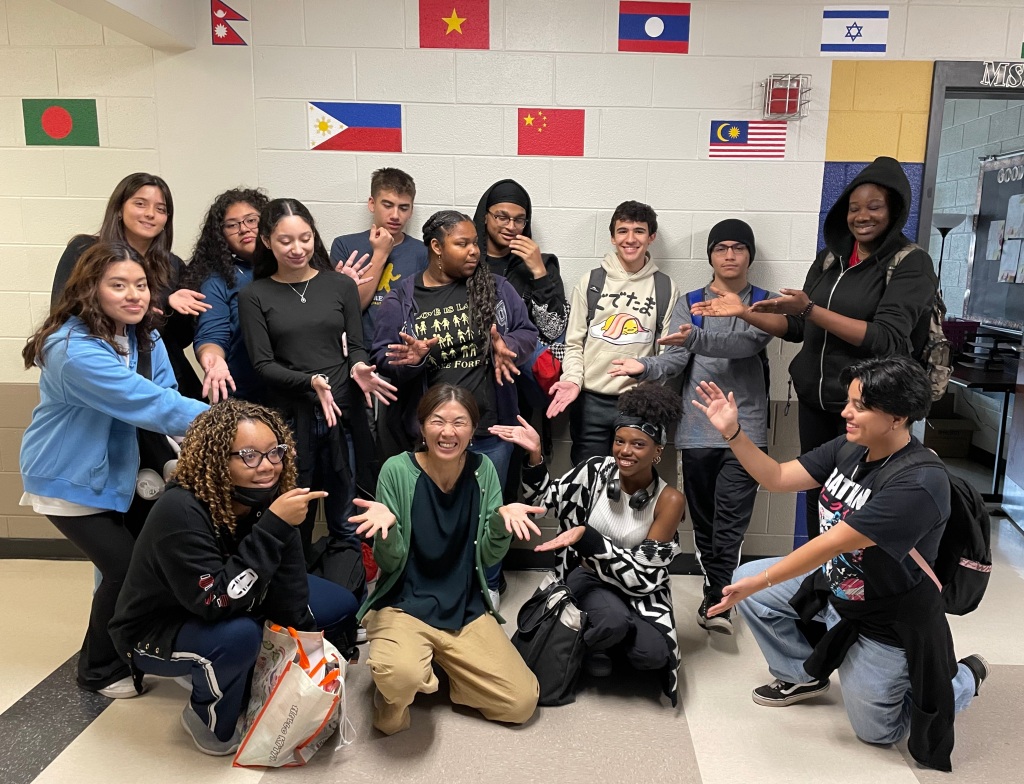
On March 26, some of my Japanese Plus colleagues and I first interacted with the KAKEHASHI group. Our school, District of Columbia International School, first hosted them. I was paired with Riki, one of the nine boys. Over the course of three days seeing each other on different occasions, we got familiar with each other. On Tuesday and Thursday, they visited our school and then visited Japanese Plus on Wednesday. We also hung out on the National Mall, going to a museum and played sports like soccer, frisbee, and badminton just to have extra time together.

Riki and the other boys were easy to talk to and fun to be around. Riki was an easygoing person and also invested in conversations by asking more questions and wanting to know more. His overall character was very genuine and nice. I’m glad I got to meet him.

That’s Riki in the middle.

I feel as through my classmates and I really made a strong connection with the KAKEHASHI group. I learned a lot from their presentations, like what made a good castle (to make a good castle it should be on a hill and have complex entrances), how to make origami, cherry blossoms (how they also represent the finish of friendships, and how they are short lived but beautiful, etc). I also learned a lot of differences from America and Japan, for example like social media. The US often posts pictures of friends, selfies, and a lot of things we do. Whereas in Japan they often don’t show their faces, often just showing their food and activities. It was exciting to see things in another perspective. For example, how most American foods have cheese on it. Also how squirrels are actually rare to see in some areas.

Sad to see them leave but glad that we met. This exchange was very memorable for me and will continue to encourage me to continue my language learning and my relationship with Japan.

A Visit to “Recapturing Happiness” at the JICC


Jennifer Pineda

On March 11th, some Japanese Plus colleagues and I visited the Recapturing Happiness: The Enduring Spirit of Ishinomaki” exhibit at the Japan Information and Culture Center (JICC). The JICC holds events free to the public to learn more about Japan, Japanese culture, and Japan relations. I was informed that the exhibit was about 3/11, the earthquake that caused a tsunami in Tohoku, Japan in 2011.

When entering the exhibit I was shocked to see a lot of happy photos. Before coming to the exhibit I expected to see sad photos about the damages that were done and a small section of how they’ve rebuilt. But to my surprise that was not the case. A lot of the exhibit was different stories about how people overcame the tragedy and how they are continuing to have hope and resilience despite the damages that were done, and how they cope.

A story that stood out to me was about a couple that lost their three children. They built a playground and commemorated them in different seasons and the photos captured the bright colors to remember them in different seasons and weather conditions. They related rainbows to the spirits of the children and every time they saw a rainbow it reminded them of their children. After speaking with Ms. Shanti (Shoji) she explained further that the couple is tired of news teams interviewing them and sadly talking about their kids. They rather people realize of course they miss their kids, and see how they are doing well and see the positive side of things and that is exactly what the photographer captures in the photos. The bright colors help us see the brighter side of the story and see the happiness and progress.


I enjoyed the exhibit and seeing the happy memories within the stories, but also commemorating loved ones. The exhibition was meant to show the happiness and recovery from the tragedy and not dwell on the past.

Zion Daodu

On 11 March 2011, at 14:46 JST, an undersea earthquake occurred 72 km east of the Oshika Peninsula of the Tōhoku region in Japan. The earthquake was followed by a tsunami. In Japan, this is referred to as the “Great East Japan Earthquake.” The impact was catastrophic, resulting in widespread destruction of infrastructure, homes, and communities, and claiming the lives of over 18,000 people. Many families were torn apart while also faced with unimaginable loss and displacement, as entire towns were swept away by the tsunami’s powerful waves.

The JICC organized an exhibit titled: Recapturing Happiness: The Enduring Spirit of Ishinomaki, featuring photographs by Mr. Keisuke Hirai. It is an exhibition that conveys the resilience of the human spirit, the joy of community, and the moments of happiness that persisted in Ishinomaki following the Great East Japan Earthquake.

Photographer Keisuke Hirai (center) with staff from exhibit sponsors Japan Information and Culture Center and Sasakawa Peace Foundation.

Of the many people featured in the exhibit, the Amano family, and woodworkers Shinichi and Ryoko Endo, among others, stuck out to me, because of their incredible journey and how they overcame it. Following the tragedy, survivors faced a lengthy and difficult healing process as they attempted to come to terms with their loss, their trauma, and the major undertaking of starting over. After the tragedy, families that had been split apart have been gradually reestablishing their ties and seeking comfort and support in one another’s company. But these brittle reunions were cut short when the COVID epidemic struck, leaving many families to face a fresh round of uncertainty and loneliness. As the eldest son of the Amano family wrote, they were not always close but after the earthquake and their mother‘s death in 2020 they began to cherish the memories they were creating with each other.

The inability to be together during the pandemic brought an additional layer of grief and frustration for those who had already lost loved ones or were still looking for missing relatives from the 2011 disaster, adding to the emotional toll of both tragedies. Family members found it difficult, if not impossible, to continue their efforts to physically gather due to travel limitations, lockdowns, and health issues, but woodworkers Shinichi and Ryoko Endo made the 480-km drive from Tokyo to take their long-awaited photo with their daughter and her husband in front of the Ishinomori Manga Museum.


A source of strength, families were reminded of their ties and the value of helping one another through hardship by their common experiences of resiliency and survival following the Tōhoku tragedy. Even though there were clearly challenges brought about by the pandemic, it also brought to light the families’ steadfast endurance and inspired a fresh appreciation for the times they were able to spend together, whether in person or virtually.

Zitlaly Hernandez

When I first entered the exhibit I was kind of nervous because there were important people around and I’m not good at socializing. As I walked around I noticed before and after photos, photos from the past or the present or both depending on the story.

One story that really got to me was one about an older sister and how she had missed the times when she would spend with her sister. It also got to me because her story touched on how she was grateful for her family and how she was thankful for all the things they’ve done for her. This resonated with me because I’m really close with my family and although it’s small, we love big. This is something that Kokoro, the author of the story I’m talking about, illustrated in her story.


Felipe Lemos

What I enjoyed most about the exhibit at the JICC was the fact that it focused more on the stories of the people and how they recovered over time rather than the tragedy itself. Some of the exhibits had pictures from the time of the disaster that were taken in the same spot 10 years later. Some of the exhibits told stories of the changes and improvements in people’s lives, all of which occurred after the disaster. But the shared message that I took away is that the world didn’t end after the earthquake. People’s lives went on and they were able to create stories and memories that were passed on through the exhibit.

One of my favorites was the story of a family who took a photo of themselves in 2012 shortly after the earthquake, and then went back to the same place to take a family picture again. Seeing the people who aged, the children who were now adults, the new members of the family, the background behind them changing to be a clean, new building, it all adds to this sentiment that pushing through adversity and having a positive mindset can lead to happiness long term.

Special thanks to the staff of the JICC for offering extended viewing hours so our students could visit this moving exhibit after school. It’s wonderful to be so warmly greeted.

Dinner afterwards at Donburi in the neighborhood. It was great to be joined by Takahashi-sensei and Nishant Annu (who both lived and worked in Tohoku) and local TOMODACHI alumni Jeffrey Jenkins and Tenaj Gueory.

Remembering 3-11

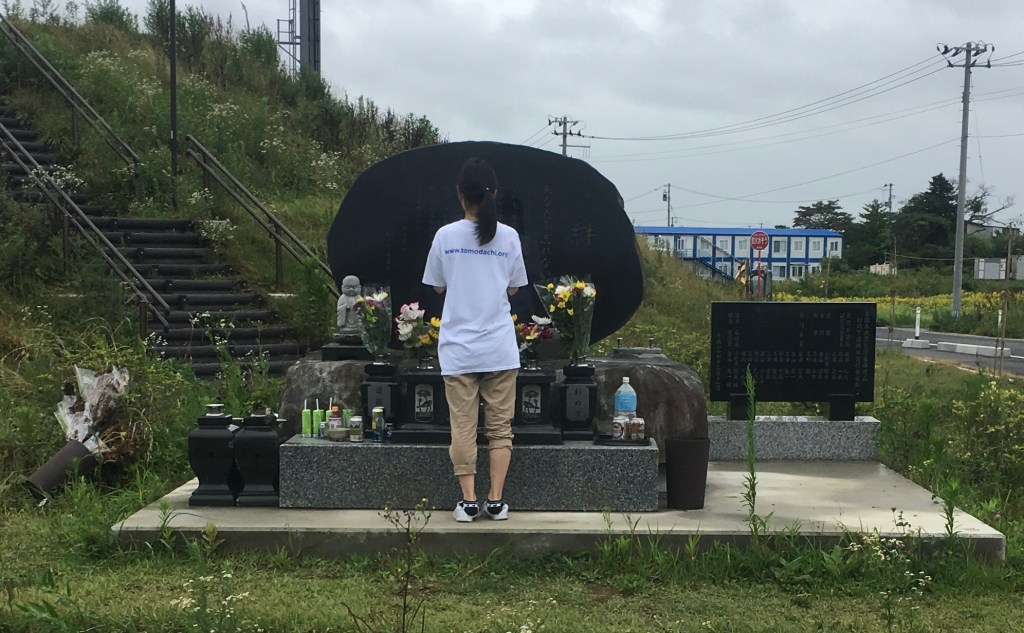
Photo from our 2018 TOMODACHI US-Japan Youth Exchange Program in Tohoku.

NOTE FROM THE PROGRAM DIRECTOR: On March 11, 2011, the Great East Japan Earthquake struck the Tohoku region of Japan, causing tremendous loss of life and widespread destruction of homes and communities. For six years Globalize DC was privileged to participate in the TOMODACHI US-Japan Youth Exchange Program, which allowed DC high school students to visit towns and cities directly affected by the earthquake, and to meet and engage with their Japanese peers in the region. These experiences have been deeply affecting and informative to all of us. So each year we take a few moments to recall the events of 3-11, to learn, and to reflect. This year our Japanese Plus students watched the emotionally riveting film, The Tsunami and the Cherry Blossom, which vividly documents the events of that day and the aftermath. These are some of our students’ reflections after viewing the film.


Chamiya

It was hard to watch the film about the tsunami that hit Tohoku on 3-11. Watching people lose their lives and witnessing survivors lose hope after experiencing a devastating tragedy was devastating to me. One guy said that he doesn’t want clothes or home, or anything material. He wanted his friend back, and that is something that I relate to. I admire these people for finding hope in the cherry blossoms. Finding something to look forward to, as something as small as watching the cherry blossoms bloom is admirable.

Zitlaly

It was hard to hear of the tragedies and how everyone had to accept the fact that the tsunami changed everything. Despite the fact that many lost what they would consider their lives/reason for living, they still continued to stay positive, to have some type of hope. I admire Japan for persevering and finding something or someone to hold onto during this hard and excruciating experience for so many. Also, I admire that many looked at the blooming of the cherry blossoms as a form of a new beginning, a remembrance, “rebirth,” hope, and a push to keep on going. Despite that, some felt envy for the blooming.

PS. May those who have not been found find serenity.

Felipe

One thing that stood out to me in the film was the man who lost his best friend. At the beginning he was distraught and at one point said that he had lost the meaning of his life and everything that was a part of it. However, once reflecting on the cherry blossoms and what they represented, he realized everybody was trying to bounce back because they were still alive and they shouldn’t give up. Another thing I found inspiring was what the woman at the end of the film was saying. She said she would photograph how the town was rebuilding but she also mentioned how the yearly blossoming of the cherry trees was giving her hope for the future. She said that the next time the trees blossomed, the town would be more rebuilt and the year after that even more. This made me reflect on how time is continuous and things will improve over time if you keep looking forward.

Mai

  • For many people in Tohoku they couldn’t believe that a tsunami was actually happening right before their eyes.
  • How easy it was for the tsunami to destroy and swallow their homes and loved ones. They could only watch, not being able to help.
  • “Nature is filled with beauty and terror but sometimes we forget about the terrors.”
  • The cherry blossoms have different meanings depending on how we feel and what memories we associate with them. They are goodbyes and new beginnings.
  • There was a tree that has lived for more than 80 years. When the Tohoku people saw the cherry blossoms, they felt healed, allowing them to have hope and motivation to rebuild their homes.
  • Cherry blossom trees have steps of growth: ichibu-zaki (which is the first step of the cherry blossoms growing) and maichiru (when the cherry blossom flowers begin to fall).
  • Sakura are yuuga (beautiful but not too showy). The Japanese people have a kanji for the concept of yuuga: 優雅

Jennifer

Although the cherry blossom trees also suffered the tsunami, they managed to strive to be alive. It became a hope to most and a reflection to those who survived. The tsunami hit them hard. Some grew from it, some resented it. The cherry blossoms give a sort of reflection on how they feel about the tsunami and what they feel about the future.

Elias

I noticed the destruction which caused the deaths of many friends and families who mourned for them after the disaster. Going through something as traumatizing as a tsunami taking your home and friends and families led people to lose everything, giving them a sense of emptiness from their tragic losses.

D’Amonie Armstrong

I believe that going through something like this is absolutely devastating and will have long-lasting impact on the people of Tohoku. To see visual evidence of such disaster and watching as people tried to get to a safe haven was very disheartening. The people showed extreme bravery for abandoning or deciding to try to salvage their belongings. Many people suffered badly. However, during this time, the cherry blossoms were also almost in bloom, and that was used to bring hope for a better future. Every year that they bloom around that time, it is seen as a reason to keep going and how with each passing year, the rebuilding gets better and better.

Zion

It was heartbreaking to see the people holding out hope that their families were still alive. Children having to watch their parents get swept away. The people that just watched knowing they could not do anything to save them. The people that were just coming out of their homes, the ones that could have died if they had waited just one second longer and the many other stories of the people who had relatives that died or were missing. I could not imagine going through what they went through and I hope that the people featured in the documentary are still alive.

Margarita

It was interesting to see how much cherry blossoms are integrated into Japanese culture and life. Many people in the film mentioned how they grew up alongside the cherry blossoms. The cherry blossoms were viewed as hope when they start blooming, not long after the disaster of March 11. The film showed how the family of one of the victims had planted their own cherry tree before the tsunami, which had started to bloom afterwards. The difference between showing solidarity compared to America is also very interesting. Unlike in Japan when natural disasters happen or any kind of devastation, in the United States the news and solidarity usually remains local. Across all of Japan people were grieving, which shows just how devastating the event was. I can’t imagine how traumatizing it must have been for everyone affected.

“Keep Smiling”


By Jennifer Pineda

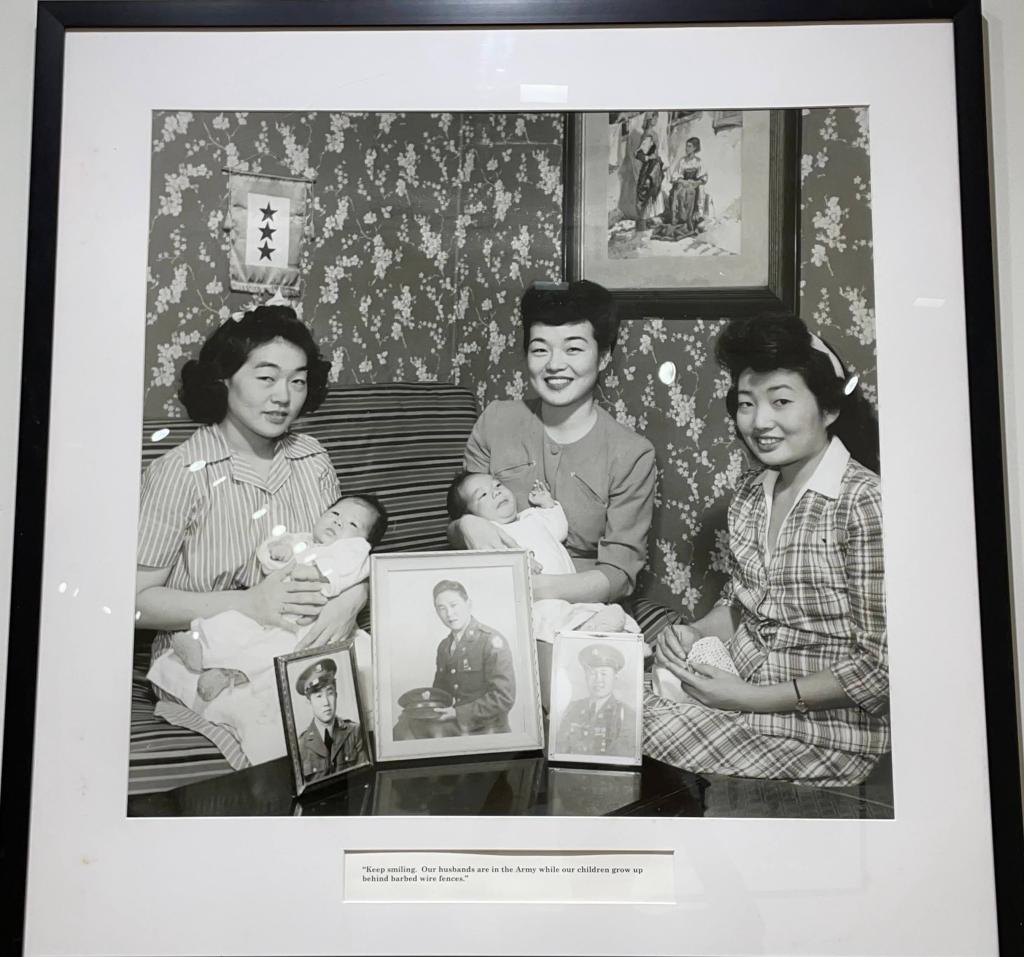
Japanese Plus went to the Japan Information and Culture Center (JICC) to visit their World War ll “Go For Broke” exhibition. There were many photos of families, relatives in the army, the Japanese-American contributions to World War ll, and many more. One thing I noticed while walking around is that most of the photos were in black and white because of the period of time. However, there was one photo that was in color near the entrance that was a reunion of the Japanese-American veterans fighting for the U.S.


While walking around there were many photos that caught my attention. One that captured my attention the most was of three women sitting around a table smiling at the camera, two of whom held babies in their arms, and on the table were three pictures of their husbands in their military uniforms. At first, I thought that this meant their husbands had passed away until I read the caption. “Keep smiling. Our husbands are in the Army while our children grow up behind barbed wire fences.” This was in reference to the Japanese-Americans being in camps because President Franklin D. Roosevelt issued Executive Order 9066. E.O. 9066 meant Japanese-Americans were sent to camps behind barbed wire fences, weren’t able to leave, and had no role in deciding if they wanted to stay in their homes. The Army took volunteers to help fight in battle and their brave husbands stepped up to the plate along with many other Japanese-Americans, despite being held in imprisonment.


The realization that these babies have to grow up in a harsh environment without their fathers made me feel sad. Then I also realized that the wives must be very worried about their husbands that they can die in the line of fire, and yet these strong women are still able to smile for a picture and continue to live in inadequate living conditions while taking care of their children. There was a deeper meaning behind this photo which is what really captured my attention. Not only the bravery of the husbands fighting in combat but the strength of the mothers. “Keep smiling” is the phrase that made me realize how grateful I should be. It makes us realize how privileged we are and reflect on how we should be more grateful and appreciative.

Walking around the Tidal Basin


By Jennifer Pineda

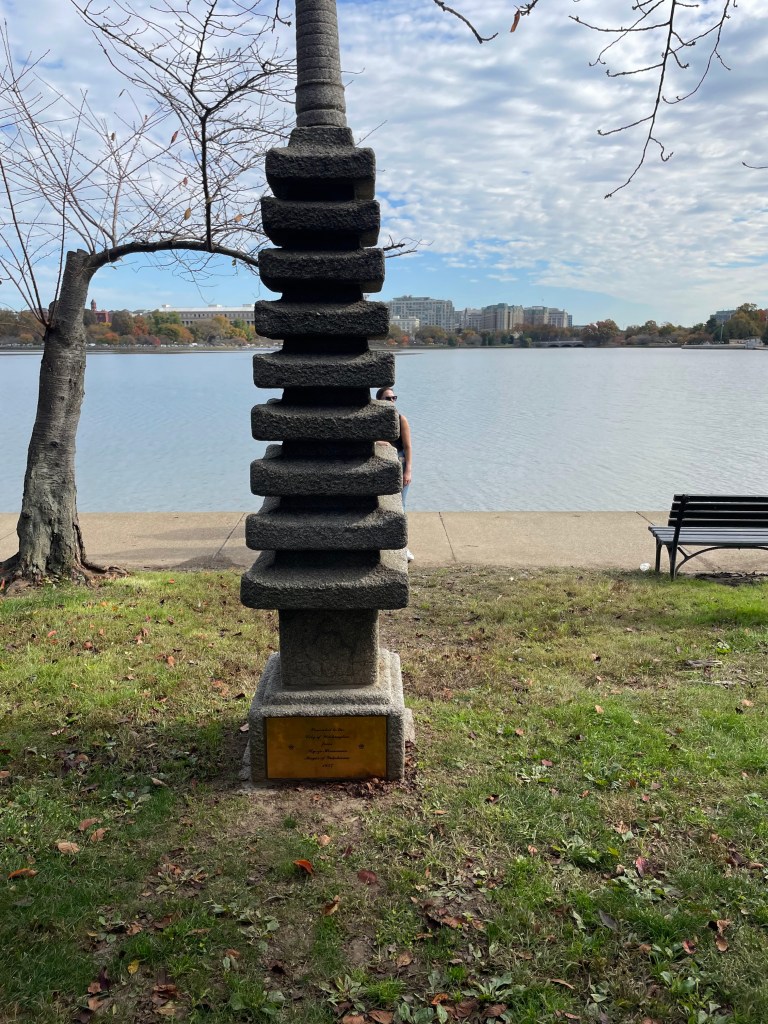
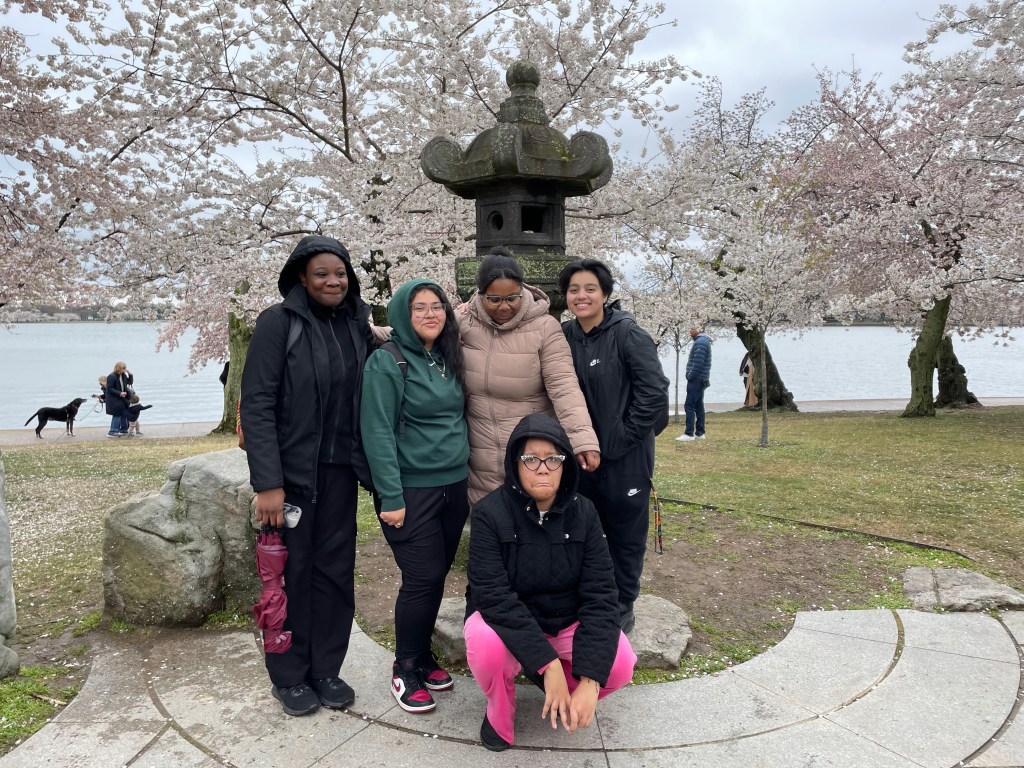
Walking around the Tidal Basin was a fun experience with my classmates and visiting educators from Japan. Although it was hard to speak only Japanese, it was a great way to learn while having fun. I enjoyed looking at the different sites such as the Japanese Lantern, and Japanese Pagoda, and taking photos with everyone. One thing that really stood out to me while we were walking around was the Japanese Pagoda. It’s funny to imagine the amount of confusion when trying to put together the 3,800 pounds of granite. As an American, most of the time, these things seem normal and we don’t really look into the history of those things, but when being told that they had relations to Japan, it gave those sites a deeper meaning. It shows the connection between America and Japan, realizing that there are pieces of Japan even in your own area and you might not even know.

We’re Back Together Again!


Saturday, September 30 was a happy day for us! The second year of our citywide afterschool program, Japanese Plus, launched at Columbia Heights Education Campus, with 14 returning students and a new Japanese teacher, Chihiro Takahashi. These super-dedicated DC public high school students will be meeting twice a week from now through the end of May – studying Japanese; exploring Japanese culture, history, and potential college/career pathways; and engaging in cultural exchange with peers and others in the US-Japan space. In other words, soaking up all things Japanese. Excitement is the operative word.

So what were they thinking on this first day back?

D’Amonie

In this present moment, I am very excited to be back. I have looked forward to this time again. I still love learning languages and I’ve been very proud of my Japanese learning journey thus far. Being able to go places and read the hiragana and katakana on Japanese products is so exciting for me, but there’s more to learn, which is why I am back. I am confident that I will get to my goal of natural conversational Japanese this year. I can’t wait to go to the next level. I can’t wait for more exchanges and interactions. And I can’t wait to go out and explore firsthand.

Zitlaly

As I was going through the metal detector here at CHEC, it hadn’t hit me that I’d soon be sitting in my Japanese class. I guess you can say it felt surreal. I’ve always been hesitant to push myself beyond limits, especially  with languages. Though due to my past year experience, I feel as I can finally reach my language goals in Japanese. So I’m not as nervous nor scared to admit when I need help. I wish myself the best of luck this year especially because I’m a senior and REALLY BUSY!!  

Elias

It’s the start of Japanese learning level 2 and honestly I feel good. I’m not particularly nervous. It’s more of a joyful, can’t wait type of feeling. But now that I’m also thinking about my senior year, that sorta does slow me down a little bit but I can manage. Learning through all the challenges and going to places relating to Japanese and Japanese culture keeps me motivated. And because of that, I’ll continue to push through in order to learn Japanese and experience the culture and more.

Aaron

I’m very excited for this year of Japanese Plus. I’ve gotten to see some friends from the class that I’ve missed. I hope to find a way to incorporate my knowledge and learning of the Japanese language into my college courses next year. My dream is to be able to tour my music in Japan or the UK one day.


Kori

I am looking forward to learn more about Japanese culture as well as being able to extend my language. I feel confident that I’ll learn more than I did before, and meet new people, like how I met a Congressman, and traveled to the Embassy of Japan during the summer, which helped me learn more on the history of the persons and embassy. I want to be able to experience more than what I’ve done like the tea ceremony, and being able to try on a traditional outfit.

Aitana

I’m looking forward to the new possibilities year two has to offer to our Japanese class this semester. After my time in Japan these last four months, I am excited to share all about my experiences with my classmates and hopefully inspire them to want to study abroad too. Overall, my goals this year are to maintain my Japanese skills, stay connected with the Japanese community in DC, and seek out new exciting opportunities.

Zion

Coming back to Japanese Plus is like remembering the first time I walked through the doors of our room for Japanese 1. I was late for my first class on Japanese, remembering my first teacher, our first exchange program with Japanese students where we all got to practice our Japanese with native Japanese speakers. It is sort of like going from middle school to high school, with all that I have learned from Japanese 1. I plan to take that knowledge with me to Japanese 2 to further expand my knowledge.

Mai

I am feeling really excited and happy coming into my 2nd year at Japanese Plus, to improve my Japanese skills that obtained last year. This year I am looking forward to learning and understanding daily life Japanese conversations, such as being able to talk about our day and things we like. I also look forward to building complex sentences using kanji. Outside the language aspect of the program, I hope to engage with the Japanese culture such as learning to play taiko drums, Japanese festival, and host again a Japanese high school exchange program.


Felipe

I’m now a level 2 Japanese student which makes me happy but nervous at the same time. I feel like I came out of last year with a good understanding of the language but I think level 2 will ramp up the pace a lot quicker and I’m gonna have to keep up. Luckily I went to Japan over the summer for 3 weeks which definitely helped with keeping my Japanese memorized. I was able to get some speaking and reading practice in as well as just being surrounded by language. This year I’m looking forward to hopefully get to a basic conversational level of Japanese and start learning some kanji.

Chamiya

My main goal for the year is to converse and meet Japanese students. While I was in Japan over the summer, I had the opportunity to practice and learn more Japanese. However, I wasn’t able to talk to students who were my age except for my host sister. Talking in a different language to converse with someone from a different culture was super fun and exciting to me. I learned so many different aspects of their culture and I was able to teach my own culture. There were similarities too and I wish to do it again. That is my goal for this year – to converse with a Japanese student and learn about their culture.

Margarita

Glad to be back!!! Seeing my friends and using Japanese again is making me feel so excited. Although I need to review some things, I am glad I get to do it with a new teacher. Hopefully this year we all grow closer as a class now that we will spend more time in person, and expand our knowledge of Japanese language and culture. I am excited to see how much Kanji we can learn this year and hopefully be able to use it with more Japanese people.

Jennifer

Coming into my second year of Japanese Plus I feel a bit nervous and excited. I feel nervous because I think my Japanese skills aren’t good enough but then I reflect on where I started. I knew nothing but here I am having small conversations and I know how to introduce myself. I am excited to continue learning. I aspire to be fluent so that it may better prepare me for college. I hope to study abroad and this program helped me seek opportunities in which I can. I also hope to get a better understanding of Japanese culture, the language, making connections, and growing with my peers.

Penelope

Although it’s been a while since our last Japanese class, I’m looking forward to picking up where we left off and advancing our language skills even further. I hope that this year we can go to more events around DC to experience Japanese culture, because I enjoyed so many of the ones we attended last year, like Sakura Matsuri and the exhibit at the JICC. I’m also looking forward to learning more kanji, and, of course, working with our new teacher!

Tristan

When I first came back to the program I was surprised by how my peers had changed over the past five months. Along with this I felt a bit awkward initially re-entering the program. I hadn’t many opportunities to practice Japanese over the break, so I felt a bit rusty almost as if I were lagging behind. With that said it would be a lie to say that I didn’t miss the program.

At the NAFSA Expo

By Jennifer Pineda


When first entering the event it was filled with many different booths. I expected to only see booths from Japan but NAFSA had booths from all over the world. The atmosphere felt very professional and welcoming. When approaching the booths someone was there to welcome you and talk about the university. I found a university I’m really interested in. It’s called Meiji University. They offer an anime course over the summer. That University stuck out to me out of all of them. I hope that I will be able to attend the University to pursue my hopes of becoming an animator. 

Karuta

By Jennifer Pineda

Happy Lunar New Year! January 29, Globalize DC attended the Marriott Hotel near the Metro Center that was holding a celebration for the Lunar New Year. An activity that my classmates and I enjoyed was the Hiragana card game, called Karuta.

To play the game one person reads a sentence off of a card and says the hiragana character. After the character is said, the rest of the players have to quickly pick out what character they said amongst the rest of the cards; whoever is first to get it and correct wins the card. The person with the most cards at the end of the game wins. When playing the game the cards had different images for each character. An example was some character was a train, another character was a cat to help you memorize them. I really enjoyed the game. It helped me practice my hiragana and made it fun to learn.

Although it was different from the way I learned hiragana, I definitely would recommend playing the game to learn and memorize hiragana.