TOMODACHI X Globalize DC


By Chamiya Carnathan

Have you ever embarked on the journey of learning a new language only to find yourself drowning in doubts along the way? Were you plagued with questions like, “Am I really getting this right?” or “Will I ever be able to hold a conversation?” For me, learning Japanese has been a rollercoaster of doubt and determination. As I delved deeper into the language, doubts lingered as I was absorbing new material. Could I actually speak Japanese? 

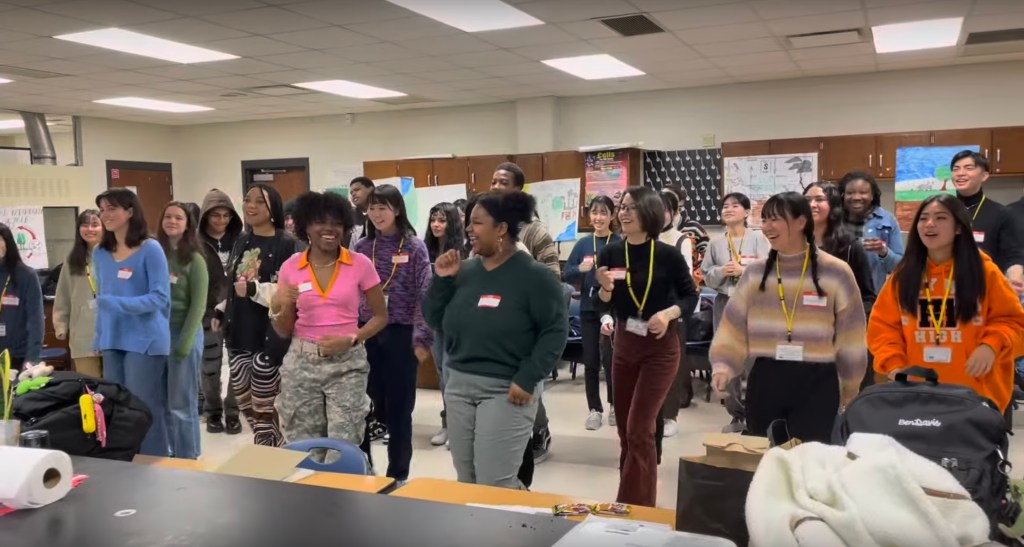
On Saturday, March 30th, Japanese students from the TOMODACHI Amway Japan Foundation Tohoku Future Leader Program came to Washington DC. They were from the Tohoku area and I had the opportunity to immerse myself in their company. I spent the day with them from 10:00 am to 5:00 pm.

In the beginning, I found myself in an unexpected situation. Due to an odd number of Japanese Plus students, I wasn’t paired with a DC partner. Instead, I was thrust into conversations with two or three Japanese peers at a time without an English-speaking partner of my own. It was nerve wracking at first, however, it was thrilling. I realized that I could indeed hold my own conversation. I used new vocabulary such as “おすすめ” (recommend) and “みなさん” (everyone). It was really fun figuring out the extent to how much I understood from the Japanese students. Our conversations ranged from what type of music we like to listen to, to recommending each other different places to visit in our hometowns. 


For one of the activities, we were tasked with a challenge to design a virtual adventure tour for the American students, showcasing sightseeing spots from Tohoku. This activity was aimed to bridge cultural gaps and give us a taste of rural Japan. I was grouped with 3 Japanese students and my classmate, Kori. They were really eager to tailor their experience to our interests and asked us, “Would you want to hike? Do you want to eat traditional Japanese breakfast in the morning? Do you want to wake up early?” Based on me and Kori’s responses, they crafted the start of a morning. We would wake up at 5 am and journey to the top of Mountain Iwate to watch the sunrise. Afterwards, we would eat a traditional Japanese breakfast that consisted of Miso soup, rice, tamagoyaki (rolled omelet), and fish. During the activity, what struck the most was their choice that consisted of natural beauty and local traditions over the conventional tourist attractions such as museums and restaurants. It gave me a glimpse into the life of Tohoku.

After the activity, there was a panel to discuss the tsunami that struck Japan on March 11, 2011 and how it affected Tohoku. The panel featured three Japanese adults, each sharing their perspectives on the disaster’s impact and the recovery efforts that followed. One of the panel discussions that I found interesting revolved around a disconnected landline phone, known as the “Phone of the Wind”. The phone is situated in a small white phone booth which overlooks the Pacific Ocean. However, it offers those left behind the opportunity to communicate with loved ones lost to the disaster. This discussion was interesting to me because it highlights how different cultures approach healing and remembrance. It not only shed light on Japan’s cultural response to disaster and loss, but also underscored the universal need for emotional outlets and communal healing, 

As the day unfolded, our adventures took us to the White House and the Smithsonian National Museum of American History. Every step of the way, I seized the opportunity to engage with as many Japanese students as possible, from creating a TikTok video to delving into a myriad of topics.

In those moments, doubts melted away, replaced by a newfound confidence in my abilities. It was a revelation, a tangible proof of progress that fueled my determination to continue this journey of language learning. This experience not only served as a communication revelation, but gave me more insight into Japan’s culture. 
Remembering 3-11

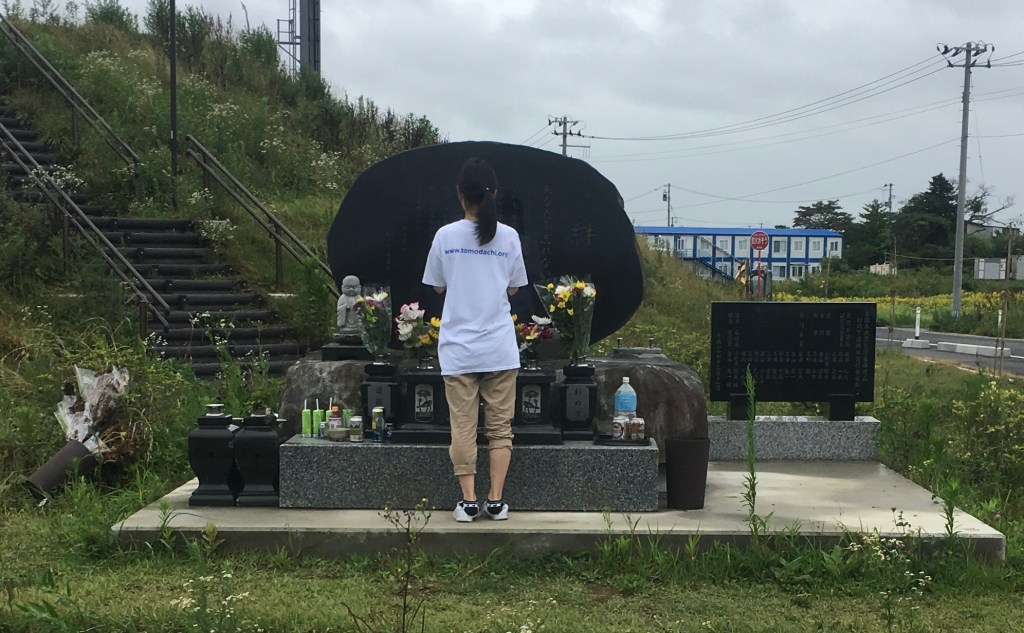
Photo from our 2018 TOMODACHI US-Japan Youth Exchange Program in Tohoku.

NOTE FROM THE PROGRAM DIRECTOR: On March 11, 2011, the Great East Japan Earthquake struck the Tohoku region of Japan, causing tremendous loss of life and widespread destruction of homes and communities. For six years Globalize DC was privileged to participate in the TOMODACHI US-Japan Youth Exchange Program, which allowed DC high school students to visit towns and cities directly affected by the earthquake, and to meet and engage with their Japanese peers in the region. These experiences have been deeply affecting and informative to all of us. So each year we take a few moments to recall the events of 3-11, to learn, and to reflect. This year our Japanese Plus students watched the emotionally riveting film, The Tsunami and the Cherry Blossom, which vividly documents the events of that day and the aftermath. These are some of our students’ reflections after viewing the film.


Chamiya

It was hard to watch the film about the tsunami that hit Tohoku on 3-11. Watching people lose their lives and witnessing survivors lose hope after experiencing a devastating tragedy was devastating to me. One guy said that he doesn’t want clothes or home, or anything material. He wanted his friend back, and that is something that I relate to. I admire these people for finding hope in the cherry blossoms. Finding something to look forward to, as something as small as watching the cherry blossoms bloom is admirable.

Zitlaly

It was hard to hear of the tragedies and how everyone had to accept the fact that the tsunami changed everything. Despite the fact that many lost what they would consider their lives/reason for living, they still continued to stay positive, to have some type of hope. I admire Japan for persevering and finding something or someone to hold onto during this hard and excruciating experience for so many. Also, I admire that many looked at the blooming of the cherry blossoms as a form of a new beginning, a remembrance, “rebirth,” hope, and a push to keep on going. Despite that, some felt envy for the blooming.

PS. May those who have not been found find serenity.

Felipe

One thing that stood out to me in the film was the man who lost his best friend. At the beginning he was distraught and at one point said that he had lost the meaning of his life and everything that was a part of it. However, once reflecting on the cherry blossoms and what they represented, he realized everybody was trying to bounce back because they were still alive and they shouldn’t give up. Another thing I found inspiring was what the woman at the end of the film was saying. She said she would photograph how the town was rebuilding but she also mentioned how the yearly blossoming of the cherry trees was giving her hope for the future. She said that the next time the trees blossomed, the town would be more rebuilt and the year after that even more. This made me reflect on how time is continuous and things will improve over time if you keep looking forward.

Mai

  • For many people in Tohoku they couldn’t believe that a tsunami was actually happening right before their eyes.
  • How easy it was for the tsunami to destroy and swallow their homes and loved ones. They could only watch, not being able to help.
  • “Nature is filled with beauty and terror but sometimes we forget about the terrors.”
  • The cherry blossoms have different meanings depending on how we feel and what memories we associate with them. They are goodbyes and new beginnings.
  • There was a tree that has lived for more than 80 years. When the Tohoku people saw the cherry blossoms, they felt healed, allowing them to have hope and motivation to rebuild their homes.
  • Cherry blossom trees have steps of growth: ichibu-zaki (which is the first step of the cherry blossoms growing) and maichiru (when the cherry blossom flowers begin to fall).
  • Sakura are yuuga (beautiful but not too showy). The Japanese people have a kanji for the concept of yuuga: 優雅

Jennifer

Although the cherry blossom trees also suffered the tsunami, they managed to strive to be alive. It became a hope to most and a reflection to those who survived. The tsunami hit them hard. Some grew from it, some resented it. The cherry blossoms give a sort of reflection on how they feel about the tsunami and what they feel about the future.

Elias

I noticed the destruction which caused the deaths of many friends and families who mourned for them after the disaster. Going through something as traumatizing as a tsunami taking your home and friends and families led people to lose everything, giving them a sense of emptiness from their tragic losses.

D’Amonie Armstrong

I believe that going through something like this is absolutely devastating and will have long-lasting impact on the people of Tohoku. To see visual evidence of such disaster and watching as people tried to get to a safe haven was very disheartening. The people showed extreme bravery for abandoning or deciding to try to salvage their belongings. Many people suffered badly. However, during this time, the cherry blossoms were also almost in bloom, and that was used to bring hope for a better future. Every year that they bloom around that time, it is seen as a reason to keep going and how with each passing year, the rebuilding gets better and better.

Zion

It was heartbreaking to see the people holding out hope that their families were still alive. Children having to watch their parents get swept away. The people that just watched knowing they could not do anything to save them. The people that were just coming out of their homes, the ones that could have died if they had waited just one second longer and the many other stories of the people who had relatives that died or were missing. I could not imagine going through what they went through and I hope that the people featured in the documentary are still alive.

Margarita

It was interesting to see how much cherry blossoms are integrated into Japanese culture and life. Many people in the film mentioned how they grew up alongside the cherry blossoms. The cherry blossoms were viewed as hope when they start blooming, not long after the disaster of March 11. The film showed how the family of one of the victims had planted their own cherry tree before the tsunami, which had started to bloom afterwards. The difference between showing solidarity compared to America is also very interesting. Unlike in Japan when natural disasters happen or any kind of devastation, in the United States the news and solidarity usually remains local. Across all of Japan people were grieving, which shows just how devastating the event was. I can’t imagine how traumatizing it must have been for everyone affected.

Mermaid of the Blue Sea – Okinawa Style


By Chamiya Carnathan

Have you ever experienced a musical in another language? On January 13th, 2024, I had the privilege to watch “The Little Mermaid” in Japanese. 

Last November, the Director of the Okinawa Prefecture Office in DC, Mr. Kazuyuki Nakazato, invited Sally Schwartz and me to attend an Okinawan performance called The Heart of Ryukyuan Dance. Then last week, Mr. Nakazato gave Sally and some Japanese Plus students another opportunity to attend a performance called “Mermaid of the Blue Sea,” located at Lisner Auditorium. Adapted from Hans Christian Andersen’s The Little Mermaid, the performance featured Okinawan traditional dance and performance styles. I absolutely loved the performance. 

In The Little Mermaid, Hans Christian Andersen introduces a young mermaid princess who falls in love with a prince she saves from drowning. Seeking a chance to be with him, she makes a pact with a sea witch and trades her voice for human legs. However, Ariel will feel constant pain and will only survive if she wins the love of the prince and marries him. Despite captivating the prince, he marries another, unaware of Ariel’s sacrifice. Heartbroken, Ariel faces an ultimatum from the sea witch: kill the prince to revert to a mermaid or face death and become seafoam. Ariel chooses not to harm the prince, embracing her fate.

The Okinawan rendition of The Little Mermaid presented a unique musical experience. Despite the language barrier, the performers’ utilization of items, such as Sensu fans, was flawless. These fans were ingeniously used to represent ocean waves and various sea animals. The musicians were amazing, playing a musical score that effectively conveyed the intended emotions. The music, which was exquisitely melancholic, created a build-up to the touching moment when the little mermaid met her end. The utilization of the bingata costumes to determine if the little mermaid was a mermaid or a human was my favorite aspect of the performance. The little mermaid had a bingata that hung down to her feet, giving the impression that she was nearly gliding across the floor. Upon turning human, she began to show her legs by wearing a bingata that hung down to her knees.

My sole critique was a desire for a longer performance and wishing that I could see more. The production was visually captivating, easily comprehensible, and conceptually exquisite. I loved the performance and I hope to see another one in the future. 

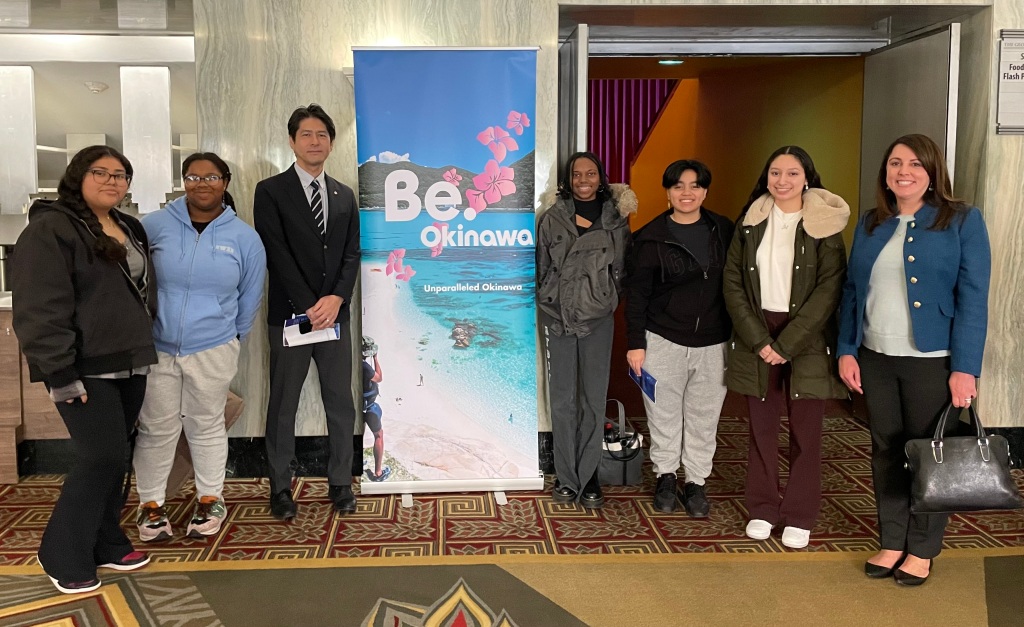
Zitlaly, D’Amonie, Chamiya, Jennifer, and Margarita with Mr. Kazuyuki Nakazato from the Okinawa Prefecture DC Office and Kristen Luck from the GWU Okinawa Collection after the performance.

じゃんけん (Janken)


By Chamiya Carnathan

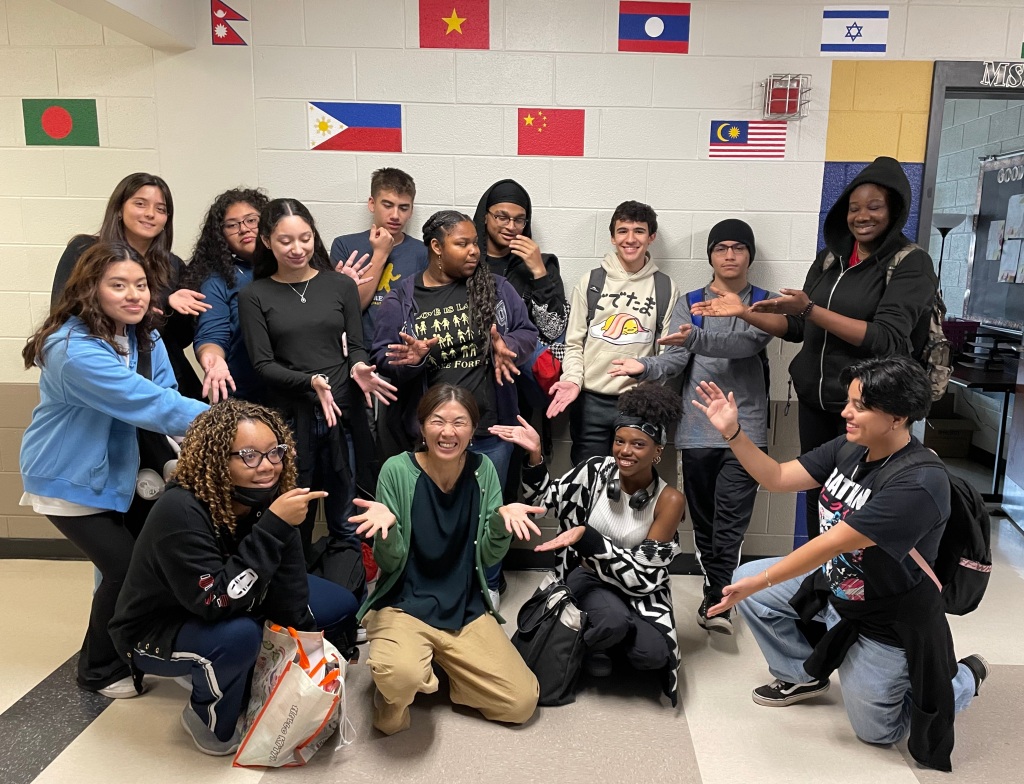
In October, our Japanese teacher dropped some knowledge bombs and initiated us into the arts of the Japanese Rock-Paper-Scissors. Otherwise, known as じゃんけん (Janken)! Although it is called different names in different places, the rules of the game are generally the same in every country. 

グー (Guu) = Rock
チョキ(Choki) = Scissors 
パー (Paa) = Paper

To start the game, players show their fists at the same time. Players will say “じゃんけんぽん” (Jankenpon) which is a phrase to be chanted by the players together. Players are to show their hands at the same time when they say “ぽん”(pon). To make it more chaotic, in class, everyone battled against the teacher. The students were standing tall and ready to defeat the teacher, “せんせい,” in the game, while the teacher was positioned in the front with her hands ready. Victory belonged to the last person standing, the one who outsmarted せんせい. And if no one could beat her, せんせい emerged as the champion.

After the class played a round of じゃんけん against our teacher, せんせい taught the class a different version of じゃんけん. The game starts generally the same where players would show their fists at the same time. “じゃんけんぽん” is chanted at the same time and players would show their hands at “ぽん”. This is where the fun begins to play out. In this version, グー, チョキ, and パー represented different numbers. 

グー (Guu) = 1
チョキ(Choki) = 2
パー (Paa) = 5

Picture this, players unveiled their hands and a thrilling race begins. The challenge? Lightning-fast mental math. Here’s the twist: quickly announce the total in Japanese after adding up the numbers displayed on both hands! For example, player one has グー and player two has パー. The added number is 六 (6). The first person to yell out “六” wins the game. 

I personally love this version of じゃんけん. The more players in the mix, the crazier the number-crunching ride becomes. The pressure to add, convert to Japanese, and blurt it out first is super stressful but also really exciting. It’s also a great practice for learning numbers in Japanese. Whenever I play Rock-Paper-Scissors with my friends or family, I teach them the Japanese version. It’s so fun for both me and them because they learned a different version of じゃんけん and I’m excited to teach them about it.

At the JICC


By Chamiya Carnathan

This picture features General Frank D. Merrill with interpreters Herbert Miyasaki and Akiji Yoshimura. The photo represents a fraction of the 14 Japanese American linguists and infantrymen who were part of “Merrill’s Marauders,” which fought in the Asia theater after Pearl Harbor. This picture specifically intrigues me because the men are smiling at something behind the lens. Regardless of the cause of their smile, it’s heartwarming and comforting to me. These men of different ethnicities have worked with each other. They collaborate with a shared objective in mind. They are enjoying each other’s company. In a strange sense, it gives me comfort to know that anyone can enjoy each other’s company if these men, of different ethnic backgrounds, can. 

The Heart of Ryukyuan Dance


By Chamiya Carnathan

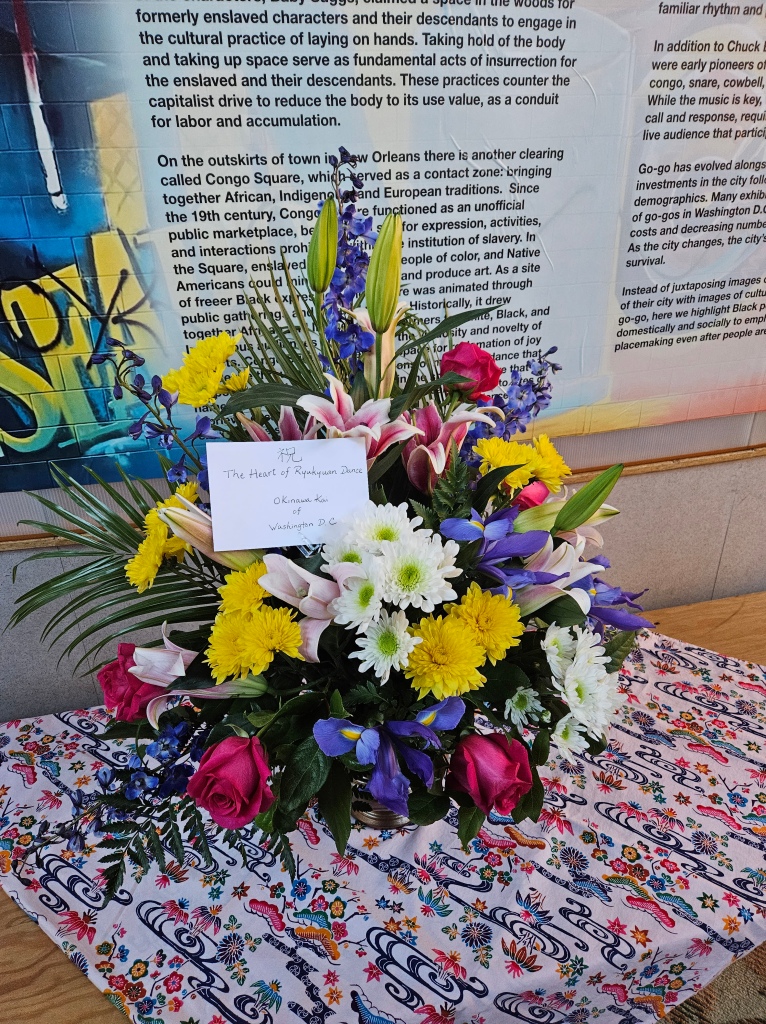
On November 18, 2023, Sally Schwartz and I attended the “The Heart of Ryukyuan Dance” performance which was located at Georgetown University’s Davis Performing Arts Center. Five masters of Ryukyuan dance from Hawaii, San Francisco, Los Angeles, and Washington, D.C. were featured in the performance. The five Ryukyuan Dance Masters from various academies came together for the first time to share Ryukyuan culture and art. Sally and I were generously invited by the DC Okinawa Prefectural Office to both the performance and the reception afterwards, and I greatly appreciated the event that I attended. 

To provide some context about the significance of the Ryukyuan dance, Ryukyu is the ancient (and original) name for the Okinawa region of Japan. From its founding in the 15th century until its incorporation into Japan in the 19th century, Okinawa fostered its history and culture as the autonomous “Kingdom of Ryukyu” for 450 years.

I didn’t know what to expect when I attended the event but it was way better than I expected. In all, ten dances told stories that included cultural tapestries, love stories, and much more. Every dance was distinct in its own right, whether it was a lively, upbeat dance or a slow dance. I loved watching the dances and connecting the dance moves to the story itself. The dance that sticks in my memory the most is called “Kanayo Tenkawa River,” and it tells the story of two lovers who chose to exchange vows by the Tenkawa River. The fact that the dance included props made it something I truly adored. The dancers used a piece of cloth to show that they were interconnected through their love. 


The dancers’ demonstration of a move used in Okinawan dances to the audience was my favorite part of the performance. They then invited the audience to join in on the dance, which I thought was a great way to involve the audience. We were able to learn a cultural dance move and take it with us home. My other favorite event was the decision to combine GoGo music — Washington DC’s official music — to Ryukuyan dancing. I would never have imagined that the two cultures could coexist, so it was really fascinating to watch. Although the dance and music are very different from one another, they nevertheless blended incredibly well. 

I greatly appreciate the dancers and everyone involved for creating a wonderful experience. I loved every ounce of it and I would love to attend another event like this again. 

We’re Back Together Again!


Saturday, September 30 was a happy day for us! The second year of our citywide afterschool program, Japanese Plus, launched at Columbia Heights Education Campus, with 14 returning students and a new Japanese teacher, Chihiro Takahashi. These super-dedicated DC public high school students will be meeting twice a week from now through the end of May – studying Japanese; exploring Japanese culture, history, and potential college/career pathways; and engaging in cultural exchange with peers and others in the US-Japan space. In other words, soaking up all things Japanese. Excitement is the operative word.

So what were they thinking on this first day back?

D’Amonie

In this present moment, I am very excited to be back. I have looked forward to this time again. I still love learning languages and I’ve been very proud of my Japanese learning journey thus far. Being able to go places and read the hiragana and katakana on Japanese products is so exciting for me, but there’s more to learn, which is why I am back. I am confident that I will get to my goal of natural conversational Japanese this year. I can’t wait to go to the next level. I can’t wait for more exchanges and interactions. And I can’t wait to go out and explore firsthand.

Zitlaly

As I was going through the metal detector here at CHEC, it hadn’t hit me that I’d soon be sitting in my Japanese class. I guess you can say it felt surreal. I’ve always been hesitant to push myself beyond limits, especially  with languages. Though due to my past year experience, I feel as I can finally reach my language goals in Japanese. So I’m not as nervous nor scared to admit when I need help. I wish myself the best of luck this year especially because I’m a senior and REALLY BUSY!!  

Elias

It’s the start of Japanese learning level 2 and honestly I feel good. I’m not particularly nervous. It’s more of a joyful, can’t wait type of feeling. But now that I’m also thinking about my senior year, that sorta does slow me down a little bit but I can manage. Learning through all the challenges and going to places relating to Japanese and Japanese culture keeps me motivated. And because of that, I’ll continue to push through in order to learn Japanese and experience the culture and more.

Aaron

I’m very excited for this year of Japanese Plus. I’ve gotten to see some friends from the class that I’ve missed. I hope to find a way to incorporate my knowledge and learning of the Japanese language into my college courses next year. My dream is to be able to tour my music in Japan or the UK one day.


Kori

I am looking forward to learn more about Japanese culture as well as being able to extend my language. I feel confident that I’ll learn more than I did before, and meet new people, like how I met a Congressman, and traveled to the Embassy of Japan during the summer, which helped me learn more on the history of the persons and embassy. I want to be able to experience more than what I’ve done like the tea ceremony, and being able to try on a traditional outfit.

Aitana

I’m looking forward to the new possibilities year two has to offer to our Japanese class this semester. After my time in Japan these last four months, I am excited to share all about my experiences with my classmates and hopefully inspire them to want to study abroad too. Overall, my goals this year are to maintain my Japanese skills, stay connected with the Japanese community in DC, and seek out new exciting opportunities.

Zion

Coming back to Japanese Plus is like remembering the first time I walked through the doors of our room for Japanese 1. I was late for my first class on Japanese, remembering my first teacher, our first exchange program with Japanese students where we all got to practice our Japanese with native Japanese speakers. It is sort of like going from middle school to high school, with all that I have learned from Japanese 1. I plan to take that knowledge with me to Japanese 2 to further expand my knowledge.

Mai

I am feeling really excited and happy coming into my 2nd year at Japanese Plus, to improve my Japanese skills that obtained last year. This year I am looking forward to learning and understanding daily life Japanese conversations, such as being able to talk about our day and things we like. I also look forward to building complex sentences using kanji. Outside the language aspect of the program, I hope to engage with the Japanese culture such as learning to play taiko drums, Japanese festival, and host again a Japanese high school exchange program.


Felipe

I’m now a level 2 Japanese student which makes me happy but nervous at the same time. I feel like I came out of last year with a good understanding of the language but I think level 2 will ramp up the pace a lot quicker and I’m gonna have to keep up. Luckily I went to Japan over the summer for 3 weeks which definitely helped with keeping my Japanese memorized. I was able to get some speaking and reading practice in as well as just being surrounded by language. This year I’m looking forward to hopefully get to a basic conversational level of Japanese and start learning some kanji.

Chamiya

My main goal for the year is to converse and meet Japanese students. While I was in Japan over the summer, I had the opportunity to practice and learn more Japanese. However, I wasn’t able to talk to students who were my age except for my host sister. Talking in a different language to converse with someone from a different culture was super fun and exciting to me. I learned so many different aspects of their culture and I was able to teach my own culture. There were similarities too and I wish to do it again. That is my goal for this year – to converse with a Japanese student and learn about their culture.

Margarita

Glad to be back!!! Seeing my friends and using Japanese again is making me feel so excited. Although I need to review some things, I am glad I get to do it with a new teacher. Hopefully this year we all grow closer as a class now that we will spend more time in person, and expand our knowledge of Japanese language and culture. I am excited to see how much Kanji we can learn this year and hopefully be able to use it with more Japanese people.

Jennifer

Coming into my second year of Japanese Plus I feel a bit nervous and excited. I feel nervous because I think my Japanese skills aren’t good enough but then I reflect on where I started. I knew nothing but here I am having small conversations and I know how to introduce myself. I am excited to continue learning. I aspire to be fluent so that it may better prepare me for college. I hope to study abroad and this program helped me seek opportunities in which I can. I also hope to get a better understanding of Japanese culture, the language, making connections, and growing with my peers.

Penelope

Although it’s been a while since our last Japanese class, I’m looking forward to picking up where we left off and advancing our language skills even further. I hope that this year we can go to more events around DC to experience Japanese culture, because I enjoyed so many of the ones we attended last year, like Sakura Matsuri and the exhibit at the JICC. I’m also looking forward to learning more kanji, and, of course, working with our new teacher!

Tristan

When I first came back to the program I was surprised by how my peers had changed over the past five months. Along with this I felt a bit awkward initially re-entering the program. I hadn’t many opportunities to practice Japanese over the break, so I felt a bit rusty almost as if I were lagging behind. With that said it would be a lie to say that I didn’t miss the program.

Chamiya at the NAFSA Expo

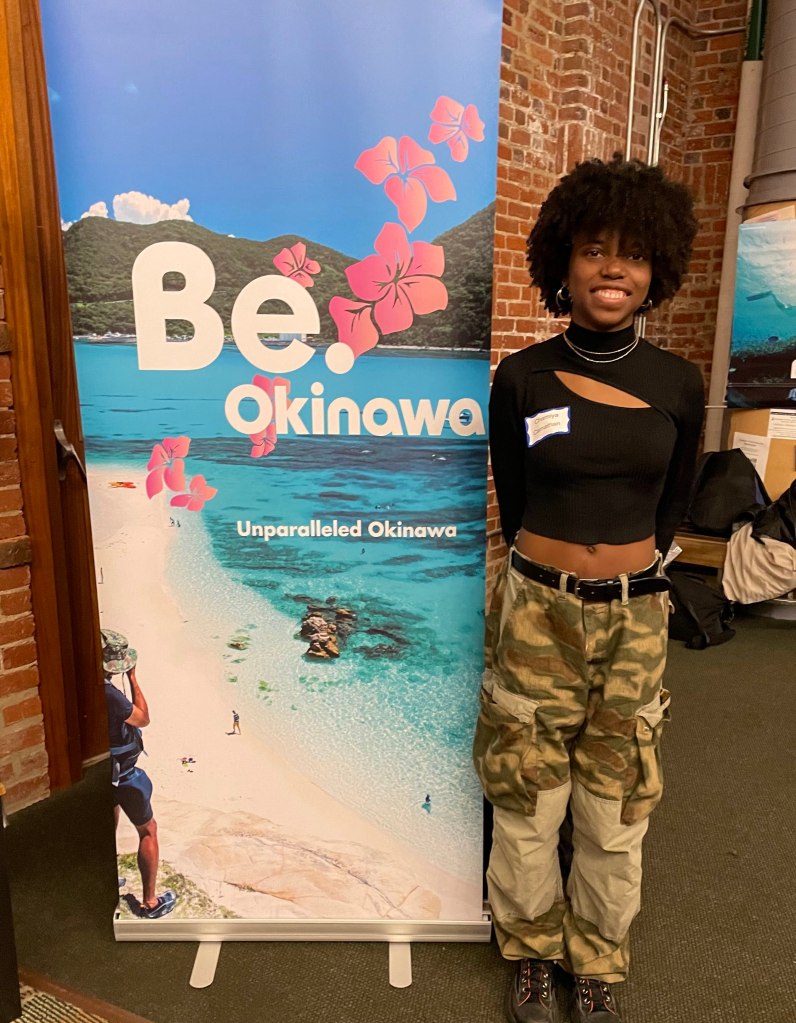
On June 1st, 2023, I was invited to attend NAFSA’s Annual Conference and Expo and connected with international educators from a variety of countries. I mainly went to the conference to connect with Japan’s universities and after talking to several universities, I was able to discover 5 that I am most interested in going to. I am studying to become a veterinarian, which means that I need to major in biological or veterinary sciences. Most of the universities that I interacted with were liberal arts schools and did not offer degree programs in English for biological sciences. However, there are 5 universities — Hokkaido University, International Christian University, Sophia University, Tohoku University, and Tokyo Metropolitan University — that offer biological sciences degree programs in English. I was so excited to add these colleges to my list, especially since I want to study in Japan!

An Important Fight for the Inclusion of Asia, Asian, and AAPI Content


By Chamiya Carnathan and Penelope Morris

We are DC high school students who have been studying Japanese with Globalize DC since summer 2021. Back in 2021, in the depths of the pandemic, a group of students from our online Japanese program (including the two of us) advocated for the new DC social studies standards, which were soon to be updated, to be more inclusive of Asians and Asian Americans. During and after the pandemic, anti-Asian hate crimes rose substantially. In order to combat anti-Asian hate and violence, we concluded that people need to be taught about Asia, Asians, and AAPI content in order to feel compassion and understanding for these communities.

In June 2021, Penelope, alongside other students from Globalize DC, testified before the DC State Board of Education (SBOE) to discuss the improvements that the new standards needed. In December 2022, the Office of the State Superintendent of Education (OSSE) released the first draft of the new standards. We were extremely unsatisfied with the draft, because OSSE did not respond to our suggestions at all. In fact, the standards regressed in the amount of content for Asia, Asians, and Asian Americans. After we discussed what could be improved, the two of us (now in Globalize DC’s afterschool Japanese Plus program) testified before SBOE in January 2023 to again demand that the standards include more Asians and Asian Americans. We advocated for standards that include specific AAPI and Asian content and the introduction of Asian/AAPI content in earlier grades. After a very strenuous rewriting process, OSSE released a revised draft of the new social studies standards on March 29th, 2023, and we were deeply pleased by the outcome.

After reading this latest draft, we compiled a list of all the standards that explicitly mentioned Asia, Asians, and Asian Americans. We were especially happy about the specificity and amount of this content. In grade 6, OSSE revised the standards to analyze cultural elements of a country located in Asia and its significance for and influence on other societies. Although the standards analyze cultural elements of only one country located in Asia, it is a very important step to add cultural aspects of Asia. We were also pleased to see that OSSE modified the standards to name some specific elements of Asian culture, such as Sikhism and the philosophical writings of Wang Yangming, compared to the vague nature of the previous draft.

In World History 2, OSSE included a lot more standards that discuss a variety of countries such as South Korea, Japan, the Philippines, China, Cambodia, and many more. More people related to Asia are also discussed such as Ibn Battuta, Marco Polo, and Zheng He. In Government and Civics, United States v. Bhagat Singh Thind, United States v. Wong Kim Ark, and Korematsu v. United States are included, which are cases that helped shape America. Overall, OSSE has most definitely added a lot more countries and specific people to the social studies standards.

Instantly, we recognized that OSSE fulfilled our suggestion of introducing Asian/AAPI content in earlier grades. In grade 1, the standards introduce Asian communities as well as other communities to explain how they have shaped and defined Washington, DC. The standards also introduce specific community leaders, including Lee Yick and Liliʻuokalani. In grade 2, OSSE expanded Asian history in the periods between 1100 and 1400. In grade 3, OSSE included greater representation of AAPI history in Washington, DC. In grade 5, OSSE included all Asian immigration during this time period, as well as additional standards about the impact of the Chinese Exclusion Act.

In conclusion, these new standards are what we wanted to be included. They highlight the impact that AAPI communities have had on Washington, DC, as well as expanding Asian history, which will build understanding and compassion among the younger children. Our greatest hope is that teachers will make great use of these standards and incorporate field trips and create other opportunities for children to learn about Asian/AAPI communities firsthand. These standards pair well with excursions to learn about many different communities that make up our city and nation.

We want to give special thanks to Dr. Sohyun An, a professor of social studies education at Kennesaw State University and an expert reviewer for these new standards, for using her expertise to advocate, alongside Globalize DC, for the inclusion of Asia, Asian, and Asian American content. We would also like to thank the members of the State Board of Education and OSSE for listening to our suggestions and taking them seriously.  

You can find the latest full draft of the K-12 social studies, along with other background information on the revision process, here.

Teaching the Cha Cha Slide

By Chamiya Carnathan

One of the fondest memories that I have of Japanese Plus is the Cha Cha Slide. For the KAKEHASHI visits that occurred in March (March 18th and March 25th), the visits were broken up into 4 different parts. Conversational exchanges between Japanese and American students, the Japanese students teaching their culture to American students through presentations, American students showing their culture through a performance, and lunch time. Besides conversing with the Japanese students, my favorite part of the visit was teaching the Japanese students the Cha Cha Slide. 

The Cha Cha Slide is a very popular dance that relatively every American knows how to dance to. The history of the Cha Cha Slide is very interesting as it didn’t actually begin as a song or dance, but rather an aerobic workout. DJ Casper, the creator of the Cha Cha Slide, put music to the workout and began selling copies of the song. The rest is history, as the song became popular, and people are still dancing to it 20 years later.

Since the Cha Cha Slide is a popular dance and Japanese Plus wants to show the Japanese students a piece of American culture, the Cha Cha slide was the perfect choice. D’Amonie Armstrong and I chose to explain the significance of the dance and how to dance to it. First, we began explaining that the Cha Cha Slide is a pivotal dance that almost every American knows. You can practically dance it for every occasion, a wedding, a birthday party, prom, etc. Next, we showed the different moves that the Japanese students needed to know. Of course, we taught the basic Cha Cha move where you swish your hips while you move back and forth. We also taught that the dance is basically a huge instruction manual since the dance literally tells you when to go right, left, back, jump, stomp, etc. Lastly, we taught OUR version of the Charlie Brown move. We know that many people have different versions of the Charlie Brown move. Some may kick their feet up or spin around in a circle. But we decided that we would show the most iconic move (in my opinion), the running man move. It’s basically when the dancer does a hopping move with alternating feet and with arm motion. After D’Amonie and I finished explaining the instructions, we began dancing to the song. 

After we finished dancing to the Cha Cha Slide, I looked around and saw that everyone had smiles on their faces. The Cha Cha Slide helped everyone open up a bit as the Japanese students talked with the American students afterwards. I asked a few Japanese students whether they liked the dance and they said that they really liked it. I was very proud after I showed the dance to both KAKEHASHI groups. We showed a glimpse of what American culture is like.