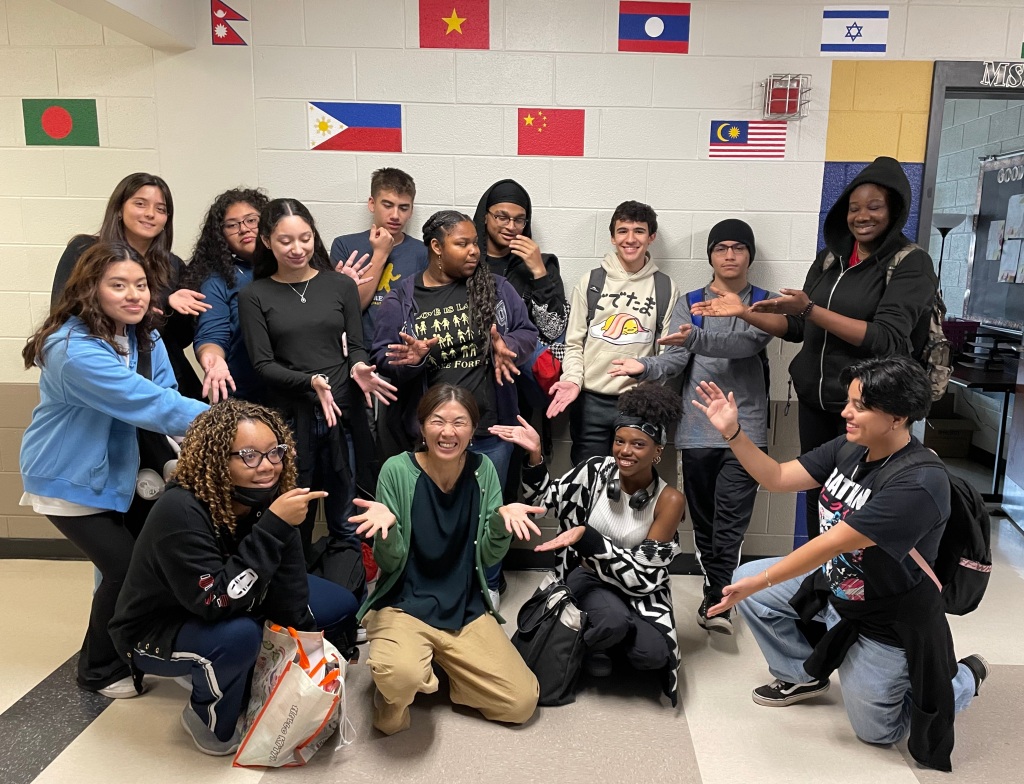
We’re Back Together Again!


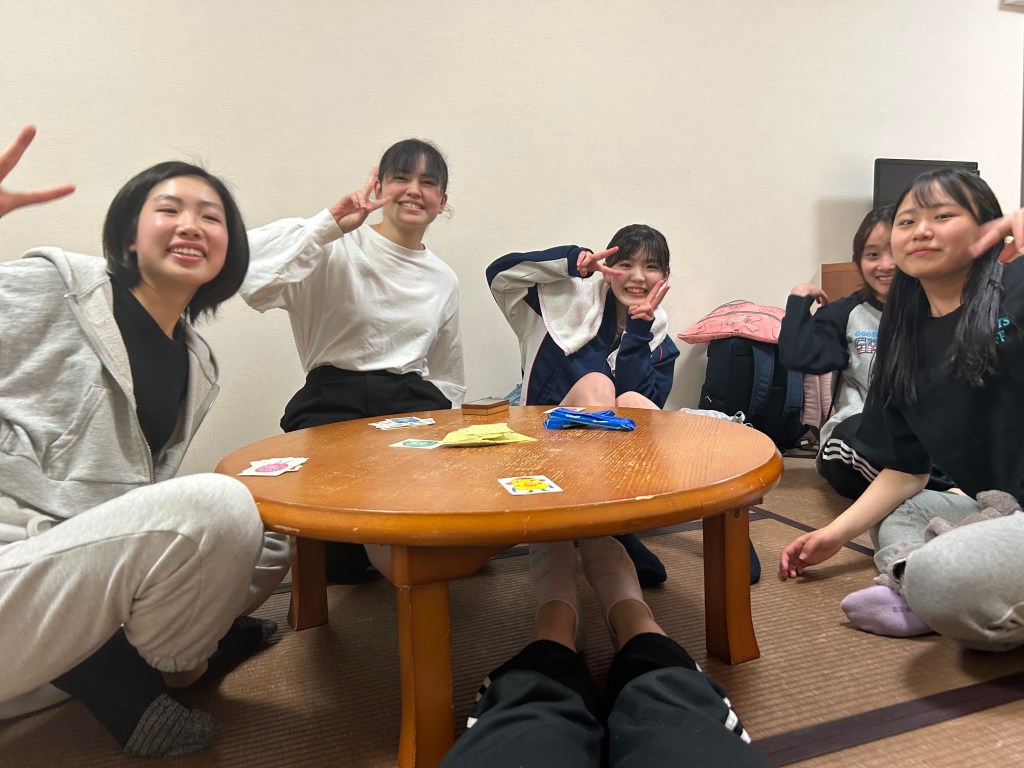
Saturday, September 30 was a happy day for us! The second year of our citywide afterschool program, Japanese Plus, launched at Columbia Heights Education Campus, with 14 returning students and a new Japanese teacher, Chihiro Takahashi. These super-dedicated DC public high school students will be meeting twice a week from now through the end of May – studying Japanese; exploring Japanese culture, history, and potential college/career pathways; and engaging in cultural exchange with peers and others in the US-Japan space. In other words, soaking up all things Japanese. Excitement is the operative word.

So what were they thinking on this first day back?

D’Amonie

In this present moment, I am very excited to be back. I have looked forward to this time again. I still love learning languages and I’ve been very proud of my Japanese learning journey thus far. Being able to go places and read the hiragana and katakana on Japanese products is so exciting for me, but there’s more to learn, which is why I am back. I am confident that I will get to my goal of natural conversational Japanese this year. I can’t wait to go to the next level. I can’t wait for more exchanges and interactions. And I can’t wait to go out and explore firsthand.

Zitlaly

As I was going through the metal detector here at CHEC, it hadn’t hit me that I’d soon be sitting in my Japanese class. I guess you can say it felt surreal. I’ve always been hesitant to push myself beyond limits, especially  with languages. Though due to my past year experience, I feel as I can finally reach my language goals in Japanese. So I’m not as nervous nor scared to admit when I need help. I wish myself the best of luck this year especially because I’m a senior and REALLY BUSY!!  

Elias

It’s the start of Japanese learning level 2 and honestly I feel good. I’m not particularly nervous. It’s more of a joyful, can’t wait type of feeling. But now that I’m also thinking about my senior year, that sorta does slow me down a little bit but I can manage. Learning through all the challenges and going to places relating to Japanese and Japanese culture keeps me motivated. And because of that, I’ll continue to push through in order to learn Japanese and experience the culture and more.

Aaron

I’m very excited for this year of Japanese Plus. I’ve gotten to see some friends from the class that I’ve missed. I hope to find a way to incorporate my knowledge and learning of the Japanese language into my college courses next year. My dream is to be able to tour my music in Japan or the UK one day.


Kori

I am looking forward to learn more about Japanese culture as well as being able to extend my language. I feel confident that I’ll learn more than I did before, and meet new people, like how I met a Congressman, and traveled to the Embassy of Japan during the summer, which helped me learn more on the history of the persons and embassy. I want to be able to experience more than what I’ve done like the tea ceremony, and being able to try on a traditional outfit.

Aitana

I’m looking forward to the new possibilities year two has to offer to our Japanese class this semester. After my time in Japan these last four months, I am excited to share all about my experiences with my classmates and hopefully inspire them to want to study abroad too. Overall, my goals this year are to maintain my Japanese skills, stay connected with the Japanese community in DC, and seek out new exciting opportunities.

Zion

Coming back to Japanese Plus is like remembering the first time I walked through the doors of our room for Japanese 1. I was late for my first class on Japanese, remembering my first teacher, our first exchange program with Japanese students where we all got to practice our Japanese with native Japanese speakers. It is sort of like going from middle school to high school, with all that I have learned from Japanese 1. I plan to take that knowledge with me to Japanese 2 to further expand my knowledge.

Mai

I am feeling really excited and happy coming into my 2nd year at Japanese Plus, to improve my Japanese skills that obtained last year. This year I am looking forward to learning and understanding daily life Japanese conversations, such as being able to talk about our day and things we like. I also look forward to building complex sentences using kanji. Outside the language aspect of the program, I hope to engage with the Japanese culture such as learning to play taiko drums, Japanese festival, and host again a Japanese high school exchange program.


Felipe

I’m now a level 2 Japanese student which makes me happy but nervous at the same time. I feel like I came out of last year with a good understanding of the language but I think level 2 will ramp up the pace a lot quicker and I’m gonna have to keep up. Luckily I went to Japan over the summer for 3 weeks which definitely helped with keeping my Japanese memorized. I was able to get some speaking and reading practice in as well as just being surrounded by language. This year I’m looking forward to hopefully get to a basic conversational level of Japanese and start learning some kanji.

Chamiya

My main goal for the year is to converse and meet Japanese students. While I was in Japan over the summer, I had the opportunity to practice and learn more Japanese. However, I wasn’t able to talk to students who were my age except for my host sister. Talking in a different language to converse with someone from a different culture was super fun and exciting to me. I learned so many different aspects of their culture and I was able to teach my own culture. There were similarities too and I wish to do it again. That is my goal for this year – to converse with a Japanese student and learn about their culture.

Margarita

Glad to be back!!! Seeing my friends and using Japanese again is making me feel so excited. Although I need to review some things, I am glad I get to do it with a new teacher. Hopefully this year we all grow closer as a class now that we will spend more time in person, and expand our knowledge of Japanese language and culture. I am excited to see how much Kanji we can learn this year and hopefully be able to use it with more Japanese people.

Jennifer

Coming into my second year of Japanese Plus I feel a bit nervous and excited. I feel nervous because I think my Japanese skills aren’t good enough but then I reflect on where I started. I knew nothing but here I am having small conversations and I know how to introduce myself. I am excited to continue learning. I aspire to be fluent so that it may better prepare me for college. I hope to study abroad and this program helped me seek opportunities in which I can. I also hope to get a better understanding of Japanese culture, the language, making connections, and growing with my peers.

Penelope

Although it’s been a while since our last Japanese class, I’m looking forward to picking up where we left off and advancing our language skills even further. I hope that this year we can go to more events around DC to experience Japanese culture, because I enjoyed so many of the ones we attended last year, like Sakura Matsuri and the exhibit at the JICC. I’m also looking forward to learning more kanji, and, of course, working with our new teacher!

Tristan

When I first came back to the program I was surprised by how my peers had changed over the past five months. Along with this I felt a bit awkward initially re-entering the program. I hadn’t many opportunities to practice Japanese over the break, so I felt a bit rusty almost as if I were lagging behind. With that said it would be a lie to say that I didn’t miss the program.

Greetings from Japan

By Aitana Camponovo

Our Japanese Plus-Tora classmate, Aitana, is going to school in Japan for an academic term. We’re happy to use this blog to share her messages to those of us left behind in DC.

I hope everything is going well in Japanese Plus. I can’t believe it’s already been a month in Japan! 

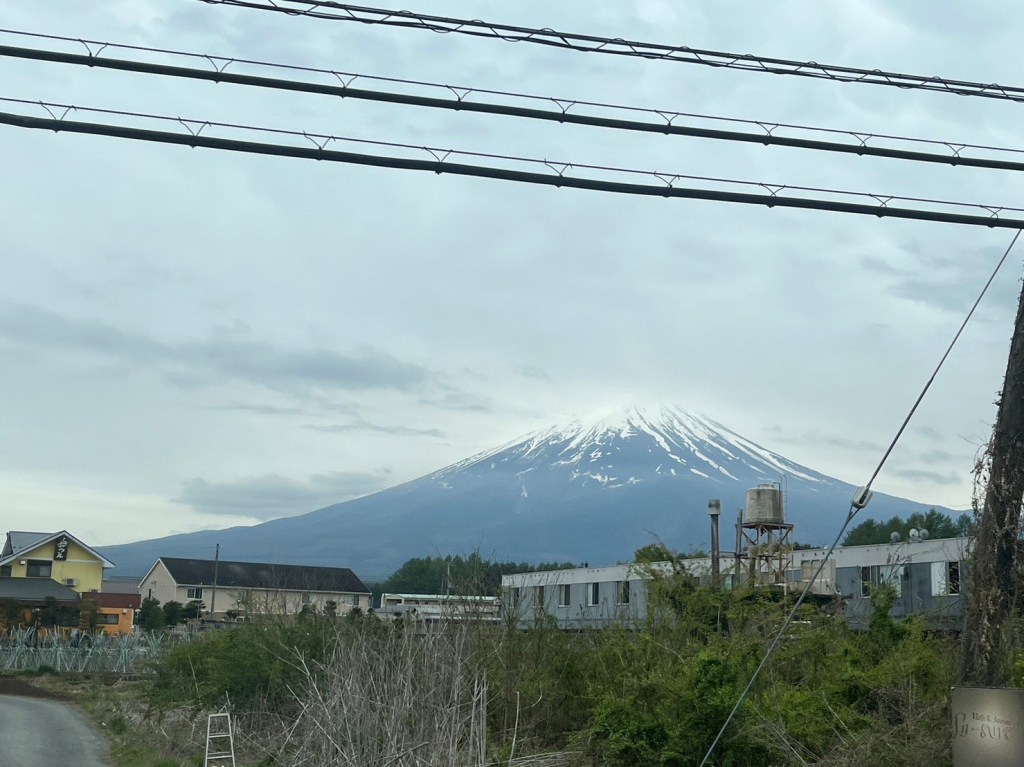
I am having a great time here and am getting used to the flow of things. I joined some clubs I would have never seen myself doing — karate and tennis! The weather is amazing everyday, so I’ve also started biking to school! Japanese school is difficult — there are a lot of classes and difficult exams every week. Things move very quickly and it can be hard to keep up, but I’ve made some friends and am exploring new places every week! Later today I’m going to Tokyo with a friend of mine. 

Here are some pictures of some of the things I’ve eaten and seen! I’d love to hear about how things are going in Japanese classes! It’s been a long time.

Tell me everything!

An Evening at the Japanese Embassy


By Aitana Camponovo

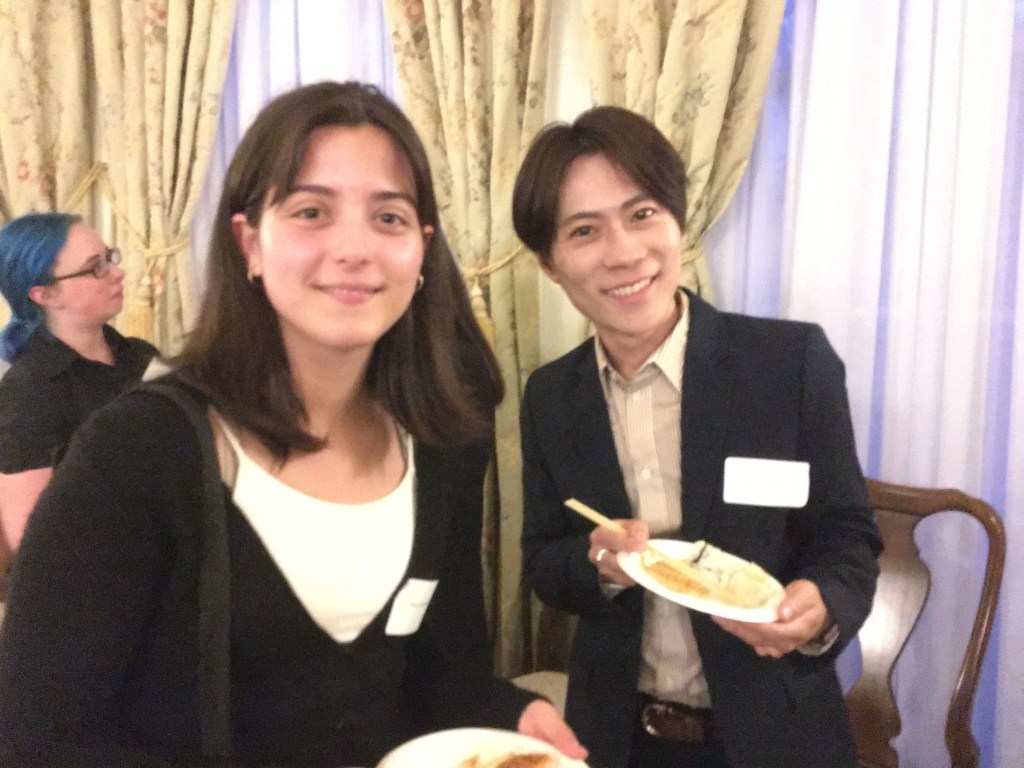
On Thursday March 23rd, I was invited by Education Counsellor Taichi Kaneshiro to spend an evening at the Embassy of Japan in Washington DC. Apart from enjoying fresh sushi and great company, this event was hosted to bid farewell to the graduates of the LEAP exchange program (Long-Term Education Administrators Program), who had been working in America for the last year and to congratulate them on their hard work. While representing Japanese Plus, I had the pleasure to meet a wide variety of officials from all over DC and Japan and to get to know the LEAP graduates. Funny enough, without having to even leave my very own city, I had the privilege to stand on Japanese soil that night. 

The highlight of the evening was speaking with the LEAP alumni in Japanese. They were fascinating individuals who shared valuable perspectives with me that night. It turned out they had been dispersed all over the country, one being in New York, others in Alabama and Arizona, but had rejoined as a group in Washington DC before they would board one final flight back home to Japan. When I told them I would be joining them in Japan very soon to study abroad, I asked for some advice. Surprisingly, they shared they were worried about going home because of how much they felt America had changed them; they of course missed their families, but would miss America more. It seemed they too were conflicted, but for reasons different from mine. 

This April, I will be studying abroad in Chiba, Japan for a semester through a program called AYUSA. One week prior to this evening, I had been solely focused on preparing for my exchange trip, so much so that I did not take any time to stop and breathe for a second. My world at that point was nothing but what was coming up in the next two weeks. I was finishing all of my final exams in March, months early, and already beginning to say my goodbyes to close friends and teachers. Though it was a stressful time full of late night studying and packing lists, the dinner that evening was like a breath of fresh air. Visiting the Japanese Embassy for the first time taught me the meaning of the phrase “the world is your oyster.” The world of Japan is not just a language website on my phone or late night study sessions. I realized that if only I opened my eyes a little more, I would see there is a lot more out there than what I previously thought; I just have to be willing to look for it. 

I am very grateful to have been invited to such an event, and I am excited to attend many more in the future once I return from Japan. It was especially an honor to be the youngest one there, and I am thankful for everyone in the Japanese Embassy who made that special evening possible.

Meeting Japanese Exchange Students


By Aitana Camponovo

On February 5th, Japanese Plus students received the amazing opportunity to get to know a group of Japanese exchange students who came to DC for an afternoon. It was especially exciting because of the exchange of cultures and languages that took place that day, where everyone tried their best to understand each other despite each other’s major differences.  

One of my favorite parts of the exchange was meeting Yui and Tomoya. While I was so nervous I could feel my heart in my ears and my hands shook as I tried not to drop my cheeseburger, out of the spur of the moment I decided to pick a seat in the first booth I found. This seat would later become the best decision I had ever made, because though I did not know it at the moment, my day was about to completely change its course. 

They told me they both came from the same school in Hiroshima and happened to be the same age as me. I asked them how long they had been studying English: four years. They asked me: three years. We talked about each other’s interests: why do I like Japan? I have always wanted to study abroad there, I told them, and then I asked what they thought about my hometown, Washington DC. They said they loved it and began to tell me about all of the things they had done so far, where they were planning to go next, and when they would leave. I learned Yui is great at calligraphy, her grandmother is a teacher for “sadou,” Japanese traditional tea ceremony, she is on the volleyball team, while Tomoya plays baseball, and his friends call him “Bacchi” for short. I learned there are two different types of “okonomiyaki”; one from Osaka and Hiroshima, though the Hiroshima one is obviously better. Most of all, I learned, after talking with these two for hours, that regardless of one’s language and culture, people will always be people. We still make the same jokes, laugh at the same things, and share similar views of life despite our homes being hundreds and thousands of miles apart. 

The only sour part of my day was having to say goodbye. The three of us promised we would see each other again soon, whether it be in America again or in their country, Japan. We took our final photos together and made sure we had each other’s contacts saved. Though it was short, I know I will never forget this day and the people it brought me close to. 

Learning Hiragana


By Aitana Camponovo

Hiragana is just one out of the three total Japanese alphabets, but it is arguably the most important. It is the backbone of the rest of the language, and without a complete understanding of it, it is impossible to learn Japanese. For three months, Japanese Plus worked together to master this alien writing system; it was hard, but by the end of it, gratifying to finally put to use.

As English-speakers who are only used to writing the Latin alphabet, one of the hardest parts of understanding hiragana is learning its stroke order and having to memorize it for all forty-six letters. Not only that, but with the exception of very few minor differences like an extra loop or curve at the end, some of the hiragana looks exactly alike. Though I had already studied hiragana a few years ago, thanks to Tsujioka-Sensei’s valuable teaching, even I got the opportunity to brush up on my handwriting. 

I was shocked at the resilience of some of the members of our class. They showed up to every meeting, including the optional review sessions, and were committed to mastering not only the writing of hiragana, but the reading and real-world usage. I remember seeing the class’ writing the very first time we started learning it, and seeing it again only a few weeks later and being shocked by the improvement. It is exciting to see so many motivated students because it pushes me as well to want to continue learning. 

The next alphabet the class has left to learn is katakana, though similar to hiragana, it is sharper and more square shaped, used only for foreign loan-words in Japanese. I am confident, however, that learning it will be a breeze now that everyone is more familiar with foreign writing systems.