Visitors from the Japanese Embassy

By Elena Encarnacion

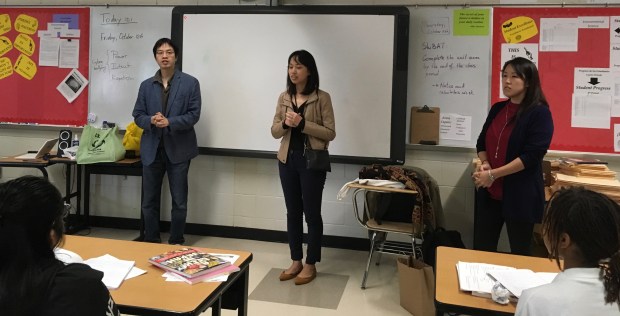
A day or two before class, we were told that we would have some “special guests” in our Facebook group. I was really curious as to the kind of guests we would have and the type of people they would be. When I found out that they were from the Japanese Embassy, I was excited, yet a little nervous. When Eshita-sensei said that we would have to individually introduce ourselves to our guests, I felt a lot more nervous. I was worried about messing up. However, after I introduced myself, the guests clapped and it calmed me down.

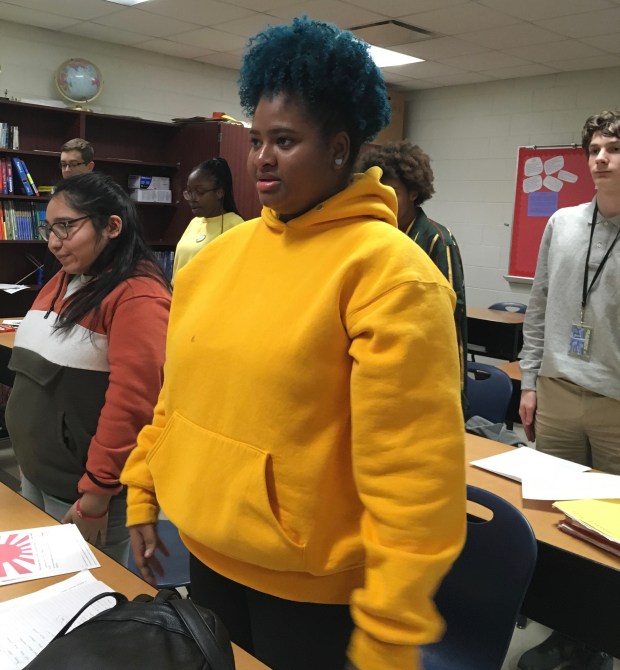
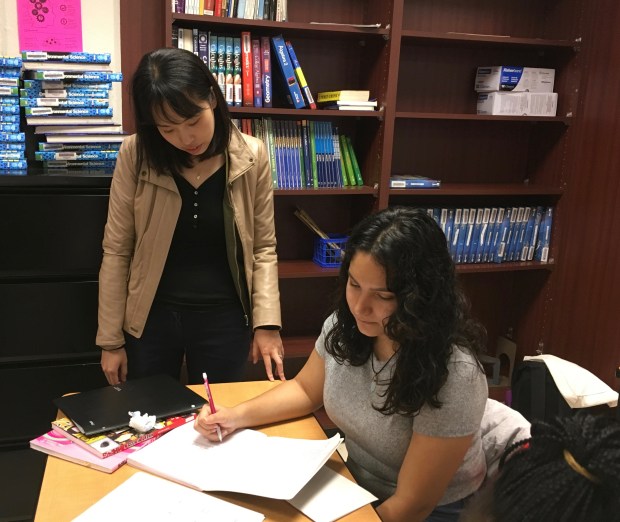
After all of the introductions, our guests sat in the back of the classroom and observed our class. They occasionally walked around and looked at our notebooks as we practiced writing Katakana. They praised and even helped us out if we asked for extra help with pronunciation or penmanship.

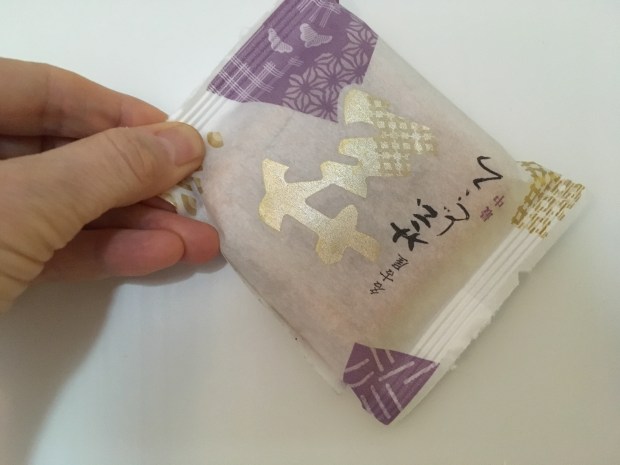
The guests from the Japanese Embassy finished off their visit by presenting us with Japanese sweets and cute little buttons that we could pin to our backpacks or shirts. Although I was originally anxious about what having them in our classroom would be like, in the end I was happy. Not only were they kind and helpful, but they also answered our questions and told us about some of the study abroad programs that were sponsored by the Japanese government. I hope our next visitors are as nice as they were.

Meeting Simon

By Kenny Nguyen

It was our third week of class and Sally, one of the program directors, brought in someone she recently met near her high school. His name was Simon. He told us about how in middle school he got into Japan because of JUMP comic books, and in middle school started to learn the basics of Japanese in order to be able to read and speak Japanese. He was a really fun guy and brought a positive atmosphere to the classroom. Simon was really helpful, and he helped me write katakana since it was my first time learning it and I was struggling.

After having our Japanese lesson of the day, Sai-sensei, the name Simon told us to call him by, told us a little bit more about his connection to Japan. He talked about how he started to learn Japanese in middle school but when high school hit, he started to stop trying to learn the language. Then in college he started to re-learn that language, since he had the opportunity to teach in Japan. Having Sai-sensei talk about his past really connected with me. He told us that if we were going to learn the language then we have to get more invested and not just learn it because of anime or anything simple. Back in middle school I used to love anime, and I tried learning Japanese because of it, but once high school hit and I didn’t have the time for anime anymore, I started to lose interest in trying to learn Japanese.

But then over the summer when I was traveling in Asia, I realized just how amazing and beautiful the culture was, which reignited my determination to learn Japanese. Having Sai-sensei in the classroom will really be amazing since he is able to connect with us since he experienced the same things we did. But also it’s always nice to have an extra hand around, especially when you’re learning a new language. So having Sai-sensei around will help me be able to better write my katakana and have someone to talk to in Japanese so he can critique it. So I look forward to our next class together and hope you continue helping out our class so we all can become better at Japanese!

Doozo yoroshiku onegaishimasu!   

Our First Visitor

By Alexx Thompson

We had our first guest speaker! I was really curious as to what he’d be like. At first I thought he might’ve been a student, but no! He’s a teacher. He introduced himself as Simon and told us to call him Si! In class we learned honorifics recently, so I think it’s polite to call him Si-san. Or maybe Si-sensei, since he is also going to be helping us with Japanese!

He told us that he started studying Japanese in middle school and I was really moved. I also connected with that due to the fact I started studying Japanese in middle school too! Sometimes I would hear him talking to Eshita-sensei and I thought, wow! This guy is really good! I want to be as good as him. When he started telling us about how he got a job through a company in Japan, I was really interested. He said the program made sure that the businesses that employees worked at had to pay them and make sure they had living accommodations. I want to ask him how he found that company!

I really liked him and thought he was a really fun guy! I hope he comes back more. I think he was amazing as our first guest speaker and I’d like him to come again. I really liked listening to his story. I was also surprised that he came back. Living in Japan is my dream but when he said he didn’t know if he wanted to be there until he retired really made me think. Maybe I should rethink my goals and don’t rush towards my goal, because maybe I’ll end up becoming unhappy later on.

Having a guest speaker really made me think that class was finally getting into swing. It made me feel like I’m diving into the real world. I really look forward to what he’ll help us with! His Japanese skill makes me really want to practice with him. He told us in order to stay passionate about learning Japanese we had to find something we were passionate about other than things like manga and anime. The first thought that came to mind was history, and then later fashion. But I love history and think it’s super interesting. I sometimes devote hours to researching random facts about history that I won’t even use for anything, I just think they’re really cool to read about.

I really like having guest speakers come in because I think it’s super interesting. I love hearing about other people’s stories! I’m really excited to see who comes in next so I can learn from them as well. There’s lots of joy, for me, finding out new things and opportunities. I’m looking forward to the next guest and the fun experiences to come soon! Like we learned in class, I’ll say see you later for now. Jyaa ne!

A Wild Ride

By Lucca Bey

The start of Japanese Plus has been a wild but truly exciting ride. When I had first signed up for the program, I genuinely wasn’t expecting to learn what I have so far, even in just the last few weeks. I’ve gotten to know a lot of my peers, as well as Japanese cultural concepts and viewpoints that I wouldn’t typically know or learn outside of this environment. One great example that I can think of was how oddly specific many concepts of the language were. General knowledge that almost everyone knows is that ‘Konnichiwa’ typically means hello. I was pleasantly surprised when I discovered that this wasn’t the case. Apparently, there’s no general way to say hello, and most greetings are based on the time of day, i.e, Konnichiwa is a greeting used in the afternoon, Konbanwa in the evening, etc. These seemingly insignificant bits of knowledge have genuinely prompted some interesting dialogue within my head lately.

Learning things like this is what makes learning about cultures other than your own interesting. Realizing and comparing these gaps between our American linguistic view and the Japanese cultural view is honestly a key to becoming an internationally minded person. The classroom in general is an extremely welcoming environment. That said, everyone there is there because they want to learn about said nuances and differences between cultures. It enlivens the atmosphere and energy of the classroom, knowing that everyone you know isn’t there out of obligation, but in willingness to learn. In this way, participation in this class is so much more different than I initially expected.

We learn about and implement aspects of Japanese culture in an engaging way in class. We follow the practice of arriving to class on “Japanese time,” which we’ve learned involves being  at class at least five minutes ahead of time, with materials prepared and ready to learn. Every class begins and ends with “Gourei,” which is the practice of one student leading the rest of the class with standing, bowing, greeting the teacher, and sitting down to mark the start and end of class. Getting to participate in these cultural experiences, personally, makes me even more excited to learn more and do more. The perspective, learning opportunities, and environmental opportunities that we gain and experience through Japanese Plus is definitely something that I’m looking forward to seeing more of.

Getting Started

By Chetachukwu Obiwuma

My first ever Japanese class was not like what I thought it would be. I wasn’t hoping for magic or the surge of knowledge about the Japanese language to hit me, but I’m not a people person. I do have a close knit group of people that I love to talk to but this is a class full of people from other schools in DC. I thought that I was only going to talk to the people from Banneker and that would be it.

However, from when I first got into the class to the end, the atmosphere was so welcoming. We sat in groups of four and two of the people at my table were not from Banneker. It’s never really been easy for me to interact with people, but Japanese class has a vibe that facilitates natural interactions. Through the use of interactive activities during the language portion and discussion during the cultural proportion, I was able to easily talk to students at my table and in the class. The need for interaction, especially in language classes, I feel is largely overlooked. Conversations are more likely to be remembered more than a worksheet. Drilling can work with some children but not everyone learns the same, and to include interactions to facilitate learning allows for a much more open classroom.

The atmosphere of the Japanese class is something that I really do like and pushes me to strive for success in my Japanese language studies. I hope that through my interactions in Japanese class, I am able to learn more about the Japanese language and culture. I also hope that I am able to gain a wider global perspective through this class.

Application Period Opens for SY2018-19 Japanese Plus Program

We are thrilled to announce that, thanks to another generous grant from the United States-Japan Foundation, Globalize DC will again offer its Japanese Plus program during the 2018-19 school year. Japanese Plus is a free afterschool Japanese language, culture, and career exposure program, open to DCPS and DC charter high school students.

You can learn about the program on this Globalize DC: Japan website here and through our student blog.

Globalize DC will select up to 25 new students. The program will meet from September 2018 through May 2019, twice a week – Wednesdays after school (4:30-6:30 pm) and Saturday mornings (9 am-12 noon), plus additional meetings. Meetings will be held at Columbia Heights Education Campus. Students who successfully complete the program may be able to earn high school credit towards graduation.

To be eligible, students must be DC residents attending either a DCPS or DC charter high school. Preference will be for 10th and 11th graders, although freshmen and seniors are also welcome to apply. We recommend students have a 2.5 GPA or above, though we do allow for some flexibility. Keep in mind that Japanese Plus will be like taking an extra class! We are seeking students who have both the interest and the high level of commitment to fulfill the requirements of this program.

To apply, complete the Online Japanese Plus Application Form at https://goo.gl/forms/QXXRhtLCvrUnfzc53.

Applications will be reviewed as they are received; face-to-face interviews will be required. Final selections will be made in late August-early September 2018.

Please feel free to contact Sally at sally@globalizedc.org or 202-251-1692 if you have any questions.

Cindy’s KAKEHASHI Reflection

By Cindy Guevara (Japanese at CHEC)

In the beginning I had all kinds of emotions. I was nervous, happy, a little sad, but most of all I was excited. This would be the first time I went outside the country without my family, and really far away. 6,747 miles away to be exact. When I first arrived at Tokyo, Narita airport I was very happy because after a super long plane ride I had finally stepped foot in Japan. I didn’t know what was coming my way, but I already knew it was something amazing. What I didn’t know though was that in just one week of being in a whole new and different country I would learn so many things about it. I thought the best part would be the food, but that wasn’t it. I mean the food was delicious, don’t get me wrong, but I had so many fun and exciting experiences that I don’t even know what was the best part anymore.

The first day, we were introduced to Fujimoto San. And I tell you she was the best guide. She took us from Narita airport to a restaurant so we could eat dinner, and not just any dinner, my first ever dinner in Japan. It was delicious – a new flavor that I had never tried before. After everyone finished their delicious meal, we rode a bus to the hotel. The Grand Palace Hotel. While we were riding, I saw so many convenience stores and vending machines. I had heard there were a lot of them, but I never imagined that there were so many! It was like they were in every block.

Once we got to The Grand Palace Hotel, we were assigned rooms and roommates. And that’s where our Journey in Japan began. We went to so many different lectures. In the first lecture we learned the rules and expectations. After that lecture we were going to the Ministry of Foreign Affairs for another one. There I learned that the constitution of Japan was actually influenced by the United States of America, I found that very interesting, because I didn’t know that. I also learned why Japan is a very safe country, they don’t use weapons like guns. In fact, article 9 of the Constitution renounces war and prohibits Japan from having Military Forces. That was shocking to me because I didn’t know about how their constitution was made or by who and when I learned that I was shocked.

After lectures we got on to do so many things. Our schedule would be really tight and we had to be mindful of how much time we had. Of the many things we did, one of them was to get in the Shinkansen to go to Gifu prefecture, where we would go to a school and later meet our Host Families. When we arrived at Gifu Prefecture we had 2 more guides. We went to another lecture to learn more about Gifu and I learned that every prefecture has something unique that lets them stand out from the others, and Gifu’s was Cormorant fishing. Basically they use Cormorant birds to catch fish. I found that interesting because normally the birds would eat the fish, but this was different. They were trained to not eat them.

Later we went to Gifu Sogo Gakuen High School, where I had so much fun. I think that’s the first time I actually had fun in a school. We watched and did so many club activities. This showed me that in Japan the students are very dedicated. At first I thought they would be stressed out because of studies and not really open, from what I had heard, but it was wrong. The students were so energetic and excited to have us there it was very cool. We watched the drum club play and it was amazing, they took it so serious. Then we also watched the calligraphy club, the archery club, and we not only watched, but we were given the opportunity to do it ourselves. I had so much fun. It was very sad that we had to part ways so soon. But I was excited that we would soon meet our host families.

Even though we would have partners, I was nervous. I was concerned about the language barrier. But when I met my dad I was so moved, because he was trying so hard to make sure that my partner and I understood what he was trying to say. It made we want to try even harder to learn Japanese. The hospitality was great, not only in my family but also at the school, stores, the hotel. Pretty much everywhere. I had so much fun and exciting moments that I will treasure them always. Overall the trip was phenomenal and I am so thankful for this opportunity that was given to me.

Charity’s KAKEHASHI REFLECTION

By Charity Chukwu (Japanese Plus)

Given the harsh social and political climate right now, it can be difficult to find positive things about the U.S. I often compare it to Japan, pondering how much better the U.S. would be if it were more like Japan. I was ashamed of my country, so I had the notion that some of the Japanese people would feel the same way.

I never would have imagined how many things Japan and America have in common. Tokyo looks so similar to Baltimore or another nearby city in my eyes that at one point I wondered when I would start to feel homesick. The rainy, overcast sky outside the Grand Palace Hotel was met with a kind of nonchalant serenity; it felt as if it were an everyday sight despite knowing I was in a completely different country! Not to mention that the Rainbow Bridge resembles the Key Bridge in Baltimore so much that it’s uncanny.

The trip also convinced me that America has a lot more respect from Japan than I previously thought. I have to admit, I worried too much about any mistakes I made in the way I presented myself. While we were visiting the high school in Ogaki City, one of the girls giving my group a tour reached out to feel the curls on my ponytail. She complimented me and asked if I braided my hair myself. I told her that my mom braided it for me, and the look of pure amazement on her face honestly made me blush. I was used to hearing how pretty girls from Japan are, so I jumped to the incorrect conclusion that I would somehow be deemed inferior in some shape or form.

It’s interesting how traveling to another country teaches you more about your own. Now, I try to learn about the U.S. with more ambition, just like I do when I learn about Japan.

A Visit from Mr. Tobias

Occasional writing from the Japanese I class at Columbia Heights Education Campus.

By Tim B

To help our class gain some perspective, Takahashi-sensei asked one of the staff members in the school to give a presentation to our class about his experiences with Japan. The staff member that came was Mr. Tobias, and he walked in dressed with a headband and a shirt that was gifted to him by his host family. Mr. Tobias is the technology coordinator for the school, and it is his job to organize the laptops and IPads in the building. He told us that he lived in Japan for a year while he was on a religious mission to teach English. Also, he recounted various stories about how daily life is different in Japan than in the United States. Later on, he ended his speech with how the experiences really shaped his life and his goals.

Mr. Tobias’ speech on Friday highlighted some really interesting things about Japan to me. One of the things that he told us about Japan was the advanced technology and cleanliness in the culture. He mentioned that department store bathrooms have stalls with water jets and blow dryers. He also mentioned that he felt safe enough in Japan to walk around late at night. Furthermore, one part of Japan that he loved specifically was that the technology there sometimes hadn’t even been released in America. Another important part was the respect that Japanese people show each other. The Japanese culture that Mr. Tobias described got me really interested and motivated in going to Japan someday.

Mr. Tobias’ presentation had a really positive impact on me. His presentation motivated me to travel and connect to people. Someone asked him, “Did you ever feel discriminated against in Japan for how you look?” He replied with a lesson, and said that “What people can see about you is only the tip of the iceberg; you have so much more about yourself that people will only ever know if they talk to you.” It really stuck with me, and I could relate since I am the only one that looks like me in my school. According to him, his experience with Japan working with people is the reason why he does what he does today. The time he spent working on learning a language and getting to know very different people shaped him and really had an impact on him. In conclusion, I hope that I can study hard and learn Japanese so that I can meet new people and find my passion just like Mr. Tobias.

Chidera’s KAKEHASHI Reflection

By Chidera Obiwuma (Japanese Plus)

First of all I would like to start this by expressing my appreciation to the Japanese Embassy, JICE, and everyone who helped and hosted us in Japan. This trip was my first time visiting Japan so I had a lot of expectations about Japan and for me, Japan was more amazing than I expected. I loved meeting the people, exploring the different cities and popular sites, looking at the beautiful scenery, and learning the history and current events about Japan.

To me this trip showed me the importance of developing more global awareness and exposing myself to people with different cultures from my own to develop an understanding of each other. Many aspects of the trip such as the high school exchange, homestay, and visits to temples and shrines helped me come to this realization. Before coming to Japan I thought that Japanese high school students were very different from American high school students, however, that was not the case. I saw that they were just like any normal high school student or teenager, cheerful and excited. The homestay was a very exciting part for me. It was nice to see how hospitable that Japanese people were. My host family took me into their home and made the homestay a very fun experience for me. I have always been a firm believer in not judging others because they are different from you racially, ethnically, religiously, etc. but this was furthered by my host family, especially my host mother. She treated me like I was one of her daughters and showed me many interesting things, like Ogaki castle, Myojorinji temple and making arts and crafts. Leaving them was difficult for me and I even cried when they left. I was so surprised because I didn’t realize that spending just one day with a person can impact you so much. Through my host family, I was able to get more insight on what a typical family in Japan was like.  I saw that in Japan family is very important in life and seeing my host family I think that it wasn’t so different from what I experience in America.

On the trip I learned a lot of things about Japan and the culture that helped me to understand Japanese culture and the reasons for certain things in the culture. Something interesting that I learned was that the statues in front of temples and shrines have specific positions for their mouth. The statue on the right always has its mouth open and the statue on the left closed, which symbolizes life and death, so walking through the temple or shrine is like walking through life. This made made me feel that Japanese culture is very thoughtful. The KAKEHASHI trip was an incredible trip and I will definitely want to return to Japan one day.