By Felipe Lemos
Before joining Japanese Plus, I had some interest in Japanese culture but very little interest in the Japanese language. Unlike some of my other classmates, I was first introduced to Japanese culture by visiting there with my family when I was 11 years old. I loved the trip and the country so much that I decided when I got back to start learning Japanese with a private tutor. Unfortunately, that idea fizzled out since my tutor had to move for work just 6 months into my journey. For years after that I never even thought about Japan or the Japanese language, I wasn’t too interested in Japanese history or pop culture, and I would have never joined the program had my mom not gotten an email advertising it. She asked me if I was interested, especially considering it would not be my first rodeo with the language, and for the sake of trying new things (and hearing that learning a new language was really good for your brain), I decided to sign up. When I first walked into class at MLK Library for the first time, I had no idea how much I was going to learn. I mean I had no idea what even “mina-san” meant the first time I had heard it. I hoped to at least be able to speak some level 1 or 2 Japanese by the end of my two years with the program, but I had no idea of the fun memories, cultural experiences, and immense studying and learning that was still to come.
The Hiragana Test:
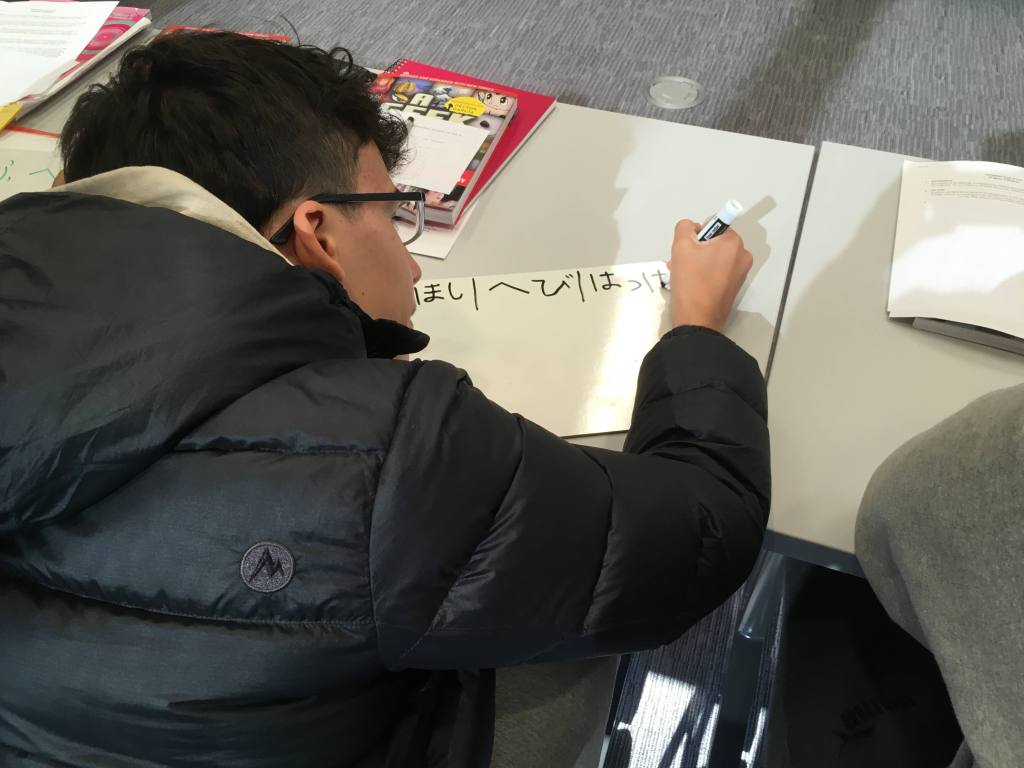
Learning Hiragana was our first real test of any sort of real Japanese learning. Up to then we had been learning the occasional words and theorizing about the way grammar and sentence structure worked but we had no real thing we could point to that proved our knowledge and what we had learned. Hiragana was like the steppingstone into an entirely new realm of the Japanese language, writing. Just looking at my hiragana writing from the past makes me reminisce about how much I struggled memorizing those darn characters. However, it really gave me the first benchmark of my progress with the language. Something to be proud of that would keep me motivated to keep learning. While I don’t remember doing too well on the test itself, the entire learning process of Hiragana challenged the whole group in a new way and made us realize how much we had learned even though this was just the beginning.
The Haiku Competition:
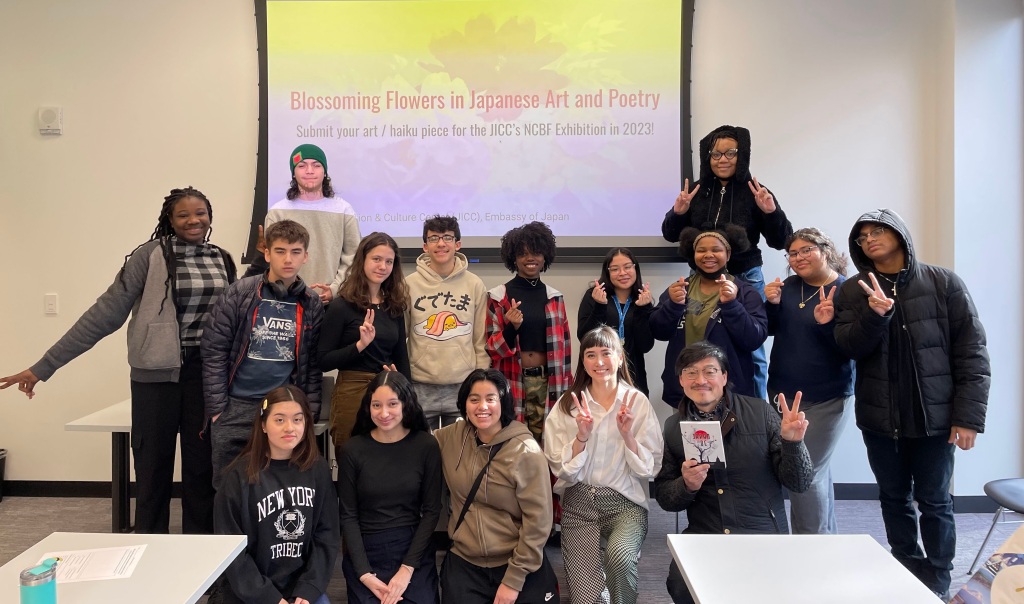
While it wasn’t a huge event for everybody in the group, this competition holds a special place in my memories of the program because it made me realize that I had a passion for learning the language and could accomplish things using it. I submitted my haiku at the last minute, expecting nothing and received an award and had my poem displayed in an exhibition at the Japan Information and Culture Center (JICC). This was a special moment to me as it showed me that there were real-world benefits to this. I was really getting to make connections and even win awards through the program which just motivated me more to keep going.
The First Exchange:
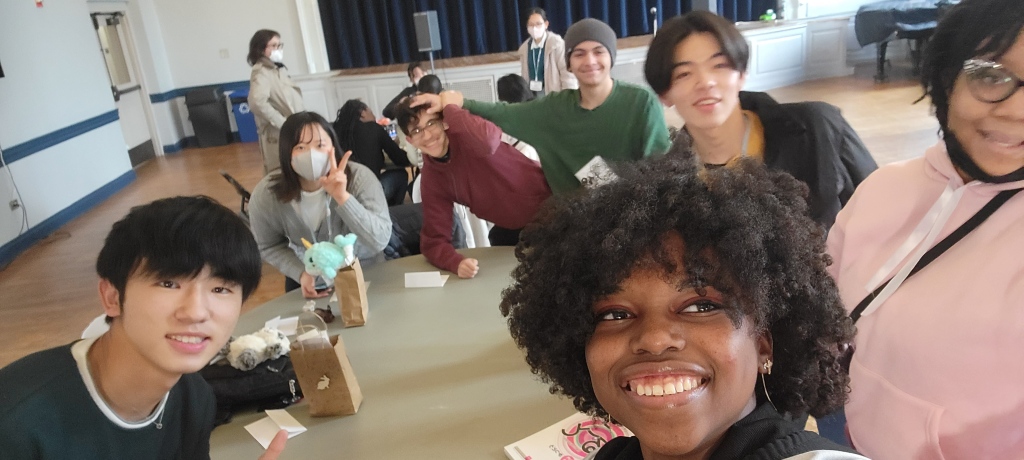
The first exchange group of high school students we met will always be a fond memory for me. Being able to tap in more to the cultural learning part of the program by actually meeting people from Japan who were our age was fascinating. Comparisons were drawn over every part of our everyday lives making me realize that there was so much different between us yet so much the same. This was also our first chance to really try and have sustained conversations with native Japanese speakers which admittedly didn’t go too well but it was a fantastic experience nonetheless. It was humbling seeing how little we really knew but this experience also opened our eyes to realize that there was still so much to learn in the next years and that maybe one day we would be able to converse on equal footing.
The NAFSA Conference:
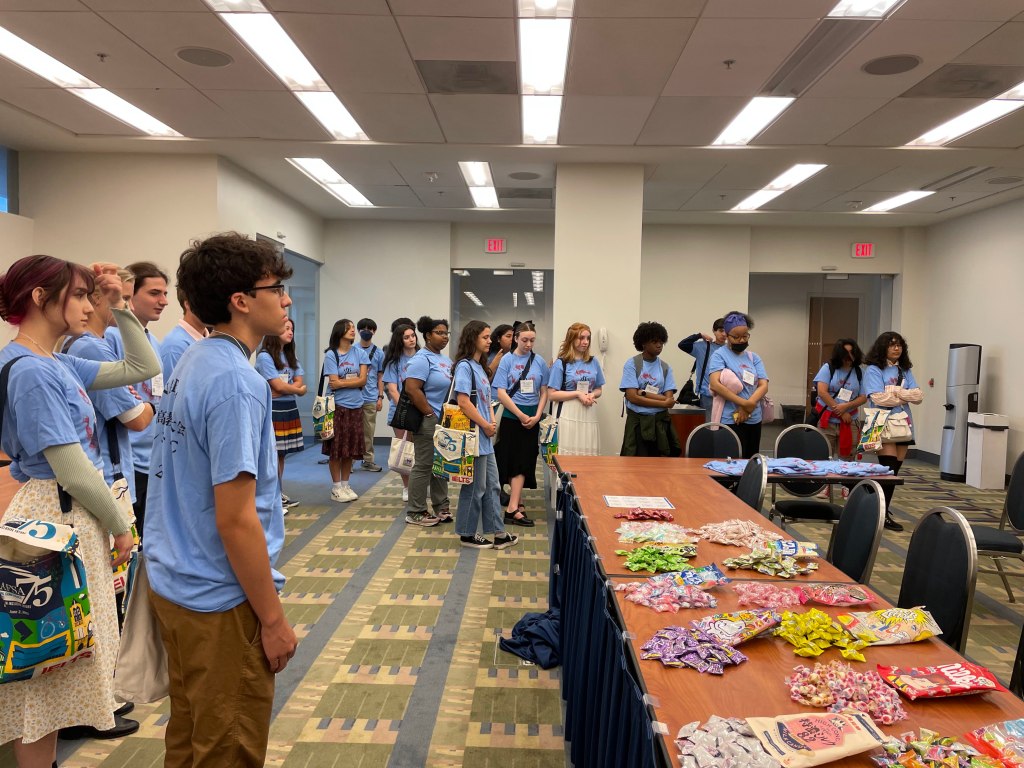
The NAFSA conference was an opportunity for me to branch out into a new possibility for my future with Japan, study abroad. The conference hosted many colleges from around the world including many from Japan. The COI (Connection, Opportunity, and Initiative) program that we visited with invited us to meet with many of these Japanese college representatives to learn about their campuses and the programs they offer both in English and in Japanese. This event really gave me a view into what Japan could mean to me in the future of my education, maybe not as a full 4-year college experience but as a shorter study abroad opportunity.
The Tidal Basin Walk:
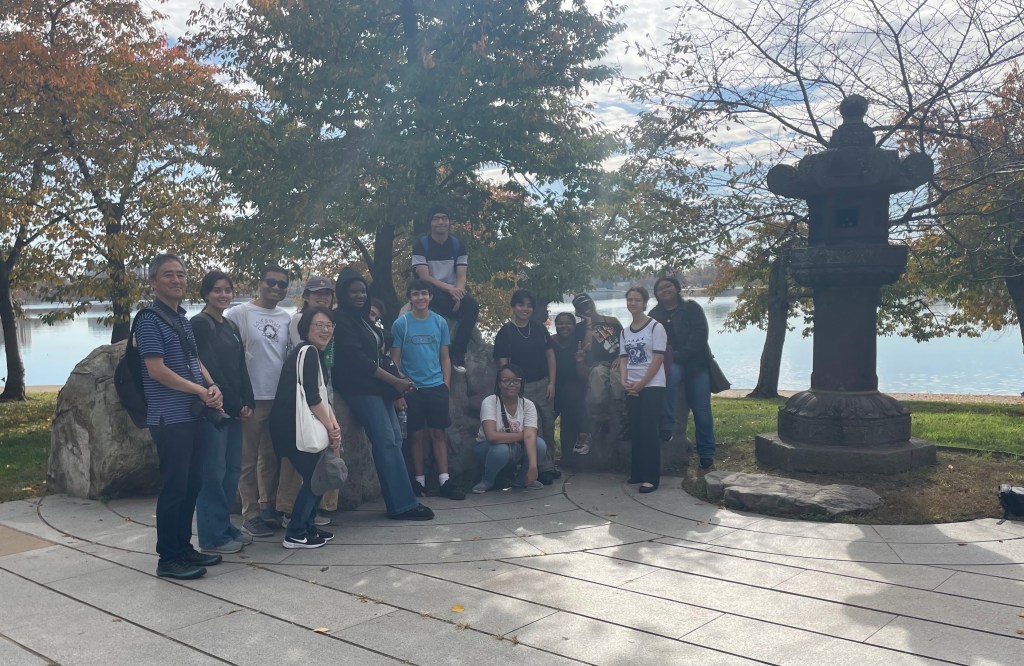
Around the beginning of our second year we went on a walk around the Tidal Basin but with one important rule. We were only allowed to speak Japanese with each other on the whole walk. If we wanted to comment on anything we saw or have any conversations we had to try and make it work using what we had already learned. Throughout the walk, we learned how to play rock paper scissors and many variations of it in Japanese to keep us entertained. We even learned a version where the way to win was to count the total amount of fingers the players had up after picking rock, paper, or scissors. This walk helped me familiarize myself with common Japanese phrases and slang speech as I was talking in a new context that I hadn’t been in before.
The Navy Yard Visit:
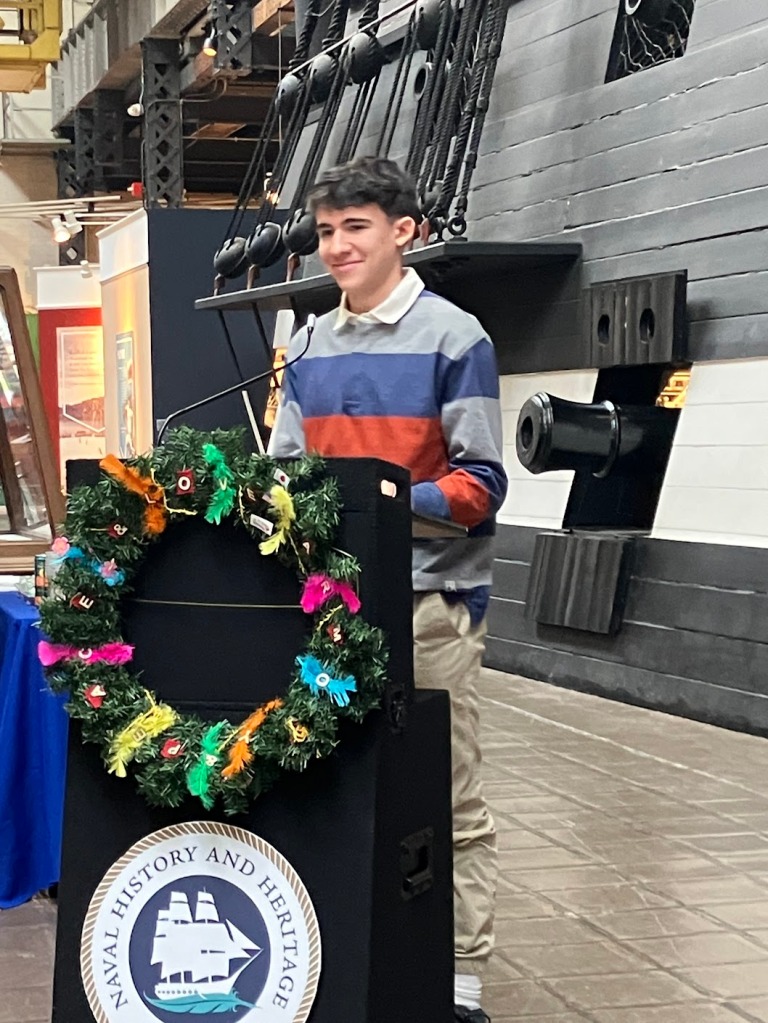
The Navy Yard visit was an important event to me because it was a real project and presentation that we did outside of our program. Doing this remembrance project I felt like I was doing something in the community outside of just learning, which is a key part of Japanese Plus and Globalize DC. To remember the events of Pearl Harbor, we decorated wreaths and wrote statements acknowledging the events and paying condolences to those who lost their lives. We then visited the Navy Yard complex and presented our wreaths and our statements out loud. This felt like a significant event we prepared for and involved us in the community outside of the classroom.
The Final Exchange:
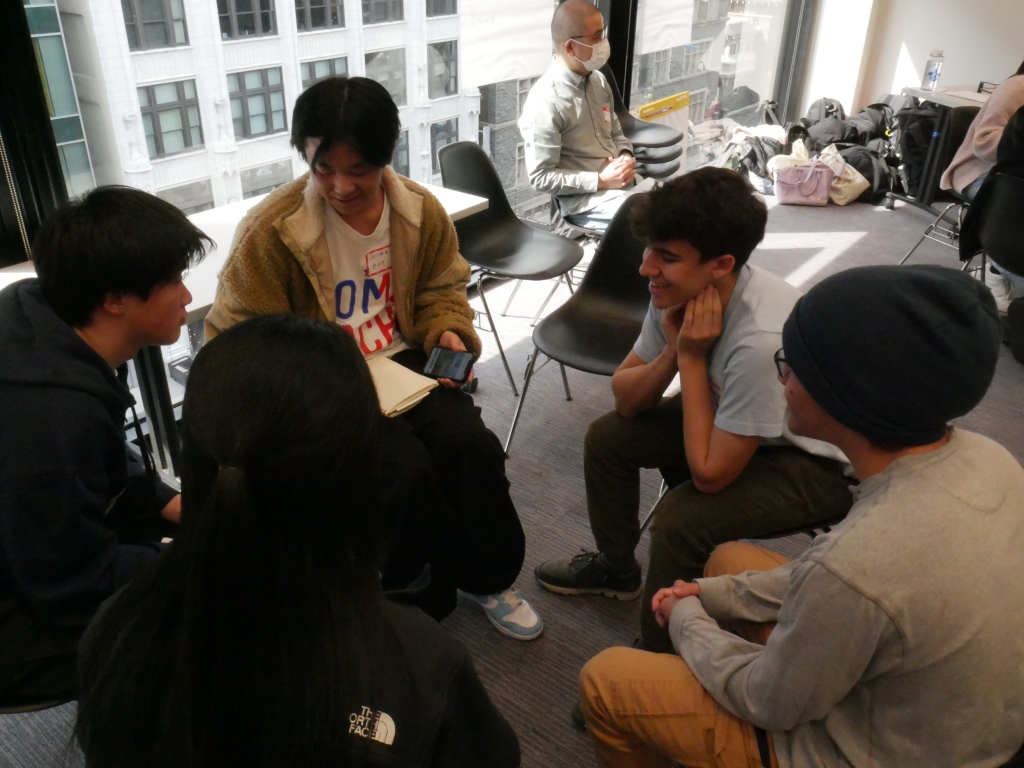
The final exchange we did was with a group of children from the TOMODACHI Program, a program created following the 2011 East Japan Earthquake to form friendships between Japanese and American students. The word “tomodachi” means friend in English and the program brings students from the Tohoku region affected by the earthquake to the US. In their visit to us, we had a panel where we talked to a variety of people who have lived in both the US and Japan. We also set up conversations to talk to each other in Japanese to practice and also went to the Smithsonian American History museum as a visit. I think what I liked the most about this program was comparing it to our first ever exchange over 1 and a half years before. I knew how to speak so much more the second time compared to the first time which made me proud of my progress. It also gave me hope just like the first time that the next time I tried speaking in a group setting I’d be able to speak even better.
The Final Presentation:
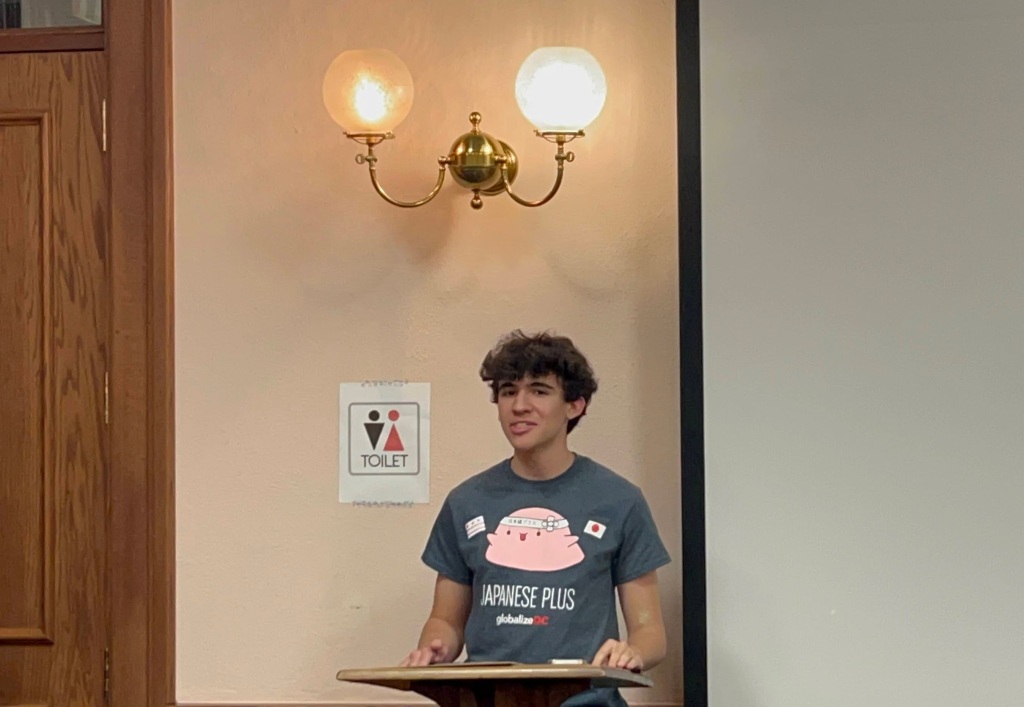
The final presentation marks the end of my Japanese Plus journey. Throughout all the trials and hardships I had faced up to this point, I had finally made it and I had my final skit performance to show for it. I was able to perform my lines flawlessly, making little to no mistakes in my speaking and having good pronunciation. Unlike in my first skit performance, I knew the meaning of almost every word I was saying and felt comfortable as if I was speaking a language that I knew. This success compared to the subsequent speech I gave and diploma I received rounded off my Japanese Plus experience perfectly.
If pre-program me could see the progress I have made over these two years of learning, I believe he would be impressed by how much I had learned and how much I was able to say. I think he’d also discover how many friends and connections I made throughout the program who have changed my life for the better. I think just him seeing how I was able to perform on the STAMP test would have impressed him, especially with the listening and speaking portions.
If I were to give one piece of advice to somebody looking to start learning Japanese, I’d say first of all to go for it since I think it is a beautiful language that is challenging but rewarding to learn and has thousands of years of history and culture to be discovered. I’d also recommend trying out the basics of it on your own before committing. While Japanese may appear very difficult at first, Hiragana and Katakana can be used to read a lot and is easily learned through self-study. Basic sentence structure is also fairly easy to learn once you get the hang of the grammar. Following that, I’d enroll in any basic class and always study 5-10 minutes a day to brush up on anything you may be struggling with. I’d especially suggest dedicating a chunk of that time specifically to reading because the more you master the basic reading of Hiragana and Katakana, the less you will regret it later on.
As for the future, I am adamant in continuing my Japanese learning journey. I hope to enroll in a higher-level course for my senior year outside of the program and carry that learning on into college. I’m not sure quite yet if I want to commit fully to studying 4 years in Japan but either way, I will definitely do all I can to study abroad for some period of time in the country. I hope to not only remember and continue my learning of Japanese going forward, but always keep a special place in my heart for this program, Japanese Plus, which kickstarted my journey and provided me with invaluable friendships and fun for these fantastic two years.
Thank you to my teachers, Takahashi-sensei, Tsujioka-sensei, and Hamano-sensei, as well as all of my classmates and of course, Sally, for making this program possible and making it what it is today.
 GLOBALIZE DC: JAPAN