かけはし (KAKEHASHI) Exchange


By D’Amonie Armstrong

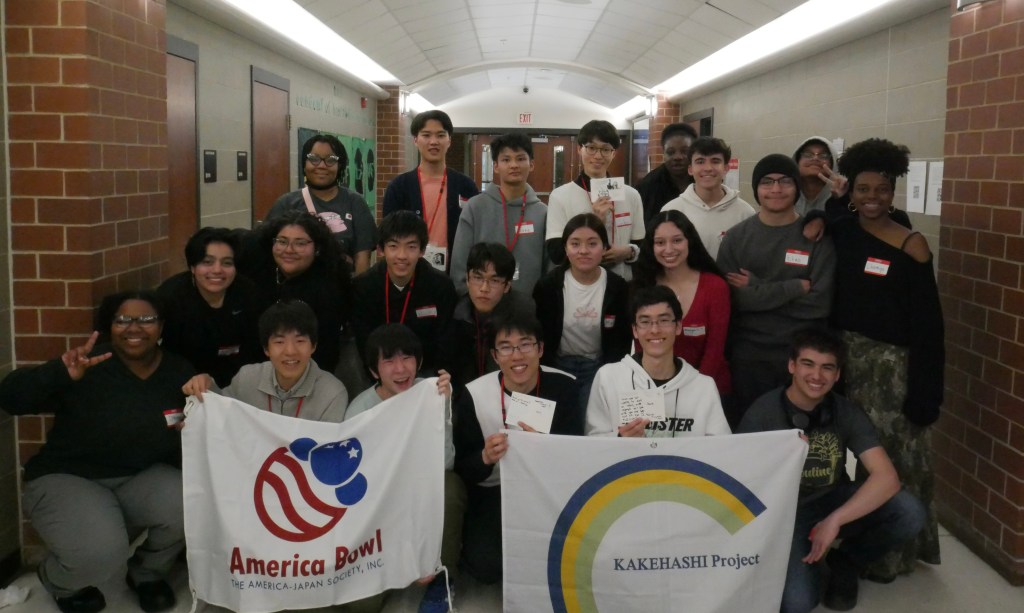
On the last Wednesday of March, our group had our first Japanese student exchange of Tora year 2. It was a group of nine boys from three different schools that had won the America Bowl – equivalent to our version of the Japan Bowl or Math Bowl. We had the honor of hosting this group of charismatic, lively boys. 

We’d been excited to get word that we were getting the chance to interact with more Japanese students, as last year’s KAKEHASHI exchanges were hits! It’s something we all, hands down, looked forward to. The studying and preparation to make sure we’re the best hosts is always our favorite. This exchange we created presentations to present to the students. 

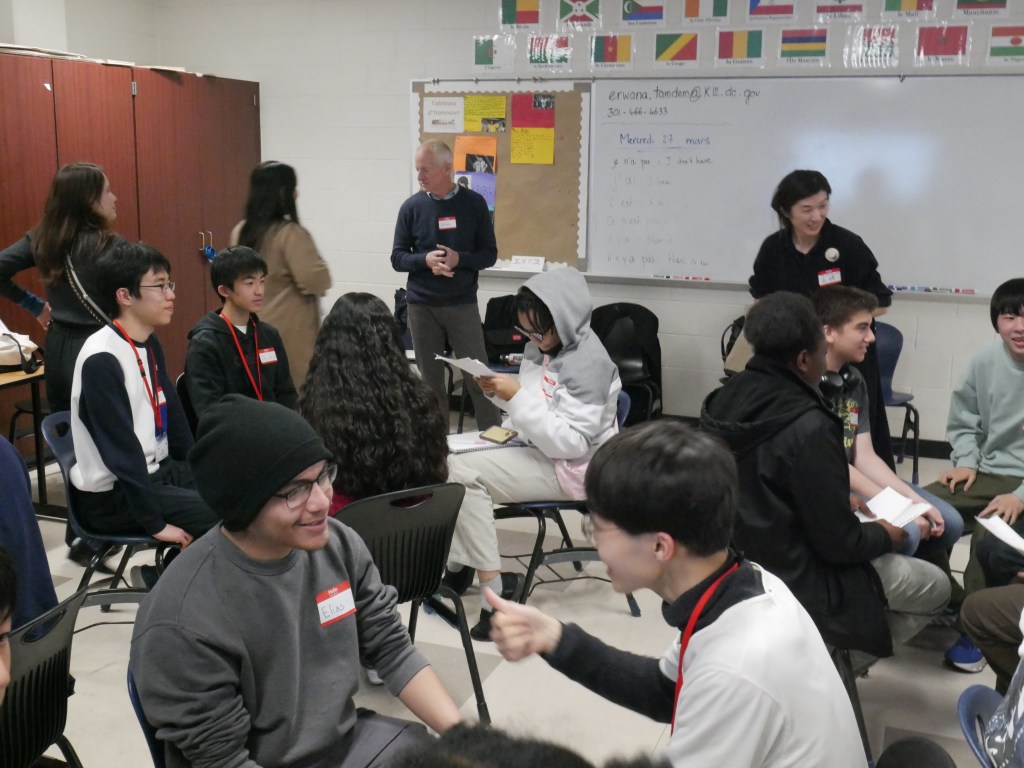
We scrambled around with excitement even down to the second they came into the room. We had gifts and snacks prepared, alongside them bringing sweet treats for us as well. We began by engaging in small group discussion, in Japanese, where we got to put the phrases we learned into use. We discussed our ages, hobbies, and the things we liked, which mainly included sports. In my small group, I distinctly remember bonding with one of the students over our enjoyment of badminton. I hadn’t heard anyone say they played badminton, so I was excited. 

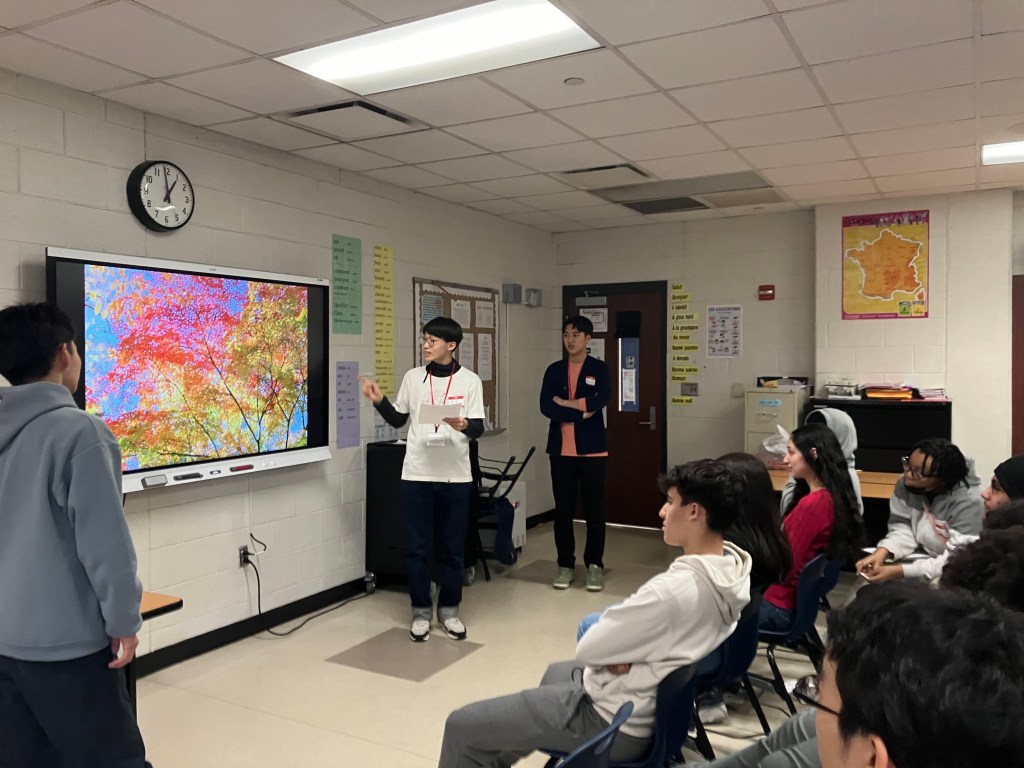
Afterwards, we both presented our presentations. Our class had spent prior class time preparing presentations of places in D.C. we thought showed the real D.C. to us D.C. natives. I appreciated how very lively they were for our presentations; they had fun reactions which helped with our nervousness. Through my group’s presentation we were able to show them Go Go music – D.C.’s music, and Rock Creek Park – D.C.’s biggest park. 

I enjoyed their presentations because they were very interactive. We learned about the importance of certain castle properties, what keeps the people inside safe and what puts them in jeopardy; the deep meaning of sakura and how it has been perceived throughout the years; and origami, something I struggle with heavily, but with their help, I made the tiny sailor hat! 

The two hours we spent together flew by devastatingly quick. But of course, we had to make time to teach them the Cha Cha slide – a very popular choreographed American dance that we do at all the parties and events. I love being able to share our culture through something as expressive as dancing. We had a good time and laugh, they are naturals! There was one boy, though, that came up to me and told me he had enjoyed dancing but wanted advice on how to learn dances. That moment was very special to me, as I felt honored that he had asked me for that advice. 

Then before we knew it, we were signing cards from comic book cut out cards that the boys individually chose, and escorting them back outside to their bus. I remember staying outside waving to them inside the bus until they pulled off. 

But that wasn’t the end. They weren’t heading back home until Saturday morning, so we decided to hang out with them again Friday after school. They had stayed with the DCI students from our group all week (you can read other blog posts about that), so once they finished up there, they traveled to the National Museum of American History, where I met them with sports equipment. 

Playing sports with them, even if it was only for fifteen minutes, was the highlight for the few of us that could go. There was a soccer ball, a football, some frisbees, and racquets and birdies for badminton. Some played frisbee, while others were having a soccer match. I engaged in a 2 versus 2 badminton game. In the end, we all participated in a huge soccer game, with even some local kids joining us for a bit. 


In essence, we were very grateful to have had this experience and hope that we can one day meet them again with better Japanese. We will work hard!

My exchange experience


By Tristan Lam

The Wednesday KAKEHASHI exchange was much easier than the TOMODACHI one Saturday because the students in the Wednesday class were more fluent in English than the Saturday class. I also felt like I got to know the kids on the Wednesday exchange better because there were nine of them instead of sixteen of them. However I could relate to the TOMODACHI exchange’s struggle to communicate, as while their English was much better than our Japanese, there was a clear indication that we had trouble communicating with each other.

On Wednesday, we gave our presentation to the KAKEHASHI group about places to visit in DC. I introduced them to the National Arboretum. Afterwards the KAKEHASHI group did their presentations on the meaning of cherry blossoms and how fortresses in Japan were made. Cherry blossoms, while beautiful, wilt very quickly, thus they often take the meaning of the end of something. Fortresses in Japan were made to optimize their defensive capabilities (e.g. being on the top of the hill for higher ground, having holes in the walls to shoot arrows out of, having a cramped entrance to the fortress to slow down the enemy, etc.). Overall, these exchanges were very memorable for me and helped to teach me how to communicate without speaking, like via hand movements, gestures, and using items to explain new words.

Meaningful connections

That’s me off camera to the right with only my hands showing.


By Elias Lovos

My time spent with the two exchange groups was filled with laughter and meaningful connections; this time around compared to the other groups we have met, I was less shy throughout the exchange and I did a whole lot better speaking Japanese instead of only relying on English. The students in both exchanges understood my words most of the times and I felt like I also had an easier time understanding their words as well. After the lunch we had at the library, we went to the Smithsonian Museum of American History with the exchange group and I felt like I had a better time speaking to some of the students there. It was a very chilled environment where we could simply talk about any of our personal interests and even talking about what was being displayed inside the museum. My group really liked the pop culture section of the museum with Prince’s guitar and the display of protests and riots at the back. But sadly the time came to an end and we had a nice goodbye to all of the students as both groups went our separate ways.

Hesitating about meeting the KAKEHASHI group


By Aaron Weeks

My first thoughts going into the KAKEHASHI exchange were ones that were followed with nervous energy. I didn’t have a lot of confidence in my Japanese skill and was even more nervous that I wouldn’t even get along with the visiting students. I got into the class about right before the students’ arrival. Everybody was preparing things and it didn’t really immediately help with my nervousness, but when the students got there it was much more relaxed than I was prepared for. The students knew enough English and we knew enough Japanese to communicate through both languages successfully (although the Japanese students were more proficient at English than we were at Japanese). If we were confused with a word the Japanese students found a way to explain to us, and if they were confused we found a way to explain to them what we meant.

These mutual understandings we had of each others’ language allowed me to realize how much I had in common with the Japanese students from the KAKEHASHI group. I was able to relate most to them by asking about their music taste, because music is a very important part of my personal life. I got to learn that we even shared similar music tastes. I got to relate with a group of students over our shared interest in the Hip Hop genre as well as the jazz genre. I even met a student who shared an interest in the band “Ikimonogakari.” These shared experiences helped me get over those nervous thoughts I came in with. I’m very glad I got to meet with the KAKEHASHI group and get that experience of using the Japanese language to learn about kids I share similar tastes with.