By Zion Daodu
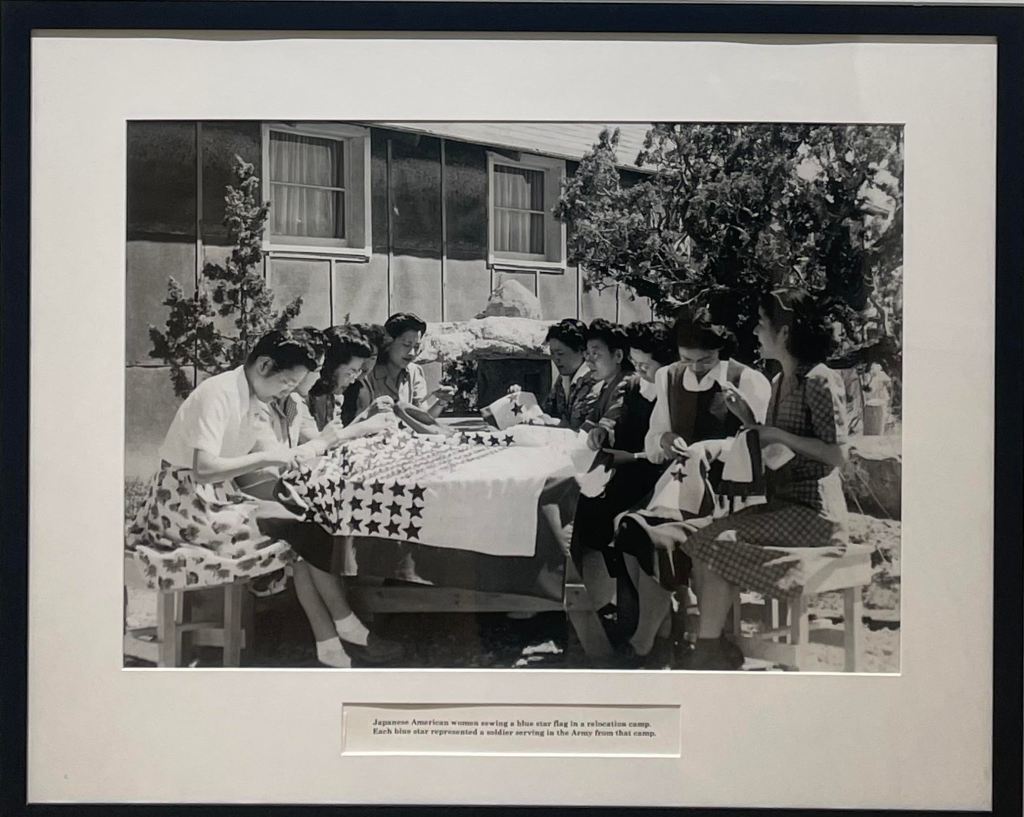
During World War II, a worldwide conflict emerged, encompassing countless individuals from different nations, all of whom made substantial sacrifices for their respective countries. Amidst this chaotic era, the often-overlooked narratives revolve around Japanese American women who found themselves confined in Internment camps alongside their children, while their husbands dutifully served in the United States Army. During the aftermath of the Pearl Harbor attack in 1941, numerous Japanese American women, alongside their families, were compelled to relocate to internment camps. Despite the difficulties posed by internment, these women actively participated in volunteer activities within the camps. One notable example was their involvement in sewing blue stars, symbolizing each Japanese American soldier serving during that period, as depicted in the provided image.
During the war, Japanese American women, like their counterparts across the United States, stepped into roles traditionally occupied by men who were serving in the military. They took up positions in various sectors such as manufacturing and agriculture, making significant contributions to the wartime economy. Following the war, these women encountered the daunting task of rebuilding their lives. Many had suffered the loss of their homes, businesses, and belongings due to internment, yet they played a pivotal role in the resettlement process. They adapted to new circumstances and actively participated in the post-war recovery efforts. The strength and resilience displayed by Japanese American women during World War II and the internment period highlight their unwavering determination in the face of adversity. Moreover, their unwavering commitment to supporting their communities and country further exemplifies their remarkable character.
 GLOBALIZE DC: JAPAN